George Washington Never Knew Dinosaurs Existed
Explore why the idea of George Washington and dinosaurs together is fascinating. Discover the history and myths behind this curious fascination.
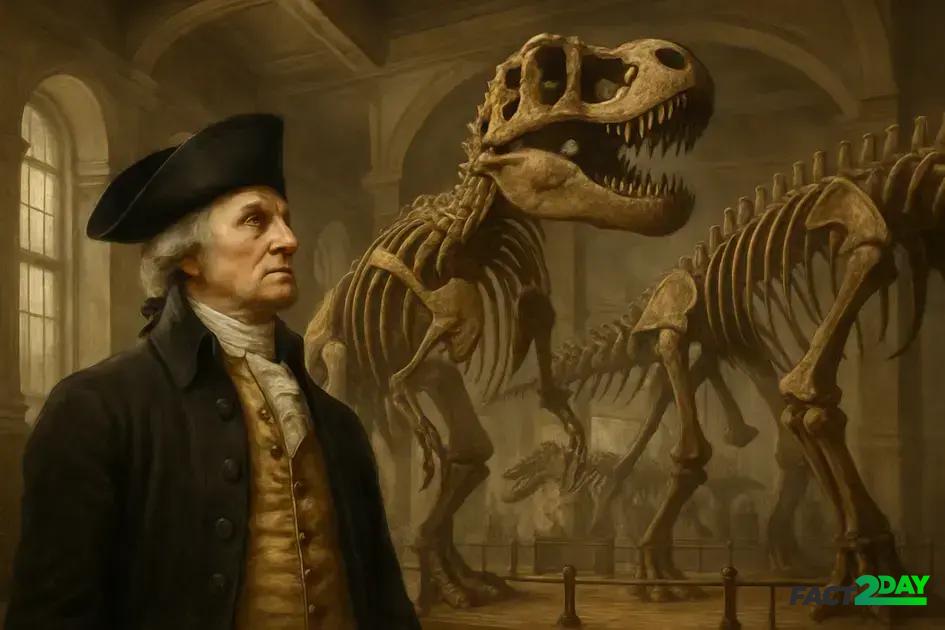
Washington and dinosaurs never coexisted as dinosaurs became extinct millions of years before George Washington’s time, with knowledge of dinosaurs emerging only through scientific discoveries long after his era.
Have you ever thought about Washington and dinosaurs? It’s a fun puzzle to imagine George Washington living in a world where dinosaurs roamed. Let’s unpack why these two never crossed paths and what that says about our view of history.
the timeline of dinosaurs and human history
The timeline of dinosaurs extends from about 230 million years ago in the Triassic period to their extinction around 65 million years ago, long before humans appeared on Earth. Dinosaurs thrived through the Jurassic and Cretaceous periods, dominating terrestrial ecosystems. In contrast, the first humans, belonging to the genus Homo, only appeared roughly 2.5 million years ago, a tiny blip compared to the vast reign of dinosaurs.
Because of this huge gulf in time, dinosaurs and humans never coexisted. The creatures walked the Earth millions of years apart, with no overlap in their timelines. This separation helps explain why historical figures like George Washington had no knowledge or record of dinosaurs, as they lived and died long before humans evolved.
The significance of geological eras
Breaking down Earth’s timeline by geological eras helps us understand this vast time difference. The Mesozoic Era, known as the “Age of Dinosaurs,” is followed by the Cenozoic Era, the “Age of Mammals,” which includes the rise of humans. This division highlights the clear distinction between dinosaur history and human history.
Fossils are the primary evidence we have about dinosaurs, found in rock layers that date back millions of years. These fossils provide crucial clues about the species that lived long before humans, allowing scientists to reconstruct their appearance and behaviors.
who was george washington and what was his era
George Washington was the first president of the United States, serving from 1789 to 1797. He lived during the late 18th century, a time marked by the American Revolutionary War and the founding of the nation. This era was dominated by colonial conflicts, the fight for independence, and the crafting of the U.S. Constitution.
Washington’s life and background
Born in 1732, Washington was a military leader before becoming a political figure. He led the Continental Army against British forces and later took a leading role in shaping the government of the new country. His era lacked the scientific understanding of prehistoric life, including dinosaurs.
The world in Washington’s time was very different from today. People relied on agriculture, horse-drawn transportation, and manual labor. The concept of deep geological time and fossils had not yet been developed, making knowledge of dinosaurs impossible.
This period is sometimes called the Age of Enlightenment, featuring advances in philosophy, science, and politics. However, even with growing scientific curiosity, discoveries like dinosaur fossils came much later after Washington’s time.
why george washington never knew about dinosaurs
George Washington never knew about dinosaurs because the scientific study of these prehistoric creatures had not yet begun during his lifetime. In the 18th century, when Washington lived, the idea of extinction was not well accepted, and fossils were often misunderstood or linked to myths.
scientific knowledge in the 18th century
At Washington’s time, natural history was in its early stages. Fossils were collected but not systematically studied, and the theory that entire groups of animals could vanish was controversial. The concept of dinosaurs did not emerge until the 19th century, decades after Washington’s death.
The first dinosaur fossils were identified and named in the early 1800s, with scientists like William Buckland and Richard Owen playing crucial roles in defining what dinosaurs were. These discoveries reshaped the understanding of Earth’s history, something beyond Washington’s reach.
Therefore, Washington’s era simply lacked the paleontological knowledge and modern scientific methods needed to reveal the existence of dinosaurs. Any references connecting him directly to dinosaurs are fictional or playful anachronisms rather than facts.
how dinosaur fossils were discovered centuries later
Dinosaur fossils were discovered centuries after George Washington’s time, during the late 18th and early 19th centuries, when naturalists began piecing together clues from rocks. These fossils are ancient remains of prehistoric life preserved in sedimentary layers of Earth.
the beginnings of paleontology
The field of paleontology grew as explorers and scientists found strange bones and teeth unlike any living animals. Early collectors often mistook fossils for the remains of giant humans or mythical creatures. It wasn’t until more careful study and comparison that dinosaurs were recognized as a distinct group.
Important fossil discoveries include the first scientifically described dinosaur Megalosaurus in 1824 by William Buckland, followed by the naming of Iguanodon and other species. These findings helped establish dinosaurs as a unique and extinct group of reptiles.
The development of geology as a science also contributed by providing a timeline for when fossils were formed. Advances in excavation techniques allowed more complete skeletons to be discovered, deepening our understanding of dinosaur diversity.
Overall, the discovery of dinosaur fossils took place far beyond Washington’s era, reshaping science and capturing public imagination by revealing a world lost to time.
common myths linking george washington and dinosaurs
There are several common myths that link George Washington and dinosaurs, although these ideas are historically inaccurate. These myths often arise from playful fiction or misunderstandings about history and science.
myth 1: george washington encountered dinosaurs
This myth imagines Washington living in the same era as dinosaurs, but the truth is they lived millions of years apart. No evidence supports that humans and dinosaurs ever coexisted.
myth 2: dinosaur fossils were discovered in washington’s time
Another myth suggests that dinosaur fossils were already known during Washington’s life. In reality, fossils became recognized as dinosaur remains only in the 19th century, long after his era.
myth 3: washington had dinosaur bones
Some stories claim Washington collected dinosaur bones, but there are no records of this. Fossil hunting as a scientific pursuit was not established during the 18th century.
Understanding these myths helps separate fact from fiction and highlights how exciting discoveries about dinosaurs came well after the founding of the United States.
the impact of paleontology on understanding history
Paleontology has greatly impacted our understanding of history by revealing the life forms that existed millions of years before humans. This science studies fossils to reconstruct ancient ecosystems and track evolutionary changes over time.
how fossils shape our view of the past
Fossils provide direct evidence of organisms that lived long ago. Through fossil analysis, scientists have discovered not only dinosaurs but also early mammals, plants, and insects. These findings fill gaps in the timeline of life on Earth.
the role of paleontology in geology and biology
Paleontology connects with geology by dating rock layers where fossils are found, helping to build the geological time scale. It also influences biology by showing how species have evolved and adapted through mass extinctions and environmental changes.
This science offers insights into Earth’s history beyond human records. It teaches us about extinction events, climate shifts, and the gradual development of biodiversity. Understanding this deep history explains much about the world we live in today.
how dinosaur knowledge evolved over time
Dinosaur knowledge has evolved significantly over time as scientists uncovered more fossils and developed new technologies. Early ideas were based on limited evidence, often leading to myths and misconceptions.
early discoveries and interpretations
The first dinosaur fossils were often mistaken for the bones of giant humans or mythical beasts. It wasn’t until the 19th century that paleontologists like Richard Owen identified dinosaurs as a distinct group of ancient reptiles.
advances in technology and science
Over time, improved excavation tools, imaging techniques, and methods like radiometric dating allowed researchers to study fossils with greater accuracy. This led to better understanding of dinosaur anatomy, behavior, and evolutionary relationships.
Today, scientists use 3D scans, computer modeling, and even DNA analysis of feathers found on some fossils to reconstruct how dinosaurs looked and moved. This evolving knowledge continues to change as new discoveries are made.
The growing understanding of dinosaurs also reflects changes in scientific thinking, from seeing dinosaurs as slow and cold-blooded to recognizing their diversity and complex ecosystems.
why historical figures didn’t know about prehistoric animals
Historical figures like George Washington did not know about prehistoric animals because the scientific knowledge and tools to discover them did not exist during their times. People in the 18th century had limited understanding of natural history and no concept of deep geological time.
lack of scientific methods and technology
Before modern paleontology, fossils were often misunderstood or linked to myths and legends. The tools and techniques to study fossils properly only developed in the 19th century, after Washington’s era.
limited communication and exploration
Exploration of remote areas where fossils are found was rare, and scientific information spread slowly. Most people relied on local knowledge, which did not include evidence of prehistoric life.
Furthermore, the idea that entire species could become extinct was not widely accepted. This made it harder for early scientists and thinkers to conceptualize animals that lived millions of years ago.
Overall, the lack of fossils, technology, and scientific understanding in historical times meant prehistoric animals remained unknown to figures like George Washington.
the role of science in separating fact from fiction
Science plays a crucial role in separating fact from fiction, especially when it comes to topics like dinosaurs and historical figures such as George Washington. Through careful research, analysis, and evidence-based methods, science helps clarify what really happened in the past.
evidence-based investigation
Scientists use fossils, carbon dating, and geological studies to uncover facts about prehistoric life. These methods provide reliable data that can be tested and verified, unlike myths or stories passed down without proof.
debunking myths with research
Many popular myths about dinosaurs living alongside humans or historical figures knowing about them have been debunked by scientific research. By studying timelines and fossil records, science shows that these creatures lived millions of years before humans existed.
Scientific literacy allows people to understand the difference between imaginative stories and reality. It encourages curiosity while promoting critical thinking to question unsupported claims.
Overall, science equips us with tools to explore our world accurately, helping us appreciate true history and discard fictional ideas.
what we learn from bridging history and paleontology
Bridging history and paleontology helps us understand the world in a more complete way. While history records human events, paleontology reveals life from millions of years ago. Together, they show the timeline of life and how Earth has changed.
understanding deep time and human history
Paleontology introduces the concept of deep time, showing that dinosaurs lived far before humans. This expands our view beyond recorded history and gives context to how life evolved.
connecting environmental changes to human development
Studying fossils alongside historical records helps us learn how climate and geography shaped the rise of civilizations. For example, changes in flora and fauna influenced human survival and migration.
This connection also helps correct misconceptions, like the idea that humans and dinosaurs coexisted, by providing clear scientific timelines. It teaches us to appreciate the vastness of natural history compared to human history.
Overall, combining history with paleontology enriches our knowledge about the past and helps us better understand our place in Earth’s story.
Wrapping up the connection between Washington and dinosaurs
It’s clear that George Washington never knew dinosaurs existed because they lived millions of years before humans appeared. Science helps us separate fact from fiction and understand the vast history of life on Earth.
By learning from both history and paleontology, we gain a fuller picture of our world and how it has changed over time. This knowledge reminds us how exciting discoveries continue to shape what we know about the past.
Understanding these connections encourages curiosity and appreciation for both the human story and the prehistoric world that came before us.