Stepping into the Screen: The Immersive Future of VR and AR Gaming
Explore the VR/AR gaming future and discover how immersive experiences are reshaping play and technology interaction today.
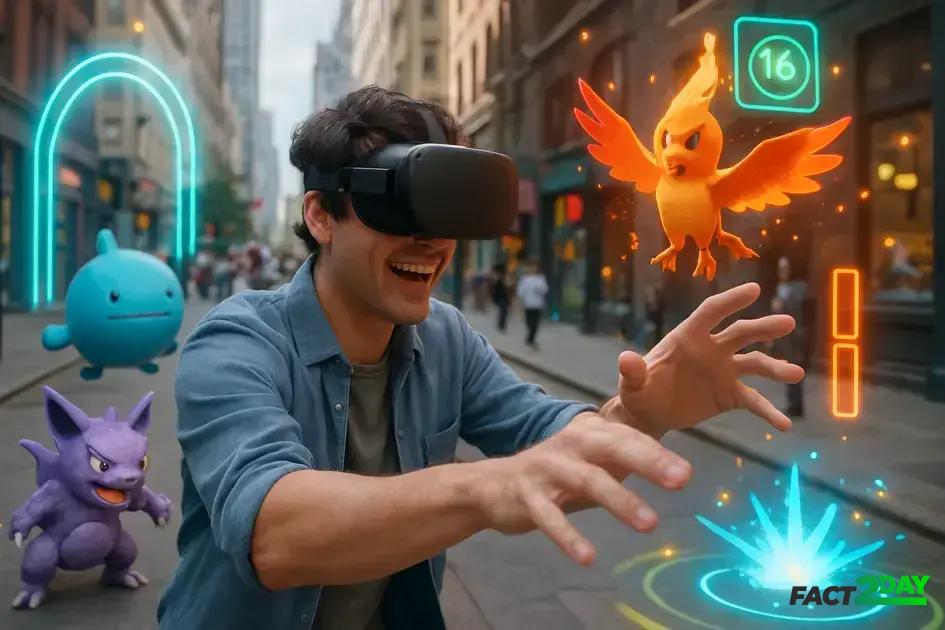
The VR/AR gaming future involves immersive technologies that enhance player engagement and game design through realistic visuals, motion tracking, haptic feedback, and AI-driven experiences, creating interactive and personalized gameplay that redefines traditional gaming.
Have you ever wondered what the VR/AR gaming future might look like? As virtual and augmented realities blend with our screens, the way we play games is quietly evolving into something far more immersive and interactive. Let’s take a closer walk into this shifting landscape and see where it might lead.
how vr and ar are transforming gaming experiences
The rise of VR and AR technologies is reshaping how we engage with games, moving beyond traditional screen-based experiences to full immersion. Virtual reality creates completely digital environments where players can explore, interact, and feel presence as if inside the game world. Augmented reality adds digital layers to the real world, blending game elements with everyday surroundings.
With VR, gamers can look around and move naturally, making gameplay more intuitive and captivating. AR games encourage players to move through real spaces, discovering content that overlays the environment. This shift boosts the player’s sense of presence and makes gaming more active and social.
Examples of Transformative Experiences
Popular VR titles like Beat Saber and Half-Life: Alyx offer intense, physical gameplay that immerses players in rhythmic or narrative challenges. AR games like Pokémon GO revolutionized mobile gaming by turning cities into interactive playgrounds, encouraging exploration. These advances show how vr and ar are expanding what games can be.
The integration of spatial audio, haptic feedback, and advanced motion tracking further deepens immersion. Players can hear sounds from directions matching the virtual scene or feel vibrations that correspond to in-game actions. These sensory enhancements create realistic and engaging experiences that traditional gaming setups cannot match.
Overall, vr and ar are breaking barriers between players and virtual worlds, making gaming more lifelike and emotionally engaging.
technology driving the future of immersive gaming
The future of immersive gaming is powered by breakthroughs in various technologies that enhance realism and player interaction. Advanced VR headsets with higher resolution displays and wider fields of view deliver clearer, more lifelike visuals. Alongside this, improved sensors and motion tracking capture player movements with great accuracy, enabling natural interactions within games.
Another key technology is haptic feedback, which uses vibrations and force to simulate touch sensations. This lets players feel textures, impacts, and resistance, greatly deepening immersion. Wearable devices and gloves equipped with haptic actuators are becoming more common to complement VR experiences.
AI and Cloud Computing
Artificial intelligence enhances gameplay by creating smarter non-player characters and adapting game scenarios based on player behavior. This dynamic interaction makes each gaming session unique. Cloud computing allows complex game worlds to be processed remotely, reducing hardware requirements on the user’s end and enabling large-scale multiplayer environments with low latency.
Additionally, augmented reality glasses are evolving to be lighter and more ergonomic, with better image projection and environment scanning capabilities. This makes AR gaming more accessible and seamlessly integrated into everyday life.
Collectively, these technologies are driving immersive gaming toward highly realistic, interactive, and personalized experiences that will soon redefine how we play.
the impact of vr/ar on player engagement and game design
VR and AR technologies are transforming player engagement by creating deeply immersive environments that encourage active participation. Unlike traditional gaming, these platforms enable players to physically interact with game worlds, fostering a stronger emotional and cognitive connection.
This shift has a significant influence on game design. Developers now prioritize spatial storytelling, where players explore narratives through their movements and discoveries in 3D spaces. Game mechanics are tailored to reward exploration, interaction, and collaboration, moving beyond button presses to gestures and body language.
Enhanced Social and Psychological Engagement
VR and AR also promote social engagement by enabling multiplayer experiences that feel more personal and immediate. Players often report feeling “present” with others, which strengthens community-building and cooperative gameplay. Psychology research highlights that these immersive experiences can improve memory retention and increase motivation to play.
Moreover, VR/AR’s impact on accessibility is notable. Adaptive controls and customizable environments allow a broader range of players to enjoy gaming, fostering inclusivity. Game designers are increasingly integrating these features to appeal to diverse audiences.
Ultimately, the blend of technological innovation and design creativity in VR/AR is redefining what engagement means, encouraging players to become fully immersed participants rather than passive observers.
Shaping the future of gaming with VR and AR
The impact of VR and AR on player engagement and game design is changing the way we play and connect. These technologies make games more immersive, social, and accessible than ever before.
As developers continue to explore new ways to blend technology with storytelling and interaction, players can look forward to exciting, engaging experiences that truly put them at the center of the action.
Embracing VR and AR is not just about better graphics or controls, but about creating meaningful connections between players and virtual worlds that feel alive and responsive.
With these innovations, gaming is evolving into a more inclusive and captivating form of entertainment for everyone.