Gladiators and Blood: The Most Bizarre and Brutal Ancient Sports That Would Be Banned Today
Violent Ancient Sports reveal the bizarre, brutal contests of the past that would shock and horrify modern audiences.
Okay, so get this: ever stumbled across something super weird in a game that just… wasn’t supposed to be there? Well, back in the original Pokémon Red and Blue days, there was a glitch. Not just any glitch, but a legendary one: MissingNo.
You’d fish on Cinnabar Island, and suddenly, this messed-up block of pixels would pop up. It looked like static, sounded like a nightmare, and could literally break your game. Your Hall of Fame would corrupt, your graphics would go nuts – total chaos, man!
But here’s the wild part: players loved it. Why? Because if you caught this digital monstrosity, it’d duplicate items in your inventory. Suddenly, you had unlimited Rare Candies or Master Balls! It was a game-breaking bug that became a secret cheat code, an unofficial feature. Seriously, what other game turns a programming error into a fan-favorite legend? Mind. Blown.
Okay, so get this! Violent Ancient Sports were all about pushing human limits—sometimes with brutal, blood-soaked consequences. You won’t believe the kinds of games people actually watched (and bet on) back then. Curious? Let’s dive into this wild world!
The origins of violent sports in ancient civilizations
Violent sports have deep roots in ancient civilizations, often emerging as expressions of power, religious rituals, and social hierarchy. Early societies like Mesopotamia, Egypt, and Greece used physical contests to prepare warriors for battle and entertain ruling elites. These events were not just games but ceremonial displays of strength and dominance.
In many cultures, sports combined athletic skill with lethal combat, reflecting the harsh realities of survival and warfare. For example, the Mesoamerican ballgame was tied to religious sacrifice, while Greek pankration blended wrestling and boxing in ruthless competition.
These violent contests often symbolized the struggle between order and chaos, with winners gaining honor and losers sometimes facing death. The origins of these sports reflect the values and fears of their times, laying the foundation for later, more organized brutal spectacles like the Roman gladiatorial games.
Ancient Societies and Their Combat Sports
Each civilization imbued their violent sports with unique meaning. In ancient Egypt, wrestling matches were held to honor the gods, while in Sparta, boys were trained from a young age in aggressive physical contests to become fierce warriors. In India, ancient texts describe combat sports that combined martial arts techniques.
These origins highlight how violence in sport was often glorified and intertwined with culture, religion, and politics, making them vital to ancient community identity and cohesion.
Gladiatorial games: blood, honor, and death in the arena
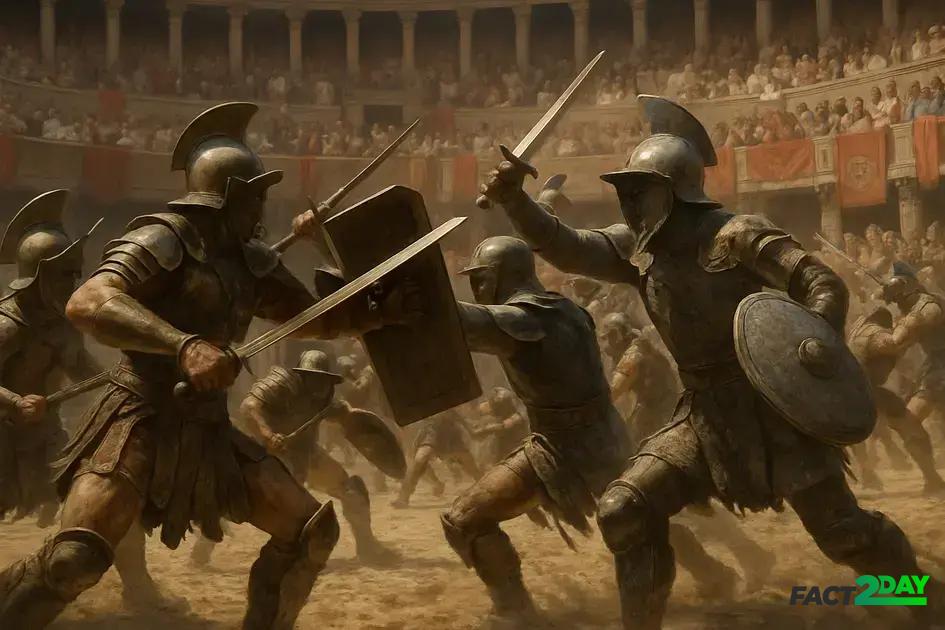
Gladiatorial games were one of the most infamous violent ancient sports, combining brutal combat with public spectacle. Fighters, known as gladiators, were often slaves, prisoners of war, or volunteers who battled in arenas like the Colosseum in Rome. These contests were more than fights; they symbolized blood, honor, and death, captivating audiences hungry for excitement and drama.
Gladiators used various weapons, from swords to tridents, and fought under different rules depending on their class and the type of match. The battles could be one-on-one duels or large group clashes, sometimes even involving wild animals. Victory brought glory and sometimes freedom, but many matches ended in fatal injuries.
The role of spectacle and politics
These games were not just entertainment but powerful political tools. Emperors and officials staged lavish shows to gain public favor and demonstrate their power. The crowd’s reaction could decide a gladiator’s fate—life or death—making the event deeply interactive.
Gladiatorial combat reflected Rome’s values of bravery and endurance, but also its harshness. The desire for spectacle often outweighed concern for human life, highlighting a stark contrast with modern sports ethics.
Chariot races: speed, danger, and fierce competition
Chariot races were among the most thrilling and dangerous sports in ancient times, famous for their speed, danger, and fierce competition. Held in large venues like the Circus Maximus in Rome, these races attracted massive crowds eager to witness the intense battles on wheels. Drivers, called charioteers, controlled fast horses pulling lightweight, two-wheeled chariots at breakneck speeds.
The races were not only a test of driving skill but also of courage and strategy. Crashes—known as “naufragia”—were common and often deadly, making chariot racing one of the most perilous sports of its era. Sharpened elbows and aggressive maneuvers were typical as competitors fought for position on the tight track.
The cultural impact of chariot racing
Beyond entertainment, chariot races served political and social purposes. Wealthy patrons sponsored teams, and factions of fans often displayed fierce loyalty, creating a charged atmosphere. Victories brought great prestige to charioteers and their supporters.
Chariot racing symbolized the ancient love for speed and spectacle but also highlighted how far participants were willing to risk their lives for fame and glory.
The brutal world of ancient boxing and pankration
Ancient boxing and pankration were two of the most brutal combat sports practiced in antiquity, known for their intense physicality and often deadly outcomes. Boxing in ancient Greece involved fighters using leather straps to protect their hands, but the rules were minimal, allowing hits to almost any part of the body.
Pankration, meaning “all powers,” combined wrestling and boxing with very few restrictions. This sport was incredibly violent, permitting choking, joint locks, and strikes, making it one of the toughest contests in ancient Olympic Games.
Techniques and dangers
Both sports demanded immense strength, skill, and endurance. Fighters aimed to incapacitate their opponents through relentless attacks. Injuries were common, including broken bones and severe bruises, and death was not unheard of.
Competitors trained rigorously to withstand the brutal nature of these fights. Victories brought fame and honor, but participants risked their health and lives every time they entered the arena.
The brutal world of ancient boxing and pankration highlights the primal appeal of combat sports and the fine line between sport and survival in the ancient world.
Ritual combat and human sacrifice in ancient sports
In many ancient cultures, violent sports were deeply tied to ritual combat and human sacrifice. These events were not merely for entertainment but served spiritual and religious purposes. Combatants often fought to appease gods, ensure good harvests, or maintain cosmic balance.
Some societies believed that the bloodshed in these contests carried sacred power. For example, the Aztecs organized ritual battles where captured warriors could fight for their lives, with losers often sacrificed. These sacrifices were believed to nourish the gods and protect the community.
Symbolism and cultural significance
Ritual combat symbolized the struggle between life and death, order and chaos. Participants might be seen as mediators between humans and the divine. Public executions and sacrifices during sports events reinforced authority and instilled fear.
The intertwining of violence, religion, and sport shows how ancient people viewed death as a necessary part of life, often dramatized through these brutal competitions.
The role of animals in violent ancient contests
Animals played a significant role in many violent ancient contests, often adding a terrifying and unpredictable element to the events. These contests ranged from beast hunts to gladiatorial games involving wild creatures such as lions, bears, and elephants. The use of animals heightened the drama and danger for both participants and spectators.
Beast hunts were popular in ancient Rome, where trained hunters, known as venatores, faced off against dangerous animals in the arena. These spectacles were not only tests of skill but also displays of human dominance over nature.
Animal fights and their symbolism
Some contests involved animals fighting each other, like lions versus bulls, thrilling the crowd with raw brutality. In other cultures, animals were used symbolically, representing power, ferocity, or divine will.
Unfortunately, these violent contests often led to suffering and death for the animals involved, reflecting the harsh values and desperate entertainment of the times.
Ancient ball games with deadly consequences
Ancient ball games were far from the friendly sports we know today. In many cultures, these games involved extreme violence and sometimes even death. The Mayan ballgame, for instance, was played with a heavy rubber ball, and players had to keep it in motion using their hips, knees, and elbows without hands. The stakes were high, often linked to religious rituals.
Deadly consequences were not uncommon. Some versions of the game ended with the sacrifice of losing players, believed to please the gods and maintain cosmic order. The game combined athleticism with spiritual significance, making it much more than just entertainment.
The cultural and spiritual impact of ball games
Besides physical danger, these games often symbolized the battle between life and death or the celestial bodies’ movements. Playing was a sacred duty for some participants, and crowds gathered to witness the intense, sometimes fatal, contests.
The brutal nature of ancient ball games reflects a world where sports, religion, and survival were deeply intertwined.
The social and political significance of violent sports
Violent sports in ancient times served more than just entertainment—they were powerful tools for social control and political influence. Leaders used these brutal games to demonstrate power, distract the population, and unify communities under a shared spectacle.
Political leaders often sponsored violent contests to gain favor with the public. These events could signal strength and legitimacy, showcasing the ruler’s ability to maintain order and command resources.
Social cohesion through violence
Violent sports also reinforced social hierarchies. Gladiators, for example, were often slaves or lower-class participants, while elites watched and bet on the outcomes. These spectacles maintained the status quo by channeling public aggression into controlled environments.
The crowd’s deeply emotional involvement created a sense of belonging and identity, linking violence to community pride and cultural values.
How ancient violent sports influenced modern combat sports
Many modern combat sports have deep roots in ancient violent sports, borrowing techniques, rules, and cultural significance. For example, boxing and wrestling styles today trace their origins to ancient Greek and Roman traditions. The concept of competitive fighting for honor and skill remains a core element.
Martial arts like pankration influenced modern mixed martial arts (MMA), combining striking and grappling techniques. Ancient contests emphasized toughness, strategy, and endurance, qualities still celebrated in today’s fighters.
Evolution of rules and safety
While ancient sports often involved few rules and high risks, modern combat sports have developed regulations to protect athletes. Despite this, the spirit of fierce competition and respect for skill continues to connect the past to the present.
Understanding these ancient origins helps explain why combat sports remain popular and respected worldwide, blending tradition with contemporary sportsmanship.
Famous ancient athletes known for their brutality
Throughout ancient history, some athletes became notorious not only for their skill but also for their brutality in violent sports. These individuals were often celebrated as legends, admired for their strength and fearlessness in the face of deadly combat.
One famous figure is Spartacus, a gladiator who led a major slave uprising against Rome. Known for his fierce fighting ability and strategic mind, he embodied the brutal spirit of the arena while challenging the empire.
Other legendary brutal athletes
In ancient Greece, athletes competing in pankration gained fame for their relentless and sometimes savage fighting style that combined wrestling and boxing with few rules. Their toughness was admired by spectators who valued courage over mercy.
These athletes left a lasting impact on the culture of violent sports, symbolizing both the glory and the harsh realities tied to physical combat in ancient times.
Weapons used in ancient sports and their impact
Weapons played a crucial role in many ancient violent sports, adding lethality and skill to the contests. Gladiators and warriors used swords, spears, tridents, nets, and shields, each weapon requiring specific training and tactics. The choice of weapon often defined the fighter’s class and fighting style.
The impact of these weapons went beyond combat technique. Their effectiveness and brutality influenced the rules of the games and the audience’s excitement. Deadly weapons increased the risks, making victories more meaningful and defeats often fatal.
Types of weapons and their significance
Swords like the gladius were common in Roman gladiatorial fights, prized for their balance between offense and defense. Spears and tridents were used by certain types of gladiators who specialized in longer reach and trapping opponents with nets.
These weapons shaped the physical demands on athletes, pushing them to master precision, strength, and endurance. The spectacle of weapon-based combat echoed the military values of the time, glorifying martial prowess while thrilling the public.
Spectator culture and public executions at games
Spectator culture in ancient violent sports was intense and deeply ingrained in society. Massive crowds gathered to watch brutal games, cheering passionately for fighters and animals alike. The atmosphere was charged with excitement, fear, and sometimes cruelty, as the audience played an active role in the events’ outcome.
Public executions were often part of these spectacles, serving as grim entertainment and a warning to others. These executions could be staged before or after the games and were designed to display the power of rulers and the consequences of breaking laws or rebelling against authority.
The crowd’s power and influence
The crowd’s reactions could decide a gladiator’s fate, with gestures signaling mercy or death. This interactive dynamic made the games more dramatic and emotionally engaging. Spectator loyalty also created rivalries among factions, adding another layer to the spectacle.
Overall, these games were not just sports but significant social events that reflected ancient values, justice, and control through public display.
Why these sports would be banned today
Many violent ancient sports would be banned today due to modern ethical standards and laws protecting human rights and animal welfare. These contests often involved extreme physical harm, risking lives for entertainment, which clashes with today’s values of safety and dignity.
Issues like cruelty and exploitation are key reasons for prohibition. Gladiatorial games, for example, deliberately placed combatants in life-threatening situations, while some sports used animals that were mistreated or killed.
Legal and moral considerations
Contemporary sports emphasize fairness, consent, and minimizing harm. Violent ancient sports ignored these principles, with many participants coerced or forced into fighting. Public executions and human sacrifices within games violate basic human rights protected by modern laws.
While these ancient sports hold historical interest, their bloodthirsty nature makes them unacceptable in today’s society, where respect for life guides laws and sportsmanship.
Lessons modern sports can learn from ancient violence
Modern sports can learn valuable lessons from the violent ancient contests, especially about the importance of rules, safety, and respect for participants. While ancient sports glorified raw brutality, today’s sports emphasize fair play and protection of athletes.
One key lesson is how unchecked violence can harm not only competitors but also society’s perception of sport. Establishing clear regulations promotes sportsmanship and minimizes injury.
The balance of competition and safety
Ancient sports also show the human desire for challenge and spectacle. Modern sports can embrace this passion while ensuring events do not cross ethical boundaries. This balance keeps sports engaging without sacrificing humanity.
Furthermore, the role of spectators as influencers of the game is crucial. Learning from history, it is important to foster positive crowd behavior that supports athletes rather than encouraging aggression or cruelty.
Reflecting on violent ancient sports and their legacy
Violent ancient sports reveal a world where blood, honor, and survival were deeply intertwined. These brutal contests shaped cultures and politics, showing the human desire for challenge and spectacle.
While such sports would be banned today due to ethical reasons, they offer important lessons about fairness, safety, and respect in competition. Understanding this history helps us appreciate how modern sports have evolved to value athletes’ well-being and positive community impact.
By learning from the past, we can continue to enjoy thrilling sports while promoting respect and safety for all.