Nature’s Ingenuity: Animals with the Most Bizarre and Clever Adaptations for Survival
Unusual animal adaptations reveal nature's creativity, showcasing bizarre yet clever survival tactics that captivate and inspire every curious mind.
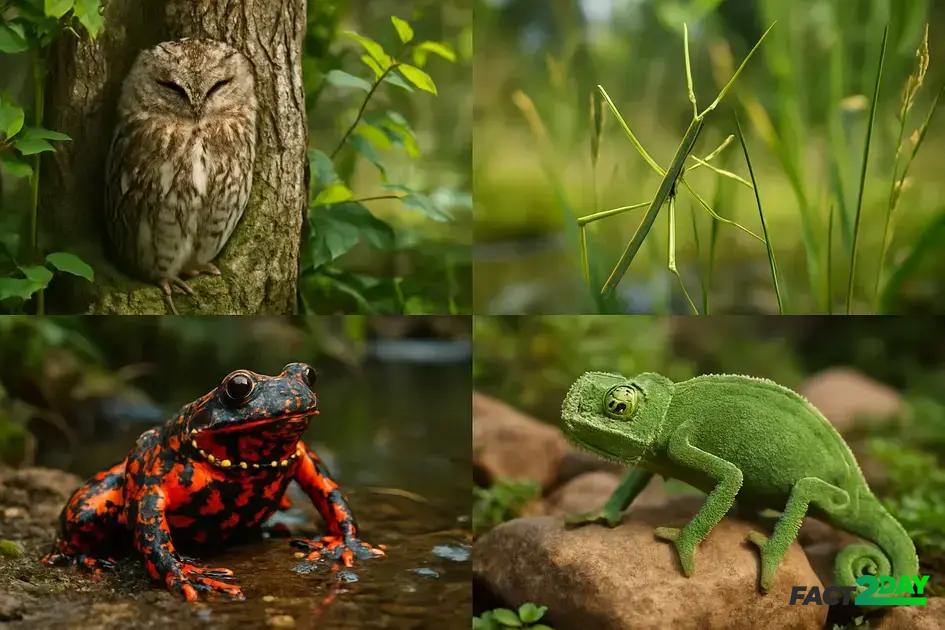
Unusual animal adaptations are specialized physical traits and behaviors evolved to enhance survival in diverse environments, including camouflage, unique defense mechanisms, and communication methods beyond sounds.
Unusual animal adaptations invite us to explore the fascinating ways creatures survive by mastering clever tricks nature offers. Have you ever marveled at how some animals blend in or defend themselves so uniquely? This piece walks with you through the most captivating examples.
the art of camouflage: blending into the wild
Camouflage is one of the most fascinating animal adaptations in nature. It allows animals to blend seamlessly into their surroundings, making it difficult for predators and prey to spot them. Many species use colors, patterns, and even body shapes to mimic leaves, bark, or shadows. For example, the peppered moth uses dark speckled wings to blend with tree bark during the day.
Some animals go beyond just color changes. The cuttlefish can actively change its skin texture and color in seconds to match its environment perfectly. This remarkable adaptation helps it avoid predators and ambush prey.
Others, like the walking stick insect, resemble twigs so closely that they become nearly invisible when resting on branches. This type of camouflage also helps protect young animals, including certain frogs and fish, which adopt colors and patterns matching their habitats.
Camouflage not only helps animals survive but also plays a key role in their hunting strategies. Predators such as the snow leopard use camouflage to silently stalk their prey in snowy, rocky terrain. By blending in, they increase their chance of a successful hunt without detection.
extreme environments and survival tricks
Animals living in extreme environments have developed some of the most remarkable adaptations for survival. In deserts, where water is scarce and temperatures soar, species like the camel store fat in their humps to provide energy and minimize heat absorption. Their nostrils can close to keep out sand, and they can go without water for days.
Deep in the ocean, creatures endure crushing pressure and total darkness. The anglerfish uses a light-producing lure on its head to attract prey in the abyssal depths. Some fish and invertebrates have antifreeze proteins in their blood to survive freezing cold waters.
In the Arctic and Antarctic, animals cope with freezing temperatures through insulating feathers, fur, or layers of fat called blubber. The emperor penguin, for example, huddles in groups to conserve heat while braving harsh polar winds. Their blood circulation systems also adapt to reduce heat loss.
Adaptations in extreme environments often involve unique behaviors too, like nocturnal activity to avoid daytime heat or burrowing underground for shelter. These tricks ensure that animals can find food, reproduce, and avoid predators despite harsh conditions.
unusual defense mechanisms animals employ
Many animals have evolved unusual defense mechanisms to protect themselves from predators in surprising ways. The bombardier beetle, for example, defends itself by ejecting a hot, chemical spray from its abdomen. This rapid chemical reaction can deter or harm predators instantly.
Some sea creatures, like the sea cucumber, can expel sticky threads or toxic substances to confuse attackers. The pufferfish inflates its body to a large, spiky ball, making it nearly impossible for predators to swallow it.
Other animals use mimicry as a defense. The viceroy butterfly resembles the toxic monarch butterfly, which predators avoid eating. This kind of mimicry is a clever way to gain protection without having actual toxins.
Autotomy is another unique defense where animals can shed a body part to escape danger. Lizards often drop their tails when grabbed, and the tail keeps wriggling to distract the predator while the lizard runs away.
Some animals flash bright colors or patterns suddenly to startle predators long enough to escape. The eye spots on some moths and frogs look like predator eyes, tricking attackers into hesitation.
adaptations for food gathering and diet variety
Animals have developed amazing adaptations for food gathering that allow them to thrive on a wide range of diets. Some use specialized body parts, while others have unique behaviors that help them find and consume food efficiently.
Woodpeckers, for example, have long, sticky tongues that help them reach insects hiding deep inside tree bark. Their strong beaks allow them to chip away wood, revealing hidden meals. Similarly, anteaters use their long, tubular snouts and sharp claws to dig into ant hills and termite mounds.
Some animals have evolved to exploit specific food sources. The hummingbird’s slender beak and rapid wing flapping enable it to sip nectar from flowers while hovering in place. On the other hand, cows have complex stomachs that help them break down tough plant fibers, allowing them to digest grass and other vegetation.
Food variety adaptations are also impressive. Omnivores like raccoons have versatile teeth and hands to eat both plants and animals. In the ocean, filter feeders like baleen whales use comb-like structures to trap tiny plankton from vast amounts of water.
Behavior plays a role too. Some animals, such as crows, use tools to crack nuts or catch prey. This blend of physical and behavioral adaptations highlights the incredible ways animals secure food for survival across diverse habitats.
communication that goes beyond sounds
Many animals have developed fascinating ways of communication beyond sounds. Some species use visual signals like color changes and body movements to convey messages. For example, cuttlefish can rapidly change their skin colors and patterns to signal their mood or warn rivals.
Bioluminescence is another incredible form of communication. Deep-sea creatures produce light through chemical reactions inside their bodies to attract mates, warn predators, or lure prey. The firefly’s flashing pattern is a well-known example used to find mates during the night.
Some animals communicate through chemical signals called pheromones. Ants leave scent trails to guide their colony to food sources, and many mammals use pheromones to mark territory or signal reproductive status. This invisible form of communication plays a vital role in social organization.
Body language is also critical. Wolves use facial expressions, tail positions, and posture to establish dominance or submission within the pack. Honeybees perform a “waggle dance” to share information about the direction and distance of food sources to their hive mates.
These diverse methods show how animals go far beyond just sounds to interact, survive, and thrive in their environments.
how evolution shapes bizarre animal features
Evolution often leads to the development of some of the most bizarre animal features that help species survive in unique ways. These features might seem strange at first but serve important roles shaped by millions of years of natural selection.
One example is the elongated neck of the giraffe, which allows it to reach leaves high up in trees that other herbivores cannot access. This adaptation gives giraffes a competitive advantage in feeding.
Another strange feature is the hammerhead shark’s wide-set eyes. This unusual head shape enhances their vision, giving them better depth perception and the ability to detect prey more effectively.
Some animals develop exaggerated traits used for mating displays or competition. The male peacock’s colorful tail feathers are a classic example, attracting females while also intimidating rivals. Similarly, the antlers of a moose grow large and complex to assert dominance during fights.
Evolutionary pressure can also lead to bizarre defense features, such as the spiny skin of a porcupine or the ability of the axolotl to regenerate lost limbs, which helps it survive injuries that could be fatal to other species.
These strange but purposeful traits highlight how evolution is a powerful force that shapes the diversity of life in astonishing ways.
Understanding the power of unusual animal adaptations
Nature’s creativity in animal adaptations shows just how diverse and clever life can be. From camouflage to bizarre features shaped by evolution, these traits help animals survive in tough environments.
By studying these adaptations, we gain insight into the amazing strategies animals use to find food, communicate, and protect themselves. Each unique feature tells a story of struggle, survival, and remarkable innovation.
Appreciating these unusual adaptations reminds us of the complexity of life and inspires us to respect and protect the natural world. After all, nature’s ingenuity is what keeps our planet vibrant and full of wonder.