Beyond Columbus: The Unsung Heroes of Global Exploration and Their Extraordinary Journeys
Explore the Untold Stories with Unsung Heroes of Exploration who shaped our world through incredible journeys beyond Columbus.
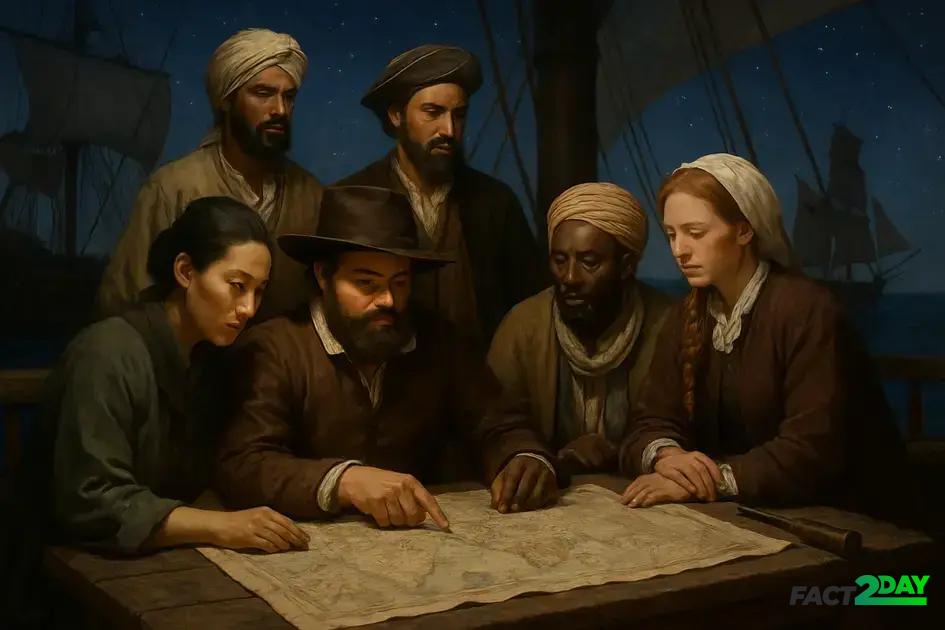
Unsung heroes of exploration significantly shaped global discovery through courage, knowledge, and resilience, though their crucial contributions often remain unrecognized in mainstream history.
Unsung Heroes of Exploration reveal fascinating tales beyond the famous Columbus narrative. Have you wondered who else bravely crossed uncharted territories? Let’s uncover these extraordinary journeys together.
The forgotten navigators who charted unknown seas
Throughout history, many navigators have ventured into uncharted waters, their names largely forgotten by mainstream history. These explorers used primitive maps, celestial navigation, and sheer courage to chart unknown seas, opening new trade routes and expanding knowledge of the world. Unlike famous figures such as Columbus, these forgotten navigators often worked in secrecy or under difficult conditions, contributing quietly but significantly to global exploration.
Techniques and Tools They Used
They relied on tools like the astrolabe and compass, combined with knowledge of ocean currents and stars. These techniques allowed them to sail vast distances with limited technology. Their skills required intense training and intimate understanding of nature’s patterns.
Challenges Faced
These navigators faced unpredictable weather, hostile territories, and unknown dangers beneath the waves. Despite limited resources, they showed remarkable resilience and adaptability, making discoveries that shaped maritime history.
Many of these sailors came from humble backgrounds yet showed extraordinary skill and leadership. Their stories, often overshadowed by more famous explorers, deserve recognition for the critical role they played in mapping the world’s oceans.
Explorers from indigenous communities and their impact
Explorers from indigenous communities played a vital role in global exploration long before and during the Age of Discovery. Their deep knowledge of local geography, ecosystems, and survival skills often guided European explorers and traders through unfamiliar territories. These explorers were not only navigators but also cultural ambassadors, sharing invaluable information about their lands.
Their Unique Knowledge
Indigenous explorers excelled in understanding natural signs such as animal behaviors, plant life, and weather patterns, which were essential for safe and efficient travel. Their expertise in using natural landmarks as navigation points allowed them to traverse challenging environments like dense forests, deserts, and vast mountain ranges.
Impact on Global Exploration
Many indigenous guides facilitated the success of expeditions, helping to establish trade routes and alliances. Their contributions also influenced maps and the broader European understanding of the world. Despite their importance, indigenous explorers often remain unrecognized in popular history.
These explorers helped bridge cultures and opened paths for exchanges of goods, ideas, and technologies that shaped the global landscape in profound ways.
Women pioneers in the age of exploration
Women pioneers in the age of exploration played essential yet often overlooked roles in shaping global history. Despite societal limitations, many women undertook incredible journeys or supported expeditions behind the scenes. They contributed as navigators, scholars, and leaders, breaking barriers in a male-dominated era.
Notable Women Explorers
Women like Jeanne Baret, who disguised herself as a man to join global expeditions, and Isabella Bird, who traveled extensively documenting her experiences, showcased courage and determination. Their journeys helped expand knowledge of new lands and cultures.
Contributions Beyond the Voyage
Many women contributed through mapmaking, funding expeditions, or acting as translators and mediators between cultures. Their intellectual and diplomatic skills often proved vital to the success of exploration missions.
Their stories highlight resilience and the ability to overcome obstacles. Recognizing these pioneers challenges traditional narratives and inspires a broader understanding of exploration history.
Unsung African explorers and their voyages
Unsung African explorers embarked on remarkable voyages long before European exploration reshaped global maps. These explorers traversed vast deserts, dense jungles, and mighty rivers, contributing greatly to the understanding of the African continent and beyond. Their journeys were driven by trade, diplomacy, and cultural exchange.
Notable Routes and Discoveries
Explorers like Ibn Battuta traveled thousands of miles across Africa, documenting cultures and landscapes while establishing important connections. Others navigated the Niger River and ventured into Southern Africa, mapping regions that were unknown to the outside world.
Impact on Global Trade and Knowledge
These African explorers played critical roles in trans-Saharan trade routes and linked communities through networks of commerce and communication. Their knowledge of geography and survival skills enriched global understanding and influenced later exploration efforts.
Their stories reveal resilience, intelligence, and leadership, yet many remain unrecognized in history. Highlighting their voyages helps us appreciate the diverse roots of exploration throughout the world.
Asian navigators who changed trade routes
Asian navigators have profoundly influenced global trade by pioneering new maritime routes that connected distant civilizations. Skilled in sailing across vast and often treacherous waters, these explorers expanded trade networks from East Asia to the Middle East and Africa.
Mastery of Navigation Techniques
Using advanced knowledge of monsoon winds, star navigation, and shipbuilding, Asian sailors like Zheng He and others led fleets that traversed the Indian Ocean. Their voyages facilitated the exchange of goods such as spices, silk, and precious metals, transforming the economies of many regions.
Impact on Trade and Cultural Exchange
These navigators not only opened new commercial routes but also fostered diplomatic relations and cultural interactions among diverse peoples. Their efforts helped create a vibrant maritime Silk Road, which became a catalyst for globalization long before modern times.
Their legacy continues to inspire modern maritime exploration and highlights the importance of Asia’s contribution to world history.
The role of translators and guides in exploration
Translators and guides were crucial to the success of many exploration missions. They bridged the language gap between explorers and local communities, enabling communication and cooperation. Without their skills, misunderstandings could lead to conflict or failed expeditions.
Functions of Translators and Guides
Translators helped decode languages and customs, while guides offered practical knowledge of terrain, weather, and survival strategies. Their local expertise ensured expeditions navigated safely through unknown lands.
Impact on Exploration Outcomes
These individuals often acted as diplomats, mediators, and cultural ambassadors. By building trust, they facilitated trade agreements, secured safe passage, and shared vital information that shaped explorers’ understanding of new regions.
Their contributions demand recognition as key forces behind successful journeys and cross-cultural exchanges.
Scientific breakthroughs from overlooked explorers
Many overlooked explorers made important scientific breakthroughs that changed how we understand the world. While their names may not be famous, their discoveries in geography, biology, and astronomy have lasting impact. These explorers meticulously documented new species, mapped uncharted territories, and observed celestial events.
Advances in Geography and Cartography
Explorers refined mapping techniques, introducing more accurate ways to chart coastlines and inland areas. Their detailed maps helped future travelers navigate safely and opened new paths for trade and communication.
Contributions to Natural Sciences
They collected specimens of plants, animals, and minerals, contributing to the fields of botany and zoology. Their records provided early scientists with valuable data about biodiversity and ecosystems previously unknown to European scholars.
Some also made astronomical observations, using the stars to improve navigation and timekeeping during long voyages. These breakthroughs laid the groundwork for modern science and exploration.
The dangers these explorers faced on daring journeys
The dangers faced by explorers during their daring journeys were numerous and often life-threatening. Harsh weather, unknown terrains, and limited supplies tested their survival skills and determination. Many expeditions faced storms at sea that could wreck ships or leave crews stranded.
Hostile Environments and Wildlife
Explorers encountered extreme climates like deserts, freezing mountains, and dense jungles filled with dangerous animals and diseases. Without modern medicine, even minor injuries or illnesses could become fatal.
Conflicts and Unfamiliar Peoples
Meeting unknown indigenous groups sometimes resulted in conflicts due to mistrust or cultural misunderstandings. Explorers had to navigate delicate diplomacy to avoid violence and build alliances.
Additionally, isolation and mental stress were significant dangers. Long voyages caused loneliness and uncertainty, challenging the explorers’ psychological resilience.
How different cultures influenced global discovery
Different cultures had a profound influence on global discovery by sharing knowledge, technology, and traditions. When explorers from various backgrounds met, they exchanged ideas that expanded navigation methods, trade practices, and understanding of new territories.
Technology Transfer and Innovation
For example, the adoption of the compass from Chinese innovations, or the use of Arab navigational charts, helped European explorers travel longer distances with more accuracy. These technologies were essential for successful journeys across oceans.
Cultural Exchange and Collaboration
Explorers often relied on local communities for guidance and information. This exchange allowed them to learn about unfamiliar environments, customs, and languages. Building trust with indigenous peoples helped establish trade networks and peaceful relations.
The blending of cultural knowledge enriched maps, scientific observations, and even cuisine, ultimately shaping the world we know today through interconnected discoveries.
The contributions of unsung explorers to modern geography
Unsung explorers greatly contributed to modern geography by mapping lands and seas that were previously unknown or misunderstood. Their accurate observations and records improved the world map and helped create reliable navigation charts.
Precision in Mapping
These explorers used careful measurement and note-taking to chart coastlines, mountains, and rivers with remarkable accuracy given their limited technology. Their work corrected many myths and assumptions about the size and shape of continents.
Influence on Modern Navigation
Their geographical insights laid the foundation for modern cartography and navigation. By providing detailed maps, they enabled safer and faster travel for merchants, settlers, and future explorers.
Their dedication to discovery paved the way for scientific advances, global trade, and cultural exchange, emphasizing how small-known figures shaped our understanding of the planet.
The impact of exploration on indigenous peoples
Exploration had profound and lasting impacts on indigenous peoples around the world. While explorers discovered new lands, indigenous communities often faced disruption to their cultures, societies, and environments. The arrival of explorers brought new diseases, conflicts, and changes to traditional ways of life.
Disruption and Cultural Change
Indigenous peoples experienced loss of land and resources due to colonization and territorial claims by explorers and their sponsors. This often led to displacement and altered social structures within communities.
Resistance and Adaptation
Many indigenous groups resisted foreign influence, defending their territories and cultures. Others adapted by forming alliances or integrating new technologies and ideas, showing resilience in the face of change.
The impact of exploration on these communities is complex, involving both hardship and cultural exchanges that continue to shape societies today.
Stories of survival and resilience in hostile environments
Explorers often faced hostile environments that tested their limits of survival and resilience. Whether navigating frozen tundras, arid deserts, or dense jungles, they needed resourcefulness and courage to overcome natural obstacles and threats.
Adapting to Harsh Conditions
Survival depended on understanding the environment, such as sourcing food and water, building shelter, and protecting against extreme weather. Explorers learned from indigenous peoples and adapted their techniques to survive.
Physical and Mental Strength
The challenges included not just physical hardships but also isolation, fear, and uncertainty. Many explorers documented their struggles, revealing how mental resilience was key to enduring long, dangerous journeys.
These stories highlight the remarkable human spirit and determination to explore despite overwhelming odds.
Why these heroes remained in history’s shadows
Many unsung heroes of exploration remained in history’s shadows due to factors like social status, race, gender, and the dominance of more famous figures. Their contributions were often overlooked or deliberately minimized, leading to a lack of recognition in mainstream history.
Barriers to Recognition
Systemic biases and colonial narratives often elevated certain explorers while ignoring others who played crucial roles. For example, explorers from marginalized communities or women were rarely credited for their achievements.
The Role of Documentation
Many of these heroes left limited written records, as their deeds were documented by others who controlled the historical narrative. This lack of primary sources made it difficult for historians to highlight their stories fully.
Despite these challenges, ongoing research and changing perspectives are helping to bring these forgotten explorers into the light, honoring their vital contributions to global discovery.
Recognizing the Unsung Heroes of Exploration
The stories of these unsung heroes show us that many people contributed to global exploration beyond the well-known figures. Their courage, knowledge, and resilience helped shape the world in ways that often went unnoticed.
By learning about their journeys, we gain a fuller understanding of history and the diverse individuals who made discovery possible. It is important to continue honoring their legacies and appreciate the rich tapestry of exploration that spans cultures and continents.
Exploration is not just about famous names, but about the shared human spirit to seek, learn, and connect across boundaries.