Threads of Connection: How the Silk Road Shaped Cultures, Commerce, and Conquest
Discover the profound impact of The Silk Road's influence on cultures, commerce, and conquest, weaving stories of connection across continents.
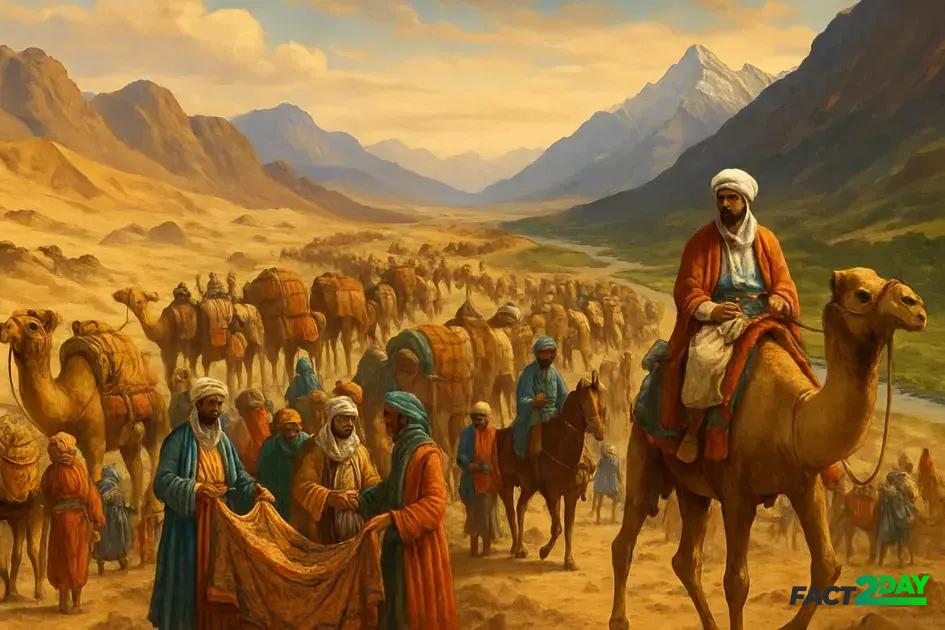
The Silk Road’s influence transformed cultures, commerce, and empires by enabling the exchange of goods, ideas, religions, and political power across Asia, the Middle East, and Europe through extensive trade networks.
The Silk Road’s influence reaches beyond mere trade; it shaped cultures, economies, and empires in ways we often overlook. Have you ever wondered how far-reaching this ancient network really was?
the cultural tapestry woven by the silk road
The Silk Road was more than a trade route; it was a vibrant corridor for cultural exchange that connected civilizations across Asia, the Middle East, and Europe. Through this network, ideas, religions, languages, and art traveled vast distances, weaving a cultural tapestry that shaped societies profoundly.
Spread of Religions and Philosophies
Major religions like Buddhism, Islam, and Christianity found new followers as merchants and travelers shared beliefs along the Silk Road. Monasteries and temples sprouted near trading hubs, serving as centers for spiritual and cultural interaction.
Artistic and Linguistic Exchanges
Artists and craftsmen influenced each other, resulting in unique styles that blended East and West. Language also evolved as traders adapted by learning new tongues, fostering communication and collaboration.
This continuous dialogue across borders created a rich melting pot where cultural elements merged, influencing fashion, cuisine, technology, and social customs. The Silk Road’s cultural legacy is visible today in diverse traditions around the world.
commerce and exchange along ancient routes
The Silk Road was a vital artery for commerce that connected distant regions, enabling the exchange of goods, ideas, and technologies. Traders carried silk, spices, precious metals, and ceramics across vast deserts and mountain ranges, linking the East and West like never before.
Trade Networks and Marketplaces
Along the Silk Road, bustling market towns and caravanserais provided rest stops and commercial hubs. Merchants from different cultures met, bartered, and shared innovations, making these stops centers for economic vitality and cultural interchange.
Economic Impact and Currency
The flow of valuable goods stimulated economies on both ends of the route. Diverse currencies and forms of credit emerged to facilitate trade, showing early examples of an interconnected global economy. This made long-distance commerce practical and profitable.
Beyond material goods, the exchange fostered knowledge transfer in fields like agriculture, medicine, and metallurgy, accelerating development in various societies. The commerce along these ancient routes was a foundation for the economic and cultural advancements that shaped the modern world.
conquests and transformations shaped by trade
The Silk Road did not only facilitate trade but also played a significant role in shaping political power through conquests and transformations. As trade routes brought wealth, they also attracted empires eager to control these lucrative paths, leading to major conquests and territorial shifts.
Rise of Powerful Empires
Empires such as the Mongols and the Persians expanded their territories by controlling key segments of the Silk Road. Their dominance ensured safer travel for merchants and encouraged cultural blending under centralized rule.
Political and Social Changes
Control over trade routes led to the growth of cities and the establishment of new governance systems. This fostered social mobility, urbanization, and the spread of technological advances across regions previously isolated.
The Silk Road also influenced warfare and diplomacy, as alliances and conflicts emerged from the competition for trade dominance. These transformations reshaped entire regions and left lasting impacts on the political landscape of Eurasia.
Connecting the Past to Our Present
The Silk Road’s influence shaped the world in powerful ways, from culture and commerce to empire-building and change. It reminds us how trade can bring people and ideas together.
Understanding this ancient network helps us appreciate the deep connections between societies and how those links led to growth and innovation across continents.
Today, the legacy of the Silk Road continues to inspire cooperation, exchange, and discovery around the globe.