Golden Dust: The Epic and Often Violent History of Spices That Shaped the World
Explore the captivating tale of spices shaping cultures and conflicts in 'The history of spices' that altered our world forever.
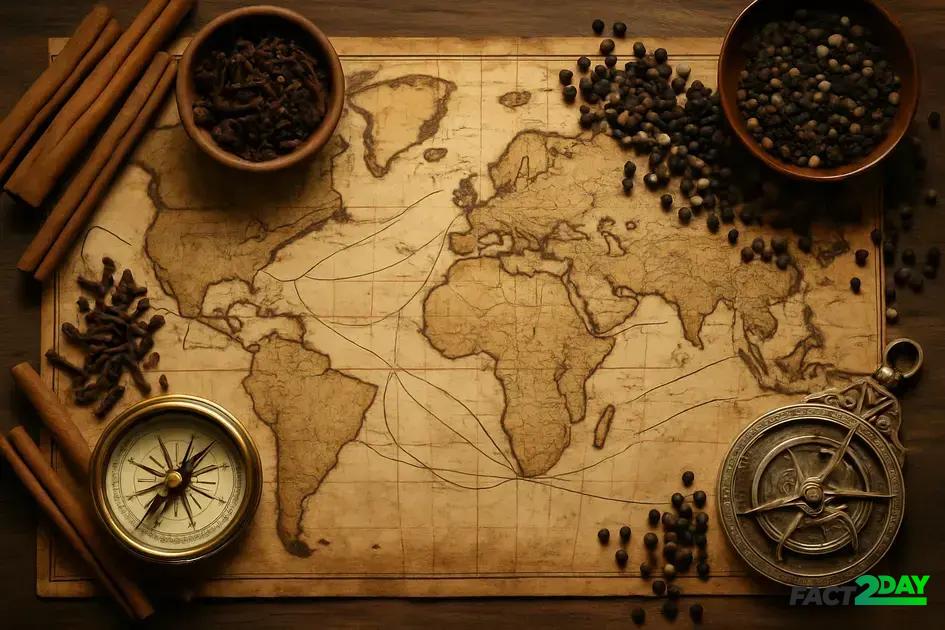
The history of spices reveals their vital role in shaping ancient economies, driving global exploration, influencing trade routes, and impacting cultures through culinary, religious, and political significance worldwide.
The history of spices is a fascinating journey through cultures, wars, and explorations. Have you ever wondered how these tiny grains could influence entire civilizations and change the course of history?
The role of spices in ancient economies
Spices played a crucial role in ancient economies by driving trade and wealth across continents. Valued not only for flavor, they also held medicinal and preservative qualities that made them highly sought-after. Empires like Rome, Egypt, and India thrived in part thanks to their control over spice production and trade routes.
Economic power and trade networks
Spice trade formed the backbone of early global commerce, linking distant regions such as Asia, the Middle East, and Europe. Merchants and empires established complex networks to transport precious spices like cinnamon, pepper, and cloves, often leading to the rise of wealthy trading cities and influential merchant classes.
The impact on social and political structures
The immense value of spices influenced social hierarchies and political alliances. Control over spice sources could finance armies and fortify kingdoms, while the demand for spices sometimes sparked conflicts and rivalries. Ancient economies were deeply intertwined with the cultivation and trade of spices, shaping the distribution of power in the ancient world.
Spices and their influence on exploration and trade routes
Spices were key drivers of exploration and the establishment of trade routes throughout history. The high demand for valuable spices like pepper, nutmeg, and cloves encouraged explorers to find new paths to spice-producing regions.
The Age of Exploration fueled by spice demand
During the 15th and 16th centuries, European nations launched expeditions to discover sea routes to India and the Spice Islands. This intense competition led to the discovery of the Americas and new maritime routes around Africa’s Cape of Good Hope.
Development of major trade routes
Once new routes were established, trade flourished along the Silk Road, the Indian Ocean, and later, the Atlantic Ocean. Spices were transported from Asia to Europe, often passing through multiple hands and cities, each growing wealthy from the trade.
Impact on global economy and colonization
Control over these trade routes became critical for colonial powers. The race to dominate spice trade contributed to the rise of colonial empires, shaping political borders and global economic systems.
Cultural and historical impacts of spices on global societies
Spices have shaped global societies by influencing culture, cuisine, and traditions. Their use in religious rituals, medicine, and daily cooking reflects deep social significance across continents.
Cultural exchange and culinary diversity
As spices traveled through trade, they introduced new flavors and cooking techniques worldwide. This exchange enriched local cuisines, from Indian curries to European baked goods, showcasing how spices became central to cultural identity.
Religious and medicinal uses
Many ancient cultures revered spices for their healing powers and spiritual importance. For example, frankincense and myrrh were prized in religious ceremonies, while turmeric and ginger were staples in traditional medicine, highlighting the multifaceted role spices played beyond the kitchen.
Spices as symbols of wealth and power
Ownership and control of spice supplies often symbolized status. Nobles and royalty displayed lavish use of spices to demonstrate wealth, while control over spice trade routes contributed to the rise and fall of empires, influencing historical power dynamics.
The lasting legacy of spices across the world
Spices have left a deep mark on human history, shaping cultures, economies, and global interactions. Their journey tells a story of exploration, trade, and cultural exchange.
From ancient rituals to modern kitchens, spices continue to connect us with our past and enrich our daily lives. Understanding this rich history helps us appreciate the powerful role these tiny ingredients have played in shaping societies.
As we enjoy the flavors and traditions influenced by spices, we also honor the complex history that brought them to our tables.