To the Stars and Beyond: Envisioning the Next Frontiers of Space Travel
The future of space travel promises new horizons and discoveries that could transform humanity's connection with the cosmos. Explore what's ahead.
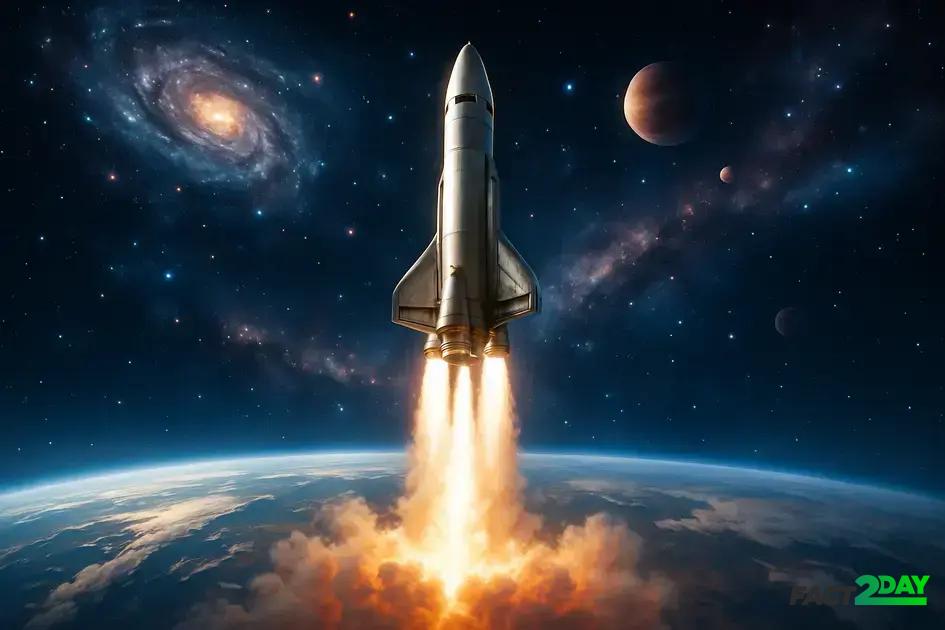
The future of space travel involves advanced propulsion, reusable rockets, and AI-driven systems that enable faster, safer, and more cost-effective exploration, expanding humanity’s reach while driving scientific discovery and global cooperation.
Have you ever wondered what lies ahead for The future of space travel? From innovative spacecraft to ambitious missions, the journey beyond Earth is evolving rapidly. Let’s explore together what the next frontiers might look like and why they matter to us all.
emerging technologies shaping space travel
Emerging technologies are dramatically transforming space travel, making missions more efficient, safer, and far-reaching. Innovations like advanced propulsion systems, such as ion thrusters and nuclear thermal engines, are key to reducing travel time to distant planets. These technologies use less fuel and generate more powerful thrust, enabling spacecraft to journey through the solar system faster than ever before.
Reusable Rockets and Spacecraft
Reusable rockets developed by private companies are revolutionizing how we access space. By allowing rockets to land and be relaunched, costs are significantly lowered, which opens the door to frequent and affordable space missions. This shift encourages more exploration and commercialization of space.
Autonomous Systems and AI
Artificial intelligence and autonomous systems are increasingly vital in navigating the vast complexities of space. These systems assist in real-time decision making, spacecraft maintenance, and managing onboard resources without constant human intervention, improving mission success rates and safety.
These emerging technologies together form the backbone of the next era in space exploration, promising to unlock new possibilities and expand humanity’s reach beyond what was once imagined possible.
challenges and opportunities in deep space exploration
Deep space exploration presents unique challenges that require innovative solutions to overcome. One major hurdle is the vast distance, which means missions can last years, demanding reliable life support and psychological resilience for astronauts. Communication delays of several minutes to hours complicate real-time decision-making and remote control of spacecraft systems.
Technical and Environmental Challenges
Spacecraft must withstand harsh conditions like cosmic radiation and extreme temperatures while maintaining functionality and safety. Developing advanced shielding and durable materials is essential. Additionally, propulsion systems must be both powerful and efficient to cover immense distances within realistic timeframes.
Opportunities for Science and Technology
Despite the difficulties, deep space exploration drives technological progress and scientific discovery. It offers chances to study cosmic phenomena directly, search for signs of life, and better understand planetary systems. These missions also inspire innovations in artificial intelligence, robotics, and human health monitoring.
Balancing risks and rewards, deep space exploration pushes the boundaries of human capability and expands our knowledge of the universe.
the impact of space travel on humanity and our planet
Space travel has a profound impact on humanity and our planet, influencing science, technology, culture, and the environment. It inspires innovation by pushing the limits of engineering and materials science, leading to advancements that often find applications on Earth, such as improved medical devices and satellite communications.
Scientific Discoveries and Technology Spin-offs
Exploring space expands our understanding of the universe and Earth’s own systems. Satellites help monitor climate change, weather patterns, and natural disasters, providing critical data to protect our environment and public safety. Technologies developed for space missions, like water purification and solar power, have practical uses on Earth.
Cultural Influence and Global Cooperation
Space exploration unites people worldwide by fostering a shared sense of curiosity and adventure. It promotes international collaboration, as seen in projects like the International Space Station. These efforts encourage peaceful cooperation and inspire future generations to pursue STEM fields.
While challenges remain, the ongoing progress in space travel continues to shape our world, offering new opportunities for growth and understanding.
Looking Ahead in Space Exploration
The future of space travel holds exciting possibilities that will continue to shape science, technology, and society. As new technologies emerge, challenges will be met with innovative solutions that expand our reach beyond Earth.
Deep space missions and international cooperation will deepen our understanding of the universe, while inspiring generations to come. The journey to the stars is not just about exploring distant worlds, but also about improving life here on our own planet.
Embracing these advancements can help us unlock new opportunities and face the unknown with confidence and curiosity. The next frontiers of space travel are within reach, inviting us all to be part of this remarkable adventure.