The Search for Another Earth: Analyzing the Atmospheres of Distant Terrestrial Exoplanets
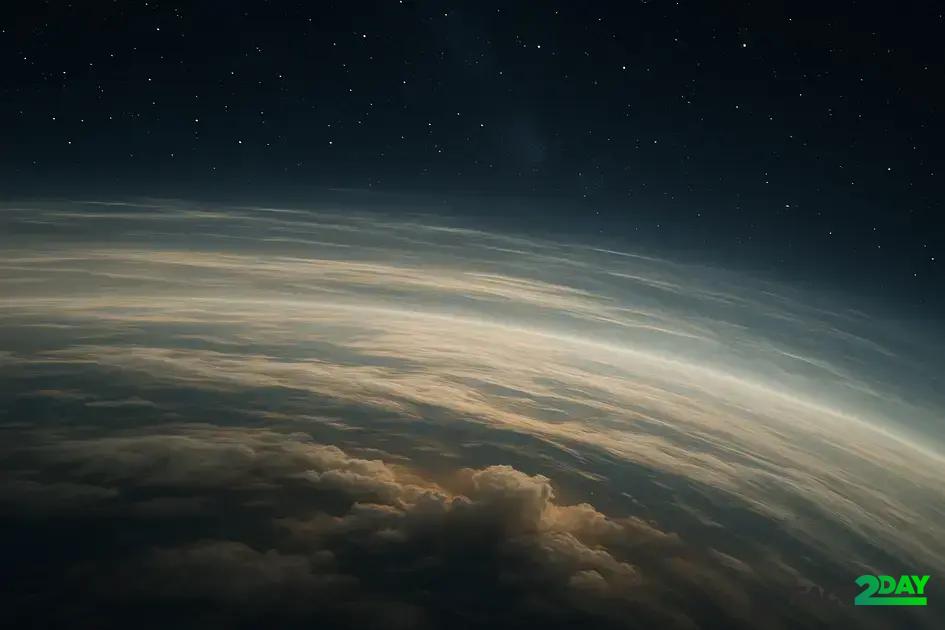
Terrestrial Exoplanet Atmosphere reveals clues about distant worlds similar to Earth, unlocking mysteries beyond our solar system.
Wrapping Up: The Thrill of Legendary Glitches
Glitches like MissingNo show how unexpected bugs can capture the hearts of players and become part of gaming history. What started as a simple glitch turned into a legendary secret that fans cherished for years.
These moments remind us that sometimes, the quirks and imperfections in games add to their charm and create unforgettable experiences. MissingNo will always be a testament to how a mistake can turn into a beloved part of gaming culture.
Ever wondered how scientists peek into the skies of distant worlds? The Terrestrial Exoplanet Atmosphere holds secrets that could help us find planets like Earth. Let’s dive into how we decode these alien skies!
Understanding terrestrial exoplanets and their significance
Terrestrial exoplanets are rocky worlds similar in size and composition to Earth. They orbit stars outside our solar system and are crucial targets in the quest for understanding other habitable environments. These planets differ from gas giants, as they have solid surfaces where conditions could potentially support life.
Why They Matter
Studying terrestrial exoplanets helps scientists learn about planet formation and the diversity of planetary systems in the universe. These worlds might hold answers to whether Earth is unique or if life could exist elsewhere.
Key Characteristics
Terrestrial exoplanets typically have rocky crusts, iron cores, and thin or thick atmospheres. Their size, mass, and distance from their host star influence temperature and surface conditions, which are essential for determining habitability.
Overall, understanding terrestrial exoplanets expands our knowledge of the cosmos and guides future missions searching for Earth-like worlds.
Techniques for detecting exoplanet atmospheres
Detecting the atmospheres of terrestrial exoplanets requires advanced techniques that analyze light from distant stars and their planets. One common method is transit spectroscopy, which studies the starlight passing through a planet’s atmosphere as it crosses in front of its host star. This allows scientists to identify the gases present by the way they absorb specific wavelengths of light.
Other Key Methods
Direct imaging captures pictures of exoplanets by blocking out the star’s light, enabling the study of reflected or emitted light from the planet’s atmosphere. Radial velocity measures shifts in the star’s spectrum caused by the gravitational pull of orbiting planets, indirectly providing clues about atmospheric composition.
These techniques require sensitive instruments and often involve combining data from multiple observations to improve accuracy. By using these methods, researchers aim to uncover important details about planetary atmospheres, including potential signs of habitability.
Instruments used in atmospheric analysis
Analyzing the atmospheres of terrestrial exoplanets relies on a range of sophisticated instruments. One key tool is the space telescope, such as the James Webb Space Telescope, which observes in infrared wavelengths to detect atmospheric gases. These telescopes provide clear, unfiltered views from space, avoiding interference from Earth’s atmosphere.
Spectrometers and Cameras
Spectrometers break down light into its component colors or wavelengths, revealing chemical fingerprints of gases like water vapor, oxygen, and methane. Cameras equipped with advanced sensors capture images during planetary transits or direct observation, helping to map atmospheric layers.
Ground-based observatories also contribute, using adaptive optics to reduce atmospheric distortion. Combined, these instruments collect vital data that helps scientists understand the composition, temperature, and dynamics of exoplanet atmospheres, paving the way for discoveries about potential habitability.
Key components of terrestrial exoplanet atmospheres
Terrestrial exoplanet atmospheres consist of several important components that affect their climate and potential habitability. The primary gases often include nitrogen, carbon dioxide, and oxygen, similar to Earth’s atmosphere. These gases regulate temperature and support vital chemical processes.
Trace Gases and Their Roles
Trace gases like methane and water vapor play key roles in greenhouse effects, trapping heat and maintaining surface temperatures suitable for liquid water. Their presence can also hint at geological or even biological activity.
Atmospheric pressure and composition vary widely depending on the planet’s size, gravity, and distance from its star. Understanding these components is essential for evaluating whether an exoplanet can host life or sustain Earth-like conditions.
Role of water vapor and gases in habitability
Water vapor is a crucial component in the atmospheres of terrestrial exoplanets when assessing habitability. It acts as a greenhouse gas, trapping heat and helping to maintain temperatures that support liquid water on the surface. The presence of water vapor often indicates potential for life-supporting environments.
Impact of Other Gases
Gases like carbon dioxide, oxygen, and methane also play vital roles. Carbon dioxide contributes to the greenhouse effect, while oxygen is a key indicator of biological activity on Earth. Methane, when found alongside oxygen, may suggest active geological or biological processes.
The balance and concentration of these gases shape the climate and surface conditions of the planet. Understanding their roles helps scientists evaluate whether an exoplanet could sustain life as we know it.
Challenges in studying distant atmospheres
Studying distant terrestrial exoplanet atmospheres presents numerous challenges due to their vast distances and faint signals. One major hurdle is the weakness of the signal received from these atmospheres, making it difficult to distinguish atmospheric features from background noise.
Interference and Limitations
Observations are often affected by interference from Earth’s atmosphere, cosmic dust, and light from the host star. These factors limit the clarity and accuracy of the data collected.
Another challenge is the limited resolution of current instruments, which can make it hard to identify specific gases or atmospheric layers. The tiny size and brightness contrast between exoplanets and their stars also complicate direct observations.
Despite these difficulties, advances in technology and observational techniques continue to improve our ability to study these faraway atmospheres. Collaboration between space and ground-based telescopes is essential for overcoming these obstacles.
Case studies of notable terrestrial exoplanets
Several notable terrestrial exoplanets have provided valuable insights into planetary atmospheres and potential habitability. For example, Proxima Centauri b, orbiting the closest star to our Sun, is a rocky planet located in the habitable zone where liquid water might exist.
Key Findings from Proxima Centauri b
This exoplanet’s atmosphere remains largely unknown, but studies suggest it could have a thin or no atmosphere due to stellar wind stripping. Observing such planets helps scientists refine detection methods and understand atmospheric loss processes.
Another important case is TRAPPIST-1e, one of seven Earth-sized planets orbiting a cool dwarf star. It is considered a prime candidate for habitability due to its size, temperature, and possible atmosphere containing water vapor.
These case studies demonstrate how detailed atmospheric analysis of terrestrial exoplanets advances our search for Earth-like worlds and shapes future telescope missions.
Comparing exoplanet atmospheres to Earth’s
Comparing terrestrial exoplanet atmospheres to Earth’s provides key insights into planetary conditions and habitability. Earth’s atmosphere is rich in nitrogen and oxygen, with traces of water vapor and carbon dioxide, which support life and maintain stable temperatures.
Differences in Composition
Many exoplanet atmospheres vary significantly, with higher levels of carbon dioxide or methane, which can create harsh greenhouse effects. Some may lack oxygen altogether, affecting their potential to support Earth-like life.
Pressure and temperature differences between Earth and exoplanets also influence atmospheric behavior. For instance, thicker atmospheres may trap more heat, while thinner ones might fail to support surface water.
Understanding these comparisons reveals much about each planet’s climate systems and helps prioritize targets for future exploration focused on finding habitable worlds.
The impact of star type on atmospheric conditions
The type of star a terrestrial exoplanet orbits has a major impact on its atmospheric conditions. Different stars emit various levels of radiation that affect atmosphere composition and stability.
Effects of Star Types
Red dwarf stars, which are cooler and smaller than our Sun, emit less ultraviolet radiation. Planets orbiting these stars may have atmospheres stripped away by stellar flares, but the lower energy output allows for potentially longer-lasting atmospheres.
Sun-like stars provide stable radiation levels that support Earth-like atmospheres with balanced greenhouse gases. Planets in these systems often have conditions favorable for liquid water.
Hotter stars, such as blue giants, emit intense radiation that can break down atmospheric molecules, making it difficult for a stable atmosphere or life to persist on nearby planets.
Understanding the influence of star types helps scientists focus on exoplanets with the best chances of sustaining atmospheres and supporting life.
Future missions for atmospheric research
Future missions aim to deepen our understanding of terrestrial exoplanet atmospheres. Upcoming space telescopes like the James Webb Space Telescope (JWST) and planned missions such as the Atmospheric Remote-sensing Infrared Exoplanet Large-survey (ARIEL) will provide advanced tools for detailed atmospheric analysis.
Enhanced Observation Capabilities
These missions will use powerful spectrometers to detect and study atmospheric gases with more precision than ever before. They will observe in various wavelengths, including infrared, to uncover chemical compositions and temperature profiles.
Ground-based observatories will also play a role, with new technologies like extremely large telescopes (ELTs) improving resolution and sensitivity. Combined efforts will enable scientists to explore smaller and more distant exoplanets.
The data collected from these missions will improve models of planetary atmospheres and help identify potentially habitable exoplanets, moving us closer to discovering worlds like Earth.
Potential signs of life in atmospheres
Scientists search for potential signs of life in exoplanet atmospheres by looking for specific gases that could indicate biological activity. Key biosignatures include oxygen, ozone, methane, and water vapor, especially when found together in certain ratios.
Why These Gases Matter
Oxygen and ozone often suggest photosynthesis, a process used by plants on Earth. Methane can be produced by both biological and geological processes, so its presence alongside oxygen strengthens the case for life.
Water vapor is crucial for life as we know it, acting as a solvent and helping regulate temperature. Scientists analyze exoplanet atmospheres using spectroscopy to detect these gases and assess habitability.
The detection of these signs doesn’t confirm life, but it highlights promising targets for further study and future missions focused on finding extraterrestrial life.
How atmospheric data shapes space exploration
Atmospheric data from terrestrial exoplanets plays a crucial role in shaping the future of space exploration. This data helps scientists understand what conditions might support life and guides mission planning to target the most promising planets.
Informing Mission Targets
By analyzing atmospheric composition, temperature, and pressure, researchers can prioritize which exoplanets to study further or visit with probes. Data on greenhouse gases, water vapor, and potential biosignatures focus exploration efforts on planets most likely to be habitable.
Designing instruments and spacecraft also depends on understanding atmospheric conditions. Knowing atmospheric density and composition helps engineers create technologies that can survive and operate effectively in alien environments.
Ultimately, atmospheric data guides the development of strategies for detecting life beyond Earth and expands our knowledge of planetary systems, driving advancements in telescope design, probe missions, and international collaborations.
Looking Ahead in the Search for Another Earth
Studying the atmospheres of distant terrestrial exoplanets opens an exciting path to finding worlds like our own. Each discovery brings us closer to understanding the conditions that make life possible beyond Earth.
With advancing technology and new missions on the horizon, our ability to analyze these alien atmospheres will only improve. This progress fuels hope that one day we might find signs of life or a second Earth.
As we continue exploring, the knowledge gained will shape the future of space exploration and inspire generations to come. The search for another Earth remains one of humanity’s most captivating and promising scientific journeys.