The Giant Joy-Con: The Most Bizarre Gaming Hardware and Peripherals Ever Created
Explore Strange Game Hardware through the Giant Joy-Con and discover bizarre gaming gear that defies expectations and sparks curiosity.
Frisson is the scientific term for the goosebumps we experience from music, caused by a simultaneous activation of the brain’s reward and fear systems, producing an intense emotional reaction.
Have you ever stumbled upon Strange Game Hardware like the Giant Joy-Con and wondered why such peculiar devices are made? These bizarre gaming peripherals pack a curious charm that’s hard to ignore, inviting us to explore their stories and quirks.
Introduction to strange game hardware
Strange game hardware refers to unusual and often unexpected gaming devices that break away from traditional designs. These pieces of hardware range from oddly shaped controllers to experimental peripherals that add a twist to how games are played. They often emerge when companies or creators try to innovate, aiming to catch players’ attention and offer new interactive experiences.
What Makes Game Hardware Strange?
The uniqueness may come from the size, shape, or the way you interact with the device. For example, a controller might be much larger or smaller than usual, use unconventional buttons, or incorporate motion sensors and other tech that change the gameplay mechanics. Strange hardware challenges players to adapt and sometimes sparks creativity in design.
Examples and Purpose
Some strange hardware exists purely for amusement or as limited edition collectibles, while others are attempts to improve player immersion. Devices like the Guitar Hero controller or VR hand trackers push boundaries but have become mainstream over time, while some remain curiosities due to impracticality or niche appeal.
This type of hardware enriches the gaming culture, showing how developers experiment with technology and user experience. It reveals a world beyond conventional controllers and screens, inviting us to explore more playful and bizarre approaches to gaming.
The story behind the Giant Joy-Con
The Giant Joy-Con was created as a playful exaggeration of the standard Nintendo Switch controller. It started as a concept to capture attention with its oversized design, making it both a conversation piece and a challenge for players. This hardware draws on the original Joy-Con’s features but amplifies them to absurd proportions.
Origins and Inspiration
The idea came from a desire to experiment with scale and usability, highlighting how controller size influences the gaming experience. Developers and enthusiasts wanted to see if doubling or tripling the size would be practical or simply comical.
Design Challenges
Making the Giant Joy-Con functional required careful planning. Buttons and analog sticks had to be repositioned to maintain playability despite the large size. Designers also faced challenges with weight, ergonomics, and responsiveness, ensuring the device wasn’t just oversized but could also be used to play games.
The Giant Joy-Con in Popular Culture
This peripheral caught the eye of gaming communities and media for its novelty. It appears in gaming expos, social media posts, and collector’s showcases as a symbol of creative hardware design gone wild. Players often try it out for fun, even though it’s not meant for serious gaming.
The Giant Joy-Con tells a story of playful innovation and highlights how sometimes, gaming hardware can be more about fun and expression than just utility or performance.
Unusual gaming controllers through history
Throughout gaming history, many unusual gaming controllers have pushed the limits of design and user interaction. These controllers often break the mold of traditional gamepads by introducing unique shapes, sizes, and input methods.
Early Experiments
In the 1980s and 1990s, companies tested various controller designs to improve comfort and gameplay. Examples include the Nintendo Power Glove, which used motion controls, and the Sega Activator, a ring-shaped motion sensor. Although innovative, these often faced challenges with precision and user experience.
Specialty Controllers
Controllers shaped like musical instruments, such as the Guitar Hero guitars and the Donkey Konga bongo drums, created entirely new ways to engage with rhythm games. These peripherals became iconic, showing how specialized controllers can enhance immersion and fun.
Modern Innovations
Recent years brought more tech-focused designs like VR controllers, which track hand and finger movements for virtual reality experiences. Adaptive controllers for accessibility have also gained prominence, allowing gamers with disabilities to customize inputs. These examples demonstrate how controller design embraces both novelty and inclusivity.
Unusual gaming controllers throughout history highlight an exciting journey of creativity and experimentation, influencing how we play and interact with games today.
Why companies create bizarre peripherals
Companies often create bizarre peripherals to stand out in a crowded market and attract attention. Unique hardware can generate buzz and spark curiosity, encouraging gamers and collectors to explore new experiences. These creations also reflect a company’s creativity and willingness to experiment beyond traditional designs.
Marketing and Branding
Bizarre peripherals serve as powerful marketing tools. They create memorable impressions and generate conversations on social media and gaming communities. This can boost brand visibility and sometimes lead to viral success, even if the device is not widely sold.
Encouraging Innovation
Developing unusual hardware pushes the boundaries of technology and user experience. It challenges designers and engineers to think outside the box. This innovation can inspire future, more practical devices by testing new ideas in a playful way.
Targeting Niche Audiences
Some peripherals cater specifically to niche markets, such as collectors or fans of quirky gadgets. These products often become limited editions, appealing to enthusiasts who value uniqueness and rarity.
By creating bizarre peripherals, companies blend fun, innovation, and marketing, adding diversity and excitement to the gaming world.
How bizarre hardware affects gameplay
Bizarre hardware can significantly change how gameplay feels and unfolds. When a controller or peripheral looks and works differently from the norm, it often forces players to adjust their strategies and techniques.
Impact on Player Interaction
Devices that use unusual inputs, such as motion sensors or oversized buttons, require players to move or react in new ways. This can add a fun challenge but might also slow down gameplay or create a learning curve.
Changes to Game Design
Some games are built specifically for quirky hardware, integrating their unique features into gameplay mechanics. This can enhance immersion and make the game more memorable. However, not all games support such peripherals well, which can lead to frustration.
Accessibility and Inclusion
While bizarre hardware may seem impractical, some designs improve accessibility by offering alternative control methods. Customizable or large controllers can make gaming possible for those who struggle with standard devices.
Overall, bizarre gaming hardware adds diversity to gameplay experiences, but it also requires adaptation and openness from players to fully enjoy the unique ways they affect interaction and design.
Collector’s appeal of strange game devices
Collectors are often drawn to strange game devices because of their rarity and uniqueness. These peripherals stand out from ordinary controllers, making them prized additions to personal collections.
Rarity and Exclusivity
Many bizarre gaming gadgets are produced in limited runs or as promotional items, making them hard to find. This scarcity increases their value and appeal among collectors who seek distinctive pieces.
Nostalgia and Storytelling
Strange devices often come with interesting backstories or are tied to specific gaming eras. Collectors appreciate these stories, as they evoke memories and deeper connections to gaming history.
Design and Creativity
Collectors admire the creativity behind unusual hardware designs. Whether oversized, oddly shaped, or featuring unexpected controls, these devices showcase innovation and artistic expression in gaming technology.
Overall, strange game devices captivate collectors by offering a blend of rarity, history, and unique design, enriching their gaming memorabilia.
The Giant Joy-Con’s design and features
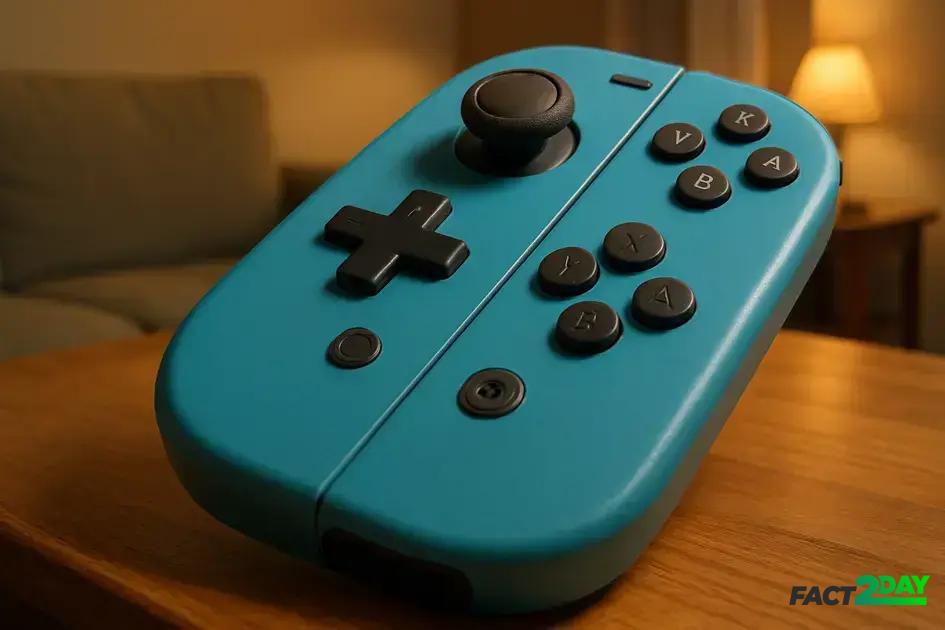
The Giant Joy-Con takes the classic Nintendo Switch controller design and enlarges it to a playful extreme. Despite its size, it retains the core features like analog sticks, buttons, and motion sensors, but all are scaled up for an unusual experience.
Oversized Buttons and Controls
The large buttons and joysticks offer a unique tactile feel, requiring players to use broader hand motions. This creates a fun, sometimes challenging way to interact with games, as precision can be harder but more entertaining.
Retention of Functionality
Unlike many novelty devices, the Giant Joy-Con is fully functional and compatible with Nintendo Switch games. It uses standard wireless technology and replicates the exact button layout, ensuring gameplay remains familiar despite the size change.
Ergonomic Considerations
The design team focused on balancing weight and grip comfort to prevent fatigue. Even though it’s oversized, the controller includes ergonomic curves and textures that help players hold it securely during extended play sessions.
Overall, the Giant Joy-Con’s design blends whimsy with practical gaming features, making it a standout example of bizarre yet usable hardware.
User reactions and community feedback
User reactions to the Giant Joy-Con and other bizarre game hardware vary widely. Some gamers find the oversized design hilarious and enjoy the novelty, while others see it as a fun challenge that changes how they play familiar games.
Positive Feedback
Many users praise the creativity and unique experience the Giant Joy-Con provides. Its large buttons and distinctive feel make gameplay entertaining, especially in social or party settings. Some appreciate its collector’s value and the conversation it sparks in gaming communities.
Criticism and Challenges
Not all feedback is positive; some players find the size cumbersome or tiring over extended play. The lack of precision with larger controls can frustrate those accustomed to standard controllers. Additionally, its novelty means it’s not practical for competitive or serious gaming.
Community Engagement
The gaming community often shares videos and reviews showcasing the Giant Joy-Con’s quirks, adding to its fame. Forums and social media groups discuss both its fun and flaws, creating a lively dialogue that helps spread awareness.
This mix of reactions highlights how bizarre peripherals can both entertain and divide players, making them memorable parts of gaming culture.
Comparing the Giant Joy-Con to classic controllers
The Giant Joy-Con stands out compared to classic gaming controllers due to its sheer size and exaggerated features. While traditional controllers focus on compact designs for comfort and precision, the Giant Joy-Con offers a playful twist by enlarging every element.
Size and Ergonomics
Classic controllers like the Nintendo Switch Joy-Con or PlayStation DualShock are designed to fit comfortably in the hands for extended play. The Giant Joy-Con, however, challenges this norm with oversized buttons and joysticks, making it less practical but highly entertaining.
Functionality and Features
Despite its size, the Giant Joy-Con maintains all the functions of a standard controller, including motion controls, buttons, and wireless connectivity. Classic controllers often prioritize precision and responsiveness, which can be harder to achieve with the Giant Joy-Con’s large inputs.
User Experience
While classic controllers aim for efficiency and comfort, the Giant Joy-Con encourages fun and novelty. Its unusual scale can make gameplay feel fresh and different, but it may not suit competitive gamers or long sessions.
Overall, comparing the Giant Joy-Con to classic controllers highlights a contrast between practicality and whimsy in gaming hardware design.
The impact of novelty in game hardware sales
Novelty plays a big role in the sales of game hardware. Unique and strange devices often attract attention, driving sales by appealing to curiosity and collectors rather than just gamers seeking performance.
Initial Attraction
When a bizarre peripheral hits the market, its unusual design can generate buzz and excitement. This curiosity can lead to strong early sales, as fans and collectors rush to get one before they become rare or sold out.
Long-Term Sales Effects
While novelty can spark interest, sustained sales often depend on the device’s usability and appeal. If the hardware offers practical or fun features beyond its odd design, it may maintain popularity over time. Otherwise, sales may taper off after the initial hype.
Marketing and Brand Image
Novelty devices often serve as marketing tools. They help brands stand out and create a memorable identity, which can boost overall product lines even if the peripheral itself is niche. These devices also foster community engagement and social sharing.
The impact of novelty in game hardware sales highlights how creativity and uniqueness can drive both excitement and brand loyalty in the gaming market.
Strange hardware and gaming culture
Strange hardware has become a unique part of gaming culture, reflecting creativity and the playful spirit of the community. These unusual devices often spark conversations and shared experiences among gamers, highlighting how hardware can be more than just functional tools.
Expression of Creativity
Gaming culture celebrates innovation, and strange peripherals embody this through bold design choices and novel inputs. They show that gaming is not only about competition but also about fun and imagination.
Community Engagement and Memes
Many strange gaming devices become the subject of memes, videos, and social media content, strengthening community bonds. Players enjoy sharing their experiences with quirky hardware, adding humor and nostalgia to the gaming world.
Influence on Indie and DIY Scenes
Strange hardware inspires indie developers and DIY enthusiasts to experiment with new control schemes and designs. This drives a cycle of innovation, as fresh ideas from small creators influence larger companies and mainstream trends.
Ultimately, strange hardware enriches gaming culture by encouraging experimentation, connection, and joy beyond traditional gameplay.
Future possibilities for bizarre game peripherals
The future of bizarre game peripherals looks bright as technology advances and player creativity grows. New materials, sensors, and wireless technologies open doors for unique controllers and interactive devices.
Integration of Virtual and Augmented Reality
Future peripherals may blend virtual reality with physical controls in surprising ways. Imagine gloves or suits that provide tactile feedback or controllers that track full-body movements to create immersive experiences.
Adaptive and Personalizable Devices
As accessibility becomes more important, bizarre peripherals may include customizable buttons and layouts to fit different players’ needs. This could lead to a surge in uniquely shaped controllers built for comfort and style.
Smart and Connected Hardware
Peripherals might become smarter, using AI to learn player habits and adjust sensitivity or feedback automatically. Wireless charging and modular parts could make hardware more adaptable and longer-lasting.
The future of bizarre game peripherals promises exciting innovations that challenge traditional gameplay and bring fresh ways for players to interact with games.
How to find and buy strange game hardware
Finding and buying strange game hardware requires a bit of research and patience, as these devices are often rare or produced in limited quantities. Collectors and gamers alike seek out these unique peripherals through various channels.
Online Marketplaces and Auction Sites
Websites like eBay, Etsy, and specialized gaming forums are great places to start searching. These platforms often have listings for vintage, rare, or custom-made peripherals. Be sure to check seller ratings and product conditions before purchasing.
Gaming Conventions and Expos
Events like PAX, E3, or Retro Gaming Expos sometimes feature booths or vendors selling unusual hardware. Visiting these events can give you a hands-on experience and a chance to meet other collectors.
Specialty Stores and Collector Networks
Some physical stores focus on retro or niche gaming items. Joining collector communities online can also provide leads on where to find strange peripherals and tips on negotiating prices.
By exploring these options, you can increase your chances of discovering and acquiring intriguing and bizarre game hardware to add to your collection or gaming setup.
Wrapping Up the World of Strange Game Hardware
Strange game hardware like the Giant Joy-Con offers a fun and unique twist on traditional gaming devices. These bizarre peripherals show how creativity and innovation can change the way we play and enjoy games.
Whether you are a collector or just curious, exploring these unusual controllers can add excitement and variety to your gaming experience. As technology evolves, the possibilities for more quirky and interesting hardware continue to grow, promising even more surprises for gamers everywhere.
So, keep an open mind and don’t hesitate to try something different—it might just make your gaming sessions more memorable.