Solar Wind: The Invisible Force That Shapes Our Planet
Solar wind influences Earth's environment in unseen ways, shaping space weather and affecting our daily life beyond the horizon.
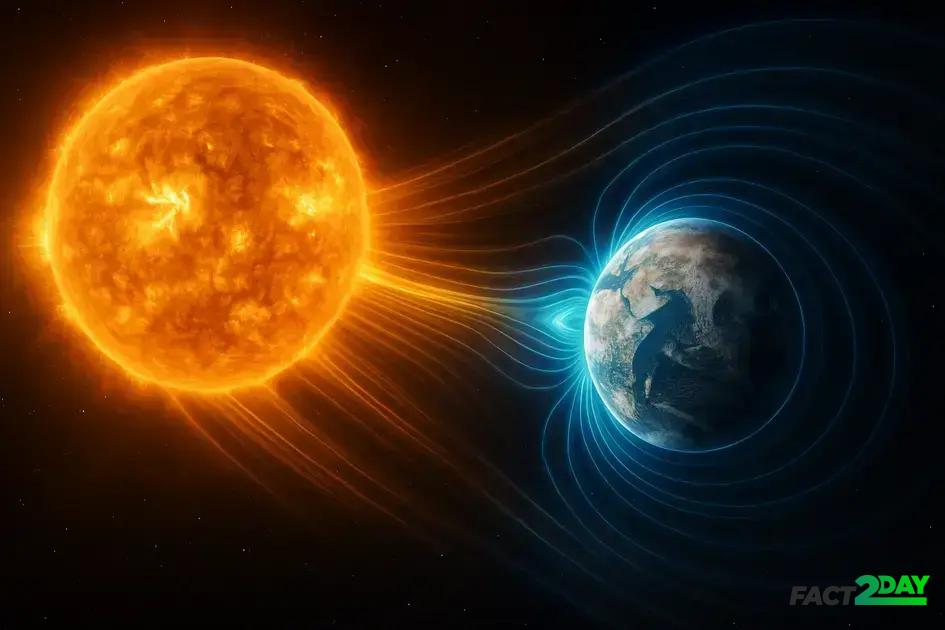
Solar wind is a continuous flow of charged particles from the sun that interacts with Earth’s magnetic field, influencing space weather, satellite operations, and atmospheric conditions.
Solar wind often feels like an invisible breeze shaping our planet in ways we rarely notice. Have you ever wondered how this unseen force interacts with Earth and influences our skies? Let’s take a closer look together.
what is solar wind and where does it come from
Solar wind is a stream of charged particles, mainly electrons and protons, that flow continuously from the Sun’s outer atmosphere, known as the corona. These particles travel at high speeds, often exceeding 400 km/s, and fill the space throughout our solar system. The solar wind originates from areas where the Sun’s magnetic field lines stretch out into space, allowing particles to escape its gravity.
Origin of Solar Wind
The solar wind forms due to the intense heat in the Sun’s corona, which causes gases to become ionized and energetic enough to break free from the Sun’s gravity. This process creates a constant flow of plasma that moves outward, carrying the Sun’s magnetic field along.
Types of Solar Wind
There are two main types of solar wind: slow and fast. Slow solar wind moves at about 300-500 km/s and is associated with the Sun’s equatorial regions. Fast solar wind, traveling at 750 km/s or more, originates from coronal holes—areas on the Sun’s surface with lower density plasma and open magnetic fields.
The solar wind is an essential force that shapes the space environment around the Earth and other planets. Understanding its origin helps us grasp how this invisible flow influences space weather and technology.
how solar wind interacts with earth’s magnetic field
The solar wind interacts with Earth primarily through its magnetic field, known as the magnetosphere. This magnetic shield protects our planet by deflecting charged particles carried by the solar wind, preventing most from reaching the surface.
Magnetosphere Structure and Function
The magnetosphere is shaped like a teardrop, compressed on the side facing the Sun and extended into a long tail on the opposite side. When solar wind particles encounter this magnetic shield, they cause the magnetic field to bend and create a bow shock, slowing down the solar wind around Earth.
Magnetic Reconnection
Sometimes, the Sun’s magnetic field carried by the solar wind interacts directly with Earth’s magnetic field in a process called magnetic reconnection. This event allows solar particles to enter the magnetosphere, injecting energy and particles and triggering phenomena like the northern and southern lights.
This interaction between the solar wind and Earth’s magnetic field shapes space weather and can affect satellite operations, communication systems, and power grids. Understanding this dynamic is crucial for predicting and managing the impact of solar storms on our technology.
effects of solar wind on earth’s atmosphere and climate
The solar wind impacts Earth’s atmosphere and climate in subtle but important ways. When charged particles from the solar wind reach Earth, they interact with the upper atmosphere, especially the ionosphere. This interaction can cause changes in atmospheric chemistry and influence the behavior of charged particles at high altitudes.
Heating and Ionization of the Atmosphere
The energy from the solar wind heats the upper layers of the atmosphere and causes ionization of gases. This process affects the density and composition of the ionosphere, which plays a key role in radio wave propagation and satellite communications.
Influence on Climate Patterns
Some studies suggest the solar wind can indirectly influence Earth’s weather and climate by modulating cosmic rays that reach the atmosphere. These cosmic rays can affect cloud formation, which in turn influences global temperatures and precipitation patterns.
Solar wind variations are linked to the 11-year solar cycle, which sees fluctuating solar activity. During solar maximum, increased solar wind intensity can lead to stronger effects on the atmosphere and may contribute to short-term climate variations.
While the solar wind’s influence on climate is complex and still being studied, it is clear that this invisible force plays a role in shaping our planet’s atmospheric dynamics and environmental systems.
solar wind’s role in space weather phenomena
The solar wind plays a critical role in shaping space weather, which affects the environment around Earth and throughout the solar system. Space weather includes phenomena like geomagnetic storms, solar flares, and auroras, all driven by interactions between the solar wind and planetary magnetic fields.
Geomagnetic Storms
When bursts of fast solar wind or coronal mass ejections reach Earth, they can disturb the magnetosphere, causing geomagnetic storms. These storms result in enhanced currents in the Earth’s magnetosphere and ionosphere, affecting satellites, GPS accuracy, and power grid stability.
Auroras and Particle Storms
The solar wind funnels charged particles toward Earth’s poles, where they collide with atmospheric gases, creating spectacular auroras like the Northern and Southern Lights. These light displays are visible indicators of solar wind activity and geomagnetic energy transfer.
Impact on Human Technology
Space weather events induced by solar wind can disrupt radio communications, interfere with satellite operations, and pose risks to astronauts in space. Monitoring solar wind conditions is crucial for predicting these impacts and protecting technological infrastructure.
In summary, solar wind’s variable nature drives many space weather events that have both natural beauty and practical consequences on our technology-dependent world.
impact on satellite technology and communication
The solar wind significantly impacts satellite technology and communication systems orbiting Earth. Charged particles carried by the solar wind can cause disturbances in satellites’ electronic components, leading to malfunctions or failures.
Satellite Drag and Orbit Changes
When solar wind activity increases, it heats Earth’s upper atmosphere, causing it to expand. This expansion increases drag on satellites in low Earth orbit, which can alter their trajectories and affect mission planning.
Electrical Charging and Damage
The energetic particles from solar wind can accumulate charge on satellite surfaces. This electrical charging may result in sudden discharges, damaging sensitive electronics and disrupting normal satellite functions.
Communication Interruptions
Solar wind-induced geomagnetic storms can interfere with radio signals and GPS accuracy by disturbing the ionosphere. These disruptions affect not only satellite communication but also navigation systems widely used on Earth.
Due to these risks, space agencies and companies monitor solar wind conditions closely to protect satellites through design improvements and operational strategies. Understanding solar wind’s impact helps maintain reliable communication and observation technologies essential to modern life.
how scientists study and monitor solar wind
Scientists study and monitor solar wind using a variety of space-based instruments and ground-based observations. Satellites equipped with sensors gather detailed data on particle speed, density, and magnetic fields as the solar wind flows through space.
Spacecraft and Satellites
Space missions like NASA’s Parker Solar Probe and the European Space Agency’s Solar Orbiter are designed to get close to the Sun and collect direct measurements of the solar wind. These probes send back valuable information about solar wind properties and behavior near its source.
Monitoring at Lagrange Points
Satellites stationed at Lagrange points, such as the SOHO and ACE spacecraft at L1, provide early warnings by measuring solar wind conditions before it reaches Earth. This data helps forecast space weather events with better accuracy.
Ground-Based Observations
Scientists also use radio telescopes and spectrometers on Earth to observe the Sun’s corona and solar activity. These observations help predict solar wind bursts and understand the Sun’s magnetic field structure.
Combining data from multiple sources allows researchers to build comprehensive models of solar wind patterns and their impact on Earth, improving our ability to prepare for solar storms and their effects on technology.
Understanding the solar wind’s impact on Earth
The solar wind is a powerful, invisible force that shapes many aspects of our planet’s environment. From interacting with Earth’s magnetic field to influencing space weather, it affects technology and natural phenomena alike.
Thanks to advanced satellites and space missions, scientists continue to monitor and learn more about solar wind, helping us prepare for its effects on communication and climate.
By understanding this dynamic force, we can better protect our technology and appreciate the natural beauty it creates, like the stunning auroras in our skies.