Intelligence Without a Brain: The Logic of Slime Molds
Explore how slime mold intelligence challenges our ideas about brains, revealing surprising logic in nature's simplest life forms.
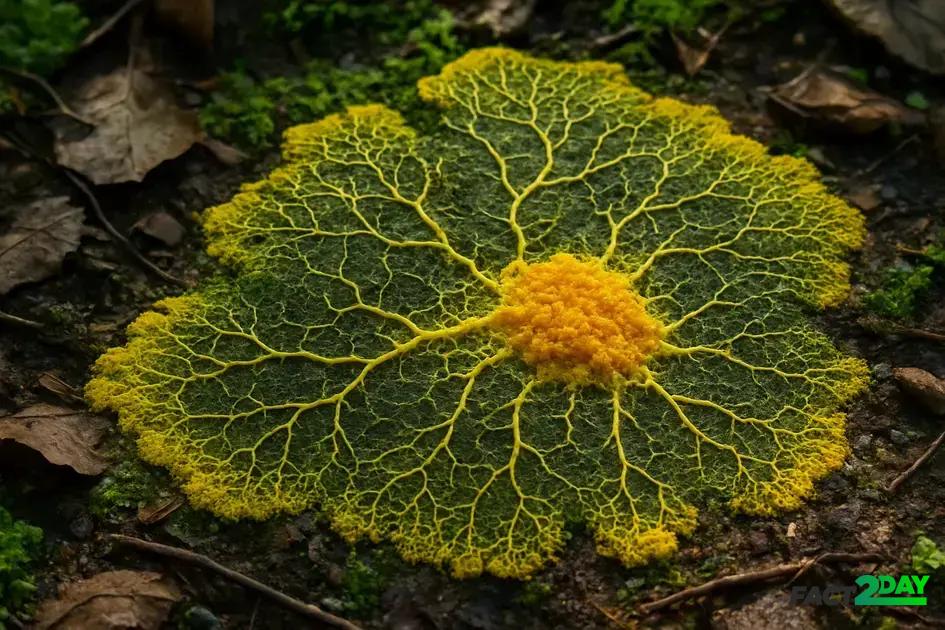
Slime mold intelligence refers to the ability of slime molds to solve complex problems, optimize networks, and adapt to environments without a brain, using distributed decision-making and environmental interaction.
Have you ever wondered if intelligence requires a brain? Slime mold intelligence invites us to see problem-solving in a new light, from a creature without a nervous system. Let’s walk through this fascinating natural paradox together.
understanding slime molds and their behavior
Slime molds are fascinating organisms that blur the line between single-celled and multicellular life. They belong to a group of living beings called protists and thrive in moist, shady environments like forest floors. Despite their simple appearance, slime molds exhibit complex behavior that often surprises scientists.
What Are Slime Molds?
Unlike fungi or animals, slime molds lack a brain or nervous system. They exist mostly as a mass of cytoplasm with thousands of nuclei, moving slowly as one entity. This unique composition allows them to explore and adapt to their surroundings in remarkable ways.
Behavior Patterns
Slime molds respond to stimuli such as light, temperature, and chemicals. They can detect food sources, avoid harmful areas, and optimize their growth paths to achieve efficient nutrient absorption. Their movement is guided by the ability to sense gradients in their environment, a process called chemotaxis.
Communication Through Network Formation
One of the most intriguing behaviors is how slime molds create network-like structures to connect food sources. These networks resemble transportation systems and can reorganize dynamically, reflecting an ability to process information collectively within the organism.
Understanding these behaviors helps us explore a new form of intelligence—one that operates without neurons but still solves problems efficiently.
how slime molds solve problems without a brain
Slime molds have no brain, but they can solve complex problems by adapting their behavior to their environment. They use a process called distributed intelligence, where the entire organism works together to find solutions. This ability allows them to navigate mazes, find the shortest paths to food, and optimize their nutrient intake.
How They Navigate and Make Decisions
When searching for food, slime molds extend parts of their body called pseudopods. These extensions explore the surroundings, and when food is found, the mold reinforces the path to that food by increasing the flow of cytoplasm in that direction. Meanwhile, less efficient paths are abandoned. This trial-and-error method helps slime molds find the best routes without any central control.
Memory Without Neurons
Interestingly, slime molds can exhibit a form of memory known as spatial memory. They remember areas they’ve already explored by leaving behind chemical markers, helping them avoid wasted effort. This behavior is crucial for efficient foraging and survival.
Problem-Solving in Experiments
Scientists have tested slime molds by placing them in maze-like setups. Despite lacking a brain, slime molds can find the shortest path to a food source faster than some computer algorithms. This shows how their simple, decentralized system can achieve remarkable problem-solving capabilities.
the role of environment in slime mold intelligence
The environment plays a key role in shaping slime mold intelligence. These organisms thrive in damp, shaded areas like forest floors, where moisture and temperature vary constantly. Such conditions provide slime molds with the stimuli needed to exhibit their problem-solving behavior.
Environmental Influences
Moisture levels affect how slime molds move and search for food. In dry conditions, their movement slows or stops, while dampness encourages exploration. Temperature also influences activity; slime molds prefer moderate ranges and avoid extremes.
Adaptation to Surroundings
Slime molds sense chemicals and light, helping them navigate complex environments. For example, they avoid brightly lit areas to reduce water loss. This sensitivity allows them to optimize paths in their search for nutrients, showing an adaptive response to environmental cues.
Impact on Intelligence Demonstration
Their flexible behavior depends heavily on the environment, as it provides the signals slime molds use to make decisions. This reliance demonstrates how intelligence can emerge from interaction with surroundings rather than from internal structures like a brain.
examples of decision-making in slime molds
Slime molds display remarkable decision-making abilities despite lacking a brain. One well-known example is how slime molds select the shortest path between food sources. In experiments, they can solve mazes by extending their body toward multiple paths and then retracting from longer or less efficient routes.
Choosing Efficient Paths
When placed in maze-like setups with food at different entrances, slime molds explore all routes initially. They strengthen connections on successful paths by increasing cytoplasmic flow, while weaker paths fade away. This network optimization helps slime molds mimic problem-solving seen in higher organisms.
Balancing Risk and Reward
Slime molds also make decisions based on nutrient quality. They may split to explore multiple options but prioritize feeding on richer food sources, showing an ability to evaluate trade-offs. This behavior reveals an adaptive decision-making system governed by environmental feedback.
Learning From Environment
In some studies, slime molds remember harmful conditions by avoiding previously encountered dangerous areas, demonstrating a basic form of learning. This memory helps them refine choices and improve survival odds.
comparing slime mold intelligence to human cognition
Comparing slime mold intelligence to human cognition reveals fascinating differences and similarities. While slime molds do not have brains or neurons, they perform complex tasks through collective behavior and environmental interaction. Humans rely on a nervous system and neurons to think, learn, and make decisions.
Different Mechanisms of Problem-Solving
Humans use memory, logic, and experience stored in the brain, while slime molds solve problems by physically adapting their shape and chemical signaling. This means slime molds excel at distributed processing, where decisions emerge from interactions within their network of cells.
Speed and Complexity
Human cognition is faster and supports abstract thought, language, and creativity. Slime molds, in contrast, work slowly but reliably, focusing on spatial problems like finding the shortest path to food sources.
Lessons From Slime Mold Intelligence
Although fundamentally different, slime molds challenge our definition of intelligence. Their ability to solve problems without a brain suggests intelligence can arise from systems beyond neurons, inspiring new approaches to technology and artificial intelligence.
applications of slime mold logic in technology
Slime mold logic has inspired innovative applications in technology, especially in areas requiring efficient problem-solving and network design. Researchers study how slime molds find the shortest paths to food and apply these principles to optimize real-world systems.
Network Optimization
One of the main applications is in designing transportation and communication networks. Slime molds naturally create efficient, resilient pathways that balance cost and reliability. Engineers mimic this behavior to improve urban transit systems, internet routing, and power grids.
Robotics and AI
Slime mold behavior guides advancements in robotics and artificial intelligence. Algorithms based on their decentralized decision-making help robots navigate complex environments and adapt to changes without centralized control. This improves flexibility and fault tolerance.
Computing and Problem-Solving
In computing, slime mold-inspired models assist in solving optimization problems like scheduling, resource allocation, and logistical planning. Their ability to adaptively explore options and reinforce efficient paths offers a new approach beyond traditional methods.
debunking myths about slime molds
Slime molds are often misunderstood, leading to several common myths that don’t reflect their true nature. One myth is that slime molds are fungi. In reality, they belong to a different group called protists, which sets them apart biologically from fungi.
Myth: Slime molds are dangerous or harmful
Many believe that slime molds are harmful pests. However, they pose no threat to humans, animals, or plants. They mostly feed on bacteria and dead organic material, playing a beneficial role in ecosystems.
Myth: Slime molds have brains or nerves
Another misconception is that their problem-solving means they have brains or nervous systems. Slime molds use distributed intelligence, coordinating their cells without a central brain, which is quite different from animal intelligence.
Myth: Slime molds are simple and uninteresting
Despite their simple appearance, slime molds exhibit complex behaviors like learning, memory, and decision-making. Their ability to solve mazes and find efficient paths challenges assumptions about what intelligence requires.
the future of studying slime mold intelligence
The study of slime mold intelligence is an exciting field with many possibilities ahead. Scientists are exploring new ways to understand how these simple organisms solve complex problems, which could revolutionize biology and technology.
Advances in Research Techniques
New imaging and data analysis tools allow researchers to observe slime mold behavior in real time and at microscopic levels. This helps uncover the mechanisms behind their distributed intelligence and communication methods.
Potential for Artificial Intelligence
Insights from slime molds inspire novel approaches to artificial intelligence and robotics. Their decentralized problem-solving challenges traditional brain-focused models, leading to adaptive algorithms that could improve machine learning and autonomous systems.
Interdisciplinary Collaboration
Future studies will likely involve collaboration between biologists, computer scientists, and engineers. This teamwork can push the boundaries of what we know about intelligence, offering practical applications in network design, optimization, and beyond.
Understanding the unique intelligence of slime molds
Slime molds challenge the traditional ideas of intelligence by showing how complex problem-solving can occur without a brain. Their ability to adapt, learn, and optimize paths demonstrates a fascinating form of natural logic.
Studying slime mold intelligence opens new doors for science and technology, inspiring innovations in AI, robotics, and network design. As research advances, we can expect even more surprising discoveries from these simple yet smart organisms.
Embracing the lessons from slime molds encourages us to rethink intelligence and appreciate the diverse ways life can solve problems.