Nature’s Unbreakable Code: Quantum Cryptography in Biological Systems
Explore the fascinating world of Quantum Cryptography Nature and its potential role in securing biological processes with unbreakable codes.
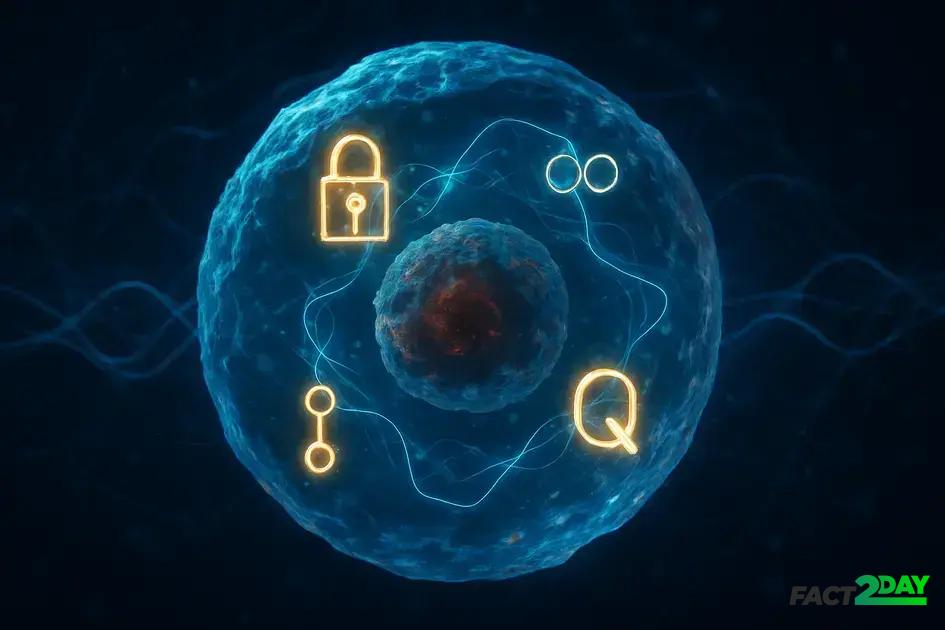
Quantum Cryptography Nature explores how quantum mechanics secures biological systems, revealing nature’s use of unbreakable codes that inspire future communication technologies.
Have you ever wondered if nature itself has a secret, unbreakable code? Quantum Cryptography Nature might hold the key to this mystery, connecting the strange quantum world with the complexity of life around us.
Understanding quantum cryptography basics
Quantum cryptography is a cutting-edge technology that uses principles of quantum mechanics to secure communication. Unlike traditional methods relying on complex algorithms, it harnesses the unique behavior of particles at the quantum level, such as photons, to create unbreakable codes.
Key Principles of Quantum Cryptography
Superposition allows quantum particles to exist in multiple states simultaneously, enabling highly secure encryption keys. Quantum entanglement links particles so that the state of one instantly affects the other, regardless of distance.
These properties ensure that any attempt to eavesdrop changes the quantum state, alerting communicators to potential breaches. The most famous protocol in quantum cryptography is Quantum Key Distribution (QKD), which allows two parties to share a secure secret key safely.
Quantum cryptography promises a new era of data security by making interception and decryption theoretically impossible, offering revolutionary protection especially important in a world of rising cyber threats.
How nature could use quantum cryptography
Nature may use principles similar to quantum cryptography to protect vital biological information. Certain biological systems, like DNA and proteins, exhibit quantum behaviors that help maintain data integrity and prevent errors during cellular processes.
Quantum mechanisms in biological systems
Quantum superposition and entanglement could enable molecules to encode and transmit information securely. This might explain how cells avoid damage from environmental noise, enhancing the reliability of genetic messaging.
For example, photosynthesis shows how quantum coherence helps plants optimize energy transfer efficiently. Similarly, quantum effects could be involved in how biological systems encrypt signals at the cellular level, keeping communication safe from interference.
While the full extent remains under research, the idea of nature’s own quantum cryptography opens new possibilities for understanding life’s resilience and security at a microscopic scale.
Quantum effects in biological systems
Quantum effects play a surprising role in several biological systems, influencing processes vital for life. These effects arise from quantum phenomena like tunneling, superposition, and entanglement occurring at tiny scales within cells.
Examples of quantum effects in biology
Photosynthesis is one well-studied example, where quantum coherence helps transfer energy efficiently through molecules in plants. This allows sunlight to be captured and converted into chemical energy with minimal loss.
Another example is enzyme catalysis, where quantum tunneling may speed up chemical reactions essential for metabolism. Some animals, like birds, are thought to use quantum entanglement to sense Earth’s magnetic field for navigation.
These natural quantum phenomena suggest that life has evolved to harness quantum mechanics, providing advantages in energy use, sensing, and information processing beyond classical methods.
The role of quantum entanglement in biology
Quantum entanglement is a phenomenon where particles become linked, sharing information instantly across distances. In biology, this link might help explain highly efficient processes in living organisms that classical physics can’t fully describe.
Entanglement in biological systems
Some studies suggest that entanglement plays a role in photosynthesis, where energy transfer between molecules is faster and more efficient than expected. This quantum connection might allow particles within plants to work together in perfect sync.
Another example is in the navigation of certain birds, which might use entangled particles in their eyes to sense Earth’s magnetic field. This ability, called quantum magnetoreception, could give animals a remarkable natural compass.
Though research is ongoing, the idea that quantum entanglement supports biological functions points to a deeper, more complex understanding of life’s processes at the quantum level.
Quantum cryptography vs classical cryptography
Classical cryptography relies on mathematical algorithms and complex keys to protect information. These methods are effective but can be vulnerable to advances in computing power, including the rise of quantum computers.
Differences between quantum and classical cryptography
Quantum cryptography uses the laws of quantum physics to secure data. Unlike classical methods, it cannot be cracked by simply increasing computational power because it relies on the behavior of quantum particles.
One key advantage is quantum key distribution (QKD), which enables two parties to create shared secret keys with the guarantee that any eavesdropper will be detected. This is impossible with classical systems, where keys can be intercepted without detection.
While classical cryptography focuses on algorithmic complexity, quantum cryptography offers unconditional security based on physical laws, making it especially important for future-proof communications.
Potential examples in DNA and proteins
DNA and proteins are fundamental to life, and recent studies suggest that quantum cryptography principles might be at work within these molecules to secure and transmit biological information.
Quantum behavior in DNA
DNA’s double-helix structure allows it to store vast amounts of genetic data. Quantum effects like tunneling could help explain how DNA manages to copy and repair itself with high accuracy, protecting against mutations.
Proteins and quantum states
Proteins fold into complex shapes to perform specific functions. Quantum coherence might assist in guiding this folding process efficiently, ensuring proteins maintain their correct structure and activity.
These quantum mechanisms could act as a natural form of biological encryption, helping cells secure critical data and processes from errors or external interference.
Security mechanisms inspired by nature
Nature has evolved sophisticated security mechanisms to protect biological information and processes. These natural strategies can inspire new approaches to quantum cryptography and data protection.
Biological security examples
Immune systems act as natural defenders, identifying and neutralizing harmful agents. Their selective and adaptive response is similar to how cryptographic systems guard against unauthorized access.
Additionally, DNA repair mechanisms correct errors and damage, maintaining data integrity. This resilience can inform the development of cryptography systems that recover from interference or hacking attempts.
By studying how life secures itself at the molecular level, researchers can design new quantum cryptography protocols that mimic nature’s ability to maintain secure, reliable communication even in noisy environments.
Challenges in studying quantum biology
Studying quantum biology presents unique challenges due to the complexity of biological systems and the delicate nature of quantum phenomena. Quantum states are extremely fragile and easily disrupted by the surrounding environment, making experiments difficult.
Technical limitations
Measuring quantum effects in living organisms requires highly sensitive instruments and precise conditions, often at extremely low temperatures not typical for biological activity. This makes it hard to observe quantum behaviors without interference.
Interdisciplinary hurdles
The field requires expertise in both quantum physics and biology, two areas that traditionally operate separately. Integrating knowledge and techniques from these disciplines is a challenge for researchers aiming to understand quantum processes in living systems.
Despite these obstacles, advances in technology and theory are gradually opening ways to explore how quantum mechanics influence life, promising exciting discoveries ahead.
Future technologies influenced by quantum cryptography
Quantum cryptography is expected to shape future technologies by providing unprecedented levels of security and efficiency in data transmission. As quantum technology advances, it will influence fields ranging from computing to communication.
Quantum-safe communication networks
Quantum key distribution (QKD) will enable secure communication channels resistant to hacking, crucial as cyber threats grow. This technology could protect sensitive data for governments, financial institutions, and healthcare systems.
Impact on quantum computing
Quantum cryptography complements quantum computing by safeguarding information against powerful quantum attacks. It also encourages the development of new cryptographic protocols designed to withstand quantum decryption methods.
Additionally, future technologies inspired by quantum cryptography may lead to advancements in quantum internet, enabling secure connections between quantum computers across the globe.
As these technologies mature, they will redefine how we think about privacy, security, and information processing in the digital age.
Implications for medicine and computing
Quantum cryptography promises to transform both medicine and computing by enhancing security and enabling new technologies. Its applications could improve patient data protection and accelerate computational advances.
Medicine and patient data security
Protecting sensitive medical records is vital as healthcare increasingly relies on digital systems. Quantum cryptography can ensure data is transmitted securely without risk of interception or tampering.
Quantum computing advances
Quantum cryptography complements powerful quantum computers by securing communications between devices. It may also aid in developing algorithms that protect against hacking by exploiting quantum principles.
Moreover, these technologies could enable faster drug discovery and personalized medicine by processing complex biological data securely and efficiently, revolutionizing healthcare innovation.
Ethical questions about quantum biotechnologies
The rise of quantum biotechnologies brings critical ethical questions that society must address. These advanced technologies have the power to alter biological systems in unprecedented ways, raising concerns about safety, privacy, and fairness.
Privacy and data protection
Quantum technologies could handle sensitive genetic and medical information, making it essential to ensure data is safeguarded against misuse or unauthorized access.
Biosecurity risks
As quantum methods enable precise manipulation of biological processes, there is a need to consider the risks of misuse or unintended consequences that could affect ecosystems or human health.
Ethical discussions must also focus on fair access to these powerful tools, avoiding disparities that could widen existing social and economic gaps.
Ongoing dialogue between scientists, ethicists, and policymakers is vital to guide responsible development and deployment of quantum biotechnologies.
How to explore quantum cryptography further
Exploring quantum cryptography involves learning its principles, technologies, and potential applications. Whether you are a student, researcher, or tech enthusiast, there are several ways to dive deeper into this exciting field.
Educational resources
Start with online courses and tutorials covering quantum mechanics and cryptography basics. Universities and platforms like Coursera and edX offer accessible materials to build foundational knowledge.
Hands-on experiments
Many institutions provide quantum computing kits and simulation tools where you can practice implementing quantum key distribution and other protocols. Engaging in practical experiments helps solidify your understanding.
Join communities
Participate in forums, workshops, and conferences focused on quantum technologies. Networking with experts and peers can provide valuable insights and open doors for collaboration.
Staying updated on the latest research through journals and articles will keep you informed about new discoveries and emerging applications of quantum cryptography.
Embracing the future of secure communication
Quantum cryptography holds great promise in transforming how we protect information, blending the laws of quantum physics with the complexities of nature. As we continue to explore and understand its applications, from biological systems to advanced technologies, new opportunities emerge to secure data and innovate communication.
With ongoing research and growing interest, learning more about quantum cryptography can open doors to exciting careers and discoveries. Staying informed and curious will help us harness this powerful technology responsibly and effectively.
The future of communication may very well depend on how well we understand and apply the unbreakable codes provided by quantum cryptography and nature’s own quantum secrets.