The Secret Life of Plants: Startling Discoveries About Plant Intelligence, Communication, and Decision-Making
Explore astounding revelations about Plant Intelligence and Behavior that uncover how plants think, communicate, and make decisions in surprising ways.
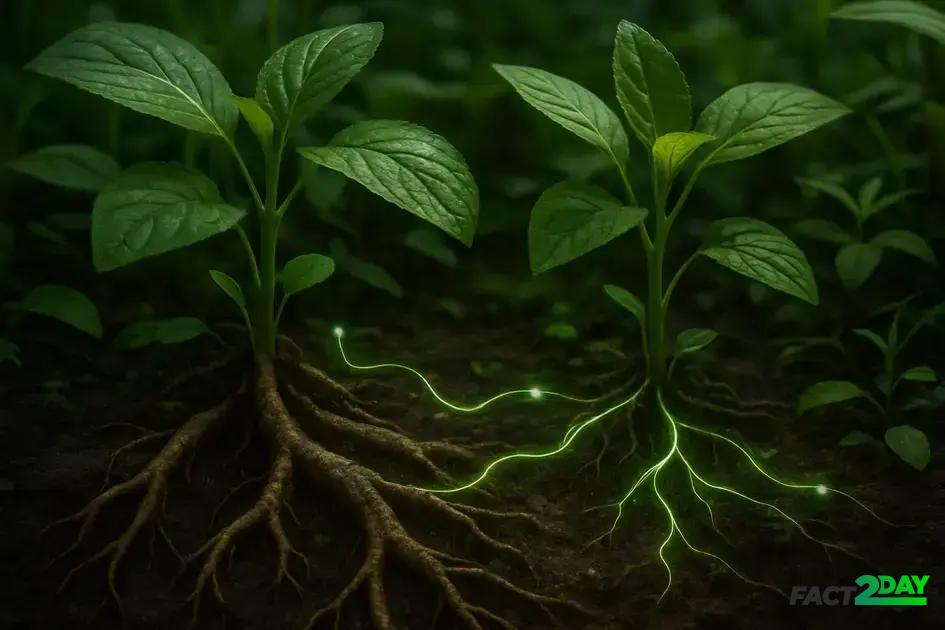
Plant Intelligence and Behavior reveals how plants perceive, communicate, and make decisions without brains, reshaping our understanding of life and ecosystem interactions.
Have you ever wondered about the secret lives of plants? Plant Intelligence and Behavior reveal a fascinating world where plants don’t just grow passively—they think, communicate, and even make decisions. Ready to uncover their astonishing abilities?
Understanding plant intelligence: what does it mean?
Plant intelligence refers to the ability of plants to process information, respond to their environment, and adapt in ways that suggest a form of decision-making. Unlike animals, plants lack a brain or nervous system, but they exhibit complex behaviors such as learning, memory, and communication. These traits challenge traditional views and expand our understanding of intelligence beyond humans and animals.
Experts study plant intelligence by observing how plants react to stimuli like light, gravity, touch, and chemicals. They can adjust their growth direction, open or close stomata, and even warn neighboring plants of threats. This shows an active and dynamic process rather than a simple mechanical response.
What does plant intelligence involve?
It involves sensing the environment, processing input signals, making decisions, and executing actions. For example, roots navigate soil obstacles and seek nutrients, while leaves optimize photosynthesis by adjusting their angle toward light. These actions demonstrate problem-solving skills that occur without a brain, relying on cellular networks and signaling molecules.
Recognizing plant intelligence pushes science to rethink cognition and behavior as broader biological phenomena. It opens new doors for research in ecology, agriculture, and even robotics, inspired by the way plants operate.
The mechanisms behind plant communication
Plants communicate with each other and other organisms through a variety of complex mechanisms that involve chemical, electrical, and physical signals. These communication methods allow plants to share information about environmental threats, resource availability, and more.
Chemical signals
One of the main ways plants communicate is by releasing chemicals called volatile organic compounds (VOCs) into the air or sending signaling molecules through their roots. For example, when attacked by pests, some plants release specific chemicals that alert nearby plants to activate their defense systems. This warning system helps the surrounding plants prepare for potential danger.
Electrical signaling
Plants also use electrical signals to transmit information internally. Changes in electrical potential travel through plant cells to trigger responses such as closing stomata or producing defensive compounds. This process resembles the nervous system in animals, but it operates through different cellular structures.
Physical interactions
Physical contact plays a role in some plant communication as well. For instance, climbing plants can sense the presence of supports and adjust their growth accordingly. Roots may also communicate by detecting chemicals released by neighboring roots, leading to cooperation or competition in nutrient uptake.
Understanding these mechanisms highlights how plants engage in a subtle yet effective language that supports survival and adaptation in diverse environments.
How plants perceive their environment
Plants perceive their environment using specialized sensors that detect light, gravity, touch, chemicals, and temperature. These sensory systems help plants adapt, grow, and survive in changing conditions. For example, plants use photoreceptors to sense light direction and intensity, guiding their leaves and stems toward sunlight for efficient photosynthesis.
Light perception
Plants detect different types of light using photoreceptors such as phytochromes and cryptochromes. These proteins allow plants to know the time of day, season, and even nearby competitors, influencing flowering, seed germination, and shade avoidance.
Gravity sensing
Gravitropism is how plants sense gravity. Special cells in roots and shoots contain dense particles called statoliths that settle with gravity, informing the plant which way to grow—roots downwards and stems upwards.
Touch and mechanical signals
Some plants respond to touch or mechanical stimuli through a process called thigmotropism. For instance, climbing vines sense and wrap around supports. Sensitive plants like Mimosa pudica fold their leaves rapidly when touched.
Chemical detection and temperature
Plants also detect chemicals in soil and air to find nutrients or detect threats. Temperature sensors influence growth cycles, dormancy, and flowering time.
Understanding how plants perceive their environment reveals intricate sensing networks that allow them to actively respond and thrive without a brain, relying instead on cellular communication and signaling.
Decision-making processes in plants
Plants exhibit remarkable decision-making processes by assessing their environment and choosing among various possible actions to optimize survival and growth. Although plants do not have brains, they use complex signaling networks to evaluate information and respond accordingly.
Integrating multiple signals
Plants gather data from light, water, nutrients, and threats through sensors in their cells. They then integrate this information to determine the best course of action. For example, a plant might decide to grow roots deeper in dry soil to access water or expand leaves toward sunlight when shaded.
Resource allocation
Decision-making also involves allocating energy and resources to different parts. When resources are limited, plants prioritize vital functions like reproduction or defense. This allocation is controlled by hormones such as auxins and cytokinins, which regulate growth and development.
Adaptive responses
Plants can switch strategies based on environmental changes. If under attack by pests, they may activate defense mechanisms, producing chemicals or changing physical structures to protect themselves. These adaptive responses show a form of biological problem-solving, adjusted in real time.
Studying how plants make decisions helps us better understand their intelligence and could inspire new technologies in robotics and agriculture, mimicking these natural strategies.
The role of roots in plant behavior
Roots play a crucial role in plant behavior by sensing the environment, absorbing nutrients and water, and communicating with other parts of the plant. They act as the plant’s underground brain, continuously exploring and adapting to the soil around them.
Environmental sensing
Roots detect moisture, nutrient levels, and obstacles in the soil. They grow toward areas rich in nutrients and water, a process known as chemotropism. When they encounter barriers, roots change direction to navigate around them, demonstrating an ability to adapt their growth.
Communication and signaling
Roots send and receive chemical signals to coordinate with shoots and leaves. They can also interact with beneficial fungi in the soil, such as mycorrhiza, which helps increase nutrient uptake. These interactions improve the plant’s overall health and resilience.
Resource allocation
The health and behavior of roots influence how a plant allocates resources. For example, if roots detect scarce nutrients, the plant may limit leaf growth to conserve energy. Roots also play a role in storing carbohydrates and supporting regrowth after damage.
Overall, roots are essential for intelligent plant behavior, enabling plants to thrive by sensing, adapting, and communicating underground.
Plants and memory: can they learn?
Plants show fascinating signs of memory and learning, even without brains or nervous systems. They use molecular and cellular mechanisms to remember past events and adjust their future responses.
How plants remember
Plants store information through changes in gene expression, protein modifications, and chemical signaling pathways. For example, after exposure to drought, plants can “remember” the stress and respond more efficiently to future dry conditions. This form of memory helps plants survive in unpredictable environments.
Learning through experience
Research shows plants can adapt their behavior based on experience. A famous experiment demonstrated that Mimosa pudica, a sensitive plant, learned to ignore repeated harmless touches, saving energy by not closing leaves unnecessarily. This indicates a basic form of learning called habituation.
Mechanisms behind plant learning
Plant learning involves complex interactions between cells using electrical and chemical signals. These processes affect growth patterns, defense activation, and even flowering times. While different from animal learning, these adaptations reflect a dynamic and responsive intelligence.
Overall, plants exhibit forms of memory and learning that allow them to thrive, showing intelligence in unexpected ways.
Communication methods: signals, chemicals, and more
Plants use a variety of communication methods to interact with each other and their environment. These methods include signals, chemicals, and physical responses that coordinate growth, defense, and survival strategies.
Chemical signaling
One of the most common communication methods involves releasing chemicals, such as volatile organic compounds (VOCs). These chemicals travel through the air or soil to warn nearby plants of threats like insect attacks or disease. This early warning helps other plants prepare defenses in advance.
Electrical signals
Plants can generate electrical signals that transmit information quickly across cells. These signals help coordinate rapid responses like closing stomata or producing toxins when attacked. Electrical communication is similar to nervous responses in animals but relies on different cellular mechanisms.
Physical contact and responses
Touch or mechanical stimulation also plays a role in plant communication. Some vines and climbing plants sense supports and wrap around them, while sensitive plants like Mimosa pudica fold their leaves upon touch. This shows plants can respond directly to physical stimuli.
Root communication
Below ground, roots communicate through chemical secretions and interactions with beneficial fungi such as mycorrhiza. This network helps improve nutrient uptake and supports overall plant health.
These diverse communication methods reveal a hidden language among plants, enabling them to adapt and thrive together in complex ecosystems.
The influence of light and gravity on plant choices
Plants rely heavily on environmental cues like light and gravity to decide how to grow and survive. These signals guide important behaviors such as where to extend roots and how to orient leaves for optimal energy use.
Light as a guiding signal
Plants use specialized proteins called photoreceptors to detect light intensity, direction, and wavelength. This process, known as phototropism, causes stems and leaves to grow toward light sources, maximizing photosynthesis. Plants can also sense changes in daylight length to time flowering and dormancy.
Gravity’s role in growth
Gravity influences plant growth through gravitropism. Roots grow downward into the soil, guided by dense particles called statoliths inside their cells. Stems grow upward, opposite to gravity, ensuring the plant can reach sunlight.
Interaction between light and gravity
Plants constantly balance the effects of light and gravity. For instance, a tilted plant stem will reorient itself upward while still bending toward the strongest light. This harmonious response shows plants integrate multiple environmental signals to make growth decisions.
Understanding how plants respond to light and gravity reveals their sophisticated ability to adapt and make choices that support survival and growth.
Interactions between plants and other organisms
Plants engage in complex interactions with many other organisms, forming relationships crucial for their survival and growth. These interactions often involve cooperation, communication, and sometimes competition.
Symbiosis with fungi and bacteria
Many plants form symbiotic relationships with fungi, especially mycorrhizal fungi, which enhance nutrient and water absorption. In return, plants provide sugars to the fungi. Similarly, nitrogen-fixing bacteria in root nodules convert atmospheric nitrogen into forms plants can use, boosting growth.
Pollination and seed dispersal
Plants rely on animals such as bees, birds, and bats for pollination. These organisms transfer pollen from flower to flower, enabling reproduction. Seed dispersal often involves animals carrying or consuming seeds and depositing them elsewhere, helping plants colonize new areas.
Defense mechanisms
Plants interact with insects and other animals through defense strategies. Some release chemicals that attract predators of their herbivores, while others develop physical barriers like thorns. These interactions involve sophisticated signaling to protect the plant.
Competition and cooperation
Plants also compete for resources like light, water, and soil nutrients. However, they can cooperate by sharing resources through root networks. This complex web of interactions shapes ecosystems and supports biodiversity.
Understanding how plants interact with other organisms reveals their dynamic role within ecosystems and highlights their intelligent behaviors.
Implications of plant intelligence for ecology and agriculture
The discovery of plant intelligence is reshaping how we understand ecology and agriculture. Recognizing that plants actively sense, respond, and communicate opens new opportunities for sustainable farming and ecosystem management.
Enhancing agricultural practices
Understanding plant behavior allows farmers to optimize crop yields by fostering natural communication and defense mechanisms. For instance, intercropping plants that signal pest attacks can reduce the need for chemical pesticides, promoting healthier crops and ecosystems.
Ecological balance and biodiversity
Plant intelligence contributes to ecosystem stability through cooperative interactions and adaptive responses to stress. This knowledge helps ecologists design conservation strategies that protect plant communities and enhance biodiversity.
Innovative technologies inspired by plants
Research into plant intelligence inspires new technologies in agriculture and robotics. For example, smart sensors mimic plant sensing to monitor environmental changes, while robotic systems replicate plant movement for efficient resource use.
Incorporating plant intelligence into ecology and agriculture advances sustainable solutions that align with nature’s adaptive intelligence, benefiting both the environment and human society.
Future research and frontier discoveries
Future research on plant intelligence is exploring new frontiers that could transform our understanding of biology and ecology. Scientists aim to uncover how plants process information at the cellular level and how this affects their interactions with the environment.
Emerging technologies
Advances in imaging, genomics, and data analysis are helping researchers observe plant behaviors in unprecedented detail. These technologies enable the study of electrical signaling, gene expression, and chemical communication within plants.
Interdisciplinary approaches
Collaborations between biologists, computer scientists, and engineers are leading to innovations inspired by plant intelligence. This includes developing bio-inspired sensors, efficient resource management techniques, and sustainable agricultural practices.
Unanswered questions
Key questions remain, such as how plants store and retrieve memories, the extent of their learning capabilities, and how they make collective decisions. Addressing these questions could reveal new principles of life and intelligence.
Understanding these frontier discoveries promises to deepen our respect for plants and unlock novel solutions for environmental challenges.
Understanding the intelligent life of plants
Plants are much more than passive organisms; they have remarkable ways to sense, communicate, and make decisions. Their ability to learn and adapt changes how we view intelligence in nature.
By exploring plant behaviors and their interactions with the environment, we uncover new insights valuable for ecology, agriculture, and technology. These discoveries inspire us to care for plants and ecosystems more thoughtfully.
As research advances, we will continue to reveal the hidden life of plants and learn from their unique intelligence. Embracing this knowledge can lead to more sustainable and innovative solutions for the future.