Did 300 Years of History Never Happen? The Phantom Time Theory
Explore the intriguing phantom time theory and question if 300 years of our history might be an elaborate illusion. Dive into this mysterious claim.
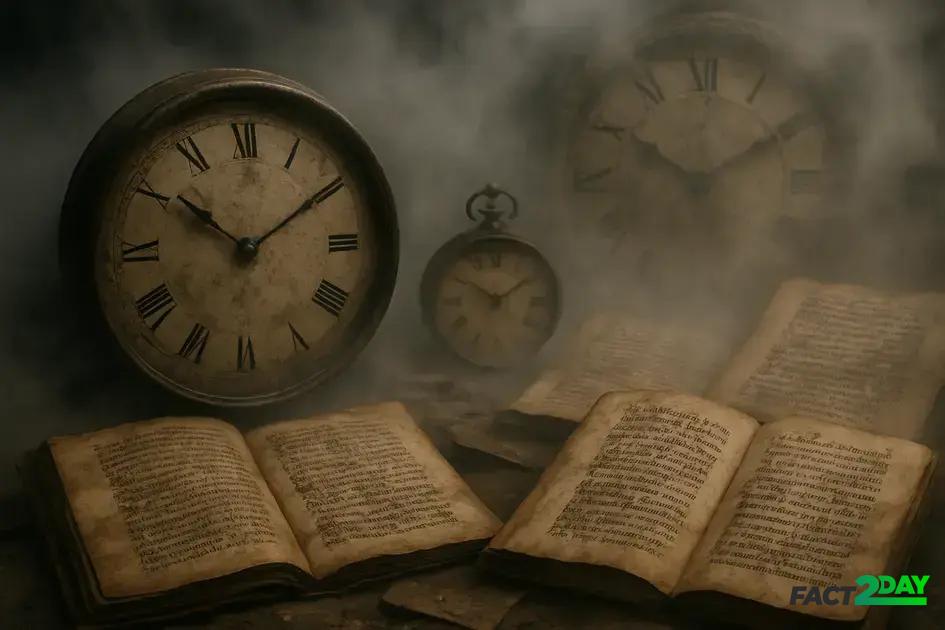
The phantom time theory claims that about 300 years of history, mainly in the Early Middle Ages, were fabricated, suggesting that events and rulers like Charlemagne never actually existed during that time.
Have you ever wondered if parts of history might have been invented? The phantom time theory suggests just that, arguing that 300 years of our past could be an illusion. Let’s walk this curious trail together and explore what lies beneath the story we think we know.
understanding the basics of phantom time theory
The phantom time theory suggests that approximately 300 years of history, mainly during the Early Middle Ages, were either fabricated or incorrectly recorded. It claims that events between roughly 614 and 911 AD never actually happened, meaning that historical timelines might be skewed by invented years.
This theory was proposed by German historian Heribert Illig in the 1990s. According to him, the addition of these phantom years was done intentionally or accidentally due to errors in calendar systems like the Julian calendar. It questions the authenticity of documents, archaeological findings, and even the dating methods used to verify this period.
Key Concepts Behind the Theory
The theory highlights anomalies such as the lack of substantial archaeological evidence for this era, inconsistencies in written records, and contradictions in astronomical data like eclipses that could suggest a deliberate alteration of timelines.
Phantom time theory challenges the accepted historical narrative by proposing that rulers like Charlemagne never lived during the supposed timeframe, and that significant events attributed to that period were fabricated or misdated.
Though the theory remains controversial, it encourages critical thinking about how history is constructed, the reliability of sources, and how calendars and dating systems impact our understanding of the past.
historical records and the questioned centuries
The phantom time theory focuses on the so-called “questioned centuries,” primarily between 614 and 911 AD, where many historical records appear sparse or inconsistent. Skeptics argue that some written documents during this era were either forged or altered, casting doubt on the authenticity of the timeline.
Many chronicles and texts from medieval Europe form the backbone of what we know about this period. However, the theory exposes gaps and contradictions within these records. For example, some important events, reigns of notable rulers, and architectural accomplishments might not have reliable contemporaneous documentation.
The Role of Chronicles and Manuscripts
Several key chronicles were written centuries after the events they describe, sometimes relying on oral traditions or previous manuscripts that may have been edited. This introduces the possibility of errors or deliberate modifications, which the phantom time theory highlights.
Moreover, archaeological findings sometimes fail to align perfectly with written accounts, such as limited artifacts or carbon dating results that don’t match the expected era. This discrepancy fuels doubts about the accuracy of these questioned centuries.
The theory also examines the impact of calendar reforms and how miscalculations might have extended the historical timeline artificially. The transition from the Julian to the Gregorian calendar led to adjustments in dating, potentially masking the phantom time.
key figures and events allegedly fabricated
The phantom time theory claims that several key figures and historical events from the Early Middle Ages were either fabricated or misdated. One of the most notable figures questioned by this theory is Charlemagne, who is said to have ruled during the supposed phantom period. If the theory holds true, his reign and achievements might have been invented or reassigned from other times.
Another event under scrutiny is the founding of the Holy Roman Empire, traditionally dated around 800 AD. The theory suggests this and other significant milestones, like the construction of certain cathedrals and castles, may never have happened during that time or were falsely attributed.
The Impact on Historical Timelines
This theory implies that many rulers and events documented in early medieval chronicles were products of altered or fabricated records. It questions the reliability of sources like the Royal Frankish Annals and other contemporary histories.
Critics of the phantom time theory point to documented events such as battles, treaties, and cultural changes as evidence against the fabricated timeline. However, supporters argue that these could be later inventions or misinterpretations.
Understanding which figures and events are allegedly fabricated helps us examine how history can be shaped by the records that survive and the narratives they support. It also invites us to question the certainty we place in so-called “established” history.
scientific and archaeological evidence analyzed
The evaluation of scientific and archaeological evidence is crucial to understanding the validity of the phantom time theory. Proponents argue that certain archaeological findings do not match the historical timeline, suggesting that some periods might be missing or fabricated.
Carbon dating and dendrochronology (tree ring analysis) are two scientific methods often referenced. Some results from these dating techniques appear inconsistent with the accepted dates of medieval artifacts or buildings, raising questions about the accuracy of traditional calendars.
Archaeological Discrepancies
Excavations in Europe have sometimes yielded fewer artifacts or signs of human activity than expected for the early Middle Ages. This scarcity is cited by supporters of the phantom time theory as an indicator that the era might be artificially extended.
Conversely, critics emphasize that gaps in archaeological records are common in history due to preservation issues or the uneven nature of excavation efforts. They argue that existing findings support the traditional timeline.
Astronomical evidence, such as records of solar and lunar eclipses, has also been examined. Some proposed inconsistencies in eclipse timing have been used to question historical chronologies, though many astronomers dispute these claims and defend the established dates.
Scientific analysis continues to play an important role in verifying historical timelines, but the debate over the phantom time theory shows how interpreting evidence can vary, depending on perspectives and methods.
why some historians reject the theory
Many historians reject the phantom time theory because it contradicts a vast amount of well-documented evidence. Historical records, supported by multiple independent sources, align closely with the accepted timeline, making the idea of fabricated centuries highly unlikely.
One key reason for rejection is the presence of archaeological findings and architectural structures dated precisely to the questioned period. These include buildings, coins, and artifacts with consistent layers and growth rings, which fit into the traditional chronology.
Consistency of Written Records
Chronicles, legal documents, and records from various regions across Europe and beyond converge to create a detailed picture of the early Middle Ages. These records often overlap and corroborate each other, challenging the idea of a large-scale time fabrication.
Furthermore, celestial events such as solar and lunar eclipses from this era have been accurately recorded and can be matched with modern astronomical calculations, providing an independent means to verify the timeline.
Critics argue that the phantom time theory relies on selective evidence and misinterpretation of data. They emphasize that gaps in the archaeological or documentary record are common due to natural losses over time, rather than deliberate fabrication.
Ultimately, historians uphold rigorous methods of cross-verifying sources and scientific dating. The broad consensus remains that while some questions exist in medieval studies, the phantom time theory oversimplifies complex historical processes.
implications if the theory were true
If the phantom time theory were true, it would mean that approximately 300 years of our recorded history never actually happened. This would have profound effects on how we view the timeline of human civilization, our understanding of historical events, and even technological and cultural development.
Many historical milestones, such as the reign of Charlemagne and the early formation of the Holy Roman Empire, would need to be reconsidered or rewritten. The origins of many institutions, languages, and cultural practices linked to this period would be called into question.
Impact on Science and Archaeology
Scientific disciplines relying on accurate dating, like archaeology, geology, and astronomy, would face significant challenges. Established timelines for artifacts, ruins, and natural events would no longer match with their physical evidence.
Our current calendar systems and methods of dating historical periods would require major revisions. This would affect how we interpret ancient texts, genealogies, and cultural evolution.
The phantom time theory would also influence modern identity and heritage, as many cultural and national histories build upon this chronological framework. Understanding the full scope of human progress would need new models that adapt to this missing time.
Ultimately, accepting the theory would force historians, scientists, and educators to rethink centuries of knowledge, posing both challenges and opportunities for rewriting human history.
how phantom time theory affects our understanding of history
The phantom time theory challenges our understanding of history by suggesting that large chunks of time were fabricated or wrongly recorded. This creates doubts about the accuracy of historical timelines and the reliability of the sources we base our knowledge on.
If the theory were true, it means many events, rulers, and cultural achievements from the Early Middle Ages would need re-evaluation. This affects how we interpret everything from the development of political systems to technological progress in that era.
Revisiting Historical Timelines
Historical events are often connected in a sequence, and changing or removing centuries can disrupt this chain. The theory raises questions about the continuity and credibility of historical narratives, which impacts education and research.
It also affects the dating of archaeological sites and artifacts. If timelines are off by centuries, our interpretation of cultural and societal evolution may be flawed.
This theory pushes historians and scientists to critically analyze evidence, question assumptions, and develop new methods to verify history. It highlights the importance of cross-referencing different types of data, like written records, scientific dating, and astronomical calculations.
Overall, the phantom time theory encourages a deeper look at how history is constructed and reminds us that our knowledge is always evolving as new evidence emerges.
popular culture and conspiracy around phantom time theory
The phantom time theory has captured popular imagination and become a favorite topic within conspiracy circles. It challenges the accepted record of history and suggests that powerful groups deliberately altered timelines to control beliefs about the past.
In popular culture, the theory is often featured in documentaries, books, and online discussions that delve into mysteries and cover-ups. It appeals to those who question official histories and seek alternative explanations for strange gaps or inconsistencies in ancient records.
Conspiracy Elements
The theory claims that rulers and institutions, like the Holy Roman Empire and the Catholic Church, manipulated calendar systems to insert false centuries. This was supposedly done to legitimize their power and rewrite history.
While skeptics dismiss these claims as unfounded, the theory’s presence in movies, podcasts, and internet forums keeps the debate alive. It also ties into broader conspiracy themes involving hidden knowledge and secret societies.
The fascination with phantom time theory shows how history can be reinterpreted and mythologized when gaps or uncertainties exist. It serves as a reminder to critically evaluate sources and question how narratives are formed in both scholarly and popular contexts.
Wrapping up the phantom time theory
The phantom time theory offers a fascinating challenge to how we understand history and the passage of time. While it raises important questions about historical records, scientific evidence generally supports the accepted timeline.
Whether you view the theory as a compelling mystery or a disproven idea, it reminds us to stay curious and critically examine the past. History is complex, and new findings can always reshape our understanding.
Exploring theories like this helps keep the study of history alive and dynamic, encouraging us to ask deeper questions about where we come from and how we record our story.