Choose Your Own Quantum Adventure: Managing Infinite Choices in Narrative-Driven Games
Explore Narrative Branching Complexity and how games handle infinite player choices for immersive, dynamic storytelling adventures.
Ever come across something bizarre in a game that just wasn’t meant to happen? Back in the original Pokémon Red and Blue, there was a glitch that became legendary: MissingNo.
If you fished on Cinnabar Island, this strange blocky pixel creature would appear. It looked like static, made weird sounds, and could even mess up your game. Your Hall of Fame data might get corrupted, and your graphics could go wild—total chaos.
Why players loved it
Despite all the trouble, MissingNo was a hit with players. Catching it duplicated items in your inventory. Suddenly, rare items like Rare Candies and Master Balls were unlimited! What was meant to be a bug turned into a secret cheat code and a fan favorite.
Seriously, how many games turn a glitch into a beloved part of gaming history? MissingNo is proof that sometimes, game mistakes can become legends.
Narrative Branching Complexity is the secret sauce behind those mind-bending, choose-your-own-adventure games. Ever wondered how developers juggle countless story paths while keeping the story engaging and coherent? Let’s dive into the chaotic genius of branching narratives and how games manage infinite player choices.
Understanding narrative branching complexity
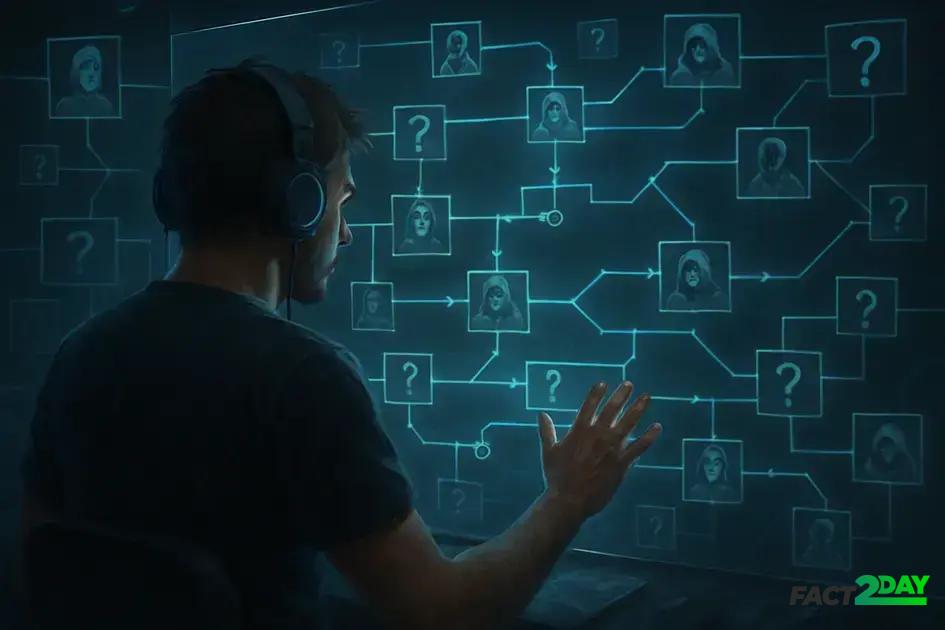
Narrative branching complexity refers to how many different story paths and endings a game can offer based on player decisions. Instead of a single, linear storyline, players navigate a web of choices that affect characters, events, and outcomes. This complexity makes games feel personalized and replayable, but it also poses significant design challenges.
How branching works
Each choice a player makes can lead to unique scenarios, creating a tree-like structure of narrative paths. Some branches quickly reconnect, while others diverge into entirely new storylines. The complexity grows exponentially with each decision, creating a rich tapestry of possibilities.
Impact on storytelling
A complex branching narrative allows writers to explore multiple perspectives and themes. However, maintaining story coherence across branches is crucial. Developers must track player choices to ensure consistent character behavior and logical plot development.
Technical considerations
Developers use specialized tools and scripts to manage branching complexity, often employing variables and flags that track player actions. Balancing detailed storytelling and manageable code is key to preventing bugs and narrative contradictions.
Understanding narrative branching complexity is foundational for creating immersive, choice-driven games that feel unique to every player.
The impact of player choices on game outcomes
Player choices directly shape the narrative and game world, making each playthrough unique. These decisions can alter character relationships, unlock different storylines, or lead to multiple endings. The impact of player choices creates a sense of agency and emotional investment.
Consequences and branching
Choices often come with consequences, immediate or delayed. For example, sparing a character might help later in the story, while aggressive actions can close off options. Tracking these variables requires meticulous design.
Emotional engagement
When players see their choices influence the story, they form stronger bonds with characters and the world. This emotional engagement increases replay value and deepens the gaming experience.
Balancing freedom and narrative
Designers must balance how much impact choices have without overwhelming players or breaking the story. Key moments usually have significant outcomes, while smaller choices enrich details.
Player choice impacts are vital in narrative-driven games, creating dynamic and personalized storytelling experiences.
Techniques for managing infinite narrative paths
Managing infinite narrative paths requires smart design and technical strategies to keep stories engaging and feasible. One common technique is using modular storytelling, where stories are broken into smaller, reusable scenes or events. This allows developers to mix and match segments based on player choices without writing entirely new content for every branch.
Use of variables and flags
Variables track player decisions and state changes, while flags mark key events. These tools help the game remember past choices and adjust future narrative elements, keeping the world consistent and responsive.
Branch convergence
To avoid an endless explosion of storylines, designers often converge branches back to central plot points. This technique balances player freedom with manageable storytelling, ensuring players’ choices feel impactful but don’t overload the narrative.
Procedural generation and AI
Advanced games may use procedural methods and AI to generate dialogue or events dynamically. This helps create varied experiences without requiring manual scripting of every path.
Combining these techniques enables developers to offer a vast range of player choices while maintaining a coherent, immersive narrative.
Balancing story coherence with player freedom
Balancing story coherence with player freedom is a key challenge in narrative-driven games. While players want to make meaningful choices, the story must remain logical and engaging. Too much freedom can lead to plot holes or a scattered narrative experience.
Structured flexibility
Designers use structured flexibility to give players choice without losing control of the story. This means creating key story beats that remain fixed, while allowing freedom in how players reach those points or influence minor details.
Consistent character behavior
Maintaining character consistency is vital. Regardless of player decisions, characters should act within their motives and personalities. This creates immersion and prevents the story from feeling disjointed.
Use of narrative anchors
Narrative anchors are crucial events or themes that reoccur across branches, tying the story together. They provide familiar reference points while letting players explore different paths.
Balancing these elements ensures players feel their choices matter without compromising a coherent and satisfying story.
Tools and software for narrative branching
Developers rely on specialized tools and software to manage narrative branching efficiently. These platforms help organize storylines, track player choices, and visualize branching paths, simplifying the complex process of interactive storytelling.
Popular narrative design tools
Tools like Twine and Ink provide user-friendly interfaces for creating branching narratives without extensive coding. They allow writers to draft, link, and test various story paths quickly.
Game engine integrations
Engines such as Unity and Unreal include plugins and scripting options that support dynamic narratives. These tools enable developers to integrate branching logic directly into gameplay mechanics.
Version control and collaboration
Software that supports version control helps teams track changes and work collaboratively on complex narratives. This is crucial for large development teams handling multiple branches and storylines.
Choosing the right tools streamlines narrative branching development, ensuring coherent and engaging player experiences.
Challenges in testing branching narratives
Testing branching narratives presents unique challenges due to the sheer number of possible paths and outcomes. Each choice can lead to different storylines, making it difficult to ensure all branches work smoothly and logically.
Exponential path growth
The number of narrative paths can grow exponentially, requiring extensive testing to catch bugs or inconsistencies. This demands thorough planning and prioritization of key branches for quality assurance.
Maintaining consistency
Ensuring consistency across branches is vital. Testers must verify that character actions, plot developments, and world states align correctly regardless of previous choices.
Automated testing limitations
Automated tools can assist with repetitive checks but often struggle with nuanced story elements. Human testers remain essential to judge story coherence and emotional impact.
Effective testing of branching narratives requires a combination of automated and manual approaches, alongside strategic focus on critical story routes.
Examples of games with complex branching
Several games are renowned for their complex branching narratives that adapt deeply to player choices. These games showcase how diverse storylines can enhance immersion and replayability.
The Witcher 3: Wild Hunt
This RPG features multiple endings and choice-driven quests where decisions impact relationships and the world. Branching paths lead to vastly different outcomes, rewarding player agency.
Detroit: Become Human
Known for its intricate branching, this game tracks hundreds of choices affecting character fates and story arcs. The narrative can change dramatically based on player decisions, offering dozens of endings.
Life is Strange
With its time-rewinding mechanic, this game explores how small choices create ripple effects across storylines. Player decisions influence friendships, mysteries, and the ultimate conclusion.
These examples highlight how narrative branching complexity creates engaging, personalized experiences in modern gaming.
Psychology behind player decision-making
Understanding the psychology behind player decision-making is crucial for crafting engaging branching narratives. Players often make choices based on emotions, moral values, and a desire for control in the game world.
Emotional drivers
Players may choose options that reflect empathy, fear, or curiosity. Emotional investment increases when choices have clear consequences, making decisions feel meaningful.
Moral alignment and identity
Many games tap into a player’s sense of morality, offering decisions that align with good, evil, or neutral actions. This can lead players to explore different aspects of their identity within the story’s context.
Desire for control and consequence
Players often seek control over the story’s outcome. Knowing that choices affect the game world motivates exploration and replayability. Branching narratives satisfy this need by offering diverse consequences.
Designing with player psychology in mind helps create narratives that resonate emotionally and encourage deeper engagement.
Future trends in narrative-driven games
Future trends in narrative-driven games focus on increasing immersion and player agency. Advances in technology enable deeper storytelling experiences that adapt dynamically to player input.
AI-driven narratives
Artificial intelligence is becoming central to creating responsive stories that evolve in real-time. AI can generate dialogue, plot twists, and character reactions based on player behavior, making stories less predictable.
Virtual and augmented reality
VR and AR technologies offer players a more immersive experience. Narrative-driven games in these spaces allow players to physically interact with the story world, heightening emotional engagement.
Procedural storytelling
Procedural generation of story elements can create unique experiences for each player. This technique expands replayability by ensuring no two playthroughs are exactly alike.
As technology progresses, narrative-driven games will blend innovation and creativity to deliver ever more personalized and captivating adventures.
Design tips for aspiring game writers
Aspiring game writers should focus on creating engaging stories that balance player freedom with narrative structure. Understanding branching complexity helps in designing meaningful choices without overwhelming the player or the development process.
Start with clear story goals
Define your main themes and key plot points early. This provides a solid foundation that guides branching decisions and keeps the narrative focused.
Plan your branches carefully
Map out choices and their consequences to ensure each path is unique yet coherent. Use flowcharts or narrative design tools to visualize branches and avoid contradictions.
Write consistent characters
Characters should behave believably across all branches. Establish clear motivations and personalities to maintain immersion regardless of player choices.
Keep player experience in mind
Design choices that feel impactful and offer variety, but avoid too many minor decisions that do not affect the story meaningfully.
By combining creativity with solid planning, game writers can craft branching narratives that captivate players and stand out in the gaming world.
Wrapping up narrative branching complexity
Managing complex branching stories in games can be tough, but it makes player experiences more exciting and personal. By carefully planning choices, keeping characters consistent, and using smart tools, game writers can build rich and immersive worlds.
Players love to see their decisions matter, making games more fun and rewarding. With creativity and good design, anyone can craft stories that keep players coming back.
So, embrace the challenge of branching narratives and create adventures full of infinite possibilities.