Tiny Survivors: The Extraordinary Lives of Microbes in Earth’s Harshest Corners
Explore how microbes in extreme environments defy odds, thriving in Earth's harshest places with incredible resilience and adaptation.
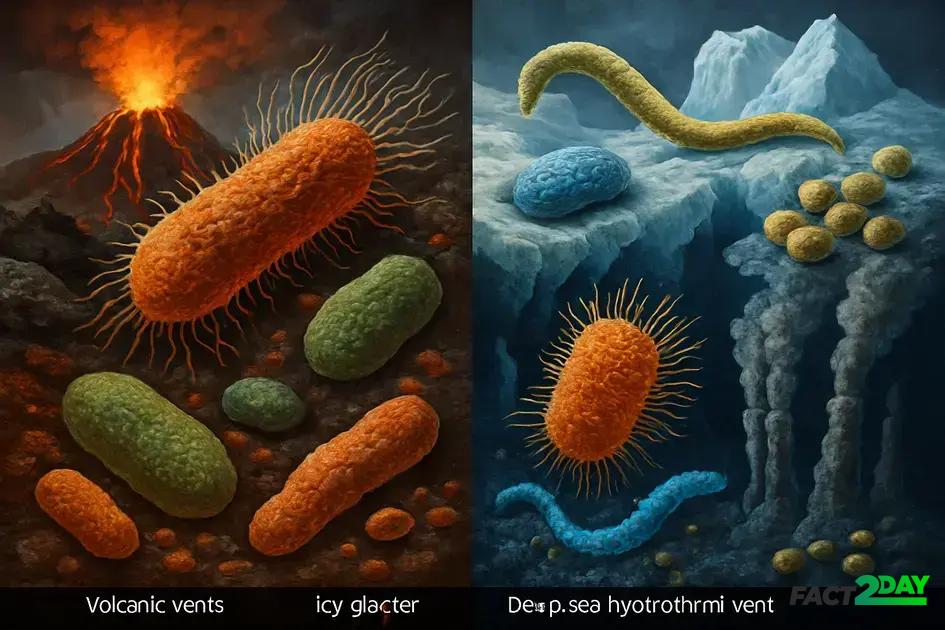
Microbes in extreme environments survive by adapting unique biochemical and structural traits that allow them to thrive in harsh conditions like heat, cold, acidity, and salinity, revealing new insights into life’s resilience and offering valuable applications in science and industry.
Have you ever wondered how life manages to endure where it seems impossible? Microbes in extreme environments hold remarkable secrets of survival that challenge our understanding of life on Earth.
survival strategies of microbes in extreme conditions
Microbes living in extreme environments have developed remarkable survival strategies that allow them to thrive where most life cannot. One key tactic is their ability to produce specialized proteins and enzymes that function in intense heat, acidity, or salinity. For instance, heat-loving microbes, called thermophiles, have heat-resistant enzymes that maintain their structure in boiling conditions.
Adaptations to Environmental Stress
These microbes often possess unique cell membranes that prevent damage from harsh chemicals or radiation. Some create protective biofilms that shield them from extreme pH or dryness. Others enter dormant states, slowing metabolism considerably until conditions improve.
Efficient Energy Use
To survive scarce nutrients, microbes utilize diverse metabolic pathways, including chemosynthesis, which allows them to generate energy from inorganic molecules like hydrogen sulfide. This ability is vital in environments such as deep-sea vents where sunlight doesn’t reach.
Microbes in extreme environments showcase life’s adaptability through these survival mechanisms, expanding our understanding of biological resilience and inspiring biotechnological advances.
types of extreme environments and their microbial inhabitants
Extreme environments vary widely across Earth, each hosting unique microbial communities adapted to survive harsh conditions. Hot springs and hydrothermal vents provide intensely hot, mineral-rich waters where thermophilic microbes flourish. These organisms use chemical energy from the vents to power their metabolism instead of sunlight.
Cold and Frozen Habitats
Polar ice caps and glaciers represent frigid realms where psychrophilic microbes live. These cold-loving microbes have adapted membranes that remain fluid at low temperatures and enzymes that function efficiently in the cold.
Highly Saline and Acidic Environments
Salt flats and acidic lakes harbor halophiles and acidophiles. Halophiles thrive by balancing salt concentration inside their cells, while acidophiles maintain internal pH despite external acidity. These adaptations illustrate the amazing flexibility of microbial life across extreme habitats.
The study of these varied environments and their microbial inhabitants helps scientists understand life’s limits and potential for existence beyond Earth.
importance of studying microbes in extreme environments
Studying microbes in extreme environments reveals critical insights into the limits of life on Earth. These microbes often possess unique genes and metabolic processes that can lead to important biotechnological breakthroughs. For example, enzymes derived from heat-loving microbes are used in industrial processes like PCR, a method essential for DNA analysis.
Advancing Scientific Knowledge
Research on extremophiles expands our understanding of how life adapts to stress. This knowledge helps scientists in fields like astrobiology, where they seek signs of life on other planets by studying organisms in Earth’s most hostile places.
Medical and Environmental Applications
Microbes from extreme environments produce novel compounds with potential for new antibiotics and pharmaceuticals. They also play roles in bioremediation, breaking down pollutants in harsh conditions where other organisms cannot survive.
Overall, exploring these resilient microbes not only deepens our appreciation for life’s diversity but also offers practical benefits across medicine, industry, and environmental science.
Embracing the hidden world of microbes
Microbes in extreme environments teach us about life’s incredible ability to survive and adapt. Their unique traits inspire innovation in science and industry while expanding our knowledge of biology.
By studying these tiny survivors, we open doors to new technologies, medical advances, and a deeper understanding of life beyond our planet. Their resilience reminds us that even in the harshest conditions, life finds a way to thrive.