The Day a Meteorite Made Sound Waves on Earth
Explore the fascinating story of meteorite audio and how these cosmic visitors create sound waves when they meet Earth’s atmosphere.
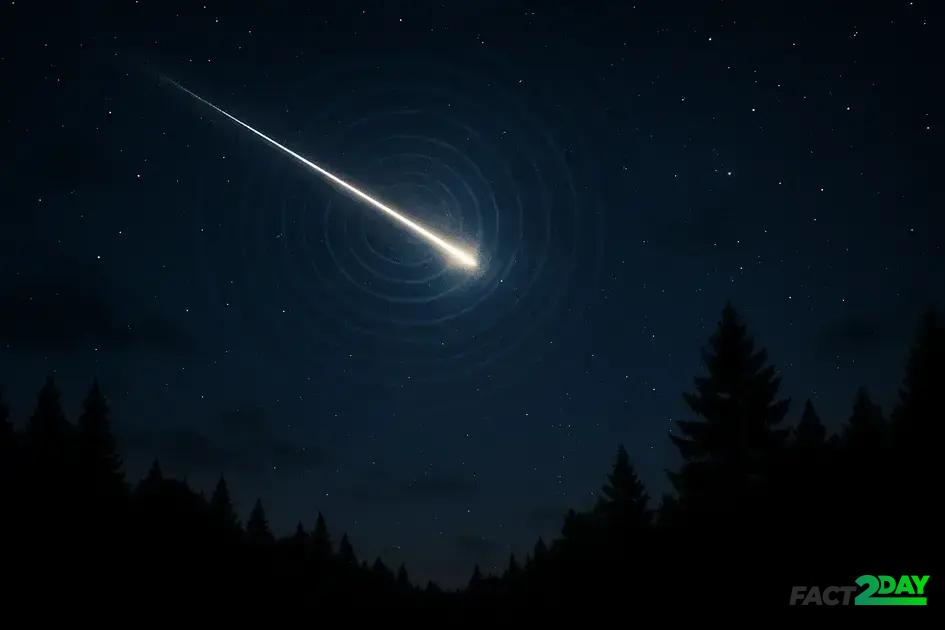
Meteorite audio refers to the rare sounds and shockwaves produced when meteorites enter Earth’s atmosphere, creating sonic booms and acoustic waves that can be captured and studied with specialized sensors and technology.
Meteorite audio is a curious phenomenon that not many notice when a glowing rock crosses the sky. Have you ever wondered how space visitors can create sounds that reach our ears? Let’s explore this rare encounter between Earth’s atmosphere and cosmic travelers and what makes these sounds so special.
what is meteorite audio and why it’s rare
Meteorite audio refers to the unique sounds produced when a meteorite travels through Earth’s atmosphere. These sounds are rare because they occur under specific conditions where the meteorite’s speed, size, and atmospheric interaction create audible vibrations or sonic booms. Most meteorites burn up silently or with little sound, making those that produce clear audio a special scientific interest.
Why Meteorite Audio Is Uncommon
Sound waves created by meteorites depend on factors such as atmospheric density, meteorite composition, and entry angle. Many meteorites are too small or disintegrate too high in the atmosphere for their sounds to reach the ground. Additionally, atmospheric noise and distance often mask these faint noises.
The Science Behind the Sounds
The sound from meteorites mainly arises from shockwaves generated as they move faster than the speed of sound in air. These shockwaves can trigger sonic booms heard on the ground or create electrical disturbances that translate to sound. Researchers use special equipment to detect and record these elusive phenomena.
Understanding meteorite audio helps scientists learn about meteorite speed, size, and composition, offering clues about objects entering Earth from space. It also enriches our knowledge of atmospheric physics during these high-energy events.
how meteorites create sound waves
Meteorites create sound waves as they travel through Earth’s atmosphere at very high speeds. When a meteorite enters the atmosphere, it pushes air molecules ahead of it, causing compression that forms shockwaves. These shockwaves move faster than the speed of sound, leading to the creation of sonic booms that can be heard on the ground.
Shockwave Formation
The shockwaves result from the meteorite’s supersonic speed, which generates intense pressure on the surrounding air. This sudden rise and fall in air pressure produce acoustic waves that can propagate down to observers on Earth.
Factors Influencing Sound Production
The size, speed, and angle of entry of the meteorite all affect the sound waves it produces. Larger meteorites traveling faster produce stronger shockwaves and louder sounds. Conversely, small meteorites or those disintegrating high in the atmosphere often do not produce audible sounds.
Other Sound Generation Mechanisms
In addition to shockwaves, some meteorites produce sounds through interactions with the Earth’s magnetic field and ionosphere. These interactions can generate electromagnetic signals that specialized equipment can convert into audio.
Overall, the process of sound creation by meteorites involves complex interactions between physical speed, atmospheric conditions, and even ionospheric effects, making each meteorite’s audio signature unique.
notable recorded meteorite sounds
There have been several notable recorded meteorite sounds that captured the attention of scientists and the public alike. These recordings provide valuable insights into the behavior of meteorites as they enter the atmosphere and produce sound waves.
The Chelyabinsk Event (2013)
One of the most famous cases is the Chelyabinsk meteorite in Russia. When it exploded in the atmosphere, it created a powerful sonic boom heard by thousands. Some audio recordings captured the sharp, thunderous blast as the meteorite shattered above the city.
The Park Forest Fireball (2003)
This event in Illinois, USA, is known for its captured audio of a fireball streaking through the sky. Witnesses reported a loud rumbling and boom as the meteorite broke apart, and specialized equipment recorded the infrasonic sounds generated.
Other Recorded Meteorite Sounds
Various researchers and enthusiasts have used acoustic sensors to pick up faint sounds associated with smaller meteorite falls. These recordings often include sonic booms, hissing, or crackling noises caused by atmospheric entry or fragmentation.
These documented cases help scientists to analyze meteor entry dynamics, understand atmospheric interactions, and even improve tracking systems for future meteor events.
the science behind atmospheric sounds
The science behind atmospheric sounds generated by meteorites involves understanding how these space rocks interact with air molecules at high speeds. When a meteorite enters Earth’s atmosphere, it compresses the air in front of it, creating shockwaves that travel as sound waves.
Atmospheric Pressure and Sound Waves
As the meteorite moves, the rapid change in atmospheric pressure creates a range of acoustic phenomena. The shockwaves often manifest as sonic booms, which are loud sounds caused by the meteorite traveling faster than the speed of sound in air.
The Role of Temperature and Altitude
Temperature and altitude affect how sound travels. At higher altitudes, the air is thinner, which can dampen the sound or change its characteristics. As the meteorite descends, the denser air helps carry the sound waves closer to the ground where they can be heard.
Electromagnetic Interactions and Sound
Some meteorites generate electromagnetic effects in the ionosphere, which can produce unusual radio and sound phenomena. Scientists study these interactions to better understand how energy is transferred during the meteorite’s atmospheric entry.
Research into these atmospheric sounds helps improve detection methods for meteorites and furthers our knowledge of atmospheric physics and meteorology.
the impact of meteorite sounds on wildlife
Meteorite sounds can have a noticeable impact on wildlife, especially when the sounds are loud or unusual. Animals rely heavily on their hearing for communication, navigation, and detecting danger, so sudden sonic booms or crackling noises from meteorites can disrupt these behaviors.
Behavioral Changes in Animals
Studies show that loud meteorite sounds may cause animals to become startled, flee, or alter their daily patterns. For example, birds might stop singing or flying temporarily, while mammals could hide or move away from the noise source.
Effects on Communication
Wildlife communication can be disrupted by meteorite sounds. The occasional loud booms may mask calls, making it harder for animals to find mates, alert each other to predators, or care for their young.
Long-Term Impact
Most meteorite sounds are brief and rare, so long-term harm to wildlife is limited. However, repeated exposures or particularly strong sonic events could stress animals, affecting feeding or reproduction.
Understanding these effects helps biologists study animal responses to unusual natural events and informs efforts to protect sensitive ecosystems during meteor-related occurrences.
how researchers capture and study meteorite audio
Researchers capture meteorite audio using a variety of specialized instruments designed to detect the faint sound waves produced by meteors as they enter the atmosphere. These tools include infrasound sensors, microphones, and radar systems that work together to collect precise data.
Infrasound Sensors
Infrasound sensors pick up low-frequency sound waves that humans cannot hear. These sensors are often deployed in arrays to identify the direction and intensity of meteorite sounds, allowing scientists to track meteor paths and sizes.
Microphone Arrays
High-sensitivity microphones capture audible sounds produced by meteorites, including sonic booms or crackling noises caused by fragmentation. Using multiple microphones enables researchers to triangulate the source of these sounds with high accuracy.
Radar and Acoustic Integration
Researchers combine acoustic data with radar observations to better analyze meteorite speed, altitude, and trajectory. This integrated approach helps generate a clearer picture of the meteor’s behavior in the atmosphere and the resulting audio signature.
Data Analysis and Modeling
The collected sound data undergoes detailed analysis using computer models that simulate how meteorites interact with the atmosphere. These models help interpret sound wave patterns and improve understanding of meteor physics.
This multi-disciplinary method of capturing and studying meteorite audio advances our knowledge of meteor events and enhances early warning systems for potentially hazardous objects.
the cultural significance of meteorite sounds
Meteorite sounds have held cultural significance throughout history in many societies. These rare and mysterious sounds were often interpreted as messages from the gods or signs of important events.
Meteorite Sounds in Mythology
In various cultures, the booming noises from meteorites were seen as warnings or omens. For example, some Indigenous groups believed these sounds signaled the arrival of spirits or changes in nature.
Folklore and Storytelling
Stories and legends about loud meteorite booms have been passed down through generations. These tales often describe dramatic sky fires and sounds linked to weather changes or battles between supernatural forces.
Modern Cultural Impact
Today, meteorite sounds inspire art, music, and literature. Scientists and artists collaborate to recreate and share these sounds, bridging science and culture. Events like meteor showers also attract public gatherings and festivals celebrating cosmic phenomena.
Understanding the cultural significance of meteorite sounds enriches our appreciation of how humans connect with the cosmos and interpret natural phenomena.
future technologies to record and analyze meteorite audio
Future technologies promise to transform how researchers record and analyze meteorite audio. Advances in sensors, artificial intelligence, and data processing will enable more precise and comprehensive detection of these elusive sounds.
Enhanced Sensor Networks
Next-generation infrasound and acoustic sensor arrays will be more sensitive and widespread. These networks can capture faint meteorite sounds over larger areas, increasing the chances of detection and improving location accuracy.
Artificial Intelligence and Machine Learning
AI algorithms will play a key role in analyzing vast amounts of audio data. Machine learning models can identify meteorite sounds amidst background noise, classify types of meteor events, and predict future occurrences.
Integration with Satellite and Radar Systems
Combining audio data with satellite imagery and radar tracking will provide more detailed meteor profiles. This integration allows for real-time monitoring and better understanding of meteor trajectories and fragmentation patterns.
Portable and Citizen Science Devices
Innovative, portable recording devices will empower amateurs and citizen scientists to contribute to meteorite audio research. This democratization of data collection will expand global monitoring networks.
Overall, these emerging technologies will deepen scientific insights into meteorite phenomena and enhance global safety by improving early detection of potentially hazardous objects.
Understanding the power of meteorite audio
The sounds created by meteorites offer a unique glimpse into the mysteries of space and our atmosphere. From rare recordings to the science behind their formation, these audio signals help scientists and enthusiasts connect with cosmic events.
With future technologies improving detection and analysis, we can expect to learn more about these fascinating phenomena. Whether through research or cultural stories, meteorite sounds continue to inspire and educate us about the universe.
Exploring meteorite audio enriches our knowledge and deepens our appreciation of Earth’s place in the cosmos.