The Moon Trees: How NASA Sent Seeds to Space
Lunar trees reveal a poetic tale of how NASA sent seeds to space, intertwining nature with cosmic exploration. Discover their story here.
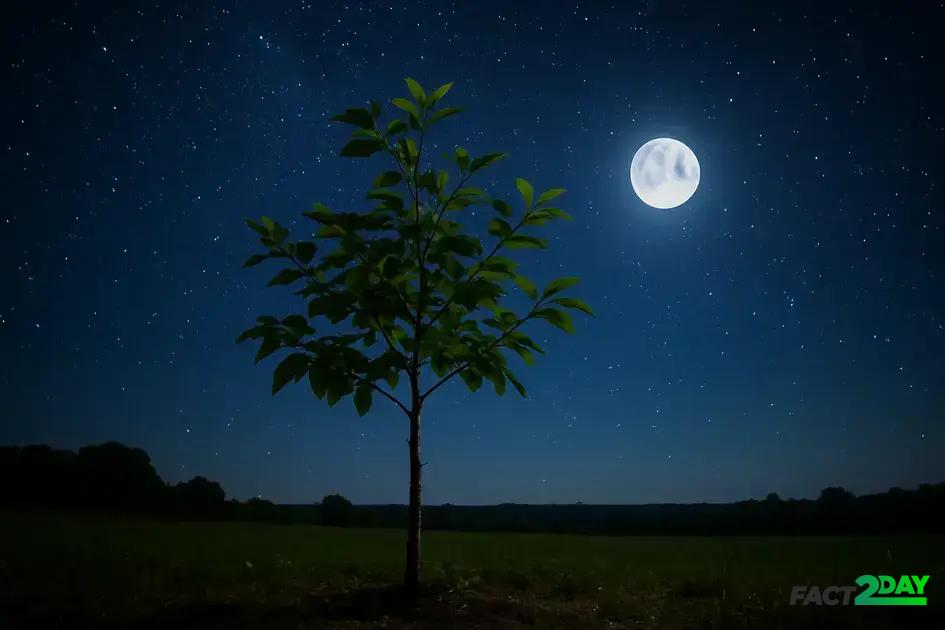
Lunar trees are trees grown from seeds that orbited the moon during NASA’s Apollo 14 mission, demonstrating that plant life can survive space conditions and linking Earth’s nature with space exploration innovations.
Have you ever heard about lunar trees? These unique trees sprouted from seeds that NASA sent to space, carrying a quiet story of earthbound nature meeting the vast cosmos. Let’s walk through this extraordinary journey together and uncover what makes these trees so special.
What are lunar trees and their origin
Lunar trees are trees grown from seeds that orbited the moon during NASA’s Apollo missions in the 1970s. The idea began as a creative experiment to see if seeds could survive the harsh environment of space and still grow normally back on Earth. These seeds were carried aboard the Apollo 14 spacecraft and exposed to space conditions like microgravity and cosmic radiation.
The origin of lunar trees
The concept was developed by astronaut Stuart Roosa, who was once a forest fire lookout. He took hundreds of seeds, including loblolly pine, sycamore, sweetgum, redwood, and Douglas fir, on the Apollo 14 mission in 1971. After the mission, these seeds were germinated, and the resulting seedlings became known as lunar trees.
Unique aspects of lunar trees
What makes lunar trees fascinating is their attempt to bridge space exploration with Earth’s natural environment. Scientists hoped to understand how the space environment might affect seed viability and growth. Today, lunar trees are planted in various locations around the world, serving as living reminders of humanity’s reach beyond our planet.
This experiment also sparked interest in space botany, encouraging further research on growing plants in space, which is critical for future long-duration space missions and potential colonization.
The NASA space mission that carried the seeds
The NASA mission that carried the seeds into space was Apollo 14, launched in January 1971. This mission was the third to land humans on the moon and included astronauts Alan Shepard, Stuart Roosa, and Edgar Mitchell. While Shepard and Mitchell explored the lunar surface, Roosa stayed in lunar orbit, conducting experiments and managing the seed experiment.
The seed experiment on Apollo 14
Stuart Roosa, a former smokejumper for the U.S. Forest Service, brought along hundreds of tree seeds in small containers. These seeds were exposed to the conditions of space travel, including microgravity, cosmic radiation, and the extreme environment of lunar orbit. This unique experiment aimed to test the effects of space travel on seed viability and germination once returned to Earth.
Carrying seeds safely
The seeds were stored in special sealed canisters inside Roosa’s personal kit during the mission. Despite the challenges of space travel, none of the seeds were lost or damaged before returning to Earth. This success was crucial for later scientific analysis and germination processes.
The Apollo 14 mission’s success with the seeds laid the groundwork for further space-based botanical experiments, providing vital information for future long-term space exploration and life-support systems.
How seeds survive in the harsh conditions of space
Seeds face extreme challenges in space, including intense radiation, microgravity, and drastic temperature changes. Despite these harsh conditions, many seeds are remarkably resilient and can survive the journey when properly protected.
Protection during space travel
To survive, seeds like those carried on Apollo 14 were sealed in special containers that shielded them from direct radiation and physical damage. This protective barrier was essential to keep the seeds viable for germination after the mission.
Effects of microgravity on seeds
Microgravity impacts biological processes by altering how cells grow and develop. Yet, many seeds appear to remain dormant and unaffected while in orbit, enabling normal growth once back on Earth. This dormancy helps seeds withstand the unusual environment without germinating prematurely.
Radiation tolerance
Space radiation, including cosmic rays and solar particles, can damage DNA and cellular structures. Seeds have a natural ability to repair some damage, and their hardy outer coatings add an extra layer of defense. NASA’s experiments showed that tree seeds especially could handle these stressors well during short missions.
Understanding how seeds survive in space is crucial for future long-term missions, where growing plants in space will support human life by providing food, oxygen, and psychological benefits.
Trees grown from seeds orbiting the moon
After returning from space, the seeds carried aboard Apollo 14 were germinated and grown into what became known as lunar trees. These trees include several species such as loblolly pine, sycamore, sweetgum, redwood, and Douglas fir. The successful growth of these trees demonstrated that seeds could survive space travel and still develop normally on Earth.
Growing lunar trees on Earth
The seeds were planted in various locations, including research facilities and arboretums across the United States. Scientists closely monitored their growth to observe any differences compared to control trees that never went to space. For the most part, lunar trees displayed normal growth patterns and healthy development.
Scientific findings and observations
While most lunar trees grew similarly to their Earth-bound counterparts, some showed minor variations in height and leaf structure. These subtle differences sparked curiosity and further studies into how space travel might affect biological processes at a genetic or cellular level.
The survival and growth of lunar trees remain a testament to the resilience of nature, bridging the gap between space exploration and terrestrial life. These living symbols have been planted in parks and universities, inspiring generations about the possibilities of space science and ecology.
Scientific studies on lunar tree growth
After the lunar seeds were brought back to Earth and germinated, scientists conducted various studies to understand how space travel affected their growth. These studies compared lunar tree seedlings to those grown from seeds that never left Earth.
Growth rate and physical characteristics
Researchers observed that most lunar trees grew at similar rates as the control group. Some seedlings showed minor differences in leaf size, height, and overall morphology, but these variations were within natural ranges. This suggested space travel did not cause significant long-term damage.
Genetic and cellular analysis
Advanced genetic tests were performed to look for mutations or abnormalities caused by space radiation and microgravity exposure. Results showed no major genetic changes, indicating that the seeds’ protective coatings and dormant state helped preserve their integrity.
Implications for space botany
These findings encouraged further research into growing plants in space, vital for future missions and colonization efforts. Understanding how space conditions influence plant biology helps design effective life-support systems, contributing to long-term human space exploration.
The symbolic meaning of lunar trees in space exploration
Lunar trees symbolize the unique bond between nature and space exploration. They represent how human curiosity leads to blending Earth’s natural life with the vast cosmos. These trees remind us of the pioneering spirit that drives scientists and astronauts to explore the unknown.
Connection between Earth and space
By sending seeds into space and growing trees back on Earth, NASA created a living bridge between our planet and the moon. Lunar trees are a powerful symbol of exploration, survival, and growth beyond the confines of our home.
Inspiration for future explorations
These trees inspire researchers to consider sustainable life-support systems for long missions. Growing plants in space is critical for future astronauts, and lunar trees serve as early examples of what might be possible.
Cultural and educational impact
Lunar trees have been planted in public spaces and universities, serving as educational tools and memorials to human achievement. They encourage people to reflect on the synergy between science, space, and the environment.
In essence, lunar trees stand as living testaments to human innovation and the hopeful future of space colonization.
How lunar trees connect Earth’s nature with the cosmos
Lunar trees uniquely connect Earth’s natural world with the vast cosmos, blending science and nature in a symbolic and literal way. These trees began as seeds that orbited the moon, then grew on Earth, representing a tangible link between our planet and outer space.
The bridge between Earth and space
By sending seeds to orbit the moon, scientists created living proof that Earth’s life can endure beyond our atmosphere. Lunar trees embody this connection, showing how terrestrial biology can withstand space conditions and thrive back home.
Inspiring scientific discovery
The success of lunar trees encouraged researchers to further explore how plants grow in space, which is critical for sustaining human life during long missions. Studying these trees helps us understand how to carry Earth’s ecosystems into the cosmos.
Symbolism and cultural significance
Lunar trees serve as powerful symbols of exploration, resilience, and hope. They remind us that despite the challenges of space, life on Earth is adaptable and enduring, encouraging a sense of unity between our planet and the broader universe.
Educating new generations with lunar tree stories
Lunar trees offer a unique way to engage students and the public in science, space exploration, and environmental education. Schools and museums use the story of these trees to spark curiosity about how plants can survive in space and the importance of preserving Earth’s biodiversity.
Teaching science through storytelling
The journey of lunar trees from space back to Earth provides a captivating narrative that helps explain complex scientific ideas like seed dormancy, radiation effects, and space travel conditions in a simple and relatable way.
Hands-on learning opportunities
Many educational programs involve planting lunar tree seedlings or similar species to give students a first-hand experience with biology and ecology. This interaction helps deepen understanding and fosters a connection with nature and space science.
Inspiring future explorers and scientists
The story of lunar trees illustrates how creativity and exploration go hand in hand. It encourages youth to dream about careers in space science, botany, and environmental stewardship by showing real-world examples of human achievement and innovation.
By sharing lunar tree stories, educators build awareness about the challenges and rewards of space exploration and the vital role of plants in sustaining life, both on Earth and beyond.
Challenges faced in growing lunar trees on Earth
Growing lunar trees on Earth involved several challenges that researchers had to carefully address. Although the seeds survived space travel, cultivating them into healthy trees required close monitoring and specialized care.
Environmental adjustments
Lunar tree seedlings were sometimes more sensitive to Earth’s environment. Scientists had to ensure optimal conditions in soil, light, and water to support their growth. Differences in climate and soil composition affected how well some seedlings adapted.
Monitoring growth variations
Researchers observed subtle differences in growth rates, leaf shapes, and overall health compared to regular trees. These variations required detailed measurement and long-term studies to understand their causes and implications.
Protecting against pests and diseases
Like all young trees, lunar seedlings were vulnerable to pests and illnesses. Maintaining a healthy growing environment involved pest control and disease prevention, especially since the seeds’ space exposure raised questions about potential unknown vulnerabilities.
Despite these obstacles, successful cultivation of lunar trees demonstrated resilience and provided valuable insight for future space botany projects and Earth-based plant research.
The future of lunar trees and space botany
The future of lunar trees and space botany holds exciting possibilities as scientists explore growing plants in space to support long-term human missions. These early experiments with seeds orbiting the moon pave the way for expanding our knowledge of plant biology beyond Earth.
Advancing space agriculture
Research aims to develop sustainable crops that can grow in microgravity and with limited resources. Lunar trees serve as a model for how plants react to space conditions, helping improve growth techniques for future space farms.
Supporting human life in space
Plants play a critical role in providing oxygen, food, and psychological benefits for astronauts. Understanding how lunar trees grow contributes to creating self-sustaining habitats on the moon, Mars, or space stations.
Biotechnology and genetic research
Scientists are exploring genetic modifications to enhance plant resilience against space stressors like radiation and low gravity. Lunar tree studies contribute insights into how plants repair damage and adapt, guiding biotech innovations.
As space exploration advances, lunar trees symbolize the merging of nature with technology, inspiring future breakthroughs in cultivating life beyond Earth.
Looking Ahead: The Legacy of Lunar Trees
The story of lunar trees highlights the amazing connection between life on Earth and the vastness of space. These trees show us that life can endure even in the most extreme conditions, inspiring hope for future space exploration.
As scientists continue to study and grow plants beyond our planet, lunar trees remain a symbol of innovation and resilience. Their journey encourages us to explore new frontiers while caring for our natural world.
Understanding and advancing space botany will be key to supporting long-term human missions in space. Lunar trees pave the way for this exciting future, bridging the gap between Earth’s nature and the cosmos.