Dust to Dust: The Environmental Factors Behind the Collapse of Ancient Empires
Explore how lost empires environmental collapse reveals nature’s role in toppling ancient civilizations through dramatic ecological shifts and human impact.
Consider for a moment a courtroom scene complete with judge, jury, and counsel, but with one peculiar difference: the accused is not human. What might seem like a whimsical fable actually reflects a strangely common practice in medieval Europe: animal trials.
The practice of animal trials
From pigs condemned for murder to beetles excommunicated for harming crops, these trials were formal events. Animals often had legal representation, witnesses, and the right to appeal decisions. This shows a unique perspective on justice and culpability at the time.
Animals as moral agents
In these trials, animals were seen as more than property; they were viewed as moral beings capable of wrongdoing. This reflects how deeply law and spirituality were connected in medieval society.
Reflections on law and morality
This unusual chapter in legal history invites us to think about how ideas of justice, morality, and personhood have changed over time. It reminds us that our judgments are shaped by cultural beliefs, even in unexpected ways.
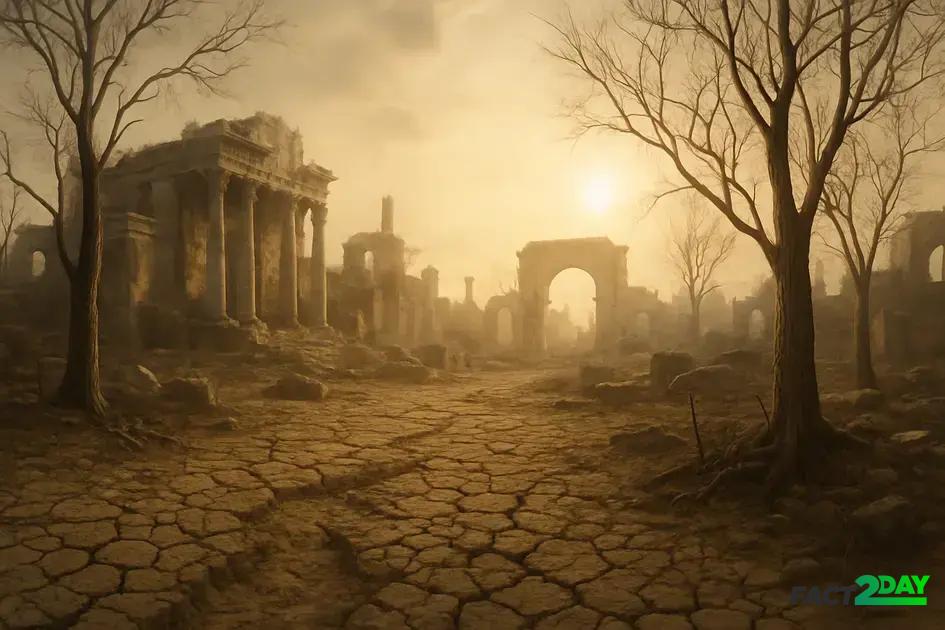
Consider for a moment the profound lesson of Lost Empires Environmental Collapse. What strikes me most is how nature’s quiet transformations can unravel mighty civilizations, inviting us to rethink our own fragile coexistence with the environment.
Understanding environmental collapse in ancient empires
Environmental collapse in ancient empires refers to the gradual degradation of natural resources and ecosystems that played a crucial role in destabilizing once-thriving civilizations. When vital resources like water, fertile soil, and forests diminish, societies struggle to sustain agriculture, maintain infrastructure, and support growing populations.
The cycle of environmental stress
Many ancient empires faced climate fluctuations that led to prolonged droughts or excessive rainfall, disrupting food production and economic stability. Combined with human activities such as deforestation and over-farming, these changes created a feedback loop accelerating resource depletion.
Human-environment interaction
Ancient communities often depended heavily on their environment, shaping their cultural and economic practices around available resources. However, unsustainable management—like clearing forests for agriculture or draining wetlands—reduced biodiversity and soil quality, making these societies vulnerable to natural disasters and climatic shifts.
Understanding how environmental collapse unfolded in ancient empires highlights the delicate balance between human activity and nature. Recognizing these interactions helps us appreciate why some civilizations fell when their environment could no longer support their needs.
Key natural factors contributing to empire decline
Several key natural factors played pivotal roles in the decline of ancient empires. Changes in climate patterns, such as prolonged droughts or sudden cooling, often disrupted agricultural cycles and food supply, weakening societies. Additionally, soil erosion and nutrient depletion from over-farming diminished land fertility, leading to lower crop yields.
Water scarcity and its impact
Rivers and lakes that once provided vital water sources sometimes dried up or became polluted due to natural shifts or human overuse. This created challenges in irrigation and drinking water availability, causing stress on populations and economies.
Natural disasters and their consequences
Earthquakes, floods, and volcanic eruptions occasionally struck ancient civilizations, damaging infrastructure and displacing communities. The repeated impact of such events could destabilize governance and social order, compounding environmental pressures.
Understanding these natural factors deepens our insight into how environmental shifts directly influenced the vulnerability and eventual collapse of powerful empires.
The role of climate change in historical collapses
Climate change has played a significant role in the collapse of many ancient empires. Fluctuations in temperature and rainfall patterns often disrupted agricultural productivity, triggering food shortages and social unrest. Long periods of drought, in particular, weakened economies that relied heavily on farming.
Impact on agriculture and food supply
Shifts in climate affected crop growth cycles and water availability, decreasing harvest yields. This scarcity made it difficult to feed growing populations, contributing to famine and migration pressures.
Social and political consequences
Resource shortages caused by climate change often intensified conflicts within and between societies. Strained resources could lead to weakened governments, loss of public trust, and eventually, the downfall of ruling elites.
Overall, recognizing the role of climate change in historical collapses provides insight into how vulnerable human societies can be when natural systems are altered.
Drought and water scarcity as critical stressors
Drought and water scarcity were among the most critical stressors in the collapse of ancient empires. Without reliable water sources, agriculture and daily life became unsustainable. Extended dry periods led to failed crops and reduced food supplies, destabilizing entire regions.
Effects on agriculture
Water scarcity limited irrigation, making large-scale farming nearly impossible. Crop failures forced communities to rely on less productive land, further straining resources. This contributed to malnutrition and weakened populations.
Social impacts of drought
As water became scarce, competition for it intensified, often leading to conflicts between communities. The stress on resources undermined trust and cooperation, sometimes causing migrations or internal unrest.
Strong empires could adapt to some challenges, but prolonged drought often meant the difference between survival and decline. Understanding these stresses highlights the delicate balance ancient societies held with their environment.
Deforestation and soil degradation effects
Deforestation and soil degradation are major environmental issues that contributed to the decline of ancient empires. Removing trees for agriculture, fuel, and building materials reduced forest cover, which affected rainfall patterns and increased erosion.
How deforestation affects soil health
Trees and plants anchor the soil, preventing it from washing or blowing away. When forests are cleared, topsoil becomes exposed and prone to erosion. This loss of fertile soil harms crop yields and reduces land productivity.
Long-term consequences of soil degradation
Soil that is repeatedly farmed without replenishing nutrients loses its ability to support crops. Over time, this decreases agricultural output, leading to food shortages and economic stress on communities dependent on farming.
Understanding how deforestation and soil degradation combined help explain why some ancient societies struggled to sustain themselves and eventually collapsed.
Impact of natural disasters on empire stability
Natural disasters such as earthquakes, floods, and volcanic eruptions had severe impacts on empire stability in ancient times. These events could destroy infrastructure, disrupt trade routes, and cause widespread loss of life, weakening political and social order.
Earthquakes and structural damage
Strong earthquakes could topple buildings, temples, and fortifications, leaving cities vulnerable to invasion and internal chaos. Repairing such damage often strained the empire’s resources and labor force.
Floods and their aftermath
Heavy floods could wash away fertile soil and settlements, contaminate drinking water, and damage crops. Repeated flooding made it difficult to maintain agricultural productivity and sustain large populations.
Volcanic eruptions and climate effects
Volcanic eruptions not only destroyed nearby settlements but also affected climate by releasing ash and gases into the atmosphere. This could lead to cooler temperatures and shortened growing seasons, further challenging the empire’s survival.
Overall, natural disasters created unpredictable challenges that ancient empires often struggled to recover from, contributing to their eventual decline.
Human activity accelerating environmental degradation
Human activities significantly accelerated environmental degradation in many ancient empires. Practices such as over-farming, deforestation, and excessive water use disrupted ecosystems and depleted natural resources.
Over-farming and land exhaustion
Repeatedly planting crops without allowing fields to rest caused soil nutrient loss and erosion. This reduced land productivity and eventually led to barren landscapes incapable of supporting large populations.
Deforestation and its ripple effects
Trees were often cut down to clear land for agriculture or to provide fuel and building materials. Deforestation decreased rainfall retention, increased erosion, and altered local climates, contributing to harsher growing conditions.
Water overuse and contamination
Irrigation systems sometimes drew more water than natural supplies could replenish. Additionally, improper waste disposal contaminated water sources, affecting both humans and crops.
These human-induced environmental changes overwhelmed natural systems and played a crucial role in weakening empires, making them vulnerable to collapse.
Case study: The fall of the Maya civilization
The fall of the Maya civilization is a striking example of how environmental factors contributed to the collapse of an empire. The Maya faced a combination of prolonged drought, deforestation, and soil exhaustion that severely affected their agricultural base.
Environmental stress and agriculture
Prolonged droughts disrupted water supplies critical for farming and daily life. Coupled with extensive deforestation to clear land for crops, these factors led to soil degradation and reduced crop yields.
Social and political repercussions
The resulting food shortages sparked social unrest and conflict among city-states. Competition over dwindling resources weakened political structures and alliances, accelerating the civilization’s decline.
Lessons from the Maya collapse
The Maya case underscores the importance of sustainable resource management and the vulnerability of complex societies to environmental change. It illustrates how nature’s limits can directly influence human history and societal stability.
Case study: The collapse of the Roman Empire
The collapse of the Roman Empire involved many factors, including significant environmental challenges. Shifts in climate led to harsher winters and disrupted agriculture, reducing food production for its vast population.
Environmental stresses and agriculture
Changing climate patterns caused crop failures and food shortages. Simultaneously, deforestation and soil erosion reduced fertile land, worsening the empire’s ability to sustain its people.
Water and resource management issues
Water supply problems emerged as rivers silted up and aqueducts were damaged. Pollution and overuse further strained resources critical for both cities and farmlands.
Broader impact on stability
Environmental hardships weakened economic strength and contributed to internal strife and external invasions. The loss of natural resilience played a role alongside political and military challenges in the empire’s decline.
Lessons from the Indus Valley civilization’s decline
The decline of the Indus Valley civilization offers important lessons on how environmental and human factors combine to impact societies. Changes in river patterns and flooding disrupted agriculture and urban life.
Environmental changes and water management
Shifts in the course of major rivers made irrigation difficult, reducing crop production. Flooding and waterlogging led to damaged infrastructure and uninhabitable areas.
Human responses and societal challenges
The civilization may have struggled to adapt its water management systems to these changes. Combined with possible deforestation and soil degradation, these issues weakened the social and economic foundations.
Insights into sustainability
The Indus Valley case highlights the need for flexible adaptation to environmental changes and balancing resource use to avoid long-term damage. It shows how complex societies depend on stable natural systems for their survival.
Ancient agricultural practices and sustainability limits
Ancient agricultural practices were critical to the success of early empires, but they also had sustainability limits. Techniques like slash-and-burn farming and continuous cropping without crop rotation led to soil depletion over time.
Impact of intensive farming
Many ancient societies practiced intensive farming to feed growing populations. However, this often exhausted nutrients in the soil, leading to lower yields and reduced food security.
Challenges of irrigation and water use
Irrigation methods sometimes caused salinization of the soil, making land less fertile. Over time, mismanagement of water resources contributed to declines in agricultural productivity.
The balance between growth and sustainability
The limits of these ancient practices reveal how early civilizations struggled to balance immediate needs with long-term sustainability. Without replenishing the land, agricultural collapse became a serious risk, contributing to broader societal decline.
Environmental collapse and social-political consequences
Environmental collapse often led to severe social and political consequences in ancient empires. When natural resources dwindled, societies faced food shortages, population stress, and increased competition for essentials.
Social unrest and migration
Scarcity of resources sparked conflicts within communities and between neighboring groups. Many people were forced to migrate in search of better living conditions, leading to population shifts and instability.
Political weakening and loss of control
Governments struggled to manage crises caused by environmental stress. Loss of food and wealth reduced their ability to maintain order, collect taxes, and defend borders, accelerating decline.
Collapse of institutions and cultural change
As empires weakened, institutions that held societies together broke down. This often resulted in cultural transformations or loss of knowledge as communities reorganized or dispersed.
These consequences show how deeply connected environmental health is to the strength and survival of civilizations.
Modern implications of ancient environmental failures
The ancient environmental failures hold critical lessons for our modern world. Today’s societies face similar challenges such as climate change, resource depletion, and ecosystem degradation, which threaten stability and growth.
Warnings from the past
Historical collapses show how ignoring environmental limits can lead to social disruption and economic decline. They remind us that sustainable resource use is vital to prevent similar fates.
Modern challenges and opportunities
Growing populations and industrial impacts increase pressure on natural systems. Yet, advances in technology and awareness provide tools to address these issues if applied responsibly.
Building resilience for the future
Learning from ancient failures encourages proactive environmental stewardship, integrating conservation, climate adaptation, and sustainable development to ensure long-term survival.
Understanding the lessons from ancient empire collapses
The stories of lost empires show us the powerful impact environmental factors can have on society. When natural resources are overused or the climate shifts drastically, even great civilizations can struggle to survive.
By studying these historical examples, we see the importance of balancing human needs with care for the environment. Doing so helps prevent social unrest and political instability.
Today, as we face our own environmental challenges, these lessons remind us to act wisely. Protecting our natural world is essential to ensuring the prosperity and resilience of modern societies.