Volcanoes Can Create Their Own Lightning
Lightning from volcanoes lights up the sky during eruptions, revealing nature’s surprising power in volcanic storms.
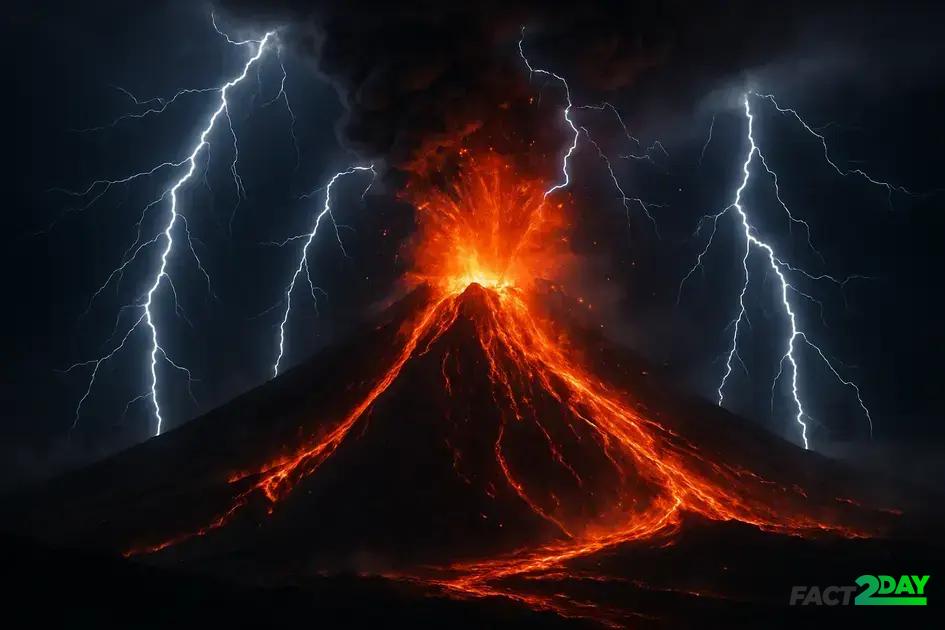
Lightning from volcanoes is caused by static electricity generated from collisions between ash, rock particles, and gases in volcanic plumes, creating intense electrical discharges inside ash clouds during eruptions.
Lightning from volcanoes is a fascinating natural spectacle that often surprises people. Have you ever wondered how volcanoes manage to produce their own lightning storms? This phenomenon blends raw volcanic power with the mysterious forces of electricity, making it a must-know for nature enthusiasts.
What causes lightning during volcanic eruptions
Lightning during volcanic eruptions happens because of the intense interaction between volcanic ash, rock fragments, and gases blasted into the atmosphere. These particles collide and rub against each other, creating static electricity. As the volcanic plume rises, this charge builds up until it discharges as lightning bolts within the ash cloud.
Unlike normal thunderstorms, volcanic lightning forms inside the dense ash plume rather than clouds filled with water droplets. The friction between fine ash particles causes parts of the plume to become electrically charged. When the charge difference grows large enough, the energy is released as a rapid spark, visible as lightning.
Key factors contributing to volcanic lightning
- Ash concentration: The higher the density of ash particles, the more friction and static charge can generate.
- Particle collisions: Constant movement and collisions between varied particle sizes enhance charge separation.
- Moisture levels: Water vapor in the plume can influence electrical conductivity and lightning frequency.
- Volcanic gas emissions: Certain gases can affect the plume’s electrical properties.
Understanding what causes lightning from volcanoes is a fascinating mix of geology and atmospheric science. Scientists study these eruptions to learn more about the electrification process, helping improve volcano monitoring and provide better safety warnings.
The role of ash and particles in volcanic lightning
The ash and particles released during a volcanic eruption are crucial in forming volcanic lightning. When volcanoes erupt, they eject vast amounts of tiny ash fragments, rock pieces, and mineral dust into the air. These particles collide violently inside the ash plume, rubbing against each other and generating static electricity.
As these particles move and interact in the chaotic environment of the eruption cloud, they separate electric charges. This charge separation builds up rapidly, similar to how static electricity works when you rub a balloon on your hair. Eventually, the electric tension becomes too strong, and it discharges as lightning bolts inside the ash cloud.
Characteristics of ash and particles influencing lightning
- Particle size: A mix of fine ash and larger rock fragments creates more friction and promotes stronger charge separation.
- Composition: Different minerals and volcanic glass particles may carry different electrical properties, affecting electrical buildup.
- Density of particles: The higher the concentration of suspended ash and particles, the greater the chance of collisions and lightning formation.
- Movement within plume: Vigorous updrafts and turbulence increase particle collisions and electrification.
Overall, the nature of volcanic ash and particles plays a direct role in creating the spectacular lightning displays seen during eruptions. Understanding these interactions helps scientists develop better models for volcanic activity and improve eruption monitoring.
Differences between volcanic and thunderstorm lightning
Volcanic lightning and thunderstorm lightning share similarities but are quite different in how and where they form. Thunderstorm lightning happens in clouds full of water droplets and ice particles, while volcanic lightning occurs inside ash clouds produced by volcanic eruptions.
In thunderstorms, lightning is caused by collisions between water droplets and ice, which create electrical charges that separate within the cloud. These charge differences build up until lightning discharges between cloud parts or between cloud and ground.
Volcanic lightning, on the other hand, results mainly from friction between solid volcanic ash particles and rock fragments, not water. As these particles collide in the rising ash plume, they generate static electricity and cause lightning to flash inside the volcanic cloud.
Main differences between volcanic and thunderstorm lightning
- Source of particles: Water droplets and ice in thunderstorms versus ash and rock particles in volcanic eruptions.
- Cloud composition: Moisture-rich cumulonimbus clouds in storms versus dry, dense ash plumes in volcanic activity.
- Lightning location: Thunderstorm lightning occurs higher in the atmosphere compared to volcanic lightning which happens within the ash column.
- Duration and frequency: Thunderstorms can last longer with steady lightning; volcanic lightning often happens in intense, short bursts during eruptions.
These differences highlight how the natural world uses different materials and forces to create similar electric phenomena. Understanding both types helps scientists study weather and volcanic hazards more effectively.
How scientists study lightning from volcanoes
Scientists use various tools and methods to study lightning from volcanoes to understand its causes and behavior. One of the primary techniques involves high-speed cameras that capture the rapid flashes of lightning within ash clouds. These cameras allow researchers to analyze lightning patterns in detail.
In addition, scientists use electromagnetic sensors to detect the electrical signals produced by lightning discharges. These sensors help measure lightning frequency, intensity, and charge distribution during eruptions.
Additional methods for researching volcanic lightning
- Satellite imaging: Satellites equipped with optical and infrared sensors observe volcanic plumes and lightning activity from space, providing a broad view of eruptions.
- Field observations: Scientists conduct field studies near volcanoes using protective gear and remote instruments to monitor lightning and ash emissions.
- Modeling and simulations: Computer models simulate the physical processes that create volcanic lightning, helping predict lightning risks during future eruptions.
Studying volcanic lightning requires combining these approaches to collect comprehensive data. This knowledge improves volcanic eruption monitoring and helps ensure safety for nearby communities.
Famous volcanic eruptions with significant lightning displays
Several famous volcanic eruptions have showcased dramatic displays of volcanic lightning, capturing public and scientific attention alike. One of the most well-known is the 2010 eruption of Eyjafjallajökull in Iceland, where thick ash clouds produced intense lightning storms visible miles away.
The 1991 eruption of Mount Pinatubo in the Philippines is another significant event, with lightning bolts seen dancing through ash plumes as the volcano erupted violently. These lightning displays helped scientists study plume electrification in real-time.
Notable eruptions with volcanic lightning
- Mount Redoubt, 2009, Alaska: Produced some of the most photographed volcanic lightning strikes, highlighting the power of ash plumes.
- Sakurajima Volcano, ongoing activity, Japan: Frequent eruptions with volcanic lightning, offering long-term observation opportunities.
- Mount St. Helens, 1980, USA: The first modern documented case of volcanic lightning helped launch focused research on this phenomenon.
These events show how volcanic lightning adds a spectacular but dangerous element to eruptions. Studying such eruptions helps improve warning systems and deepen our understanding of volcanic hazards.
Safety precautions around volcanic lightning
Volcanic lightning is a powerful and dangerous natural event that requires serious safety precautions. When near an erupting volcano, it’s important to stay indoors or in vehicles to protect yourself from falling ash, debris, and lightning strikes.
Keep a safe distance from the eruption site as volcanic lightning can strike far from the volcano itself. Authorities often establish exclusion zones to minimize risk, so follow their guidance closely.
Essential safety measures during volcanic lightning
- Wear protective gear: Use helmets, goggles, and masks to shield against ash inhalation and debris.
- Avoid high ground and open areas: Lightning tends to strike the highest points, so seek shelter in lower areas if caught outside.
- Be prepared for ashfall: Ash can reduce visibility and cause respiratory issues; having a supply of clean water and masks is recommended.
- Stay informed: Monitor updates from geological and meteorological agencies for eruption and lightning activity warnings.
Understanding the risks of volcanic lightning and taking proactive safety steps can reduce hazards significantly for people near active volcanoes.
Technological advances capturing volcanic lightning events
Recent technological advances have greatly improved the ability to capture and study volcanic lightning. High-speed cameras can now record lightning flashes at thousands of frames per second, revealing details invisible to the human eye. This technology helps scientists analyze the timing and shape of lightning within volcanic ash clouds.
Advanced sensors that detect electrical and electromagnetic signals have also become crucial tools. They provide real-time data on the frequency and intensity of volcanic lightning, enhancing monitoring during eruptions.
Key technologies in volcanic lightning research
- Infrared and thermal imaging: These capture heat from volcanic plumes and lightning discharges, allowing observation even through dense ash clouds.
- Satellite monitoring: Satellites equipped with optical and radar systems track eruptions and lightning from space, offering continuous large-scale views.
- Drones and UAVs: Remotely piloted aircraft gather close-up visual and electrical data in hazardous eruption zones where human access is limited.
Combining these technologies enables a more complete understanding of volcanic lightning, improving hazard prediction and scientific knowledge.
Environmental impact of volcanic lightning
Volcanic lightning can influence the environment in several ways, both directly and indirectly. The intense electrical activity within volcanic ash clouds interacts with gases and particles, causing chemical changes in the atmosphere. For example, lightning can help convert nitrogen gas into nitrogen oxides, which affect air quality and climate.
Effects on the atmosphere and environment include changes in ozone levels and the formation of reactive molecules that can influence cloud formation and weather patterns. These chemical reactions play a role in the Earth’s atmospheric processes.
Environmental aspects related to volcanic lightning
- Impact on air quality: Lightning-produced nitrogen oxides can contribute to acid rain and smog formation.
- Soil and water effects: Ashfall combined with lightning can alter the chemical composition of soils and water bodies near volcanoes.
- Influence on ecosystems: The combined effects of lightning, ash, and gas emissions can impact plant and animal life around volcanic regions.
Understanding the environmental impact of volcanic lightning helps scientists assess broader consequences of volcanic eruptions on climate and ecosystems.
Understanding volcanic lightning reveals nature’s power
Volcanic lightning shows how powerful natural forces combine to create stunning and complex phenomena. By studying how lightning forms in volcanic ash clouds, scientists learn more about volcanoes and the atmosphere.
Advances in technology allow us to observe and understand this mysterious phenomenon better than ever. Knowing about volcanic lightning also helps keep people safe during eruptions by improving monitoring and warning systems.
Overall, volcanic lightning is a striking reminder of nature’s incredible energy and the importance of ongoing research to unlock its secrets.