At the Edge of the Machine: Games That Forced Computers and Consoles to Outperform Themselves
Jogos que empurraram hardware transformaram computadores e consoles, desafiando limites e inspirando novas tecnologias que você precisa conhecer.
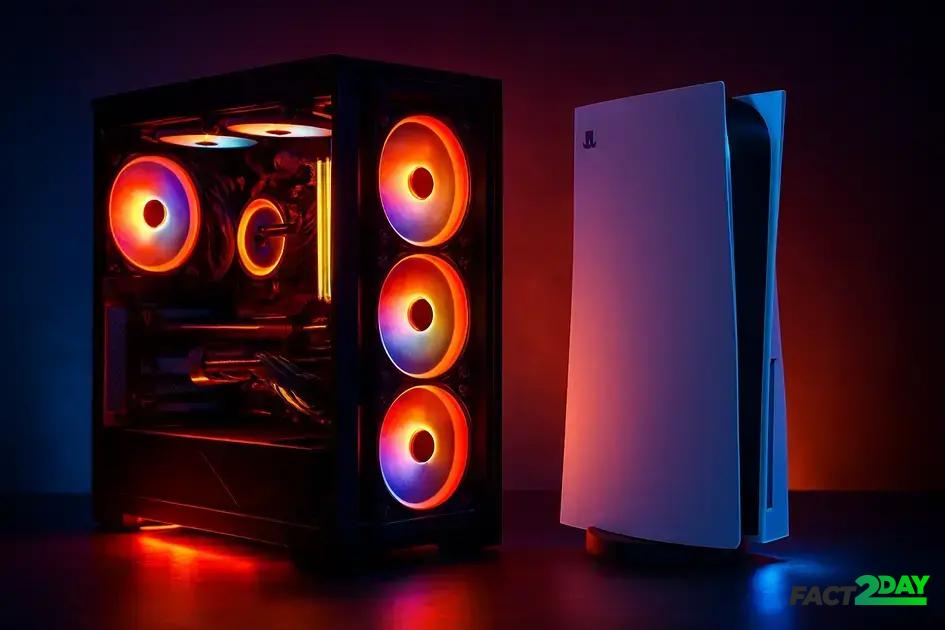
Hardware-pushing games have forced advancements in computers and consoles by requiring more complex graphics, faster processing, and efficient storage to create immersive and innovative experiences.
Have you ever noticed how some games seem to demand more from your equipment? Hardware-pushing games have changed the way computers and consoles were created, paving the way for surprising advancements. Let’s join us?
How games pushed hardware limits
Throughout history, games have constantly pushed the boundaries of what hardware can achieve. From the earliest 3D graphics in the 1990s to modern photorealistic worlds, developers demanded more processing power, memory, and graphics capabilities. Games like “Doom” and “Quake” pioneered real-time 3D rendering, requiring PCs to evolve rapidly to keep up.
On consoles, titles such as “The Last of Us” and “Halo” series raised expectations for both visual fidelity and complex AI behavior. These games forced manufacturers to innovate with more powerful CPUs, enhanced GPUs, and faster storage solutions.
The pressure from developers led to breakthroughs like multi-core processors and graphics APIs that better harnessed hardware potential. These innovations not only improved gaming performance but also advanced the capabilities of computers and consoles overall.
Examples of Game-Driven Hardware Challenges
Many games demanded new hardware features; for instance, “Crysis” became synonymous with high system requirements, setting a benchmark for PCs. On consoles, “The Legend of Zelda: Breath of the Wild” used open-world design and physics to push the Nintendo Switch’s hardware limits creatively.
In sum, games have been catalysts for hardware progress, consistently inspiring manufacturers to develop better and faster technology to provide players with richer experiences.
impacts of technological innovations on games
Technological innovations have profoundly impacted how games are designed, played, and experienced. Improvements in graphics, processing power, and storage have allowed developers to create richer worlds and more complex gameplay. Advancements like ray tracing and AI-driven NPCs have made virtual environments more lifelike and immersive than ever before.
New technologies also enable better online connectivity, expanding multiplayer experiences with larger player counts and smoother interactions. Cloud gaming and streaming services are breaking down barriers to access, letting users play high-end games on less powerful hardware.
Hardware and Software Evolution
The symbiotic relationship between hardware innovation and software demands drives gaming progress. For example, the introduction of SSDs drastically reduced load times, enhancing game flow and immersion. Graphics cards now support higher resolutions and frame rates, making visuals crisp and fluid.
Game engines continuously evolve to leverage new hardware features, enabling realistic physics simulations, dynamic lighting, and expansive open worlds. This cycle fuels developers to push boundaries, leading to ever more sophisticated and engaging games.
the future of gaming and device evolution
The future of games is closely tied to the evolution of devices, promising increasingly immersive and accessible experiences. Emerging technologies like virtual reality (VR), augmented reality (AR), and cloud gaming are transforming how players interact with games, breaking traditional boundaries.
VR and AR offer players the chance to step inside virtual worlds and interact naturally with their environments, making gameplay more engaging. Meanwhile, cloud gaming allows players to enjoy high-quality games on almost any device by streaming content, lowering hardware barriers.
Advances in Hardware
Next-generation consoles and gaming PCs continue to push performance limits with faster processors, better graphics cards, and larger, quicker storage drives. Portable devices are also evolving, blending power with convenience to meet the demands of gamers on the go.
Furthermore, AI integration is expected to enhance game design and player experiences, creating more adaptive and personalized gameplay. Overall, the convergence of these technologies points to a gaming future full of innovation and excitement.
Looking Ahead to Gaming’s Next Chapter
The future of gaming and device evolution promises exciting changes that will make play more immersive and accessible. New technologies like VR, AR, and cloud gaming are shaping how we experience games today.
As hardware continues to improve, games will become more realistic and engaging, with AI playing a bigger role in personalization. Whether on a console, PC, or mobile device, the options for gameplay will keep expanding.
Embracing these advances means players can look forward to richer, more dynamic worlds and experiences. The journey of gaming innovation is far from over, and the best is yet to come.