Beyond the Game: How Video Games Revolutionized the GPU Industry
Impacto de jogos em GPUs: descubra como os videogames impulsionaram a evolução das placas gráficas para experiências visuais surpreendentes.
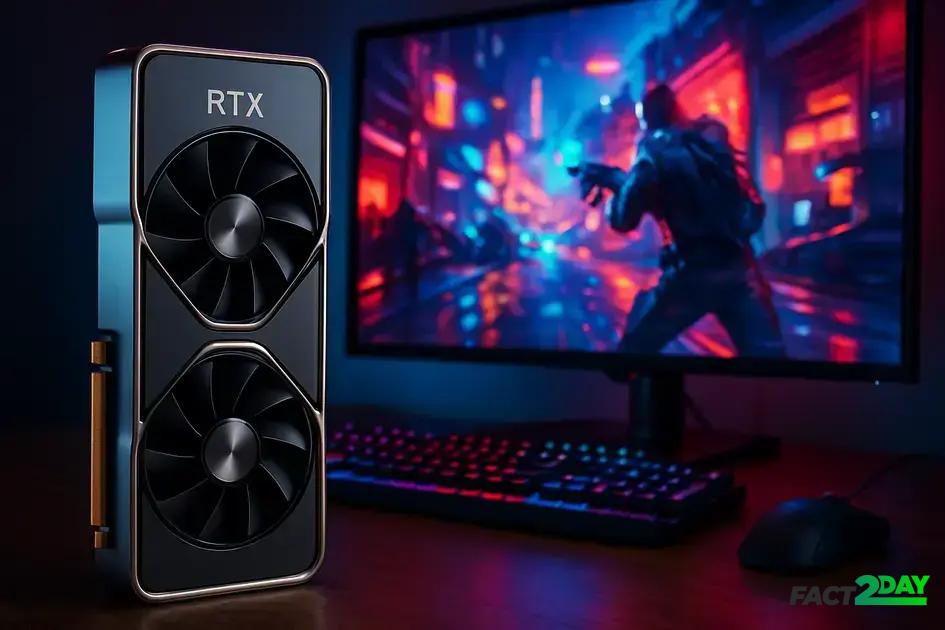
The impact of games on GPUs drives continuous innovation, pushing advancements in real-time ray tracing, AI integration, energy efficiency, and immersive technologies that define the future of graphics cards.
Have you ever stopped to think about the impact of games on GPUs? Video games go far beyond entertainment; they have been the silent engines of innovation that have transformed the graphics card industry, creating increasingly immersive visual experiences.
The evolution of GPUs driven by games
The evolution of GPUs has been closely tied to the demands and innovations brought by video games. As games grew more complex, requiring detailed textures, dynamic lighting, and realistic physics, GPUs had to advance to meet these needs. Early graphics cards focused mainly on 2D rendering, but the rise of 3D games pushed manufacturers to develop specialized hardware for better performance and visual quality.
From 2D to advanced 3D rendering
Standalone GPUs started integrating powerful shaders and parallel processing units, enabling the rendering of immersive worlds. This leap allowed games to display lifelike shadows, reflections, and character animations, which were impossible on older hardware.
Performance improvements driven by gaming
Gaming has consistently driven improvements in GPU clock speeds, memory bandwidth, and core count. Developers’ needs for smoother frame rates and higher resolutions encouraged GPU makers to innovate rapidly, resulting in the powerful chips we see today.
Additionally, gaming communities’ desire for realistic real-time graphics expedited the implementation of technologies like ray tracing and AI-based upscaling, which were originally experimental but are now standard in modern GPUs.
Impact on consumer experience
This evolution means gamers now enjoy highly detailed environments and complex visual effects without performance lags. The continuous feedback loop between gaming requirements and GPU advancements ensures future improvements will keep enhancing player immersion and experience.
video game-inspired GPU technologies
Video games have inspired some of the most innovative GPU technologies over the years. Developers needed GPUs capable of handling complex shading, lighting effects, and physics simulations to create realistic game environments. This demand led to rapid advancements in GPU architecture and capabilities.
Programmable shaders and parallel processing
One key innovation was the introduction of programmable shaders, which allowed developers to customize the way graphics were rendered at the pixel and vertex level. This breakthrough enabled more detailed textures and dynamic effects, setting a new standard for visual fidelity in games.
Real-time ray tracing and AI integration
More recently, real-time ray tracing technology has emerged, dramatically improving lighting realism by simulating how light behaves in the real world. AI-powered features like DLSS (Deep Learning Super Sampling) help increase frame rates without sacrificing image quality, reflecting the growing collaboration between game developers and GPU manufacturers.
Enhanced VR and immersive experiences
The rise of virtual reality (VR) gaming also pushed GPU technology forward. GPUs now support extremely high frame rates and low latency, essential for a comfortable and convincing VR experience. These advances benefit not just gamers, but also professionals using VR for design, training, and simulation.
how games shape the future of graphics cards
Games continue to play a crucial role in shaping the future of graphics cards. Developers constantly push the boundaries of what is possible, demanding GPUs that support higher resolutions, faster frame rates, and advanced graphical effects. This drives manufacturers to innovate and integrate cutting-edge technologies.
Focus on real-time ray tracing and AI
Real-time ray tracing is expected to become more widespread, offering unprecedented realism in lighting and shadows. GPUs are being designed to handle these tasks efficiently, while AI-powered features like upscaling and noise reduction will enhance performance without sacrificing quality.
Energy efficiency and cooling improvements
As GPUs grow more powerful, there is increased attention on energy consumption and heat management. Future graphics cards will likely feature improved cooling systems and energy-efficient designs, making them more accessible and reliable for everyday users.
Customization and VR/AR integration
Gaming trends such as virtual and augmented reality push GPUs to support specialized processing requirements. Customizable hardware and software solutions tailored for immersive experiences are in development, ensuring smoother and more engaging gameplay.
All these advances highlight the close relationship between gaming demands and GPU innovation, ensuring that the future of graphics cards remains exciting and driven by real user needs.
The lasting impact of gaming on GPU innovation
The connection between video games and GPU technology continues to shape how graphics cards evolve. Gaming pushes the limits, inspiring new features and better performance that benefit all users.
As GPUs become more powerful and efficient, they unlock new possibilities in visual realism and immersive experiences. This progress ensures gamers and professionals alike will enjoy richer, smoother graphics in the future.
Understanding this relationship helps us appreciate how entertainment drives technology forward. The future of GPUs is bright, fueled by the ongoing demands of the gaming world and its quest for ever more amazing visuals.