Meteorites That Bring Frozen Water From Space
Discover how icy meteors carry frozen water from the cosmos, revealing secrets about space and life beyond Earth.
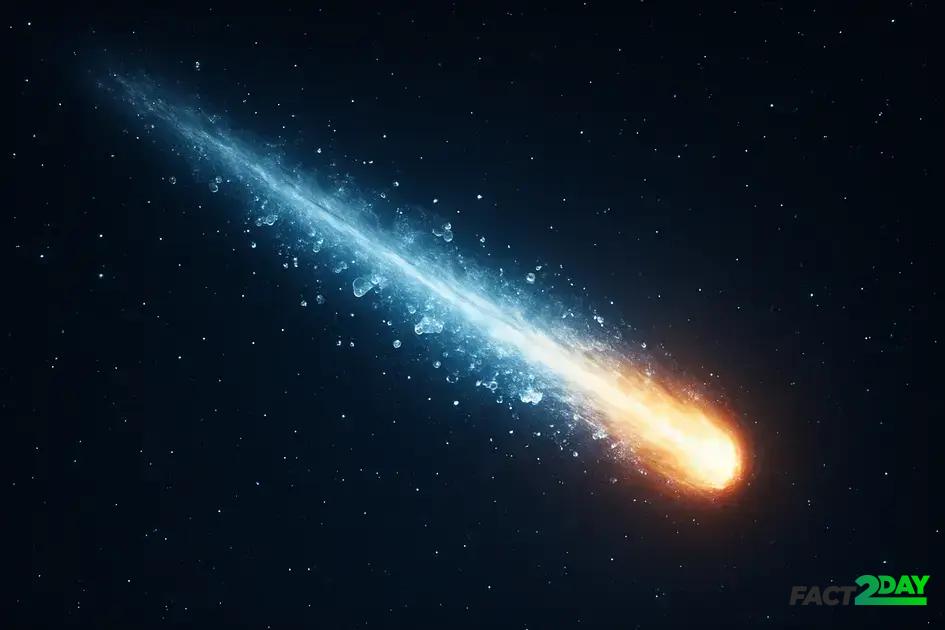
Icy meteors are space rocks containing frozen water and organic compounds that survive atmospheric entry, providing key insights into water delivery and the potential for life beyond Earth.
Have you ever wondered about icy meteors—those fascinating visitors from space carrying frozen water? Their journey and secrets might reshape how we understand life beyond Earth. Let’s take a closer look together.
what are icy meteors and where do they come from
Icy meteors are space rocks that contain significant amounts of frozen water along with dust and other minerals. Unlike typical dry meteorites, these meteors often originate from the outer regions of our solar system, such as the Kuiper Belt or the Oort Cloud. These areas are rich in icy bodies because of their great distance from the Sun, where temperatures are low enough to preserve water in solid form.
When these icy meteors get nudged by gravitational forces or collisions, they can travel toward the inner solar system, sometimes crossing paths with Earth. As they approach, the ice within them may begin to vaporize due to the heat of the Sun. However, some of the ice remains frozen if the meteor is large enough or if it travels quickly through the atmosphere.
The journey from deep space to Earth
The origin and trajectory of icy meteors help scientists understand the distribution of water in space. Because these meteors come from distant, cold areas, they carry valuable clues about the early solar system’s composition and how water—and potentially life-forming elements—could have been delivered to Earth.
Studying icy meteors can also reveal the processes that maintain ice in space and how these materials might be harvested in the future for space exploration. The presence of ice inside these meteors makes them unique travelers, connecting the frozen outer space with our warming planet.
the role of water in meteorites and why it matters
Water in meteorites is a key factor for understanding the origins of life and the history of our solar system. Many meteorites contain ice or water-bearing minerals, which suggest that water was present during the formation of these space rocks. This water often arrives in the form of frozen ice or bound within minerals like clays and hydrated silicates.
The presence of water in meteorites is more than just a curiosity: it provides clues about how water may have been delivered to Earth. Scientists believe that during the early days of our planet, icy meteorites and comets could have brought a significant portion of Earth’s water, helping to create oceans and eventually support life.
Water as a source for life’s building blocks
Water’s chemical properties enable it to dissolve and carry important organic compounds. When icy meteorites collide with Earth, they may deposit these life-essential materials. This makes the study of water-rich meteorites vital for astrobiology, as it supports theories about the existence of life beyond Earth.
Understanding water in meteorites also helps scientists learn about the evolution of other planets and moons. For example, investigating water in meteorites of Martian origin can shed light on Mars’ past climate and its potential to harbor life.
how icy meteors survive the journey to Earth
As icy meteors travel through space and enter Earth’s atmosphere, they face extreme conditions that challenge their survival. The intense heat generated by friction with the atmosphere causes outer layers to vaporize quickly, a process called ablation. Despite this, the core of many icy meteors remains protected, allowing some ice to survive the journey.
Protective layers and speed
Icy meteors often have a rocky or dusty shell that acts as an insulator, shielding the inner ice from direct heat. Their high speed means they spend only a short time in the atmosphere, limiting the amount of melting or vaporization that occurs. This combination helps preserve the frozen water.
Additionally, the size of the meteor plays a role in survival. Larger meteors have more mass, so their interiors stay cold longer as surface layers burn away. This is why some meteorites reaching Earth still contain frozen water or hydrated minerals.
Studying how icy meteors survive informs scientists about Earth’s water origins and the potential for transporting water through space. Understanding the thermal and physical processes involved helps predict the behavior of different types of meteors during atmospheric entry.
scientific discoveries from analyzing icy meteorites
Studying icy meteorites has led to remarkable scientific discoveries about the origins of water and organic molecules in our solar system. Scientists analyze frozen samples and mineral compositions to understand the building blocks of planets and life.
Clues about solar system formation
Many icy meteorites contain organic compounds and water trapped inside their minerals. This shows that early solar system materials had ingredients essential for life. These discoveries help scientists piece together how planets like Earth gained water and possibly the molecules needed to develop living organisms.
By using advanced techniques like spectroscopy and isotopic analysis, researchers can trace the origins of these materials back billions of years. The information reveals how components moved through space and how icy bodies contributed to the planet’s water supply.
Insights into extraterrestrial chemistry
Analyzing icy meteorites also reveals chemical reactions that occur in space under extreme cold. For example, how ice interacts with cosmic radiation to produce complex organics. Understanding these processes aids the search for life beyond Earth by identifying key markers in meteorites found on our planet or other celestial bodies.
Scientific study of icy meteorites broadens our knowledge of the universe’s evolution and the potential habitability of other worlds.
icy meteors and the search for extraterrestrial life
Icy meteors play a crucial role in the search for extraterrestrial life because they can carry water and organic molecules, essential ingredients for life as we know it. Water is a key solvent for chemical reactions that produce living cells, and organic molecules are the building blocks of life.
How icy meteors deliver life’s ingredients
These meteors travel vast distances through space, bringing frozen water and complex organic compounds from distant parts of the solar system to Earth. By studying the chemical makeup of these space rocks, scientists gather clues about how life’s basic components might spread throughout the universe.
The presence of amino acids and other organic molecules in icy meteors suggests they could seed planets with the necessary materials to start life. This idea supports theories that life on Earth may have begun thanks to such deliveries.
Searching for signs beyond Earth
Research on icy meteors helps astrobiologists identify markers that indicate potential habitability on other worlds. For example, if a meteor from Mars or other moons contains water and organics, it raises questions about whether microbial life could exist or have existed there.
Understanding these connections widens the scope of the extraterrestrial life search, guiding missions that explore planets and moons for signs of past or present life.
ways icy meteors affect Earth’s water cycle
Icy meteors can influence Earth’s water cycle by delivering frozen water during their fall through the atmosphere. Although the amount of water they bring is small compared to Earth’s oceans, these icy visitors contribute to the continuous exchange of water within our planet’s environment.
Contribution to precipitation and atmospheric moisture
When icy meteors enter the atmosphere, some of their ice vaporizes, adding moisture to the air. This process can create tiny particles that help form clouds, which are essential for precipitation like rain and snow. Over time, this adds a small but notable input to the atmospheric water cycle.
Additionally, meteor showers that include icy meteors may enhance local moisture levels, influencing weather patterns in subtle ways.
Impact on Earth’s water reservoirs
Some of the frozen water that survives the fiery journey embeds into the soil or bodies of water upon impact. This replenishes groundwater and surface water sources, supporting ecosystems. While the quantities are minimal, these deliveries from space remind us how Earth’s water is part of a larger cosmic cycle.
Studying these effects helps scientists understand the diverse sources of Earth’s water and the complex interplay between space and terrestrial systems.
how to observe and study icy meteors safely
Observing and studying icy meteors safely requires careful planning and the right equipment. These events can be spectacular but also unpredictable, so safety and preparation are essential.
Using safe observation techniques
To watch icy meteors, use wide-angle telescopes or cameras with night vision capabilities. Avoid looking directly at bright meteor trails without protection, as the intense light can strain your eyes. Binoculars are a safe option for spotting smaller fragments.
Choose a dark location away from city lights to improve visibility. Make sure the area is safe and free from obstacles to prevent accidents during night observations.
Studying icy meteors scientifically
Scientists use radar systems, spectroscopy, and high-speed cameras to capture detailed information about icy meteors. These tools analyze their speed, composition, and behavior during atmospheric entry.
Collecting fallen meteorite samples requires gloves and sterile containers to protect both the sample and the collector. Laboratories then study the samples for ice content and organic materials, providing valuable insights without contamination.
Joining meteor observation groups or astronomy clubs can enhance safety and provide access to expert knowledge and shared equipment.
Wrapping Up Our Journey with Icy Meteors
Icy meteors are fascinating space travelers that bring frozen water and clues about life beyond Earth. By studying their origins, composition, and impact, we learn more about our solar system and Earth’s water story.
Observing them safely and analyzing their makeup helps scientists explore the possibility of life elsewhere and understand the cosmic water cycle. These small but vital visitors continue to spark curiosity and expand our knowledge of the universe.
Whether you’re an astronomer or a space enthusiast, icy meteors offer a window into the mysteries of space and the building blocks of life.