Social Networks: The Evolution That Connected the World
The history of social media reveals how digital networks evolved from simple online communities into powerful platforms that shape communication, culture, and global interaction today.
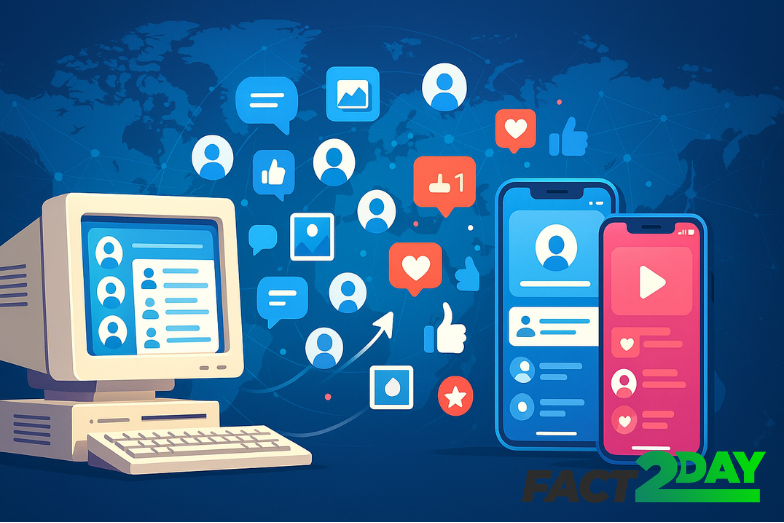
Você já parou para pensar como a História das Mídias Sociais moldou a maneira como nos conectamos hoje? De ferramentas simples a plataformas globais, essa jornada revela muito sobre nossa vida digital. Vamos descobrir juntos?
The emergence of the first digital social networks
The emergence of the first digital social networks began in the late 1990s and early 2000s, marking a significant shift in how people connect and communicate online. Platforms like Six Degrees, launched in 1997, allowed users to create profiles and friend lists, introducing the basic concept of online social networking.
As technology advanced, sites such as Friendster and MySpace brought new features like photo sharing and customizable profiles, enhancing user interaction. These early networks laid the groundwork for future giants by creating virtual communities where people could share their interests and experiences.
The role of early platforms
These initial social networks were crucial for testing the potential of online connections. Users began to appreciate how the internet could facilitate relationships beyond geographic boundaries. Networking online became more personal and engaging, encouraging users to spend more time on these sites.
Moreover, early social networks introduced ideas around privacy settings, personal expression, and digital identity management. These concepts are still fundamental in today’s social media landscape.
Overall, the rise of the first digital social networks opened doors to a new form of communication, setting the stage for the fast-paced and interactive platforms we use today.
How social media changed personal communication
Social media has profoundly changed personal communication by making it more immediate and accessible. People now share moments, thoughts, and feelings instantly through platforms like Facebook, Instagram, and WhatsApp, breaking down barriers of time and distance.
Increased connectivity and interaction
With social media, users can engage in conversations with friends and family across the globe, fostering real-time connections. This level of interaction was unheard of before, enabling stronger relationships despite physical separation.
Moreover, social media supports various forms of expression, from text messages to photos, videos, and live broadcasts. This variety allows individuals to communicate their personalities and experiences in richer ways.
Changes in communication style
Personal communication has become more informal and visual due to social media. Emojis, gifs, and memes add emotional depth and humor, making conversations lively and engaging. The style is now quicker and often more casual, reflecting everyday speech.
However, social media can also lead to misunderstandings as tone and context may be lost. Users have adapted by developing new norms, such as using reaction buttons and direct messaging for clearer communication.
Impact on relationships
Social media allows people to maintain existing relationships and build new ones with ease. At the same time, it offers opportunities to reconnect with old acquaintances and meet like-minded individuals, expanding social circles.
Despite some challenges, such as privacy concerns and online misunderstandings, social media remains a powerful tool that continues to reshape how we connect on a personal level every day.
The impact of social media on global culture
Social media has played a major role in shaping global culture by influencing how people share ideas, trends, and values across borders. It has created a space for cultural exchange, allowing diverse communities to discover and adopt new practices from around the world.
Spreading trends and popular culture
Platforms like TikTok, Instagram, and Twitter enable fast sharing of music, fashion, language, and memes. This rapid spread helps certain cultural elements become globally recognized and embraced, sometimes within days.
Raising awareness and activism
Social media has given voice to social movements and causes that might not have gained global attention otherwise. It connects people to shared concerns, promoting cultural understanding and solidarity on issues such as human rights and environmental protection.
Influence on identity and expression
People use social media to express their cultural identities, blending traditional and modern influences. This creates dynamic, evolving cultures where users participate in global conversations while celebrating local uniqueness.
Challenges of cultural impact
While social media fosters cultural exchange, it can also lead to misunderstandings and stereotypes. The rapid spread of information may oversimplify complex cultures or lead to cultural appropriation concerns.
Overall, social media’s impact on global culture is profound, connecting people in unexpected ways and continuously reshaping cultural landscapes worldwide.
Key platforms that defined different eras
Throughout the history of social media, several key platforms have defined different eras by shaping how people interact online. Each platform introduced unique features that influenced the digital landscape and user behavior.
Early pioneers: Friendster, MySpace, and LinkedIn
Friendster, launched in 2002, was among the first social networks to gain mass popularity. It focused on connecting friends and friends of friends, although it eventually declined due to technical and management issues. MySpace followed, becoming famous for profile customization and music sharing, making it a hotspot for artists and young users. LinkedIn, launched in 2003, carved its niche as a professional networking site, changing how people connect for career opportunities.
Mainstream dominance: Facebook and Twitter
Facebook revolutionized social media by combining simplicity and wide accessibility. With news feeds and friend connections, it attracted billions globally. Twitter introduced microblogging, allowing real-time updates and conversations in short messages called tweets. These features made it a go-to platform for news and public discussions.
Visual and multimedia focus: Instagram, Snapchat, and TikTok
Instagram popularized photo sharing with filters and stories, emphasizing visual storytelling. Snapchat introduced disappearing messages and interactive lenses, appealing to younger audiences. TikTok, a recent sensation, focuses on short video content with music, boosting creativity and viral trends.
Specialized platforms and evolving trends
Other platforms like Pinterest for inspiration, Reddit for community discussions, and Clubhouse for live audio conversations highlight the diversity of social media experiences. Each platform represents shifting user demands and technological advancements.
Understanding these platforms helps recognize how social media has continuously adapted to cultural and technological changes, shaping the way we connect online.
The evolution of privacy in social networks
Privacy in social networks has evolved significantly as platforms have grown and user concerns have increased. Initially, early social networks had minimal privacy controls, allowing most information to be publicly visible. This raised issues as users became more aware of the risks associated with sharing personal data.
Introduction of privacy settings
Over time, platforms introduced privacy settings that let users control who could see their profiles, posts, and personal information. This shift empowered individuals to protect their data and manage their online presence more carefully. Users could create private accounts, restrict friend lists, and customize content visibility.
Regulations and user awareness
The rise of privacy concerns led to new laws, such as the European Union’s GDPR, which mandates transparency and user consent regarding data collection. Users today are more educated about online privacy and demand better data protection.
Modern privacy challenges
Despite advancements, social networks still face challenges like data breaches, tracking, and misuse of personal information. Platforms now invest in encryption, two-factor authentication, and tools to monitor suspicious activities.
Balancing connectivity and privacy
Users must find a balance between sharing to connect and protecting their privacy. Understanding privacy policies, using available settings, and being cautious about the information shared are essential in navigating social media safely.
The evolution of privacy in social networks reflects growing responsibility from platforms and users to ensure a safer digital environment.
The role of social networks in social and political mobilization
Social networks have become powerful tools for social and political mobilization worldwide. They allow people to organize protests, share information, and raise awareness quickly and on a large scale. These platforms give a voice to individuals and groups that might otherwise struggle to be heard.
Enabling rapid communication
Social media enables instant sharing of news and events, helping activists coordinate efforts and spread messages in real time. This connectivity can increase participation and engagement in causes.
Raising awareness and education
Through posts, videos, and live streams, social networks inform the public about social injustices, political issues, and human rights. This fosters a more informed and active citizenry.
Organizing protests and campaigns
Platforms like Twitter and Facebook are often used to plan demonstrations, fundraise, and promote petitions. These tools help transform online support into real-world action.
Challenges and risks
While social media can empower movements, it also faces issues like misinformation, censorship, and surveillance. Activists need to navigate these challenges carefully to maintain credibility and safety.
Overall, social networks play a crucial role in modern social and political movements by connecting people and amplifying causes on a global scale.
How social media influences consumer behavior
Social media strongly influences consumer behavior by shaping opinions, preferences, and purchasing decisions. Platforms provide brands with opportunities to engage directly with audiences through personalized content, ads, and reviews.
Impact of social proof and reviews
Consumers often rely on testimonials, ratings, and reviews shared on social media before buying products. Positive feedback and influencer endorsements can build trust and encourage purchases.
Targeted advertising and personalized content
Social networks use data to deliver ads tailored to users’ interests and behaviors. This increases the chances of engagement and conversion by showing the right products to the right audience.
The rise of social commerce
Many platforms now offer integrated shopping features, allowing users to browse and buy products without leaving the app. This convenience streamlines the buying process and drives impulse purchases.
Influencer marketing’s role
Influencers shape trends and create authentic connections with followers. Their recommendations and product placements have a strong impact on followers’ spending habits.
Overall, social media continues to transform consumer behavior by blending entertainment, information, and shopping experiences into seamless interactions.
Challenges faced by social networks over time
Social networks have faced many challenges as they evolved over time. These issues range from technical problems to ethical concerns, all impacting users and the platforms themselves.
Privacy and data security
One of the biggest challenges has been protecting user privacy. Data breaches and misuse of personal information have raised serious concerns, pushing platforms to strengthen security measures and comply with regulations like GDPR.
Spread of misinformation
False news and misleading content can spread rapidly on social media, influencing opinions and behavior. Platforms have implemented fact-checking and content moderation to fight this problem, but it remains a constant battle.
Harassment and bullying
Online harassment and cyberbullying have affected many users, especially young people. Social networks have introduced tools to report abuse and block offenders, aiming to create safer environments.
Algorithmic challenges
Algorithms that decide what content users see can create echo chambers or reinforce harmful biases. Transparency and fairness in these algorithms are ongoing concerns for developers and regulators.
Balancing free speech and censorship
Social media platforms must find a difficult balance between allowing free expression and removing harmful or illegal content. This challenge involves legal, social, and ethical considerations.
Despite these difficulties, social networks continue to adapt, striving to improve user experience and maintain trust in a rapidly changing digital world.
The technological transformation behind social media
The technological transformation behind social media is rooted in advances that enabled fast, interactive, and scalable platforms. Early social networks relied on basic web technologies, but today’s platforms use complex systems to support billions of users.
Cloud computing and data centers
Cloud computing allows social networks to store huge amounts of data and deliver content quickly across the globe. Data centers with powerful servers enable platforms to handle millions of simultaneous connections.
Mobile technology and apps
The rise of smartphones and mobile internet has been a major driver in social media growth. Mobile apps provide easy access, notifications, and features like live videos, enhancing user experience.
Artificial intelligence and algorithms
AI powers content recommendation, personalization, and moderation. Algorithms analyze user behavior to show relevant posts, ads, and trending topics, keeping users engaged.
Real-time communication tools
Technologies like WebRTC enable live chats, video calls, and stories, making interactions instant and immersive.
Security and encryption
To protect users, social networks implement encryption, multi-factor authentication, and other security measures, ensuring safer communication.
The technological evolution of social media is continuous, driven by innovations that improve connectivity, usability, and security.
Future trends of social media in society
Future trends in social media point toward more immersive, personalized, and integrated experiences that will deeply influence society. Technology and user expectations are driving platforms to innovate constantly.
Rise of augmented and virtual reality
Social media is moving beyond screens into augmented reality (AR) and virtual reality (VR). These technologies will enable users to interact in 3D spaces, attend virtual events, and experience content in new, engaging ways.
Increased use of artificial intelligence
AI will play a greater role in creating personalized feeds, moderating content, and even generating posts. It will help make social media smarter and more responsive to individual preferences.
Growth of social commerce
Social media platforms will further integrate shopping features, allowing seamless purchases with minimal friction. Users will discover products through immersive ads, live streams, and influencer partnerships.
Focus on privacy and ethical standards
As awareness grows, future social media will prioritize data protection, user control, and ethical AI use. Platforms will need to be transparent and gain user trust to thrive.
Decentralization and new networks
Emerging decentralized social networks aim to give users more control over content and data, reducing reliance on big tech companies and promoting free expression.
The future of social media promises to reshape how we connect, consume content, and participate in online communities, blending technology with societal needs.
Looking ahead in the world of social media
Social media will continue to change and grow as new technologies and ideas emerge. From virtual reality to smarter AI, platforms will offer more personalized and immersive experiences that connect people like never before.
At the same time, privacy and ethical use will remain key concerns, guiding how these networks develop. The rise of decentralized platforms also promises to shift control back to users.
Understanding these future trends can help us prepare for a digital world that blends innovation with social needs, making social media a powerful tool for connection, commerce, and community.