Chronology of Consciousness: History of Knowledge
How human thought evolved from prehistory to AI
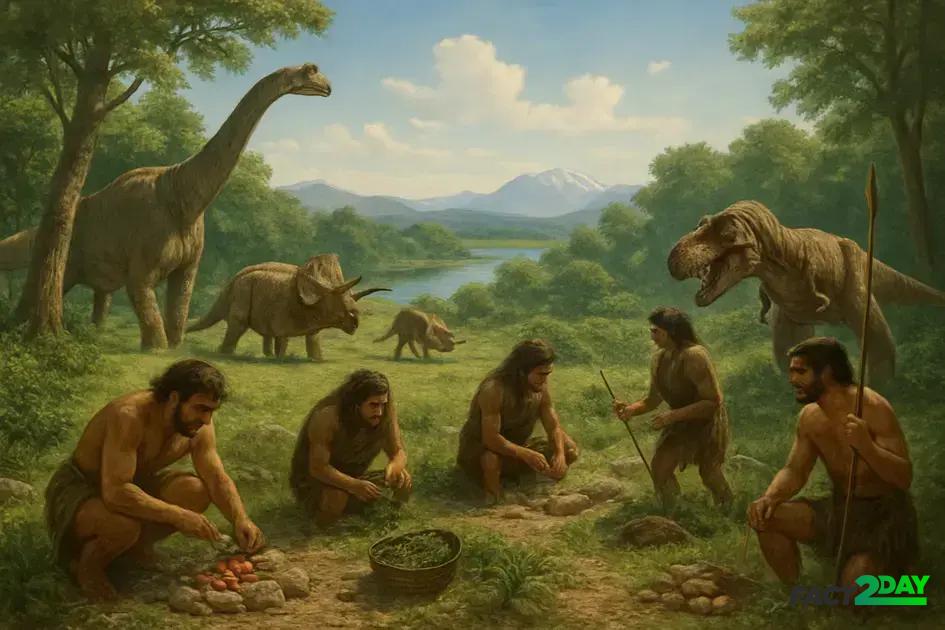
Have you ever stopped to think about how the history of human knowledge has shaped everything around us? From the earliest ideas to current technologies, our consciousness is constantly evolving. Shall we explore this fascinating journey together?
Origins of knowledge in prehistory
The origins of knowledge in prehistory trace back to the earliest humans who began to understand and manipulate their environment for survival. Through observation and trial, ancient people developed basic tools, learned to control fire, and created primitive art, which marked the first steps toward structured knowledge.
Early Tools and Techniques
Stone tools like hand axes and scrapers were among the first innovations, representing a significant leap in human capability. These tools allowed early humans to hunt, prepare food, and craft shelters, improving their chances of survival in harsh conditions.
Language and Communication
The development of language was a critical milestone that helped share knowledge across generations. Simple sounds evolved into complex communication systems, enabling cooperation and the passing down of skills and ideas.
Symbolic Expression and Art
Cave paintings, carvings, and early sculptures show how prehistoric humans not only survived but also sought to explain their world. These symbolic expressions are among the oldest known records of human thought, reflecting an emerging consciousness and curiosity.
Overall, prehistory laid the foundation for all future knowledge by helping humans develop essential skills and a way to record and share information that would shape civilization.
The writing revolution: the beginning of documented history
The revolution of writing marked the beginning of documented history and transformed how knowledge was preserved and shared. Ancient civilizations developed different writing systems, which allowed them to record events, laws, and cultural stories with precision. This shift from oral tradition to written records created a lasting legacy that we still rely on today.
Early Writing Systems
One of the earliest known writing systems is cuneiform, created by the Sumerians in Mesopotamia. Using wedge-shaped marks on clay tablets, cuneiform was initially developed for keeping trade records. At the same time, Egyptian hieroglyphics combined pictorial symbols to convey ideas and sounds, representing a sophisticated form of communication.
The Impact on Society
Writing enabled governments to codify laws, such as the famous Code of Hammurabi, ensuring social order and justice. It also allowed the preservation of religious texts, literature, and scientific knowledge, greatly enriching culture and education.
From Records to Literature
As writing evolved, so did its uses. People began recording historical events, philosophies, and poetry. This transition from simple records to creative expression enabled societies to reflect on human experience and share knowledge across generations.
Ultimately, the invention of writing was a major milestone that laid the groundwork for complex civilizations and the continuous growth of human knowledge.
Knowledge and philosophy in Ancient Greece
Ancient Greece is often considered the cradle of Western philosophy and knowledge. Thinkers like Socrates, Plato, and Aristotle laid the foundations for critical thinking and scientific inquiry. Their work shaped ideas about ethics, politics, metaphysics, and logic that still influence us today.
The Socratic Method
Socrates introduced a powerful way of learning through asking questions to stimulate deeper thinking and expose contradictions. This Socratic method encouraged the search for truth and understanding beyond surface answers.
Platonic Ideals
Plato, a student of Socrates, developed the theory of forms, which proposed that non-physical ideas represent the most accurate reality. His writings explored justice, knowledge, and the ideal society, contributing significantly to philosophy and education.
Aristotle’s Contributions
Aristotle, Plato’s student, emphasized observation and categorization of the natural world. He wrote extensively on logic, ethics, politics, and biology, creating methods that became the basis for the scientific method.
The ancient Greeks also founded early universities called academies, where students engaged in debate and study, fueling the growth of knowledge. Their philosophical and scientific achievements represent a major chapter in the history of human understanding.
The influence of major religions and their schools of thought
The influence of major religions and their schools of thought has deeply shaped human knowledge and culture. Religions like Christianity, Islam, Hinduism, Buddhism, and Judaism introduced profound ideas about morality, existence, and the universe, which guided societies for centuries.
Religious Texts as Knowledge Repositories
Holy scriptures such as the Bible, Quran, Vedas, and Tripitaka preserved spiritual teachings and ethical guidelines. These texts also contained historical narratives and philosophical insights, making them key sources of knowledge in many cultures.
Philosophical Schools Within Religions
Within these religions, different schools of thought emerged, exploring concepts like metaphysics, theology, and human purpose. For example, Christian scholasticism sought to reconcile faith with reason, while Buddhist philosophy focused on mindfulness and the nature of suffering.
The Role of Religious Institutions
Monasteries, madrasas, and temples became centers of learning where scholars preserved manuscripts, translated important works, and taught future generations. This helped maintain and spread knowledge during periods when other forms of education were limited.
The interweaving of religion and knowledge created a rich tapestry that influenced art, law, science, and ethics, demonstrating the enduring impact of spiritual traditions on human understanding.
Scientific developments during the Middle Ages
Science during the Middle Ages often gets overlooked, but it was a time of important scientific developments, especially in the Islamic world and Europe. Scholars preserved ancient knowledge and made advances in fields like astronomy, medicine, and mathematics.
Preservation and Translation of Ancient Texts
Many Greek and Roman works were translated into Arabic and Latin, preserving crucial knowledge. This translation movement helped spread ideas across cultures and laid the foundation for new discoveries.
Astronomy and Mathematics
Medieval scientists improved astronomy by developing better instruments and refining models of the stars and planets. Mathematicians introduced concepts such as algebra and adopted the Hindu-Arabic numeral system, which made calculations easier and more accurate.
Medicine and Health
Doctors in medieval times studied anatomy and developed medical texts that were used for centuries. Hospitals became places for care and learning, and physicians emphasized observation and diagnosis.
The Middle Ages were a bridge between ancient knowledge and the modern scientific revolution, showing how careful study and curiosity drove humanity’s growth in understanding the world.
The Renaissance and the explosion of human knowledge
The Renaissance was a pivotal era that sparked an explosion of human knowledge and creativity. It marked the rebirth of classical ideas and emphasized observation, experimentation, and human potential. This period laid the groundwork for modern science, art, and philosophy.
Rediscovery of Classical Knowledge
Renaissance scholars revisited ancient Greek and Roman texts, translating and studying them deeply. This revival of classical learning helped challenge old beliefs and inspired new ways of thinking.
Advancements in Science and Art
Figures like Leonardo da Vinci and Galileo pushed the boundaries of art and science, combining detailed observation with creativity. Discoveries in anatomy, physics, and astronomy advanced human understanding and influenced future research.
The Printing Press and Knowledge Spread
The invention of the printing press by Gutenberg made books accessible, allowing knowledge to spread quickly across Europe. This led to wider education and the sharing of revolutionary ideas.
The Renaissance was a transformational era that ignited curiosity and innovation, resulting in a profound growth of human knowledge that shapes us to this day.
The scientific revolution and its contributions to knowledge
The scientific revolution was a transformative period that changed how humans understand the world. It introduced a method based on observation, experimentation, and reason, which replaced older ways of thinking based on tradition and superstition.
Key Figures and Discoveries
Scientists like Copernicus, Galileo, Newton, and Kepler made groundbreaking discoveries about the cosmos, gravity, and motion. Their work laid the foundations for modern physics and astronomy, challenging old beliefs and opening new horizons.
The Scientific Method
The development of the scientific method emphasized systematic observation, hypothesis testing, and replication. This approach made science more reliable and objective, guiding research across disciplines.
Impact on Knowledge and Society
The scientific revolution not only advanced knowledge in natural sciences but also influenced philosophy, technology, and culture. It encouraged critical thinking and skepticism, which helped fuel later intellectual movements.
This period marks a major milestone in human history, as it reshaped our understanding and sparked continuous growth in knowledge that still drives innovation today.
The Enlightenment and the expansion of critical thinking
The Enlightenment was a cultural and intellectual movement that emphasized reason, science, and individualism. It encouraged people to question old traditions and think critically about politics, religion, and society, shaping modern ideas about freedom and democracy.
Philosophers of the Enlightenment
Thinkers like John Locke, Voltaire, and Immanuel Kant promoted the use of reason and evidence to challenge authority and advocate for human rights. Their works inspired revolutions and new forms of government based on liberty and equality.
Scientific and Social Progress
The Enlightenment supported scientific inquiry and technological progress, helping spread knowledge through books, salons, and academies. It encouraged education and the belief that societies could improve through knowledge and reform.
Legacy of the Enlightenment
This period left a lasting impact on modern values including freedom of speech, separation of powers, and secular governance. Its emphasis on critical thinking remains fundamental to education and democratic societies.
The Enlightenment represents a powerful expansion of critical thought that continues to influence how we understand and shape the world today.
The impact of industry and technology on knowledge
The Industrial Revolution brought major changes that transformed how knowledge was created and shared. New technologies and machines increased production, while innovations in communication and transportation spread information faster than ever before.
Technological Innovations
Inventions such as the steam engine, telegraph, and printing press revolutionized both industry and knowledge. These tools enabled mass production and quicker exchange of ideas, boosting education and scientific research.
Expansion of Learning and Research
Factories and cities grew rapidly, creating new social challenges that led to increased interest in science and engineering. Universities and research institutions expanded, focusing on practical knowledge to solve real-world problems.
Mass Media and Communication
Newspapers, books, and later radio and telephone became important for spreading news and ideas to a wide audience. This democratization of information helped build an informed public and fostered global exchange of knowledge.
The Industrial Revolution was a turning point that accelerated human understanding and connected the world through technology and industry.
The Information Age and the democratization of knowledge
The Information Age has transformed how knowledge is created, accessed, and shared. With the rise of the internet and digital technologies, information became widely available to people around the world, breaking barriers of time and location.
Digital Revolution and Access
The development of computers, smartphones, and high-speed internet gave rise to unprecedented access to data and educational resources. This revolution democratized knowledge, allowing anyone with a connection to learn, communicate, and contribute.
Online Learning and Collaboration
Platforms such as online courses, forums, and social media fostered new ways for people to acquire skills and share ideas globally. Collaborative projects and open-source knowledge grew rapidly, enriching countless fields.
Challenges of the Information Era
While access expanded, challenges like misinformation, digital divides, and data privacy emerged. Understanding how to critically evaluate information and use technology responsibly became essential skills in this new era.
The Information Age continues to reshape society, empowering individuals while presenting complex questions about the future of knowledge and technology.
Knowledge and challenges in the digital age
The digital age presents both incredible opportunities and significant challenges for knowledge. While technology has made information accessible worldwide, it also raises concerns about privacy, misinformation, and the digital divide.
Information Overload and Misinformation
The vast amount of data available can be overwhelming, making it hard to find reliable sources. Misinformation and fake news spread quickly, demanding critical thinking skills to evaluate the truthfulness of content.
Privacy and Data Security
As more personal information is shared online, protecting privacy has become crucial. Cybersecurity threats and unauthorized data use require vigilance from individuals and organizations alike.
Bridging the Digital Divide
Access to technology is uneven across different regions and communities. Closing the digital divide is essential to ensure everyone benefits from digital knowledge and education.
Addressing these challenges is vital for fostering a trustworthy and inclusive digital knowledge environment that empowers all users.
The role of universities and research centers today
Universities and research centers today play a crucial role in advancing knowledge and innovation. They serve as hubs where experts explore new ideas, conduct experiments, and train future professionals in various fields.
Research and Innovation
These institutions drive scientific and technological progress by funding projects and encouraging collaboration among scholars, industries, and governments. Their work leads to breakthroughs that solve real-world problems.
Education and Skill Development
Universities provide education that equips students with critical thinking, creativity, and technical skills. This prepares individuals to contribute effectively in rapidly changing job markets.
Global Collaboration and Sharing
Modern research centers foster international partnerships, facilitating the exchange of knowledge and resources. This global network enhances the impact and reach of scientific discoveries.
Overall, universities and research centers remain key pillars in the continuous growth of human knowledge and societal advancement.
The future of knowledge: artificial intelligence and beyond
The future of knowledge is being shaped dramatically by artificial intelligence (AI) and emerging technologies. AI enables faster data analysis, automation, and new ways of problem-solving that were unimaginable before.
AI and Knowledge Expansion
AI systems can process vast amounts of information quickly, uncovering patterns and insights that help humans understand complex problems. This accelerates research and innovation in fields like medicine, climate science, and engineering.
Human-AI Collaboration
Rather than replacing humans, AI tools augment our abilities, supporting decision-making and creativity. This partnership leads to smarter solutions and opens new possibilities for learning and discovery.
Beyond AI: Emerging Technologies
Technologies such as quantum computing, brain-computer interfaces, and extended reality promise to revolutionize how knowledge is created and experienced. These advances will likely change education, work, and communication fundamentally.
The future of knowledge holds exciting potential, with AI and other breakthroughs driving humanity toward greater understanding and innovation than ever before.
Looking ahead in the journey of human knowledge
The story of human knowledge is one of constant growth and discovery, from ancient times to the digital era and beyond. Each phase has built upon the last, bringing new insights and tools that have shaped our world.
As we face the future, technologies like artificial intelligence hold great promise to expand what we know and how we learn. Yet, challenges remain in ensuring that knowledge is shared fairly and used responsibly.
By understanding this rich history and embracing innovation thoughtfully, we can continue to unlock new possibilities and create a better future for all.