When the Sky Fell: Ancient Accounts of Meteorite Impacts and Human Reactions
Historical meteorite impacts reveal awe and fear in ancient times, showing how humans interpreted skyfire and its mysterious force.
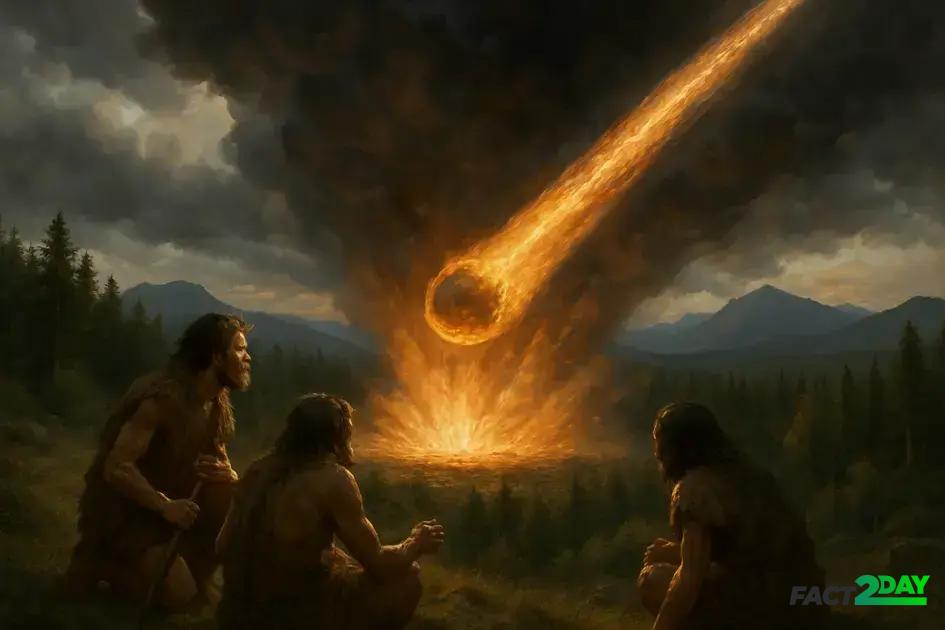
Historical meteorite impacts are documented cosmic events where meteorites collided with Earth, influencing ancient cultures, shaping myths, and providing crucial data for understanding planetary threats and human reactions.
Historical Meteorite Impacts have fascinated humanity for centuries, capturing imaginations with flashes of fire falling from the sky. Have you ever wondered how ancient people made sense of these powerful, mysterious events?
The science behind meteorite impacts
Meteorite impacts occur when fragments of rock or metal from space collide with Earth’s surface at high speeds. These objects, often remnants of asteroids or comets, enter the atmosphere and create a bright fireball known as a meteor. If any part survives the intense heat and reaches the ground, it is called a meteorite.
The force of a meteorite impact depends on its size, speed, and composition. When a meteorite strikes, it releases a tremendous amount of energy, creating a crater and sometimes triggering shockwaves, earthquakes, or fires. Scientists study impact craters to understand the history and scale of these events.
Researchers analyze rock samples and employ computer simulations to model impacts and their consequences. This science helps us gauge the potential threats from near-Earth objects and prepare for possible future collisions.
Understanding the physics behind meteorite impacts also reveals how these cosmic events have shaped Earth’s geology and even influenced life by causing mass extinctions or climate changes.
Historical records and eyewitness accounts
Throughout history, many civilizations have documented meteorite impacts with vivid descriptions and eyewitness accounts. Ancient records from China, Greece, and the Middle East tell of flaming objects falling from the sky, often seen as omens or messages from the gods.
One notable example is the 1490 meteor shower in China, where eyewitnesses reported thousands of stones falling from the sky, causing fear and confusion. Similarly, Native American oral histories include stories of fiery stones crashing to Earth, shaping their cultural narratives.
Historical chronicles often describe loud booms, ground shaking, and spectacular fireballs, capturing the awe and terror that these events inspired. Some accounts also mention damage to land or property, indicating the real physical impact these meteorites had on ancient communities.
By studying these records and combining them with scientific analysis, researchers gain valuable insights into the frequency and effects of meteorite events over centuries.
Cultural interpretations of meteorite events
Meteorite events have held great significance in many cultures, often inspiring myths, legends, and religious beliefs. Across the world, people interpreted these fiery stones as signs from the divine or messages from the heavens.
In some ancient civilizations, meteorites were seen as sacred objects. For example, the Kaaba in Mecca contains the Black Stone, believed to be a meteorite and revered as a holy relic.
Various cultures associated meteorites with gods or spirits. The Māori of New Zealand viewed them as celestial arrows sent by their gods, while Native American tribes sometimes believed meteorites held powerful spiritual energy.
These interpretations shaped rituals, art, and folklore. Stories of fireballs and falling stars were woven into the cultural fabric, explaining natural phenomena in ways that connected humans with the cosmos.
Studying these cultural views helps us understand how humans across time made sense of these extraordinary events beyond their physical impact.
Ancient human reactions and survival stories
Ancient human reactions to meteorite impacts varied widely, often reflecting fear, awe, and attempts to explain the unknown. Witnessing a fiery object crashing to Earth could trigger panic or wonder, shaping how communities responded to such startling events.
Survival stories from indigenous groups and early civilizations sometimes describe how people fled from the impact sites or sought shelter to escape shockwaves and fires. Archaeological evidence reveals signs of rapid evacuations and changes in settlement patterns near known crater locations.
In some regions, meteorite impacts led to the loss of resources such as crops and livestock, forcing communities to adapt. These events also inspired oral traditions warning future generations about the dangers from the sky.
Despite the destruction, many groups incorporated these experiences into their cultural memory, viewing survival as a testament to human resilience in the face of nature’s powerful forces.
Archaeological evidence of impact sites
Archaeological evidence of meteorite impact sites provides concrete proof of past collisions and their effects on Earth. These sites often feature distinctive craters formed by the immense force of meteorites striking the ground at high speeds.
Scientists examine shocked minerals and melted rocks at impact locations to confirm their extraterrestrial origin. These unique geological features differ from other types of craters, indicating intense pressure and heat during the impact.
Excavations near impact sites sometimes reveal changes in ancient human settlements. Artifacts and remains might show signs of abrupt abandonment or adaptation, suggesting people were directly affected by the impacts.
Studying these sites gives researchers insight into the history of meteorite impacts and helps estimate how often such events have influenced Earth’s environment and human history.
Meteorite impacts influencing mythology
Meteorite impacts have deeply influenced mythology across many ancient cultures. These sudden, fiery events often became the basis for myths explaining the origin of gods, the creation of the world, or great disasters.
Many myths feature fire from the sky, reflecting humanity’s attempt to understand these powerful phenomena. For instance, in Norse mythology, the flaming meteorites were seen as weapons hurled by gods during epic battles.
In some cultures, meteorites were thought to be the physical manifestation of divine power or messages. Ancient myths often describe these as gifts or curses from the heavens, shaping human fate and history.
These stories served to explain the mysterious crashes and lights in the sky long before science could, embedding meteorite impacts into cultural heritage and collective imagination.
By examining these myths, scholars gain insight into how early societies interpreted cosmic events and incorporated them into their worldview.
Lessons from ancient impacts for today
Studying ancient meteorite impacts provides important lessons for modern society. These events remind us of Earth’s vulnerability to cosmic threats and the need for preparedness.
Scientists use historical impacts to understand how often such collisions occur and their potential effects on climate, ecosystems, and human life. This knowledge supports efforts to track near-Earth objects that could pose future risks.
Emergency planning and risk assessment today draw from the damage patterns observed in ancient impacts, helping communities build resilience against natural disasters.
Public awareness and education about meteorite impacts encourage global cooperation in monitoring the skies and developing defense technologies.
Overall, ancient impact studies are a valuable guide to managing the challenges of protecting our planet from space hazards.
Reflecting on historical meteorite impacts
Historical meteorite impacts have shaped both the Earth and human culture in profound ways. From surprising ancient witnesses to inspiring myths, these fiery events reveal much about our planet’s past.
Studying ancient impacts helps us prepare for future threats by improving our understanding and response strategies. It highlights the resilience of humanity and the importance of ongoing scientific research.
By learning from the past, we can better protect our world and appreciate the powerful forces at work beyond our skies.