The Forged Truth: History’s Biggest Forgeries and Deceptions That Fooled the World
Explore the most fascinating historical forgeries that fooled the world, unveiling secrets behind the biggest deceptions in history.
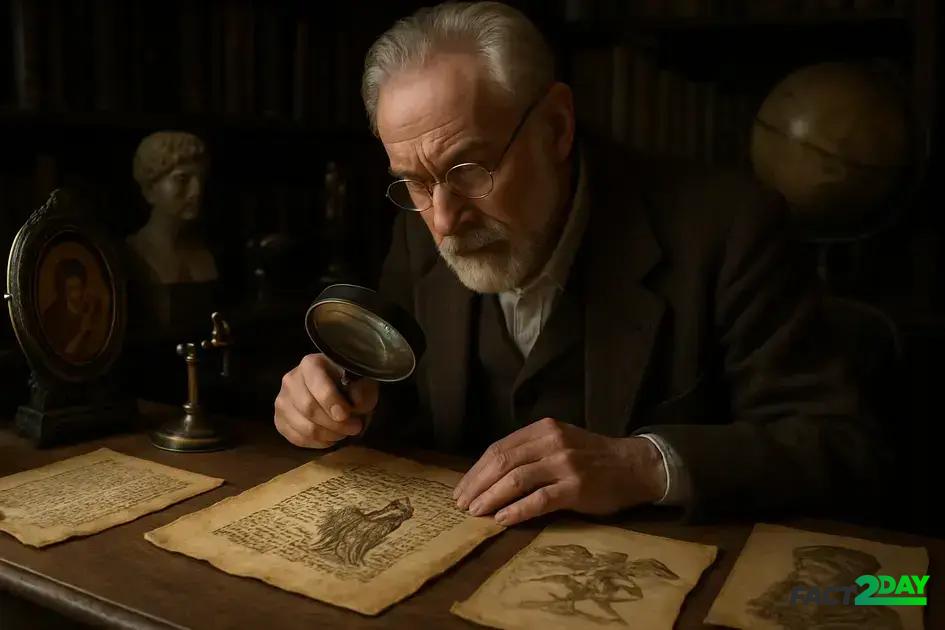
Historical forgeries involve creating fake documents, art, and artifacts that deceive people and shape perceptions of the past, requiring advanced techniques and keen expertise to detect and protect truth.
Have you ever wondered about Historical Forgeries that have fooled experts and changed how we see the past? These incredible stories of deception reveal how truth can be twisted and why understanding them matters to all of us. Let’s dive into history’s most astonishing forgeries and the secrets they hide.
Understanding historical forgeries: an introduction
Historical forgeries are false objects or documents created to deceive others by appearing genuine. These fabrications range from fake paintings and manuscripts to altered artifacts. Understanding historical forgeries helps reveal how they shaped perceptions and influenced events over time. For instance, some forgeries radically changed history textbooks or art collections before experts uncovered the truth.
Forgery isn’t just about cheating collectors or historians; it can manipulate culture, politics, and science. Fake documents might support false claims, while counterfeit art can affect the market and artistic legacy. To spot a forgery, experts look at materials, techniques, and inconsistencies within the item’s story.
Learning about these forgeries teaches us the importance of critical thinking and skepticism when studying history. It also highlights the tools and methods experts use today to authenticate items. This knowledge increases awareness and helps protect historical truth from future deception.
Famous forged documents that changed history
Some of the most famous forged documents in history have had a significant impact, shaping political events and cultural beliefs worldwide. One notable example is the “Donation of Constantine,” a medieval document that claimed to transfer authority over Rome and the western part of the Roman Empire to the Pope. This forgery influenced the power dynamics in Europe for centuries until proven fake by scholars.
Another key example is the “Zinoviev Letter,” which appeared in 1924 and was purportedly from the Soviet Union, urging British communists to promote revolution. This forged letter affected British politics by damaging the Labour Party’s reputation during an election.
The “Protocols of the Elders of Zion” is a notorious forged text that falsely described a Jewish plan for global domination. Though debunked, it fueled antisemitism and conspiracy theories throughout the 20th century.
How forged documents impacted history
These forgeries were not merely false writings; they actively changed public opinion and policy, highlighting the power of fake documents. Experts use linguistic analysis, paper tests, and historical context to detect such frauds today.
Art masterpieces revealed as clever fakes
Many famous art masterpieces have later been exposed as clever forgeries. These fake artworks were so skillfully created that they fooled experts, collectors, and museums for years. The motivation behind forging art ranges from financial profit to gaining fame or political influence.
One well-known case is the story of Han van Meegeren, a Dutch painter who forged works in the style of the Old Masters like Vermeer. His paintings were so convincing that they sold for millions before experts discovered their true origin.
Detecting forged art involves detailed scientific analysis, including pigment testing, x-ray imaging, and examining brush strokes. Technological advances have improved the ability to uncover these fakes more quickly.
The impact of forged art on culture and market
Art forgeries can distort art history and damage the reputation of artists and institutions. They also affect the financial value of genuine pieces. Despite risks, the fascination with art forgeries continues, highlighting the need for vigilance and expertise.
The impact of stamp and coin forgeries
Stamp and coin forgeries have played a significant role in undermining trust in collectibles and currency systems. Forgery of stamps and coins often leads to economic losses for collectors and governments alike. These counterfeits can range from simple alterations to skillful reproductions that closely resemble genuine pieces.
One major impact is on the collectors’ market, where fake stamps and coins can mislead buyers, causing financial harm and devaluing authentic collections. Forgeries also disrupt historical research by distorting data about trade, economy, and culture in different periods.
How forgeries affect the economy and collectors
For governments and banks, counterfeit coins undermine monetary systems by circulating fake currency, which can affect inflation and trust. Advanced technology has made forgery detection more effective, but counterfeiters continually improve their skills, keeping this a persistent challenge.
Collectors rely on authentication services that use chemical and physical tests to verify the authenticity of coins and stamps. These efforts help maintain market integrity and preserve cultural heritage.
How scientific frauds altered knowledge
Scientific frauds have significantly altered the course of knowledge by spreading false information that misled researchers and the public. These deceptions include fabricated data, manipulated results, and fake experiments designed to support incorrect theories.
One famous example is the Piltdown Man, a forged fossil found in England that was considered a missing link in human evolution for decades. It took years before experts uncovered that it was a combination of human and ape bones cleverly altered to appear genuine.
Effects of scientific fraud on research and trust
Such frauds can delay scientific progress by diverting funding and attention away from valid research. They also damage public trust in science, making it harder to accept real discoveries.
Modern science combats fraud through peer review, reproducibility checks, and strict ethical standards. Despite this, fraud cases still emerge, emphasizing the need for vigilance and transparency in research practices.
Detecting forgeries: tools and techniques
Detecting forgeries requires a combination of scientific techniques and expert knowledge. Experts use various tools to examine materials, inks, and craftsmanship to identify fake items. One common technique is forensic analysis, which includes testing paper fibers, pigments, and chemical compositions.
X-ray imaging and ultraviolet light help reveal alterations or hidden elements beneath the surface of documents and paintings. These methods can show if a different image was painted over or if ink was added later.
Technological advances in forgery detection
Modern technology uses digital imaging and spectroscopy to analyze items in great detail without damage. For instance, infrared reflectography can see under layers of paint, while mass spectrometry identifies materials at a molecular level.
Authentication also depends on expert evaluation of style and history, comparing a piece to verified originals. This process is crucial in art, documents, and artifacts to ensure their legitimacy.
Overall, detecting forgeries combines cutting-edge technology and deep historical knowledge to protect cultural heritage and maintain trust.
Famous forgery scandals that shocked societies
Throughout history, several forgery scandals have shocked societies by exposing deep lies behind important documents and artifacts. One infamous case is the Hitler Diaries, forged manuscripts that claimed to reveal the private thoughts of Adolf Hitler. When initially accepted as genuine, they caused huge public excitement before being exposed as fakes, shaking the credibility of historians and media.
The case of the Vinland Map is another notable scandal. This map supposedly showed Viking exploration of North America before Columbus, but decades of analysis raised doubts about its authenticity, causing divisions among scholars.
Social impact of forgery scandals
Forgery scandals often create mistrust among people, especially when the works are linked to national pride or cultural identity. These events demonstrate how forgeries can manipulate history and fuel misinformation. They also emphasize the importance of authentication and critical examination.
Despite these risks, the fascination with forgery scandals remains strong, often inspiring books, movies, and renewed investigations into other questionable artifacts.
The role of forgery in political propaganda
Forgery has often been used as a powerful tool in political propaganda to mislead populations and manipulate public opinion. Fake documents, images, and speeches are crafted to support specific political agendas, undermine opponents, or justify actions.
During wars and elections, forged materials can spread false information quickly, influencing voters and citizens. An example includes forged letters or documents designed to discredit political figures or foreign governments.
Impact of forgery on political events
These deceptive tactics can sway public sentiment and alter the course of history. Governments and political groups may use forgery to create fear, justify policies, or rally support by exploiting misinformation.
Understanding how forgery functions in propaganda emphasizes the need for critical thinking and fact-checking in politics. It also highlights why transparency and media literacy are vital in democratic societies.
Consequences for those caught forging history
Those caught forging historical documents, artworks, or artifacts often face serious legal and social consequences. Legal penalties can include fines, imprisonment, and restitution payments to victims who suffered losses due to the forgery.
Besides legal trouble, forgers commonly experience damage to their reputation and career. Scholars, artists, and collectors who engage in forgery risk permanent exclusion from professional communities and loss of credibility.
Examples of consequences faced by famous forgers
Famous forgers like Han van Meegeren and Mark Hofmann suffered imprisonment and public disgrace after their scams were uncovered. Their cases remind us that fraud in history not only deceives society but also carries heavy personal costs.
Efforts to detect and prosecute forgery help protect cultural heritage and maintain trust in historical records. These measures emphasize the importance of honesty and integrity in preserving our collective past.
Forgery in literature and ancient texts
Forgery in literature and ancient texts has misled scholars and readers for centuries, altering our understanding of history and culture. Forged manuscripts and fake inscriptions were often created to boost the prestige of authors or to influence religious and political views.
One famous case involves the Donation of Constantine, a forged medieval document that claimed to grant the Pope authority over vast territories. This text influenced medieval politics until it was proven fake.
How literary forgeries affect historical knowledge
Fake ancient texts can distort historical timelines and misrepresent cultures. They may introduce false ideologies or support controversial claims. Detecting these forgeries requires careful linguistic analysis, carbon dating, and comparison with authentic texts.
The study of literary forgery underscores the importance of verifying sources and maintaining skepticism when evaluating historical documents. Protecting the integrity of literature ensures a more accurate view of the past.
Modern digital forgeries and their challenges
Modern digital forgeries involve creating fake images, videos, documents, and audio using advanced computer software. These forgeries can be extremely convincing and pose serious challenges for authentication and verification. Digital forgeries can influence public opinion, spread misinformation, and damage reputations.
One common type of digital forgery is the deepfake, where artificial intelligence creates realistic but fake videos of people saying or doing things they never did. These can deceive even experts and are used in scams or political manipulation.
Challenges in combating digital forgeries
Detecting digital forgeries requires specialized technology, such as algorithms that analyze inconsistencies in pixels, audio, or metadata. However, forgers continually improve their skills, making detection an ongoing arms race.
Education and awareness about digital forgeries are crucial. People must learn to critically evaluate digital content and verify sources to avoid falling victim to deception.
Lessons we learn from history’s biggest deceptions
History’s biggest forgeries teach us valuable lessons about truth and trust. They reveal how easily misinformation can spread and shape beliefs, even among experts. These deceptions highlight the need for careful verification and skepticism when evaluating historical claims.
One important lesson is the value of critical thinking. Accepting information without evidence can lead to false narratives that persist for decades or centuries. Forgery cases encourage us to question sources and demand proof.
The importance of improving detection methods
Advances in technology and research methods help uncover fakes, but forgers also become more sophisticated. Ongoing efforts in science and education are essential to stay ahead.
Finally, these stories remind us of the human element: motives behind forgeries often stem from greed, power, or fame. Understanding these drives can help us better guard against future deception and appreciate the complexities of history.
Understanding the truth behind historical forgeries
Historical forgeries have shaped our perception of the past in surprising ways. By learning from these deceptions, we become better equipped to question and verify information critically. This helps protect the accuracy of history and prevents misinformation from taking hold.
Advancements in technology and a strong commitment to truth are key to uncovering and stopping forgeries. Awareness and education play vital roles in helping society spot falsehoods and value authenticity.
Remember, history is complex and sometimes blurry, but by staying curious and cautious, we can appreciate the real stories that have truly defined our world.