The Vatican Declared Galileo Innocent — in 1992
Galileo Forgiven reveals how the Vatican finally cleared his name in 1992, ending centuries of controversy and misunderstanding.
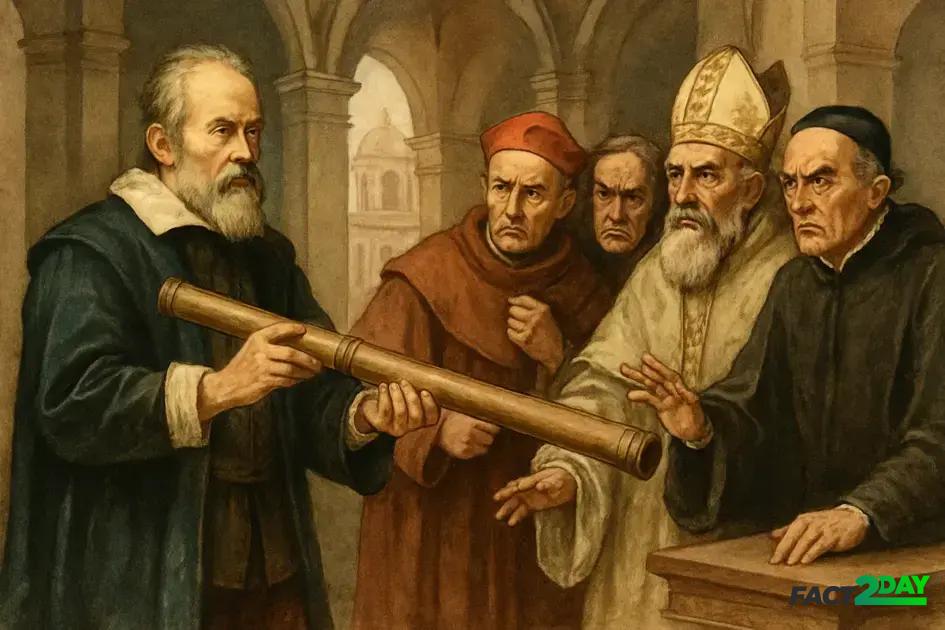
Galileo Forgiven refers to the Vatican’s 1992 declaration that formally acknowledged Galileo Galilei’s scientific contributions and corrected the Church’s historic condemnation of his support for the heliocentric theory.
Have you ever wondered what led the Vatican to declare Galileo Forgiven centuries after his trial? His story is a fascinating mix of science, faith, and human error that still sparks debate today.
Galileo and his clash with the Catholic Church
Galileo Galilei’s clash with the Catholic Church began in the early 17th century when he supported the heliocentric theory, which proposed that the Earth and other planets revolve around the Sun. This idea challenged the long-standing geocentric view held by the Church, which placed the Earth at the center of the universe.
At that time, the Church held great authority over scientific and philosophical ideas, and anything contradicting biblical interpretations was often met with suspicion. Galileo’s findings, supported by his improved telescope observations, threatened the Church’s teachings and raised doubts about its infallibility.
His open advocacy for heliocentrism led to increasing tension, culminating in a trial by the Roman Inquisition in 1633. The Church accused him of heresy, forcing Galileo to recant his views publicly. Despite this, his work laid the foundation for modern science and our understanding of the cosmos.
Impact on Science and Religion
The clash highlighted a significant conflict between science and religious authority, which impacted how scientific ideas were received for centuries. It also raised important questions about freedom of inquiry and the role of evidence versus tradition.
The heliocentric theory and its impact
The heliocentric theory, proposed by Nicolaus Copernicus and championed by Galileo Galilei, revolutionized our understanding of the universe. It suggested that the Sun, not the Earth, was at the center of the solar system, challenging centuries of accepted belief.
This theory shifted humanity’s view of its place in the cosmos and sparked major scientific progress. Galileo’s observations with the telescope supported this idea by showing moons orbiting Jupiter and phases of Venus, proving not all celestial bodies revolved around the Earth.
Impact on Science and Society
The heliocentric theory was a catalyst for the Scientific Revolution. It encouraged observation and experimentation over tradition. This approach laid the foundation for modern physics and astronomy while inspiring new ways of thinking about nature.
However, it also caused tension with religious teachings, leading to conflicts like Galileo’s trial. Despite opposition, the theory eventually gained acceptance and changed how people viewed the universe and their own existence.
Why Galileo was condemned in the 17th century
Galileo was condemned in the 17th century mainly because his support of the heliocentric theory challenged the authority and teachings of the Catholic Church. At that time, the Church upheld the geocentric view, which placed Earth at the center of the universe, aligning with certain biblical interpretations.
Galileo’s writings and observations contradicted this view, which was seen as a threat to the Church’s power and influence. His book, “Dialogue Concerning the Two Chief World Systems,” presented arguments favoring heliocentrism, provoking strong opposition.
The Trial and Charges
In 1633, the Roman Inquisition charged Galileo with heresy. He was forced to recant his beliefs publicly under threat of severe punishment. This condemnation was also influenced by political and religious tensions during the Counter-Reformation period.
Despite the condemnation, Galileo’s scientific work continued to influence future generations, ultimately paving the way for modern science.
The role of the Inquisition in Galileo’s trial
The Roman Inquisition played a central role in Galileo’s trial. Established to combat heresy, it was an institution of the Catholic Church tasked with maintaining doctrinal orthodoxy. When Galileo publicly supported the heliocentric model, the Inquisition saw this as a challenge to Church authority.
They summoned Galileo to answer charges of heresy in 1633. The trial was marked by intense questioning and pressure for Galileo to recant his views. The Inquisition’s goal was to ensure that his teachings did not contradict scripture as interpreted by the Church.
Impact on Galileo and Science
The Inquisition’s condemnation forced Galileo to abjure his beliefs and placed restrictions on his work. This had a chilling effect on scientific inquiry within Catholic territories for many years. However, despite these limitations, Galileo’s discoveries eventually gained acceptance.
The Inquisition’s involvement highlights the tension between religious institutions and emerging scientific ideas during that era.
Changing attitudes towards science and religion
Over the centuries, attitudes toward science and religion have evolved significantly. Initially, the conflict between Galileo and the Church symbolized a hard division where religious doctrine dominated all understanding of the natural world.
As time passed, many began to recognize that science and religion could coexist without conflict. This shift was influenced by the Enlightenment, which emphasized reason and evidence while respecting spiritual beliefs.
Dialogue Between Science and Faith
Today, there is more dialogue and collaboration between scientific inquiry and religious thought. Many religious leaders accept scientific discoveries as explanations of the natural world that do not necessarily contradict faith.
This change reflects a broader understanding that faith and reason address different questions—faith focuses on meaning and purpose, while science seeks to explain how the universe works.
The process leading to the Vatican’s acknowledgment
The process leading to the Vatican’s acknowledgment of Galileo’s innocence was gradual and reflective. Beginning in the 19th century, the Church slowly reassessed Galileo’s trial as part of a broader effort to reconcile faith with scientific progress.
Key figures such as Pope Pius XII began speaking more openly about Galileo’s contributions to science, urging a balanced view that respected both faith and reason. This set the stage for deeper reflection within the Church.
Pope John Paul II’s Formal Vindication
In 1992, Pope John Paul II publicly acknowledged that the Church had erred in condemning Galileo. This official statement recognized Galileo’s work as pioneering and corrected centuries of misunderstanding.
The acknowledgment involved thorough examination by theologians and scientists, illustrating the Church’s willingness to engage with history honestly and appreciate scientific truth.
How the 1992 declaration changed perceptions
The 1992 declaration by Pope John Paul II significantly changed public perceptions of Galileo and the Catholic Church. For centuries, Galileo’s condemnation was seen as a symbol of the Church opposing scientific progress.
This formal acknowledgment showed a willingness to admit past mistakes and embrace a more open relationship with science. It marked a turning point in the dialogue between faith and reason.
Shifting Views on Science and Religion
The declaration helped many see the Church not as an enemy of science but as an institution capable of reform and understanding. It encouraged a more nuanced view, recognizing that religious faith and scientific inquiry can coexist.
This new perspective has improved the Church’s image among scientists and the public, fostering respect and cooperation between the two worlds.
The influence of Galileo’s vindication on modern science
Galileo’s vindication by the Vatican had a profound influence on modern science. It helped heal the long-standing rift between scientific inquiry and religious belief, encouraging scientists to pursue knowledge without fear of persecution.
Galileo’s story became a powerful example of the importance of evidence and critical thinking in understanding the natural world. His work inspired the scientific method, which remains a foundation of research today.
Encouragement for Scientific Progress
The acknowledgment boosted confidence among researchers, signaling that science and religion could coexist. It opened doors for new discoveries by promoting freedom of thought and expression in scientific fields.
Ultimately, Galileo’s vindication fostered a culture that values open dialogue and respect between different ways of knowing, contributing to advancements in physics, astronomy, and many other disciplines.
Lessons learned from Galileo’s story
Galileo’s story teaches several important lessons about science, faith, and the pursuit of truth. One major lesson is the importance of standing by evidence, even when it challenges established beliefs or authority.
His experience also highlights the risks of mixing politics and religion with scientific inquiry. When science becomes entangled in ideological battles, progress can be delayed or suppressed.
The Value of Open Inquiry
Another key takeaway is the need for open dialogue and respect between different fields of knowledge. Galileo’s story reminds us that questioning and testing ideas is essential for discovery, but it should also be done with humility and understanding.
Finally, it emphasizes the power of patience and perseverance. Although Galileo faced condemnation, his ideas eventually prevailed, showing that truth often stands the test of time.
What Galileo’s forgiveness means today
Galileo’s forgiveness by the Vatican today symbolizes a bridge between science and faith. It reflects a more open, respectful approach to scientific discoveries within religious communities.
This act encourages ongoing dialogue and cooperation between scientists and religious leaders, promoting mutual understanding and respect for different ways of exploring truth.
Modern Significance
Today, Galileo’s forgiveness serves as a reminder that mistakes made in the past can be corrected, fostering hope for progress in reconciling conflicts between different worldviews.
It also highlights the importance of humility — recognizing that no institution, scientific or religious, is beyond revision or improvement.
Reflecting on Galileo’s journey and its lessons for heliocentric theory
Galileo’s story reminds us of the challenges faced when new ideas confront old beliefs. It shows the importance of keeping an open mind and valuing evidence while respecting different perspectives.
The Vatican’s forgiveness highlights how progress and understanding can grow from humility and dialogue. Today, it encourages us to work together, balancing science and faith to explore the world around us.
By learning from history, we can inspire future generations to seek truth with courage and respect.