The Great Wall of China Can’t Be Seen from the Moon
Discover why the Great Wall myth about being visible from the moon isn't true and what really affects what we can see in space.
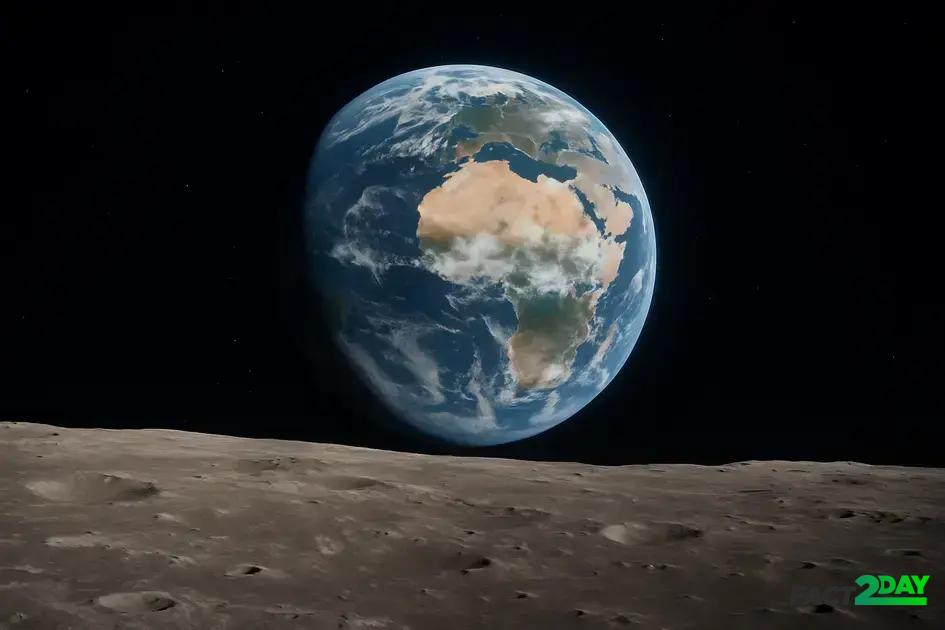
The Great Wall myth falsely claims it is visible from the moon, but due to its narrow size, color blending, and human visual limits, it cannot be seen from the moon without technological aid.
Have you ever wondered if the Great Wall myth that the wall can be seen from the moon is actually true? It’s a story many have heard, but the reality might surprise you. Let’s dive into what science and space experts say about it.
what is the great wall myth and where did it come from
The Great Wall myth claims that the Great Wall of China is the only man-made structure visible from the moon. This idea has been passed down through popular culture and media for decades. It likely started as early as the 18th century and became widespread during the 20th century as space exploration captured public imagination.
Despite its popularity, astronauts and scientists have confirmed that the wall is not visible to the naked eye from the moon without aid. The myth stems from a misunderstanding of the wall’s size and the limits of human eyesight from great distances. The Great Wall is very long, but also narrow and built with materials that blend into the surrounding landscape.
Origins of the myth
The myth appears to have gained traction from early space missions and simplistic explanations about what could be seen from orbit. It was often used to illustrate human achievement or as a fun fact without factual backing. Over time, it became embedded in textbooks, media, and general knowledge.
Modern space images and astronaut reports clearly show that many human-made objects, including cities and large roads, can be seen from low Earth orbit, but not from the moon, which is roughly 238,855 miles (384,400 kilometers) away. The Great Wall’s appearance is similar to the surrounding terrain, making it indistinguishable from orbit.
Understanding the myth’s background helps us appreciate the difference between legends and scientific facts, and demonstrates how important it is to rely on verified information about space and our planet.
scientific facts about seeing earth from the moon
Seeing Earth from the moon involves understanding distances, visibility, and the limits of human vision. The moon is about 238,855 miles (384,400 kilometers) away from Earth, which makes observing detailed structures like the Great Wall extremely challenging.
Human eyesight can distinguish objects only up to a certain size and contrast from such a great distance. From the moon, Earth appears as a bright, colorful sphere with visible weather patterns, continents, and oceans, but individual man-made structures are not discernible.
Factors affecting visibility
The brightness of Earth, its atmospheric conditions, and the resolution of the human eye all play roles in what can be seen. For example, large city lights are visible from low Earth orbit but vanish from the moon due to distance and light diffusion.
Space missions and astronauts have reported that only large-scale natural features like mountains, seas, and major landmasses are visible without aid from the moon. This scientific understanding debunks myths that smaller constructions can be seen unaided from that far away.
Modern imaging technology uses powerful cameras to capture detailed pictures of Earth from space, but these images rely on magnification and digital enhancement, not direct human sight. This helps scientists study our planet but doesn’t change what the naked eye can perceive from the moon.
why the great wall of china isn’t visible from space
The Great Wall of China is often believed to be visible from space, but this is a common misunderstanding. The wall is not visible from space with the naked eye due to several reasons related to its size, color, and the limits of human vision.
First, the wall is very narrow, usually only a few meters wide, and its materials blend with the surrounding natural landscape of rocks and earth. This lack of strong contrast makes it hard to distinguish from above without zooming instruments.
Distance and human vision limits
From low Earth orbit, at about 250 miles (400 kilometers) above the surface, astronauts can see cities, roads, and large airports, but the Great Wall remains difficult to spot unaided. The wall’s width does not make it stand out enough to be visible as a continuous structure.
Atmospheric conditions such as haze, cloud cover, and the angle of sunlight also affect visibility. These factors make it even more challenging to see thin structures from space, especially with the unaided eye.
While satellites and powerful cameras can capture images of the wall, these use telescopes or zoom lenses rather than direct human sight. Thus, the Great Wall’s visibility depends more on technology than natural human vision from space.
how human perception affects what we see from orbit
Human perception plays a big role in what astronauts and observers see from orbit. Our eyes and brain work together to interpret huge amounts of visual information, but there are natural limits to our ability to spot small objects from far away.
Visual acuity decreases with distance, meaning that objects need to be large or highly contrasting to be noticed easily. From orbit, many features on Earth look blurred or merged, especially thin or color-matched structures like the Great Wall of China.
Factors influencing perception
The lighting conditions, angle of view, and atmospheric effects all influence how clearly objects appear. For example, bright sunlight can create reflections or glare, while shadows can hide details. The Earth’s atmosphere can also scatter light, reducing clarity.
Additionally, cognitive biases and expectations affect what people think they can see. If told a landmark is visible, some may believe they spot it even when it is not distinguishable. This psychological aspect helps explain why myths about seeing the Great Wall from space persist.
Astronauts rely on cameras and instruments to document Earth, which can capture details beyond naked vision. Understanding how human perception works from orbit highlights the difference between actual visibility and what we might imagine or expect.
historical myths vs modern space photography
Throughout history, many myths have surrounded space and how Earth appears from above. The claim that the Great Wall of China is visible from the moon is one such story that has been challenged by modern space photography and astronaut accounts.
Historical myths often arose from limited knowledge and a human desire to explain or exaggerate remarkable achievements. These myths can persist through books, news, and word of mouth, creating powerful but inaccurate images of what can be seen in space.
Advances in space photography
Modern technology, including high-resolution cameras on satellites and spacecraft, provides clear and detailed images of Earth. These images confirm which large natural and man-made features are visible from various orbits, debunking older myths with solid evidence.
For example, while city lights are visible from low Earth orbit at night, the Great Wall does not stand out enough to appear distinctly, even in powerful photographs. These facts rely on scientific observations rather than folklore.
Understanding the differences between historical stories and current scientific data helps us appreciate the real marvels of space exploration. It also teaches the importance of verifying information with reliable sources instead of accepting myths as truth.
the role of atmospheric conditions in visibility
Atmospheric conditions play a significant role in what can be seen from space or orbit. The Earth’s atmosphere affects visibility through several key factors such as haze, clouds, dust, and air pollution.
Haze and air particles scatter sunlight, which reduces contrast and clarity when viewing objects on Earth from above. This scattering makes thin or low-contrast structures, like the Great Wall of China, extremely difficult to distinguish.
Cloud cover and weather impact
Clouds can completely block the view of Earth’s surface, making it impossible to see landmarks from space at those times. Weather conditions such as storms or fog also reduce visibility from orbit or the moon.
Air pollution and dust storms further reduce clarity by adding more particles to the atmosphere. These particles absorb and scatter light, dimming the view of any features on the ground.
Lighting and angle of observation also affect visibility. The position of the sun can create shadows or glare that hide or highlight certain features. Early morning or late afternoon light may provide better conditions for spotting some landmarks.
Because of these atmospheric influences, even large human-made structures can be invisible from space without the help of technology. Understanding these natural limits helps explain why some myths about visibility persist.
how satellites and astronauts view earth landmarks
Satellites and astronauts use different methods to observe and capture images of Earth landmarks. Satellites orbit at varying altitudes and are equipped with advanced cameras and sensors designed to capture detailed images across different wavelengths of light.
Satellites can zoom in on specific areas to capture high-resolution images that are impossible to see with the naked eye from space. They use technologies like infrared and multispectral imaging to study vegetation, urban areas, and natural features under various conditions.
Astronauts’ perspective
Astronauts aboard the International Space Station (ISS) orbit about 250 miles (400 kilometers) above Earth and can see broad landmasses, large cities, and major geographical features. However, their view is limited by human visual acuity and atmospheric conditions.
Astronauts use handheld cameras with zoom lenses to photograph specific landmarks. These photos help scientists study changes on Earth over time and share stunning views of our planet with the public.
Visibility of landmarks depends on size, contrast, and environmental factors. While large features like rivers and mountains stand out, narrow or camouflaged structures such as the Great Wall blend into the terrain, making them nearly invisible without technological aid.
Both satellites and astronauts contribute valuable data that help dispel myths about what can be seen from space and improve our understanding of Earth’s surface.
why debunking this myth matters today
Debunking the myth that the Great Wall of China can be seen from the moon is important for several reasons. It helps promote accurate scientific understanding and corrects common misconceptions about space and human perception.
Scientific literacy improves when myths are replaced with facts, encouraging curiosity and critical thinking. People become more informed about space exploration, Earth observation, and the limitations of human vision.
Impact on education and culture
Separating fact from fiction ensures that educational materials provide truthful information. This fosters trust in science and helps students develop realistic views of our planet and universe.
Moreover, debunking myths prevents the spread of misinformation that can cloud public understanding and lead to unrealistic expectations about space travel and technology.
Addressing these myths also honors the real achievements of human engineering and space exploration without relying on exaggerated claims.
Promoting curiosity about how humans really observe Earth from space can inspire future generations to explore science and technology honestly and passionately.
Understanding the truth about the Great Wall myth
The myth that the Great Wall of China can be seen from the moon is a captivating story but not scientific fact. Learning the real limits of human vision and space technology helps us appreciate the true wonders of our planet and space exploration.
By debunking myths like this, we support accurate knowledge and inspire curiosity based on facts. Recognizing what is really visible from space encourages respect for human achievements without exaggeration.
Embracing the truth about our world and the universe opens up new opportunities for learning, discovery, and inspiring the next generation of explorers and scientists.