The Great Breath: How Tiny Microbes Changed Earth’s Atmosphere and Paved the Way for Complex Life
Explore the Great Oxidation Event and discover how tiny microbes transformed Earth's atmosphere, making complex life possible in surprising ways.
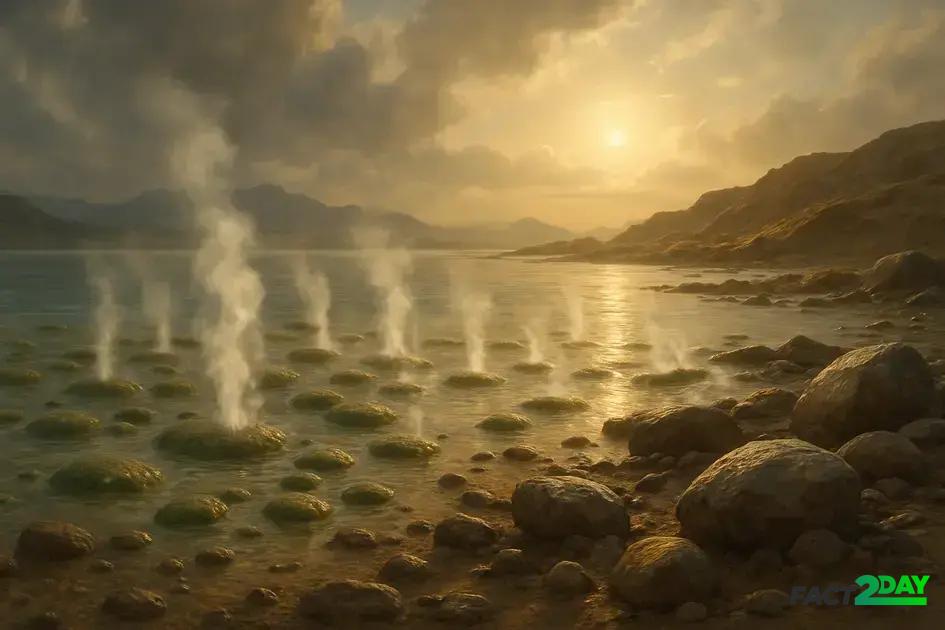
The Great Oxidation Event was a critical period when oxygen-producing microbes transformed Earth’s atmosphere, enabling the rise of complex aerobic life and altering global ecosystems permanently.
Have you ever wondered how our oxygen-rich atmosphere came to be? The Great Oxidation Event reveals a fascinating chapter, where tiny microbes quietly changed the course of life on Earth. Let’s explore this incredible transformation together.
the origins of oxygen-producing microbes
The origins of oxygen-producing microbes trace back over 2.5 billion years ago, when tiny organisms called cyanobacteria began performing photosynthesis. These microorganisms used sunlight to convert carbon dioxide and water into oxygen and sugars, a process that profoundly altered the chemistry of Earth’s atmosphere.
How Cyanobacteria Changed the World
Cyanobacteria were among the first life forms capable of producing oxygen as a byproduct. Unlike earlier microbes that thrived in oxygen-free environments, these microbes slowly released oxygen, which began to accumulate in shallow oceans and, eventually, in the atmosphere.
Early Evidence of Photosynthesis
Geological records show layers of banded iron formations formed by oxygen reacting with iron in seawater. This helped scientists understand when and how oxygen started to build up thanks to microbial activity. These formations serve as key evidence of the great shift caused by these tiny oxygen producers.
The Impact on Earth’s Atmosphere
The oxygen produced by cyanobacteria didn’t immediately fill the atmosphere. Initially, it reacted with minerals and gases, but over millions of years, oxygen levels rose significantly. This created new environmental conditions that paved the way for more complex aerobic life forms.
The emergence of these microbes marks a critical turning point in Earth’s history, demonstrating how microscopic life can drive planetary-scale changes.
how oxygen began to accumulate in the atmosphere
Oxygen began to accumulate in the atmosphere as a result of the continuous activity of photosynthetic microbes, particularly cyanobacteria. Initially, the oxygen they produced reacted with minerals like iron, preventing free oxygen from building up in the air. This phase is often called the “oxygen sink”.
the iron curtain and banded iron formations
One major process that absorbed oxygen was the oxidation of dissolved iron in oceans. This formed large deposits known as banded iron formations, which provide clear geological evidence of the changing chemistry in ancient seas. These formations show cycles of iron oxides alternating with silica, created as oxygen levels fluctuated.
breaking through the oxygen sink
Over millions of years, as iron and other oxygen-reactive materials became saturated, free oxygen began to escape into the atmosphere. This buildup happened slowly but steadily, transforming Earth’s air from oxygen-poor to oxygen-rich.
This accumulation marked a major environmental shift, opening new possibilities for life that relied on oxygen to survive and thrive.
impacts of rising oxygen on early earth ecosystems
The rise of oxygen transformed early Earth ecosystems in profound ways. Before this change, life mainly consisted of anaerobic organisms that didn’t need oxygen and sometimes found it toxic. As oxygen levels increased, these organisms faced new challenges.
oxygen as both a threat and an opportunity
Oxygen was toxic to many early life forms, causing oxidative stress and killing some species that thrived in oxygen-free environments. This led to mass extinctions and forced many microorganisms to adapt or find oxygen-free niches.
development of new life strategies
On the other hand, rising oxygen enabled the evolution of aerobic organisms that could use oxygen for more efficient energy production. This increased energy availability allowed cells to become more complex and support larger, multicellular life forms.
changes in ecosystems and food webs
The presence of oxygen led to new food chains and ecosystem dynamics, as organisms evolved to exploit oxygen-rich environments. It also contributed to the formation of the ozone layer, which protected life from harmful ultraviolet radiation.
These changes laid the foundation for biodiversity and complex ecosystems that followed in Earth’s history.
the shift from anoxic to oxygen-rich environments
The transition from anoxic to oxygen-rich environments was a complex process that reshaped Earth’s surface and atmosphere. Early Earth’s oceans and atmosphere were largely anoxic, meaning they lacked free oxygen. Over millions of years, oxygen produced by photosynthetic microbes began to accumulate, causing profound changes.
changes in ocean chemistry
As oxygen slowly increased, it reacted with iron and other elements, creating new mineral deposits like banded iron formations. This gradual shift altered the chemistry of oceans, allowing oxygen to penetrate deeper and support new types of life.
development of oxygen-rich habitats
Oxygen-rich environments enabled the growth of aerobic organisms, which use oxygen for more efficient energy production. This opened new ecological niches and contributed to biodiversity. Organisms that once lived in oxygen-poor zones either adapted or retreated to anoxic refuges.
impact on Earth’s surface and atmosphere
The rise of oxygen also led to the formation of the ozone layer, which protected living organisms from harmful ultraviolet rays. This protection was crucial for life to move from oceans to land, setting the stage for greater complexity.
This shift transformed Earth’s environment, fostering the evolution of multicellular life and ecosystems dependent on oxygen.
the evolution of complex life forms after the event
The evolution of complex life forms after the Great Oxidation Event was a turning point in Earth’s history. The increase in atmospheric oxygen allowed organisms to develop cellular structures that used oxygen to create energy more efficiently, which supported larger and more complex bodies.
rise of eukaryotes
Eukaryotic cells emerged, characterized by a nucleus and specialized organelles. These cells could harness oxygen for energy through cellular respiration, a key factor in their ability to grow and specialize into different tissues.
multicellularity and diversity
With more oxygen available, multicellular life forms evolved. This provided advantages like better mobility, protection, and the ability to exploit varied environments. Over time, this led to a rapid diversification of species during periods such as the Precambrian and Cambrian explosions.
impact on ecosystems
The emergence of complex life altered ecosystems profoundly. New food webs developed, predators and prey evolved, and ecosystems grew in complexity. Oxygen also enabled the development of skeletons and shells, providing structure and defense.
This period set the stage for the rich variety of life shapes and systems we see today.
lessons from the great oxidation for today’s environment
The Great Oxidation Event offers valuable lessons for understanding today’s changing environment. It shows how tiny organisms can drive massive shifts in the atmosphere that affect all life on Earth.
human impact on atmospheric balance
Just as ancient microbes changed oxygen levels, modern human activities are altering atmospheric gases, contributing to climate change and environmental stress. This reminds us of the delicate balance needed for life to thrive.
importance of monitoring and adaptation
Studying past events like the Great Oxidation helps scientists predict how ecosystems respond to changes in oxygen and other gases. This knowledge supports efforts to protect biodiversity and manage natural resources sustainably.
hope through resilience and innovation
The Earth’s history shows resilience in the face of drastic changes. By understanding how life adapted to new conditions in the past, humanity can innovate to reduce harm and find solutions for a healthier planet.
These lessons emphasize the critical role of science in guiding environmental policies and actions today.
Understanding the Great Oxidation Event and Its Lasting Impact
The Great Oxidation Event was a turning point that reshaped Earth’s atmosphere and allowed complex life to evolve. Tiny microbes played a huge role in changing our planet in ways we are still discovering today.
By learning from this ancient event, we gain insight into how delicate Earth’s environment is and how vital it is to protect it. Science and innovation can help us face modern challenges by guiding us toward sustainable choices.
Remember, even small changes can have big effects over time, just like those early oxygen-producing microbes changed the world billions of years ago.