Glaciers with Green Algae Changing their Color
Glacier algae blooms captivate with vivid greens, revealing how microscopic life shifts icy landscapes. Discover their surprising impact on glaciers.
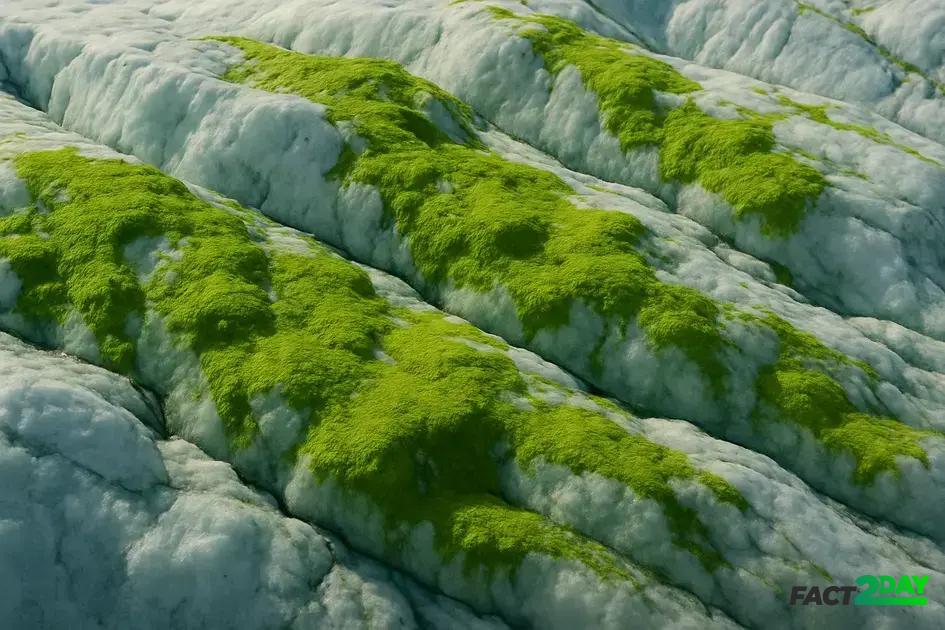
Glacier algae blooms are microscopic algae growing on glacier surfaces that darken the ice, accelerate melting by reducing reflectivity, and impact local ecosystems and global climate patterns.
Glacier algae blooms paint icy surfaces with unexpected greens, inviting us to notice these subtle shifts. Have you wondered how such tiny organisms can influence vast glaciers? Let’s explore this intriguing natural phenomenon together.
what are glacier algae blooms?
Glacier algae blooms refer to the growth of microscopic algae on the surface of glaciers. These algae thrive during the warmer months when sunlight is abundant. Unlike typical algae found in water, glacier algae live on ice, creating colorful patches that vary from green to red depending on their type and pigments.
These blooms play an important role in the glacier ecosystem. They can change the surface color of glaciers, often darkening it, which affects how much sunlight is absorbed. This process may contribute to faster melting of ice by reducing its reflectivity, a phenomenon scientifically known as albedo effect.
Types of glacier algae
The most common glacier algae include species like Ancylonema nordenskiöldii and Mesotaenium berggrenii. Each has unique pigments that can range from green to reddish, influencing the color visible on the ice.
Where do they grow?
They typically appear in polar and alpine regions where glaciers exist. These algae survive harsh conditions, including intense UV radiation and freezing temperatures, making their blooms a remarkable example of adaptation.
Understanding glacier algae blooms provides insights into changing glacier dynamics and highlights the complex interactions within these cold ecosystems.
how algae change glacier color
Algae change glacier color by growing on the ice surface and producing pigments that absorb sunlight. These pigments range from green to red and purple, depending on the algae species and their adaptation to light. When algae bloom, they can cover large glacier areas, creating colorful patches visible even from a distance.
The ice normally appears bright white because it reflects most sunlight. However, when algae accumulate, they darken the glacier surface, reducing its reflectivity or albedo. This lower albedo causes the glacier to absorb more heat, accelerating melting.
The role of pigments
The pigments in glacier algae not only help in photosynthesis but also protect the algae from harsh solar radiation. These pigments, such as chlorophylls and carotenoids, are responsible for the visible color changes on glaciers.
Impact on glacier appearance
The presence of algae can turn the pristine white ice into shades of green or even red. These color changes are often more noticeable during summer when sunlight and temperatures favor algae growth.
Understanding how algae influence glacier color is crucial because it reveals interactions between microbial life and glacier dynamics, which can affect broader environmental systems.
effects on glacier melting and climate
The effects of glacier algae blooms on melting are significant because these algae darken the ice surface, absorbing more sunlight and increasing heat retention. This process speeds up the melting of glaciers, which contributes to rising sea levels and changes in freshwater availability.
Influence on glacier melting
When algae spread across glaciers, they decrease the albedo effect—the glacier’s ability to reflect sunlight. Darker surfaces absorb more solar energy, which melts ice faster than clean, white ice surfaces. This accelerates the loss of glacier mass.
Climate feedback loops
The melting caused by algae blooms can create a feedback loop. More meltwater creates favorable conditions for further algae growth, which in turn leads to additional darkening and melting. This loop can intensify local warming and affect the glacier’s stability.
Global climate implications
Glaciers act as important freshwater reservoirs and climate regulators. When algae speed up melting, they can affect downstream ecosystems and human communities relying on glacier-fed rivers. Additionally, increased melting contributes to global sea-level rise, impacting coastal areas worldwide.
Scientists continue to study how glacier algae blooms interact with climate systems to better predict future changes and help manage environmental impacts.
studying algae in polar environments
Studying algae in polar environments helps scientists understand the effects of climate change and glacier dynamics. Researchers use a mix of fieldwork and lab analysis to examine these microscopic organisms growing on ice.
Field research methods
Scientists collect samples directly from glaciers using specialized tools to avoid contamination. They measure algae coverage, pigment concentration, and environmental conditions like temperature and sunlight. This data helps track bloom patterns over time.
Laboratory analysis
In the lab, researchers analyze algae species under microscopes and use DNA sequencing to identify types. They study pigments that influence glacier color and assess how algae affect ice melting. This research sheds light on algae adaptations to extreme cold.
Technological tools
Remote sensing technologies like satellites and drones provide images of glacier surfaces. These tools help monitor large areas and detect algae blooms that cause color changes, offering a broader perspective on their distribution.
Studying algae in polar regions also informs predictions about future glacier changes and helps design strategies for environmental protection.
implications for ecosystems and wildlife
Glacier algae blooms impact ecosystems and wildlife by altering the environment on and around glaciers. The algae provide a food source for microbial communities, which in turn supports a range of small organisms living in icy habitats.
Effects on microbial food webs
Algae serve as the base of the food chain for microbes and tiny invertebrates. This supports biodiversity in glacier ecosystems, which are otherwise low in nutrients and life.
Influence on larger wildlife
As algae-driven melting changes glacier landscapes, habitats for animals like Arctic foxes, birds, and insects can be affected. Some species rely on glacier meltwater, so changes in water flow influence their survival.
Ecological balance and risks
While algae blooms create habitats, excessive growth linked to warming can disrupt ecological balance. Darkened ice increases melting rates, potentially harming animals adapted to colder conditions and changing migration patterns.
Understanding these implications helps highlight the delicate relationships between glacier algae, climate change, and ecosystems dependent on icy environments.
future research and environmental monitoring
Future research on glacier algae blooms focuses on understanding their long-term impact on glaciers and global climate. Scientists aim to improve models of algae growth and its effects on ice melting.
Advances in monitoring technologies
New tools like satellite imaging and drones offer improved ways to track algae blooms over large glacier areas. These technologies help gather detailed data about distribution, density, and seasonal changes.
Environmental monitoring programs
Ongoing monitoring programs combine field studies and remote sensing to watch glacier surfaces closely. They help detect changes early, enabling faster responses to environmental shifts connected with climate change.
Collaboration across disciplines
Research now integrates biology, climatology, and glaciology to understand algae blooms better. This interdisciplinary approach is crucial to predict future glacier behavior and inform conservation strategies.
Such efforts help scientists and policymakers prepare for the consequences of glacier changes and develop better protection plans for these fragile ecosystems.
Understanding glacier algae blooms and their impact
Glacier algae blooms are small yet powerful forces changing the color and melting rate of glaciers. Their growth affects not just the ice but entire ecosystems and the global climate.
By studying algae in polar environments and monitoring their spread, scientists gain insights into how glaciers respond to a warming world. This knowledge helps predict future changes and develop ways to protect these vital natural resources.
Continued research and advanced technology will be key to managing the challenges ahead. Paying attention to these tiny organisms reveals a bigger story about our planet’s health and the urgent need for environmental care.