Gamification Business Productivity in the Workplace
How Gamification in Business Improves Productivity, Engagement, and Employee Retention
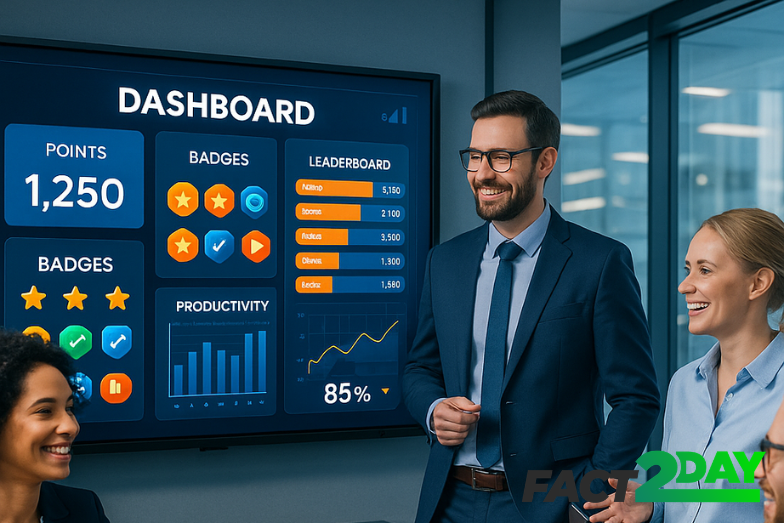
Gamification business productivity Strategies may seem like a buzzword, but it’s a real strategy for improving your daily work. Have you ever thought about how incorporating game elements can transform motivation and performance? Keep reading to understand this world that blends fun and efficiency.
What Is Gamification and Its Impact on Business
Gamification is the use of game design elements in non-game contexts, such as business environments, to boost motivation and engagement. It involves applying points, badges, leaderboards, and challenges to everyday tasks, making them more enjoyable and rewarding.
This approach impacts businesses by transforming how employees interact with their work. Instead of routine tasks feeling like chores, gamification adds a competitive and fun layer that encourages productivity. When people see progress and earn recognition, their satisfaction and focus increase.
Driving engagement through game elements
Elements like progress bars and real-time feedback create a sense of achievement. Leaderboards foster friendly competition, encouraging employees to improve performance. These features stimulate participation and collaboration within teams.
Improving business outcomes
Companies that use gamification often report higher employee retention, faster onboarding, and improved performance metrics. By making work more interactive, gamification directly contributes to enhanced productivity and a positive work culture.
Adapting to different business needs
Gamification is highly flexible and can be tailored to fit various industries and objectives. Whether it’s sales, customer service, or training, businesses can design game mechanics suited to their goals, keeping employees motivated and aligned.
In summary, gamification reshapes the work experience by blending fun and function, leading to meaningful improvements in business results.
Key Benefits of Gamification for Productivity
Gamification brings several key benefits that directly improve productivity in business settings. By turning routine tasks into engaging challenges, it encourages consistent effort and focus among employees.
Increased motivation
By rewarding progress with points, badges, or levels, gamification taps into the human desire for achievement. This keeps employees motivated to complete tasks efficiently and strive for higher performance.
Better focus and attention
Game mechanics provide immediate feedback, which helps workers stay aware of their progress and adjust efforts as needed. This clarity reduces distractions and improves task completion speed.
Enhanced collaboration
Leaderboards and team challenges promote friendly competition and cooperation. When employees work together or compete positively, overall productivity tends to rise.
Improved learning and skill development
Gamification encourages continuous learning by making training programs interactive and rewarding. Employees acquire new skills faster and apply them effectively to their daily work.
Ultimately, gamification creates a more dynamic workplace where employees feel encouraged to perform better, leading to significant productivity gains.
How Gamification Increases Employee Engagement
Gamification enhances employee engagement by making work more interactive and rewarding. Instead of feeling like routine jobs, tasks become exciting challenges that encourage active participation.
Creating a sense of achievement
Through rewards such as points, badges, and levels, employees see tangible recognition for their efforts. This boosts morale and makes them more willing to stay involved and committed.
Fostering friendly competition
Leaderboards and contests motivate employees to perform better while promoting teamwork. Friendly competition pushes individuals to reach new goals, leading to higher engagement.
Providing instant feedback
Gamification systems often offer real-time progress updates. This quick feedback keeps employees aware of their performance and encourages continuous improvement.
Encouraging participation
By incorporating game elements, companies create a fun environment that invites employees to participate more willingly in activities like training, meetings, and goal setting.
Overall, gamification turns work into a more engaging experience where employees feel valued, motivated, and connected to their roles and teams.
Popular Tools for Business Gamification
Several popular tools help businesses implement gamification effectively. These platforms offer features like rewards, progress tracking, and interactive challenges to boost employee engagement and productivity.
1. Badgeville
Badgeville provides a comprehensive gamification platform that integrates with existing business systems. It offers real-time analytics, leaderboards, and achievement badges to motivate employees and track progress.
2. Bunchball Nitro
Bunchball Nitro delivers customizable game mechanics such as points, badges, and levels. It supports social sharing and collaboration, helping teams stay connected and engaged.
3. Kahoot!
Kahoot! focuses on interactive quizzes and learning games. It is widely used for employee training sessions, making learning fun and memorable through competitive gameplay.
4. GamEffective
GamEffective blends gamification with training and performance management. It uses storytelling and mission-based challenges to create immersive employee experiences.
5. Microsoft Viva
Microsoft Viva integrates gamification elements into daily workflows within Microsoft 365. It encourages collaboration and recognizes employee achievements directly through familiar tools.
Choosing the right gamification tool depends on your company’s goals, size, and culture. Many platforms offer free trials, so testing and evaluating their features against your needs is a good way to start.
Gamification in Remote Teams: Challenges and Solutions
Gamification can be an effective way to support productivity and engagement for remote teams, but it comes with unique challenges. Working apart means communication and motivation need extra attention.
Challenges of gamification with remote teams
One of the main challenges is ensuring all team members feel connected despite physical distance. Without face-to-face interaction, it can be harder to foster competition and collaboration.
Technical issues, like differing devices or internet speeds, can also impact participation. Plus, time zone differences may limit when team members can engage in game activities.
Solutions to enhance remote gamification
Using cloud-based gamification platforms helps keep everyone on the same page. Features like real-time updates, notifications, and mobile access enable participation anytime and anywhere.
Creating flexible challenges that accommodate different schedules and work styles supports inclusion. Encouraging team goals and collaboration reduces isolation and builds camaraderie.
Communication and recognition
Regular virtual meetings to celebrate achievements and share progress reinforce motivation. Providing instant feedback and public recognition within platforms boosts morale and keeps teams engaged.
By combining thoughtful design with the right technology, gamification can overcome remote work barriers and cultivate a productive, connected team culture.
Real Examples of Gamification in Successful Companies
Many successful companies have used gamification to boost productivity and engagement. These real-world examples highlight the impact gamification can have when applied correctly.
Google uses gamification in its employee training programs. Employees earn points and badges for completing courses, which encourages continuous learning and development across teams.
Salesforce
Salesforce implemented gamification in its sales processes with leaderboards and rewards. This inspired healthy competition among sales reps and resulted in higher sales performance.
Dell
Dell uses gamification to improve customer service training. Team members participate in challenges that simulate real scenarios, which enhances skills and motivation.
Microsoft
Microsoft integrates gamification into their productivity tools, encouraging users to complete tasks and reach goals. Badges and progress tracking make daily work more engaging.
Starbucks
Starbucks rewards customers and employees through gamified loyalty programs and training modules, increasing satisfaction and retention.
These cases demonstrate how gamification can adapt across industries to improve motivation, learning, and performance.
Steps to Implement Gamification in the Corporate Environment
Implementing gamification in a corporate environment requires a clear and structured approach to ensure success and employee engagement.
Identify objectives and goals
The first step is to define what you want to achieve with gamification. Whether it’s improving productivity, enhancing training, or boosting motivation, clear goals will guide the design process.
Understand your audience
Analyze the workforce to identify their preferences, motivations, and challenges. This helps in creating game mechanics and rewards that truly resonate with the employees.
Choose the right gamification model
Decide on the types of game elements to use, such as points, badges, leaderboards, or challenges. Tailor these tools to fit your corporate culture and business objectives.
Select appropriate technology
Pick a gamification platform that integrates well with your existing systems. Consider ease of use, scalability, and the ability to provide real-time tracking and feedback.
Design engaging content
Create tasks, challenges, and missions that align with workflow and encourage participation. Make sure they are fun yet productive.
Communicate and train employees
Explain the purpose and benefits of gamification clearly. Provide training so everyone knows how to participate and use the system effectively.
Launch gradually and monitor
Start with pilot projects or specific departments. Gather feedback, monitor engagement and performance metrics to identify areas of improvement.
Adjust and optimize
Continuously refine the gamification program based on feedback and results. Keep content fresh and rewards meaningful to sustain long-term engagement.
A thoughtful and well-executed gamification plan can transform corporate culture and drive productivity by making work engaging and rewarding.
Measuring and Analyzing Gamification Results
Measuring and analyzing gamification results is essential to understand its impact and optimize its effectiveness.
Define key performance indicators (KPIs)
Start by setting clear KPIs aligned with your goals, such as increased productivity, higher engagement rates, or improved training completion.
Use analytics tools
Utilize gamification platforms that offer real-time data on user activity, progress, and achievements. These tools help track how employees interact with game elements.
Collect qualitative feedback
Surveys and interviews provide insights into employee experience and satisfaction, revealing what motivates or discourages participation.
Monitor behavior changes
Analyze patterns in task completion, collaboration, and overall performance before and after gamification implementation to assess its influence.
Adjust strategies based on data
Continuous improvement relies on using data to refine game mechanics, rewards, and challenges, ensuring they remain engaging and effective.
Regular reporting and transparent communication about progress keep stakeholders informed and encourage ongoing support.
Gamification vs Traditional Motivation Methods
Gamification and traditional motivation methods both aim to increase employee engagement and productivity but work in very different ways.
Traditional motivation methods
These often include bonuses, promotions, and verbal recognition. While effective to some degree, they may lack immediate feedback and ongoing engagement.
How gamification differs
Gamification introduces game elements such as points, badges, and leaderboards that provide instant rewards and visual progress. This makes tasks more fun and motivating on a daily basis.
Continuous engagement
Unlike traditional rewards, gamification encourages ongoing participation through regular challenges and competition. It keeps employees involved rather than relying on occasional recognition.
Fostering collaboration and competition
Gamification can create a balance of teamwork and friendly rivalry, which stimulates motivation more effectively than individual-based traditional incentives.
Customization and flexibility
Gamification systems can be tailored to suit different employee preferences and company goals, whereas traditional methods tend to be one-size-fits-all.
Both approaches have value, but integrating gamification can add a dynamic, engaging layer that complements and enhances traditional motivation strategies.
The Role of Technology in Business Gamification
Technology plays a crucial role in the success of gamification within businesses. It provides the platforms and tools needed to deliver engaging game elements and track progress.
Platforms and software
Modern gamification relies on software that integrates with business systems like CRM, HR, and communication tools. These platforms offer features such as points, leaderboards, badges, and real-time feedback.
Data collection and analytics
Technology enables the continuous collection of data on employee participation and performance. This data is vital for measuring success and optimizing gamification strategies.
Accessibility and engagement
Mobile apps and cloud-based solutions allow employees to engage with gamification elements anytime and anywhere, increasing convenience and participation.
Artificial Intelligence and personalization
AI technology can tailor gamification experiences to individual preferences and learning styles, making the process more effective and enjoyable.
Integration with existing tools
Seamless integration ensures that gamification complements current workflows without disruption, encouraging adoption and sustained use.
In summary, technology forms the backbone of gamification, making it scalable, measurable, and adaptable to different business needs.
Common Gamification Mistakes and How to Avoid Them
Applying gamification in business can bring excellent results, but some common mistakes may reduce its effectiveness.
Failing to align with business goals
One common error is implementing gamification without clear objectives. Gamification should support specific business goals like improving productivity or enhancing training.
Lack of employee involvement
Ignoring employee preferences and feedback leads to low engagement. It’s important to involve users in the design process to create motivating and relevant experiences.
Overcomplicating game mechanics
Complex systems with too many rules or rewards can confuse participants. Keep gamification simple and intuitive to encourage consistent participation.
Neglecting meaningful rewards
Rewards that don’t matter to employees fail to motivate. Offering clear, valuable incentives increases enthusiasm and sustained effort.
Ignoring data and feedback
Not measuring results or adapting based on data limits improvement. Regular analysis and iteration help keep gamification effective.
By avoiding these pitfalls and focusing on clear goals, user experience, and continuous improvement, companies can maximize the benefits of gamification.
Gamification and Organizational Culture: Creating Positive Habits
Gamification can significantly influence organizational culture by encouraging the development of positive habits among employees. This impact goes beyond motivation, shaping how people work and interact daily.
Reinforcing desired behaviors
By rewarding specific actions, gamification helps embed important habits, such as timely task completion or knowledge sharing. Consistent rewards strengthen these behaviors over time, making them part of the company culture.
Promoting collaboration
Team-based challenges encourage employees to work together, boosting cooperation and camaraderie. This fosters a culture where collaboration becomes a natural and valued practice.
Supporting continuous learning
Gamified training programs motivate ongoing skill development. When learning is engaging and rewarding, employees are more likely to adopt growth mindsets and self-improvement habits.
Building a feedback culture
Real-time feedback in gamification systems encourages openness and responsiveness. Employees become more comfortable giving and receiving feedback, contributing to a transparent organizational culture.
Implementing gamification thoughtfully helps create a positive environment where productive habits thrive, aligning individual actions with organizational goals.
Future Trends in Business Gamification
Future trends in gamification are shaping how businesses will engage employees and customers with innovative, tech-driven approaches.
Increased use of Artificial Intelligence
AI will enable more personalized gamification experiences by adapting challenges and rewards to individual behaviors and preferences, making engagement more effective.
Integration of Virtual and Augmented Reality
VR and AR technologies will create immersive gamified environments, offering realistic simulations for training, collaboration, and customer interaction.
Data-driven decision making
Advanced analytics will provide deeper insights into user engagement and performance, allowing companies to optimize gamification strategies continuously.
Greater focus on social interaction
Future gamification will emphasize community building with social features like team challenges, real-time collaboration, and peer recognition.
Cross-platform gamification
Seamless experiences across multiple devices and platforms will become standard, ensuring users can engage anytime and anywhere.
Ethical gamification
There will be more attention to designing gamification that promotes well-being, avoids addictive behaviors, and respects user privacy.
These emerging trends will transform gamification into a more immersive, personalized, and responsible tool for business growth and employee engagement.
Impact of Gamification on Employee Satisfaction and Retention
Gamification has a strong impact on employee satisfaction and retention by making work more enjoyable and rewarding.
Boosting motivation and morale
Gamification introduces game elements that provide instant feedback and rewards. This increases motivation and makes employees feel appreciated for their efforts.
Creating a fun work environment
Incorporating challenges, badges, and leaderboards turns routine tasks into engaging activities. A fun atmosphere helps reduce stress and enhances job satisfaction.
Encouraging personal growth
Gamified training programs promote continuous learning. Employees who feel they are growing professionally are more likely to stay committed to the company.
Strengthening team bonds
Team-based competitions and collaborative challenges foster a sense of belonging. Strong relationships at work improve overall happiness and reduce turnover.
Recognizing achievements
Public recognition through gamification platforms makes employees feel valued. Feeling appreciated is key to long-term retention.
By improving engagement and satisfaction, gamification helps companies retain talented employees and build a positive workplace culture.
Key takeaways on gamification’s impact on employee satisfaction and retention
Gamification makes work more engaging, motivating employees with rewards and recognition. This creates a fun and positive workplace where people want to stay.
By encouraging learning, teamwork, and personal growth, gamification helps build strong bonds and loyalty. Employees feel valued and connected to their company.
When used thoughtfully, gamification can be a powerful tool to boost satisfaction and reduce turnover, helping businesses keep their best talent and thrive in a competitive market.