From Cyberpunk to Landline: Games That Accurately Predicted Our Future (and Those That Failed Miserably)
Games Predicted Future reveals which video games foresaw our world and which wildly missed the mark. Dive into gaming's prophetic power!
Exoplanets are planets orbiting stars beyond our solar system, discovered through methods like detecting star light dimming, revealing vast, diverse worlds and expanding our understanding of the galaxy.
Have you ever wondered if video games can actually predict our future? Games Predicted Future explores how some games surprisingly got it right and others, well, missed by a mile. Ready to dive into this fascinating mix of creativity and prophecy?
The rise of cyberpunk themes in gaming
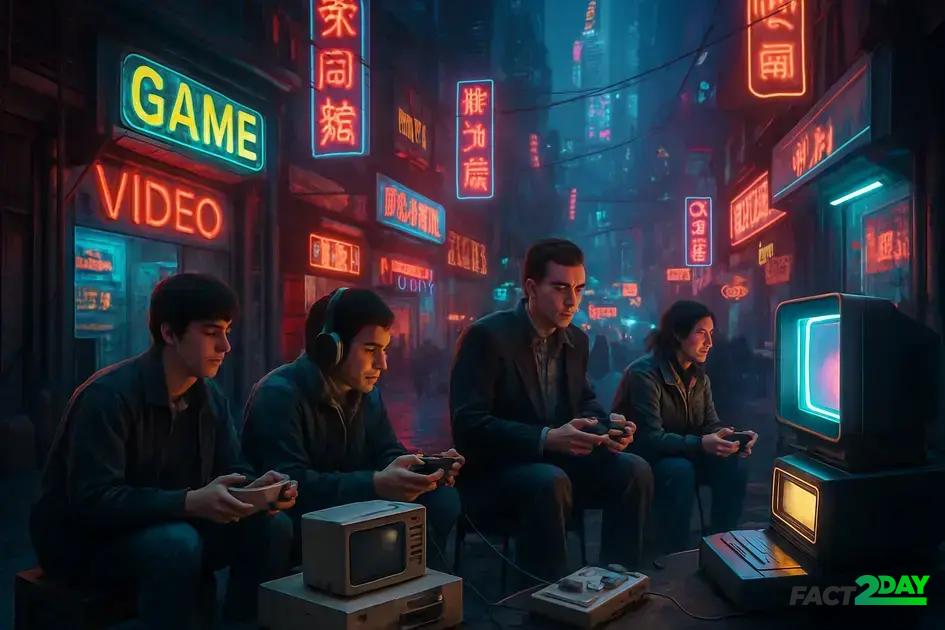
The rise of cyberpunk themes in gaming marks a significant shift in how video games portray the future. Originating from science fiction literature, cyberpunk explores a high-tech world mixed with societal decay. Games adopting this style focus on themes like advanced technology, megacorporations, and gritty urban environments, often showcasing a dystopian reality.
Origins and Impact
Cyberpunk themes gained popularity in the 1980s, fueled by books like Neuromancer and films such as Blade Runner. Video games began reflecting these ideas by creating immersive worlds filled with neon lights, cybernetic enhancements, and AI-driven societies. This setting resonates because it challenges players to explore ethical questions about technology and its effects on humanity.
Defining Features
Typical cyberpunk games feature dark cityscapes, hacking mechanics, and a mix of futuristic and retro elements. Players often navigate complex social hierarchies dominated by powerful corporations, revealing a sharp contrast between technological progress and social inequality. This mix creates a compelling, immersive experience that blends action with deep storytelling.
Why Cyberpunk Still Matters
Today, cyberpunk continues to influence new games and media, reflecting ongoing concerns about surveillance, corporate power, and digital identity. It invites gamers not only to escape into futuristic worlds but also to question the direction technology might take in real life. The genre’s focus on rebellion and human resilience keeps it relevant and thought-provoking.
How early games imagined future technology
Early video games often imagined future technology by combining limited technology of their time with creative speculation. These games predicted devices like handheld consoles resembling smartphones and interfaces similar to today’s touchscreens. Though primitive, their visions included futuristic gadgets, robots, and space travel.
Innovative Concepts
Games like “Metroid” and “The Legend of Zelda” introduced advanced technology in their worlds, such as energy weapons and portals, long before any real equivalent existed. These imaginative features inspired players to think beyond current capabilities.
Retro-Futurism in Design
Many titles combined a retro style with futuristic dreams, leading to designs that mixed 80s aesthetics with imagined tech like cybernetic limbs and AI companions. This blend created iconic visuals and influenced later sci-fi games.
Limitations and Creativity
Despite hardware limits, early developers used pixel art and simple sound to hint at complex technologies. This often led to abstract but powerful depictions of virtual worlds, hacking, and digital landscapes.
Early games served as a playground for innovative ideas, showing how technology could evolve and intertwine with human experiences in ways that continue to shape gaming narratives today.
Games that predicted mobile communication
Several video games surprisingly foresaw the rise of mobile communication long before smartphones became widespread. These games often featured portable communication devices or advanced wireless networks as essential gameplay elements. For example, some titles included in-game gadgets resembling early cell phones used for messaging or coordination between characters.
Early Concepts of Mobile Devices
Games like Deus Ex and Metal Gear Solid showcased handheld devices with features similar to modern smartphones, including voice calls and hacking capabilities. These tools allowed players to access information and communicate in a realistic, interactive way.
Integration in Gameplay
Mobile communication in games often served both story and mechanics, enabling real-time updates, mission briefings, or social interactions. This predicted how our real-world mobile devices became central to our daily communication and information sharing.
Visionary Aspects
Beyond mere communication, these games imagined mobile devices as multi-functional gadgets combining internet access, data storage, and even surveillance. This vision anticipated how smartphones evolved into all-in-one tools that shape how we connect and consume media.
These early gaming predictions reflect the creators’ keen insight into technological trends, making them fascinating examples of entertainment anticipating reality.
The role of AI in videogame futures
Artificial Intelligence (AI) has played a critical role in shaping the imagined futures within video games. Many games have used AI both as a story element and as a gameplay mechanic, envisioning advanced intelligent systems that impact society and day-to-day life.
AI as a Narrative Device
Games like Detroit: Become Human and Horizon Zero Dawn explore AI characters with human-like consciousness, raising questions about morality, freedom, and coexistence between humans and machines. These narratives challenge players to think about the ethical implications of AI development.
AI in Gameplay Mechanics
Beyond storytelling, AI technologies enhance gameplay by creating adaptive enemy behaviors, procedural content generation, and realistic non-player characters (NPCs). This use of AI foreshadows real-world advances where intelligent systems interact seamlessly with humans.
Predictions and Realities
Some games anticipated AI integration in everyday objects, surveillance, and decision-making processes, reflecting contemporary discussions about privacy and automation. The depiction of AI in games combines optimism for innovation with cautionary tales about dependence on technology.
Through these portrayals, video games offer a unique lens to explore the promises and challenges of AI, making futuristic concepts accessible and engaging for a wide audience.
Virtual reality’s representation in past games
Virtual reality (VR) in past video games often represented an exciting but limited vision of immersive technology. Early games imagined VR as a fully immersive experience where players could enter digital worlds with realistic sights and sounds. While the technology was far from today’s standards, the concept sparked imagination about what virtual spaces could become.
Early Depictions of VR
Games like The Lawnmower Man and Rez portrayed VR as a cybernetic landscape or a digital realm players could explore. These experiences emphasized visual immersion, with vibrant colors and abstract designs to suggest a futuristic environment.
Gameplay and VR
VR elements in games were often used to create puzzles, navigation challenges, or combat scenarios inside virtual environments. This foreshadowed current VR gaming, where interaction and presence are key components.
Limitations and Influence
Although hardware restricted real VR capabilities, these past games laid the foundation for future developments. They highlighted the potential of VR to transform storytelling, training, and social interaction within games.
Virtual reality’s early portrayal in games continues to inspire developers aiming to create immersive and engaging experiences today.
Dystopian futures: warnings or entertainments?
Dystopian futures in video games offer a powerful blend of warnings and entertainment. These games paint dark, often bleak visions of the world shaped by oppressive governments, environmental disasters, or uncontrolled technology. While thrilling to play, they also serve as cautionary tales about the possible consequences of current societal trends.
The Warning Aspect
Many dystopian games highlight issues like loss of privacy, corporate overreach, and social inequality. Titles such as Half-Life and BioShock illustrate how unchecked power and technology might lead to suffering or rebellion, urging players to consider ethical choices in reality.
Entertainment Value
Despite their dark themes, dystopian games are deeply engaging due to their immersive worlds and intense narratives. The tension, survival challenges, and resistance stories create compelling gameplay that keeps players invested.
Balancing Both Elements
Developers often balance grim warnings with exciting gameplay mechanics and storytelling. This combination makes dystopian settings appealing while encouraging reflection on humanity’s future.
Dystopian games act as both mirrors and lenses, reflecting current fears while imagining possible futures, blending entertainment with thoughtful commentary.
Games that misjudged technological progress
Some games have missed the mark when predicting technological progress, imagining futures that never came to be or taking too optimistic or pessimistic views. These misjudgments often highlight the challenge of forecasting technology’s pace and impact.
Overestimations of Technology
Titles like Jet Set Radio Future envisioned flying cars and hoverboards as common, which remain largely unrealized. Such games showcased advanced transportation that, while exciting, failed to materialize on a mass scale.
Underestimations and Missed Trends
Other games did not foresee the rise of smartphones or social media’s influence. This led to futures where communication was more limited or traditional than today’s reality.
Reasons for Errors
These misjudgments stem from unpredictable social, economic, and technical factors. Games reflect the knowledge and hopes of their time, which can date quickly as real technology evolves differently.
Despite inaccuracies, these games spark imagination and remind us that predicting the future is never exact, leaving room for surprising innovations.
Impact of gaming predictions on real tech development
Video games often serve as a source of inspiration for real-world technology development. Many innovations we see today were first imagined or popularized through gaming concepts, influencing engineers and designers to turn fiction into reality.
Inspiring Real Technology
Games featuring advanced interfaces, drones, or AI have sparked interest in similar devices in the real world. Developers sometimes look to gaming for ideas on user experience, control systems, and immersive environments.
Proof of Concept Through Simulation
Simulated environments in games allow testing of concepts like virtual reality and autonomous navigation before real prototypes exist. This helps refine ideas and assess potential challenges.
Bridging Entertainment and Innovation
The cross-over between gaming and technology development fosters creativity, sometimes speeding up the adoption of new tools. Technologies such as motion sensors and augmented reality owe part of their success to gaming culture pushing boundaries.
In this way, gaming predictions don’t just entertain; they can shape the path of technological progress.
The influence of sci-fi literature on game futures
Sci-fi literature has had a profound influence on how video games imagine and portray the future. Many games draw inspiration from classic and modern science fiction books, adopting themes, settings, and technologies that originated in these works.
Key Themes Borrowed from Sci-Fi
Games often incorporate elements like space exploration, artificial intelligence, and dystopian societies—all common in sci-fi literature. These themes provide a rich backdrop for storytelling and gameplay.
Inspirational Authors and Works
Authors such as Isaac Asimov, Philip K. Dick, and William Gibson have inspired games with their visions of futuristic technology and complex social issues. For example, cyberpunk games heavily borrow from Gibson’s concept of a high-tech, low-life world.
The Symbiotic Relationship
Sci-fi literature and games feed off each other, with games expanding on literary worlds and offering interactive experiences. This relationship broadens players’ understanding and appreciation of speculative futures.
The influence of sci-fi literature enriches video games’ futures, making them more diverse and thought-provoking, inviting players to explore complex ideas through engaging narratives.
Cultural shifts reflected in game predictions
Video games often reflect cultural shifts when predicting the future, capturing changing social values, technology use, and human behavior. These games show how society imagines its evolution through technology and ideas.
Changing Social Norms
Many games portray futures where traditional roles and cultural norms are challenged. For example, games may show diverse societies with new social structures or highlight themes like equality and environmentalism, reflecting growing awareness.
Technology and Lifestyle
Predicted futures in games often include lifestyle changes driven by technology, such as remote living, virtual interactions, or reliance on AI. These ideas echo real-world trends in communication and work culture.
Impact on Storytelling
These cultural reflections influence game narratives, making stories more relatable and meaningful. They allow players to explore potential futures shaped by cultural values and ethical questions.
Through these shifts, game predictions become windows into how societies envision their progress and challenges, blending imagination and social commentary.
The accuracy of futuristic game environments
Futuristic game environments often strive for a blend of imagination and realism, aiming to create believable worlds that reflect potential future societies. Many games have successfully depicted environments with detailed urban landscapes, advanced technology, and realistic social dynamics.
Elements of Accuracy
Games that get it right often incorporate scientific advancements, architectural trends, and cultural shifts into their world design. This helps make the settings feel plausible and immersive. The inclusion of dynamic weather, AI-driven inhabitants, and interactive technology adds to the authenticity.
Examples of Realistic Environments
Titles like Cyberpunk 2077 and Deus Ex showcase sprawling cities with lifelike streets, neon lights, and diverse populations. These games mirror real-world urban challenges such as pollution, social inequality, and technological dependency while projecting them into the future.
Challenges in Prediction
Some aspects of future environments are difficult to predict, such as cultural changes or breakthroughs in technology. However, the best game developers combine research with creative freedom to build worlds that resonate with players.
The accuracy of futuristic game environments enhances player immersion and provides a meaningful context for gameplay and storytelling.
What the future holds for predictive gaming
Predictive gaming is poised to evolve dramatically as technology advances. Future games will likely harness artificial intelligence, machine learning, and big data to create experiences that adapt and anticipate player choices in real time. This will make gameplay more personalized and immersive than ever before.
Enhanced Personalization
Games will analyze player behavior to predict preferences, offering tailored storylines, challenges, or environments. This will keep players engaged and provide unique experiences for each individual.
Integration with Real-World Data
Future predictive games might incorporate real-world information such as weather, social trends, or health metrics to influence game dynamics. This blending of virtual and real worlds will deepen immersion and relevance.
Ethical and Privacy Considerations
As predictive gaming relies more on data, developers will need to address privacy and ethical concerns. Transparency about data use and ensuring player consent will be important for maintaining trust.
The future of predictive gaming promises a new era where games not only entertain but also learn and evolve with players, creating rich, dynamic experiences that push the boundaries of interaction and storytelling.
Looking Ahead to the Future of Predictive Gaming
Predictive gaming is set to transform how players engage with video games, making experiences more personalized and adaptive. As technology advances, games will become smarter in understanding player needs and blending real-world data with virtual worlds.
However, this evolution comes with important challenges, especially around privacy and ethical data use. Ensuring transparency and player trust will be key to success.
Ultimately, predictive gaming offers exciting possibilities for creating richer, more immersive stories and gameplay that grow with players. The future of gaming is not only about entertainment but also about innovation and interaction in ways we have yet to fully imagine.