Brain Training Fun: How Specific Video Games Are Boosting Cognitive Skills and Memory
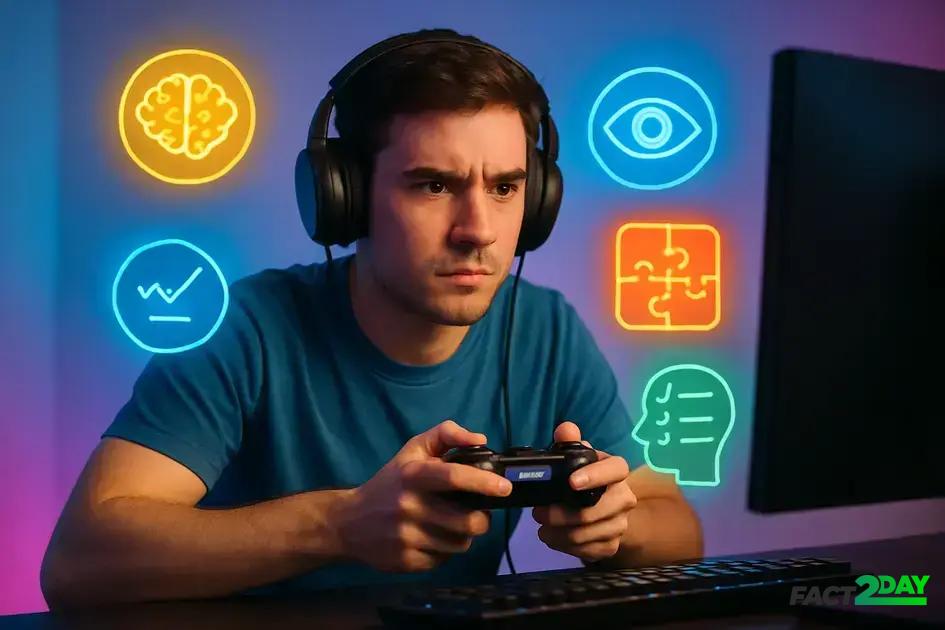
Games as Cognitive Training Tools unlock powerful benefits by improving focus, memory, and problem-solving through engaging gameplay.
Exoplanets are planets orbiting stars beyond our solar system, discovered through methods like detecting minute star light dimming, revealing the vastness and diversity of our galaxy.
Games as Cognitive Training Tools are transforming the way we sharpen our minds. Have you ever wondered if playing certain video games could actually boost your memory or decision-making skills? Let’s explore how this fascinating trend is shaping brain health.
Understanding cognitive training and its benefits
Cognitive training involves structured activities designed to improve mental functions such as memory, attention, and problem-solving. These exercises help the brain stay sharp by challenging different cognitive skills regularly.
Studies show that consistent cognitive training can enhance neural connections and possibly delay cognitive decline associated with aging. This makes it valuable not only for older adults but also for anyone aiming to maintain or boost mental performance.
Key benefits of cognitive training include:
- Improved memory: Exercises can help increase both short-term and long-term memory capacity.
- Greater attention span: Focusing on tasks helps enhance concentration and multitasking abilities.
- Faster processing speed: Training supports quicker thinking and decision-making.
- Enhanced problem-solving: Developing strategies during cognitive tasks boosts critical thinking skills.
By regularly engaging in cognitive training, you promote brain plasticity—that is, the brain’s ability to adapt and grow. This not only helps you perform daily tasks more efficiently but may also improve your quality of life over time.
How games fit into cognitive training
Many video games are designed to target these cognitive areas through interactive challenges and rewards. These games can make training more enjoyable, increasing motivation and consistency compared to traditional exercises.
How video games stimulate brain function
Video games engage the brain through dynamic challenges that stimulate multiple cognitive functions. Playing these games requires quick thinking, decision-making, and coordination, which activate regions responsible for attention, memory, and problem-solving.
Action games, for example, improve hand-eye coordination and reaction times by requiring players to respond rapidly to visual and auditory stimuli. This kind of stimulation enhances neural pathways related to processing speed.
Multitasking and strategy
Many games also demand multitasking and planning, activating the prefrontal cortex, which governs executive functions such as organizing tasks and managing resources. Puzzle and strategy games strengthen these skills by encouraging players to think ahead and make complex decisions.
Additionally, playing cooperative or competitive multiplayer games can enhance social cognition, including understanding others’ perspectives and improving communication skills.
Memory and learning
Games often involve memorizing patterns, rules, and environments, which exercises both working and long-term memory. This repetition and practice support learning new information and recalling it efficiently.
Overall, video games create a rich environment for the brain to adapt and strengthen essential cognitive abilities through engaging and repeated mental activities.
Types of video games that boost cognitive skills
Different types of video games target various cognitive skills, each offering unique brain benefits. Understanding these game categories helps you choose games that suit your training goals.
Action games
Action games enhance reaction time, hand-eye coordination, and spatial awareness. Players must respond quickly to fast-moving stimuli, which strengthens visual processing and motor skills.
Puzzle games
Puzzle games challenge problem-solving and logic skills. They promote strategic thinking by encouraging players to analyze patterns, plan moves, and find solutions under constraints.
Strategy games
Strategy games demand planning and resource management. These games activate executive functions like multitasking, decision-making, and long-term foresight.
Memory games
Memory games directly exercise working memory through tasks like matching pairs or recalling sequences, improving both memory retention and recall speed.
Role-playing games (RPGs)
RPGs combine narrative with decision-making and problem-solving. They also encourage learning new information and adapting to a changing game environment.
Simulation games
Simulation games mimic real-life activities and promote critical thinking by asking players to manage complex systems or scenarios.
Choosing a variety of these games can provide a balanced approach to enhancing multiple cognitive skills simultaneously.
Scientific evidence supporting brain training games
Scientific research has explored the effects of brain training games on cognitive functions with mixed but promising results. Many studies show that these games can improve specific skills such as memory, attention, and processing speed.
Key findings from research
One well-known study found that adults playing brain training games regularly demonstrated increased working memory capacity and faster problem-solving abilities. These improvements were often seen after just a few weeks.
Other research highlights the role of brain plasticity, where training games encourage the brain to form new neural connections. This process supports learning and adaptation, particularly in areas responsible for executive function.
Limitations and critiques
While improvements in trained tasks are common, some studies question whether these benefits transfer broadly to daily life skills. Scientists emphasize the need for long-term studies to better understand lasting effects.
Meta-analyses suggest that well-designed games with diverse challenges tend to provide more significant cognitive benefits. The effectiveness depends on game quality and player engagement.
Practical implications
Scientific evidence supports using brain training games as a supplement to other healthy habits like physical exercise and social interaction, rather than as a sole cognitive solution.
Ongoing research aims to refine game designs to maximize their impact and identify which populations may benefit most.
Impact of games on memory and attention span
Playing video games can have a notable impact on both memory and attention span. Certain games require players to remember complex patterns, locations, or sequences, which helps to strengthen working memory.
Memory enhancement through gameplay
Games that involve puzzles, strategy, or role-playing often demand recalling information quickly and accurately. Repeated exposure to such tasks can improve the brain’s ability to store and retrieve information effectively.
Improving attention span
Fast-paced games challenge players to maintain focus and react swiftly to changing environments. This sustained engagement trains the brain to concentrate for longer periods and enhances selective attention, filtering out distractions.
Studies have shown that players of action and attention-demanding games can process visual and auditory information more efficiently. This leads to quicker decision-making and better task management in daily life.
Balancing benefits and risks
While games may boost cognitive functions, it’s important to balance screen time with other activities. Excessive gaming can lead to reduced attention in non-game contexts, so moderation is key.
Integrating brain-stimulating games into routines offers a fun way to exercise memory and attention, supporting overall cognitive health.
Design elements that make games effective cognitive tools
Effective cognitive training games share common design elements that keep players engaged while targeting specific brain functions. These elements combine to create a balanced mental workout that is both enjoyable and challenging.
Clear goals and immediate feedback
Games that set clear objectives and provide instant feedback help players understand their progress and stay motivated. This reinforces learning by showing what works and where improvement is needed.
Adaptive difficulty
Adjusting the difficulty level based on player performance keeps challenges within a manageable range. This prevents frustration and boredom, ensuring the brain is stimulated effectively without overload.
Varied tasks and challenges
Including diverse activities that engage memory, attention, and problem-solving helps train multiple cognitive skills simultaneously. Variety prevents monotony and encourages broader brain development.
Engaging storylines and rewards
Incorporating narrative elements and rewards like points or badges boosts motivation and encourages sustained play. Positive reinforcement supports habit formation and continuous training.
User-friendly interface
A simple, intuitive design allows players to focus on cognitive tasks without struggling with controls or navigation.
By combining these design principles, brain training games maximize cognitive benefits while maintaining fun and user satisfaction.
Incorporating brain training games into daily routines
Incorporating brain training games into your daily routine can boost cognitive abilities without taking up too much time. Consistency is key, so setting aside even 10 to 15 minutes a day can make a noticeable difference.
Choose the right time
Playing games during a regular time slot, such as after breakfast or during a break, helps create a habit. This makes it easier to stick with training over weeks and months.
Set clear goals
Identify specific cognitive skills you want to improve, like memory or attention. Selecting games that target these areas ensures your time is well spent.
Create a distraction-free environment
Playing in a quiet space without interruptions helps maintain focus and enhances the training effect.
Combine with other healthy habits
Pair brain training with physical exercise, a balanced diet, and enough sleep to maximize cognitive benefits.
Track your progress
Many games offer progress reports and milestones. Use these features to stay motivated and adjust your routine as needed.
By making brain training games a regular part of your day, you engage your mind actively, supporting ongoing mental sharpness and learning.
Potential limitations and challenges of game-based training
Game-based cognitive training offers many benefits but also has potential limitations and challenges to consider for effective use.
Transfer of skills
One major challenge is whether improvements seen in-game actually transfer to real-world tasks. While players often get better at the game itself, evidence on broad cognitive gains is mixed.
Motivation and adherence
Maintaining consistent motivation to play regularly can be difficult. Without engagement, the training effect weakens. Games must be sufficiently fun and rewarding to encourage repeated use.
Individual differences
Results vary greatly among individuals. Age, baseline cognitive ability, and personal preferences influence how much benefit a person gains from brain training games.
Overreliance on games
Relying solely on games for cognitive improvement ignores other important factors like physical exercise, social interaction, and proper nutrition.
Quality and design of games
Not all brain training games are created equal. Poorly designed games may lack scientific backing or fail to target relevant cognitive functions effectively.
Understanding these challenges helps users set realistic expectations and use game-based training as one part of a broader cognitive health strategy.
Comparing traditional cognitive exercises with video games
Traditional cognitive exercises like puzzles, memory drills, and brain teasers have been used for decades to improve mental skills. In recent years, video games designed for cognitive training have gained popularity as an alternative or complement to these methods.
Engagement and motivation
Video games often provide a more immersive and interactive experience. They use rewards, levels, and challenges that create excitement and encourage regular practice, which can be harder to achieve with traditional exercises.
Variety and adaptability
While traditional exercises can be repetitive, video games offer varied tasks and adaptive difficulty that adjust to a player’s skill level. This keeps the training appropriate and challenging over time.
Skill transfer and effectiveness
Both approaches aim to improve cognitive abilities, but research suggests that video games may enhance multitasking, spatial skills, and processing speed better due to their dynamic nature. Traditional exercises often target specific skills like memory and attention but may lack real-time feedback.
Accessibility and convenience
Video games are accessible on multiple devices and can be played anywhere, making it easy to integrate training into daily routines. Traditional exercises may require physical materials or dedicated time in quieter settings.
Choosing between traditional cognitive exercises and video games depends on personal preference, goals, and lifestyle. Combining both could provide a well-rounded approach to brain training.
Future trends in gaming for cognitive enhancement
Future trends in gaming for cognitive enhancement are focused on innovation and personalization to boost effectiveness. Emerging technologies are making brain training games more immersive and adaptable than ever.
Virtual and augmented reality
Virtual reality (VR) and augmented reality (AR) technologies are creating immersive environments that fully engage players’ senses. These experiences enhance attention, spatial awareness, and memory by simulating real-world scenarios.
Artificial intelligence and personalization
AI is enabling games to adjust challenges dynamically based on individual performance. This personalized training maximizes cognitive gains by targeting specific weaknesses and adapting in real time.
Biofeedback and wearable technology
Wearable devices that monitor brainwaves, heart rate, and other physiological signals can provide feedback to both players and games. This data helps optimize training sessions for better results.
Social and collaborative gaming
Future brain training games will emphasize social interaction and cooperation, which also supports cognitive health. Multiplayer challenges and teamwork foster communication and problem-solving skills.
Integration with daily life
Games are becoming more seamlessly integrated into everyday routines through mobile platforms and smart devices, making consistent brain training more accessible.
These trends promise a more engaging and effective approach to cognitive enhancement through gaming, blending science and technology to keep minds sharp.
Tips for choosing the right brain training games
Choosing the right brain training games is essential to maximize cognitive benefits while keeping the experience enjoyable. Consider several factors to find games that suit your needs and preferences.
Define your cognitive goals
Identify which skills you want to improve, such as memory, attention, or problem-solving. Look for games specifically designed to target these areas.
Check for scientific backing
Prefer games developed with input from cognitive scientists or backed by research. This ensures the training is likely to be effective.
Look for adaptive difficulty
Games that adjust to your skill level prevent frustration and boredom by providing a balanced challenge as you progress.
Read user reviews and ratings
Check feedback from other players to gauge the game’s enjoyment, usability, and impact on cognitive skills.
Consider platform and accessibility
Choose games available on devices you use regularly, such as smartphones, tablets, or computers. Easy access encourages consistent practice.
Trial periods and free versions
Take advantage of free trials or demos to test whether a game fits your style before committing.
By thoughtfully selecting brain training games, you can create a personalized and effective cognitive workout plan.
Wrapping up brain training through games
Brain training games offer a fun and engaging way to boost cognitive skills like memory, attention, and problem-solving. By choosing the right games and practicing regularly, you can keep your mind sharp and active.
Remember that combining these games with a healthy lifestyle, including exercise and proper rest, will maximize your brain’s potential. Whether you prefer traditional exercises or modern video games, the key is consistency and enjoying the process of learning.
Start exploring brain training games today and take a fun step toward better cognitive health!