The End of the World That Wasn’t: History’s Most Bizarre and Hilarious Apocalyptic Prophecies
Explore the most fascinating failed apocalyptic prophecies that history forgot, showcasing bizarre predictions that never came true.
Imagine a courtroom where the defendant isn’t human but an animal. This strange yet real practice took place in medieval Europe, where animals stood trial for acts like murder or crop damage.
Legal process for animals
From pigs accused of killing people to insects excommunicated for destroying crops, these trials followed formal procedures. Animals even had lawyers, witnesses, and the right to appeal, making the courtroom drama surprisingly detailed.
Human ideas of justice and morality
These animal trials reveal how people viewed justice and responsibility in a time when law and religion were closely linked. Animals were seen as not just property but moral beings who could be punished for wrongdoing.
Reflecting on changing perspectives
This odd chapter in legal history reminds us how concepts like law, morality, and personhood have changed over time. It shows the human desire to explain and control the world using familiar ideas—even when applied to animals.
Overall, the animal trials invite us to think about how deeply our ideas about fairness and blame run, shaping how we judge both humans and the natural world.
Consider for a moment the intriguing world of Failed Apocalyptic Prophecies—those grand declarations of doom that never quite materialized. What drives such persistent belief in the end times, despite repeated letdowns? Join me as we delve into history’s most bizarre and sometimes hilarious false alarms about the world’s end.
Origins of apocalyptic prophecies and their cultural significance
Apocalyptic prophecies date back thousands of years and have roots in various cultures around the world. Many ancient civilizations believed that the world would undergo a catastrophic event to end one era and begin another. These prophecies often served to explain natural disasters, social upheaval, or cosmic phenomena.
Religious and Cultural Origins
In numerous religions, including Christianity, Hinduism, and Norse mythology, apocalyptic visions appear as narratives describing the ultimate fate of humanity and the universe. These stories carry cultural significance as they often teach moral lessons or warn communities to prepare for change. For example, the Book of Revelation in the Christian Bible offers a vivid and symbolic portrayal of the end times.
Symbolism and Meaning
Symbols such as storms, fire, and darkness frequently appear in apocalyptic prophecies. These images evoke powerful emotions and symbolize transformation. They connect to people’s fears and hopes, serving as metaphors for personal or societal rebirth rather than literal destruction.
Impact on Society
Throughout history, these prophecies have influenced art, literature, and social behavior. Cultural traditions and festivals sometimes revolve around ideas of renewal linked to apocalyptic themes. Even today, understanding these origins helps us comprehend why apocalyptic stories remain so captivating and persistent in human culture.
Famous historical figures behind failed apocalyptic predictions
Throughout history, many famous figures have made apocalyptic predictions that ultimately failed, yet they left a lasting impression on society. These individuals often combined religious beliefs, personal visions, or political motives to predict the world’s end.
William Miller and the Great Disappointment
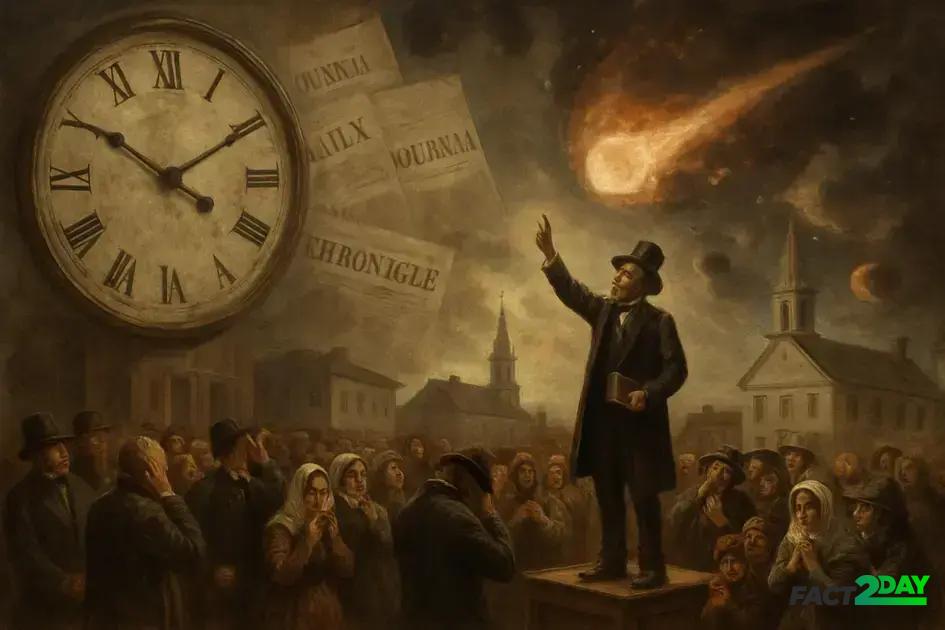
One of the most famous examples is William Miller, a 19th-century preacher who predicted Jesus Christ would return in 1844. When this did not happen, it caused what is known as the Great Disappointment, shaking the faith of many followers and giving rise to new religious movements.
Nostradamus’s Vague Predictions
Nostradamus, a French seer from the 16th century, is famous for his cryptic quatrains that many interpret as apocalyptic forecasts. Despite his enduring fame, many of his specific predictions failed to come true, yet his prophecies continue to fascinate people worldwide.
Harold Camping’s Date Predictions
In recent history, Harold Camping predicted the Rapture would occur in 1994 and again in 2011. Both dates passed without incident, but Camping’s bold claims drew significant media attention and followers prepared earnestly, illustrating the powerful influence of failed prophecies.
These figures highlight how failed apocalyptic predictions can deeply impact society and culture, fostering movements, skepticism, or even humor around the theme of the world’s end.
Psychology behind why people believe in end-of-world scenarios
People often believe in end-of-world scenarios due to a variety of psychological factors. One key element is the human tendency to seek patterns and explanations during uncertain times. Apocalyptic predictions offer a way to make sense of chaos and anxiety.
Fear and Control
Fear plays a central role in why many are drawn to these beliefs. Predicting the end of the world can give a sense of control over the unknown. It provides a framework for understanding complex events and offers a way to prepare mentally or spiritually.
Cognitive Biases
Several cognitive biases contribute to belief in these scenarios. Confirmation bias leads people to focus on information that supports end-of-world ideas while ignoring contradictory evidence. The bandwagon effect also encourages group acceptance and validation of these beliefs.
Need for Meaning
Apocalyptic prophecies often fulfill a psychological need for meaning, especially during times of social or personal crisis. They can provide hope for renewal or justice after destruction, appealing to deep emotional and existential concerns.
Understanding these psychological influences helps explain why end-of-world scenarios remain compelling, even when predictions consistently fail to come true.
How failed prophecies influenced religious movements
Failed apocalyptic prophecies have often played a significant role in shaping and reshaping religious movements. When predictions about the end of the world do not come true, these events create challenges but can also lead to renewed faith or changes in doctrine.
Adaptation and Reinterpretation
Religious groups often reinterpret failed prophecies to maintain cohesion among followers. This may involve adjusting the timeline, spiritualizing the prophecy instead of viewing it literally, or emphasizing the need for ongoing faith and preparation.
Formation of New Groups
Failed prophecies sometimes lead to schisms, with some followers breaking away to form new sects or movements. These splinter groups might develop new teachings that better align with updated interpretations or reveal new revelations.
Strengthening of Community Bonds
Paradoxically, the shared experience of disappointment can strengthen the social bonds within a religious community. The collective interpretation of failed predictions often reinforces group identity and deepens commitment to the faith.
From historical to modern times, the influence of failed prophetic expectations continues to mold religious landscapes, demonstrating how resilience and belief persist even when predictions prove incorrect.
The role of media in amplifying apocalyptic forecasts
The media has played a major role in amplifying apocalyptic forecasts, making them more widely known and often more sensational. News outlets, television shows, and social media platforms spread predictions quickly, sometimes without critical analysis.
Sensationalism and Fear
Sensationalism is a key factor in media coverage of apocalyptic prophecies. Dramatic headlines and speculative stories grab attention, increasing audience engagement but sometimes distorting facts or exaggerating risks associated with end-of-world scenarios.
Influence of Modern Technology
Modern technology, especially social media, accelerates the spread of apocalyptic predictions. Viral videos, memes, and online discussions can create echo chambers where these ideas are reinforced without skepticism, leading to heightened public anxiety.
Media’s Double-Edged Impact
While the media can educate and inform by providing context, it can also amplify panic or misinformation. Responsible journalism and critical consumption of information are essential to balance public interest with factual accuracy.
Overall, media acts as a powerful tool that shapes public perception of apocalyptic forecasts and influences how society responds to these predictions.
Technological fears that sparked doomsday predictions
Technological fears have often sparked doomsday predictions throughout history. As new inventions and scientific advances emerge, they can generate anxiety about potential dangers and the unknown impact on society.
Nuclear Technology and Cold War Anxiety
The development of nuclear weapons during the 20th century led to widespread fears of global annihilation. The threat of nuclear war inspired various apocalyptic prophecies, reflecting the anxiety surrounding the power humans held to destroy the planet.
Computer Technology and the Y2K Scare
The arrival of computers and digital systems introduced fears of technological collapse. The Y2K scare, for example, was based on concerns that computer systems would fail at the turn of the millennium, causing global chaos and economic disaster.
Artificial Intelligence and Future Uncertainty
More recently, advancements in artificial intelligence (AI) have led to speculative fears about machines overpowering humans or causing societal breakdowns. These fears fuel apocalyptic narratives, even though AI also offers many benefits.
Technological progress often stirs a mix of hope and fear. Doomsday predictions tied to technology reveal how society struggles to understand and control rapid change while imagining worst-case scenarios.
Economic and political instability fueling apocalyptic anxieties
Economic and political instability often fuels apocalyptic anxieties, as uncertainty in these areas makes people fear drastic changes or collapse. When governments face turmoil or economies suffer, the idea of the world ending can seem more plausible to many.
Economic Crises and Fear
Recessions and depressions can heighten worries about the future, making apocalyptic predictions more popular. Financial hardships lead people to expect catastrophic outcomes, sometimes interpreting economic collapse as a sign of impending doom.
Political Unrest and Uncertainty
Political instability, such as wars, revolutions, or weak leadership, contributes to public anxiety. These events shake people’s confidence in society’s stability, encouraging belief in apocalyptic visions as a reflection of disorder and fear.
Media and Public Perception
The media often links economic and political crises with apocalyptic rhetoric, amplifying public distress. Discussions around failed states, corruption, and global conflicts can strengthen the association between instability and end-of-world fears.
Understanding the connection between economic and political instability and apocalyptic anxieties helps explain why these fears persist, especially in turbulent times where uncertainty reigns.
Notable failed predictions from the 20th century
The 20th century saw many failed apocalyptic predictions that captured public attention but never came true. These events reveal much about society’s fears and hopes during turbulent times.
1947: The Great Flood Prediction
One notable prophecy predicted a massive flood worldwide in 1947, causing widespread panic in some communities. When the flood did not happen, believers had to reconcile their faith with reality.
1962: The Doomsday Clock and Cold War Fears
The Doomsday Clock, created by scientists, symbolized the threat of nuclear war during the Cold War era. While it remains a metaphorical warning, actual nuclear apocalypse predicted by some failed to materialize.
1999: Nostradamus Predictions
Many interpreted Nostradamus’s quatrains as predicting the end of the world in 1999. This date passed without disaster, showing how vague prophecies can lead to widespread speculation but no fulfillment.
2000: The Y2K Scare
The Y2K bug caused fears of widespread technological failure at the start of the new millennium. Despite significant preparation, the predicted crises largely did not occur, illustrating how modern fears mimic ancient apocalyptic anxieties.
These examples show how failed predictions shape public perception and demonstrate the persistence of apocalyptic fascination despite repeated letdowns.
Modern-day apocalyptic prophecies and their reception
Modern-day apocalyptic prophecies continue to capture attention, fueled by rapid technological change and global events. These predictions often spread through social media and online platforms, reaching a vast audience worldwide.
Popular Themes in Modern Prophecies
Themes like climate change, pandemics, and artificial intelligence frequently appear in contemporary doomsday predictions. These reflect current anxieties about humanity’s future and the planet’s health.
Public Reception and Skepticism
While some people take modern apocalyptic prophecies seriously, many approach them with skepticism or humor. Doubt arises from the repeated failure of past predictions, while others use satire to cope with anxiety around uncertain futures.
Role of Media and Influencers
Media outlets and influencers play a big role in spreading or debunking apocalyptic claims. Some amplify fears for attention or profit, while others work to provide scientific facts and calm public fears.
Overall, modern apocalyptic prophecies demonstrate society’s ongoing fascination with the end of the world, shaped by contemporary issues and digital communication.
The social impact of preparing for a non-existent apocalypse
Preparing for a non-existent apocalypse can have significant social impacts, influencing communities, relationships, and behaviors. These preparations often reflect deep concerns about survival and safety, but they can also lead to social division and economic strain.
Community Building and Group Identity
In many cases, shared preparation efforts foster strong community bonds. Groups that prepare together develop a sense of identity, support, and common purpose, which can be positive for social cohesion.
Economic Consequences
Spending large amounts of money on survival gear, stockpiling food, or securing shelters can lead to financial stress for individuals and families. Sometimes, this behavior can contribute to shortages or inflate prices, affecting broader communities.
Psychological Effects and Social Division
Preparing for a predicted apocalypse can increase anxiety and paranoia. It may cause social isolation or conflicts between believers and skeptics, resulting in divisions within families and society.
The social impact of preparing for a non-existent apocalypse highlights how fear and uncertainty can powerfully shape human behavior and community dynamics, often in complex and unintended ways.
How humor and satire address failed apocalyptic predictions
Humor and satire have long been tools to cope with the fear and uncertainty caused by failed apocalyptic predictions. They help people process these events with laughter instead of anxiety.
The Role of Satire
Satirical works highlight the absurdity of doomsday predictions, exposing how easily people can be misled by dramatic claims. Through exaggeration and wit, satire encourages critical thinking and skepticism.
Comedy as a Coping Mechanism
Comedians often joke about past failed prophecies, using humor to reduce fear and bring communities together. This shared laughter can alleviate tension and remind people not to take doomsday forecasts too seriously.
Examples in Popular Culture
From movies to cartoons, failed apocalypse scenarios are often parodied. Shows like “The Simpsons” and films such as “This Is the End” use humor to reflect societal anxieties while entertaining audiences.
Ultimately, humor and satire serve as powerful responses to failed apocalyptic predictions, helping balance fear with laughter and skepticism.
Lessons learned from repeated end-of-world failures
Repeated end-of-world failures teach us valuable lessons about human nature and belief systems. These failures reveal how people process uncertainty and the desire to find meaning in complex events.
The Importance of Skepticism
Skepticism helps prevent blind acceptance of apocalyptic predictions by encouraging critical analysis and questioning of sources. It protects individuals from panic and misinformation.
Understanding Human Hope and Fear
Failures highlight how hope for salvation and fear of disaster coexist in people’s minds. Many predictions tap into these emotions, showing how powerful they are in shaping beliefs.
Role of Adaptation and Resilience
Communities often adapt after failed predictions, changing beliefs or behaviors to maintain cohesion. This resilience helps groups recover and move forward despite disappointments.
Overall, these lessons emphasize the significance of balanced thinking and emotional awareness when facing extraordinary claims, fostering a thoughtful response to apocalyptic forecasts.
Reflecting on why humanity remains obsessed with doomsday predictions
Humanity’s obsession with doomsday predictions stems from deep psychological and social factors. This fascination reflects our desire to understand the unknown and find meaning in life’s uncertainties.
Fear of the Unknown
Fear drives much of our interest in doomsday scenarios. Predicting the end helps people feel a sense of control over uncertain futures, even if the outcomes are frightening.
Search for Meaning and Purpose
Doomsday predictions often offer a narrative that explains suffering and justice. Many find comfort in the idea that events have a higher purpose or that a major change will bring renewal.
Social and Cultural Influences
Literature, religion, and media continuously feed into apocalyptic themes, keeping these ideas alive. Social groups also share and reinforce these beliefs, making doomsday predictions a communal experience.
Overall, the ongoing obsession with apocalyptic predictions highlights our innate need to grapple with existence and uncertainty, a theme that remains relevant across centuries.
Understanding our fascination with apocalyptic predictions
Throughout history, failed end-of-world prophecies have taught us valuable lessons about human nature, hope, fear, and resilience. While these predictions have never come true, they reflect deep psychological and social needs.
Our obsession with doomsday scenarios shows how we try to make sense of uncertainty and look for meaning in life’s challenges. It reminds us to approach such claims with critical thinking while acknowledging the powerful emotions involved.
By understanding why apocalyptic predictions remain popular, we can better navigate fears about the future, strengthen community bonds, and focus on positive actions that shape our world for the better.