Life on the Edge: Surviving in Earth’s Most Extreme Environments
Explore how life in extreme environments thrives against all odds, revealing nature's resilience and surprising adaptations in Earth's harshest places.
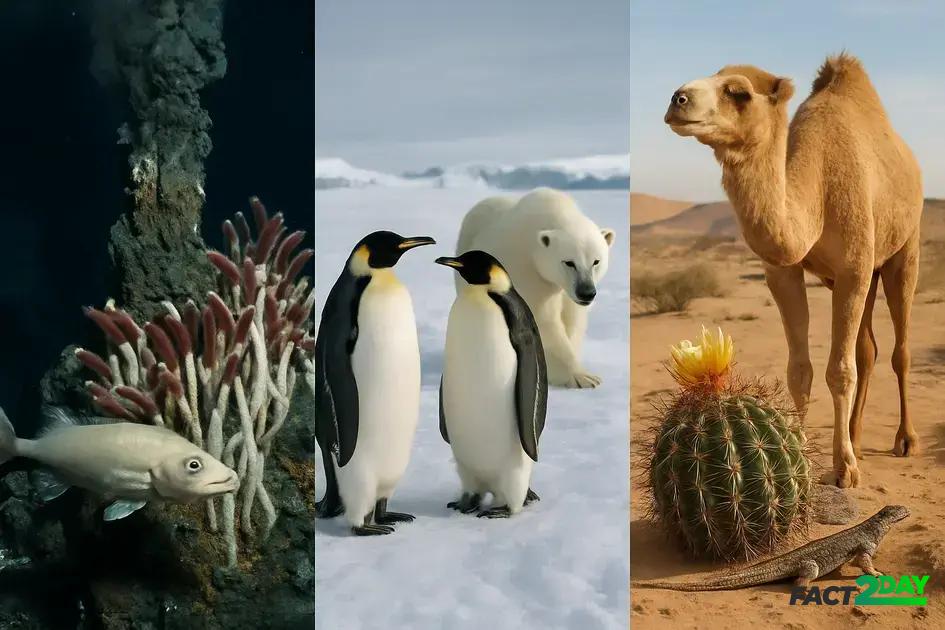
Extreme environments life refers to organisms that adapt and survive in Earth’s harshest places, revealing unique biological traits vital for science, ecology, and biotechnological innovations.
Have you ever wondered how life manages to persist where conditions seem utterly inhospitable? Extreme environments life invites us to glimpse nature’s most daring survivors, thriving where few dare to exist.
Understanding extreme environments and their challenges
Extreme environments on Earth present some of the most challenging conditions for life, including intense heat, freezing cold, high pressure, and severe dryness. These environments are found in places like deep ocean vents, polar ice caps, deserts, and acidic lakes. Organisms living here face obstacles such as scarce nutrients, radiation, and constant physical stress.
Variety of Extreme Conditions
These varied habitats test the limits of biology. For example, deep-sea vents feature crushing water pressure and total darkness, while deserts combine intense heat and dehydration. Each environment demands unique adaptations for survival.
Biological and Physical Challenges
Extremophiles, organisms that thrive in these harsh settings, must overcome challenges like DNA damage from radiation or protein denaturation due to heat. Organisms often have specialized enzymes and membranes to support function under stress.
Impact on Ecosystems
Despite their harshness, these extreme places harbor diverse ecosystems. Life here plays essential roles in global nutrient cycles and offers insights into life’s resilience and potential existence elsewhere in the universe.
Adaptations that enable survival in harsh conditions
Life in extreme environments depends heavily on specialized adaptations that help organisms survive harsh conditions. These adaptations range from physiological changes to behavioral strategies. For example, some extremophiles produce heat-stable enzymes to function in boiling hot springs or deep-sea vents where temperatures are extremely high.
Physical Adaptations
Organisms develop tough outer layers, antifreeze proteins, or water retention mechanisms to endure freezing cold or intense dryness. Desert plants, for instance, have thick coatings and deep roots to minimize water loss and reach underground moisture sources.
Biochemical Strategies
Certain microbes use unique metabolic pathways that do not rely on sunlight or oxygen. Instead, they extract energy from minerals, sulfur, or methane in their surroundings, allowing survival where typical food sources are absent.
Behavioral Adaptations
Some animals adjust their activity cycles to avoid extreme heat or cold, such as becoming nocturnal or burrowing underground. These behaviors reduce exposure to hostile environmental factors, increasing survival chances.
The significance of extreme life for science and ecology
The study of life in extreme environments has revolutionized science and deepened our understanding of ecology. These organisms, known as extremophiles, reveal how life can adapt to conditions once thought impossible. This challenges traditional ideas about the limits of biology and opens new doors in research.
Scientific breakthroughs from extremophile research
Extremophiles have provided key enzymes and molecules used in biotechnology, such as PCR enzymes from heat-loving microbes. Their resilience informs fields like astrobiology, helping scientists speculate about life on other planets with harsh conditions.
Ecological importance of extreme environments
These habitats contribute to global nutrient cycles and support unique ecosystems. For example, deep-sea vent communities rely on chemosynthesis, fueling life without sunlight. Studying these systems helps us appreciate biodiversity beyond typical ecosystems.
Implications for conservation and innovation
Understanding extreme life promotes conservation of fragile ecosystems and inspires innovative applications. The adaptations found in extremophiles drive developments in medicine, industry, and environmental solutions.
Life on the Edge Reveals Nature’s Boundless Potential
Exploring life in extreme environments teaches us how adaptable and strong living things can be. These organisms thrive against odds, offering new knowledge about biology and ecology.
From scientific breakthroughs to ecological balance, studying extremophiles broadens our view of life on Earth and beyond. Their unique traits inspire innovations that benefit medicine, industry, and environmental care.
By understanding and protecting these remarkable ecosystems, we open doors to discoveries that could change the future. Life truly finds a way, even in the harshest places.