The Breath of Life: The Search for Biosignatures in Distant Exoplanet Atmospheres
Explore the fascinating quest for Exoplanet Atmosphere Biosignatures, revealing clues about life beyond Earth in distant worlds.
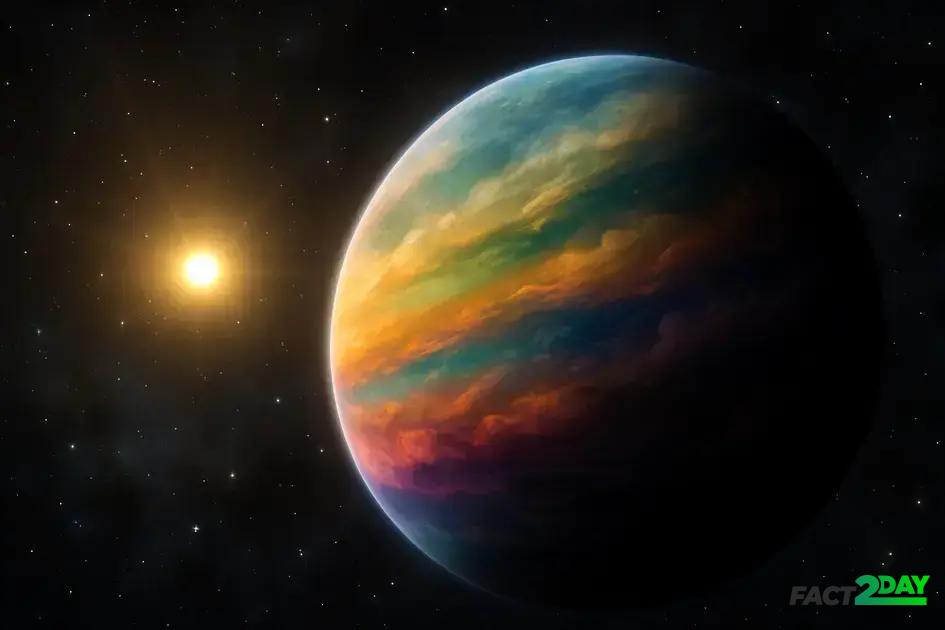
Exoplanets are planets orbiting stars beyond our solar system, discovered through methods like detecting slight star light dimming during transits, revealing countless diverse worlds and new possibilities for life.
Have you ever wondered if planets orbiting distant stars could harbor life? The search for Exoplanet Atmosphere Biosignatures is opening new doors to find clues about living worlds far beyond our solar system. Let’s delve into this cosmic detective story together and uncover what makes these alien atmospheres so fascinating!
What are exoplanet atmosphere biosignatures?
Exoplanet atmosphere biosignatures are specific chemicals or patterns in the atmosphere of planets outside our solar system that may indicate the presence of life. These signatures include gases like oxygen, methane, and ozone, which on Earth are closely linked to biological activity. Detecting these gases in the atmosphere of an exoplanet suggests that similar life processes could be occurring there.
Scientists focus on finding a balance of gases that wouldn’t exist naturally without life, such as oxygen produced by photosynthesis alongside methane released by microorganisms. This combination creates what is called a disequilibrium, a strong hint of biological processes. Instruments like spectrometers analyze the light passing through or emitted by an exoplanet’s atmosphere to identify these unique chemical fingerprints.
Biosignatures can also include unexpected atmospheric compounds or even seasonal changes in gas concentrations that might result from living organisms. However, interpreting these signals requires careful consideration because some non-biological processes might produce similar chemical patterns.
Discovering reliable biosignatures is a key goal in astronomy and astrobiology. It helps us understand if life exists elsewhere and expands our knowledge about the diversity of planetary environments where life could thrive.
How do scientists detect biosignatures remotely?
Scientists detect biosignatures on exoplanets remotely using advanced techniques that analyze the light interacting with the planet’s atmosphere. One common method is spectroscopy, where telescopes split incoming light into its component colors or wavelengths. Each chemical in the atmosphere absorbs light differently, creating unique patterns called absorption lines.
By studying these patterns, researchers can identify gases like oxygen, methane, and water vapor, which may indicate life. Transit spectroscopy is frequently used—this happens when a planet passes in front of its star, and some starlight filters through the planet’s atmosphere. Measuring changes in this filtered light helps scientists understand the atmosphere’s composition.
Other techniques include direct imaging and emission spectroscopy, where scientists observe the planet’s own glow or reflected light to infer atmospheric details. These methods require powerful telescopes like the James Webb Space Telescope or large ground-based observatories equipped with sensitive instruments.
Detecting biosignatures is challenging due to the vast distances and faint signals involved. Scientists must carefully separate the planet’s signal from the star’s light and account for noise or interference. Despite these hurdles, improvements in technology continue to enhance our ability to explore and analyze exoplanet atmospheres remotely.
The role of telescopes in observing exoplanet atmospheres
Telescopes play a crucial role in studying exoplanet atmospheres by capturing and analyzing light that interacts with these distant worlds. Ground-based observatories and space telescopes collect data that help scientists identify the chemical makeup and physical conditions of exoplanet atmospheres.
Space telescopes, like the Hubble Space Telescope and the James Webb Space Telescope, avoid Earth’s atmospheric disturbances, offering clear views of distant systems. They use methods such as transit and emission spectroscopy to detect atmospheric gases, temperature, and cloud cover.
Ground-based telescopes equipped with adaptive optics and advanced instruments can also analyze exoplanets, especially those further from their stars where direct imaging is possible. They complement space telescopes by providing longer observation times and higher resolution data in certain wavelengths.
Innovations in telescope technology, including larger mirrors and more sensitive detectors, are expanding our ability to detect faint signals from exoplanet atmospheres. These advances improve the chances of spotting potential biosignatures and understanding environmental diversity beyond our solar system.
Famous exoplanets with potential biosignatures
Several exoplanets have caught scientists’ attention due to their potential biosignatures. Planets like Proxima Centauri b, located in the closest star system to Earth, orbit within their star’s habitable zone where liquid water might exist. This makes them prime candidates for further study.
Another notable example is the TRAPPIST-1 system, which contains seven Earth-sized planets, several of which lie in the habitable zone. Researchers are studying their atmospheres for gases that might hint at life, such as oxygen or methane.
Kepler-452b, often called Earth’s “cousin,” is a larger planet orbiting a sun-like star and may have surface conditions suitable for life. Though data is limited, it inspires optimism.
GJ 1132 b is another exoplanet of interest, where indications of an atmosphere have been found. Studies of such planets help scientists understand how common life-friendly environments might be beyond our solar system.
Ongoing observations using powerful telescopes bring us closer to confirming these biosignatures, helping to identify worlds that might support life forms similar or very different from those on Earth.
Chemical clues: gases linked to life in atmospheres
Gases in an exoplanet’s atmosphere can provide chemical clues that might indicate the presence of life. Certain gases, when found together, suggest biological processes rather than purely chemical or geological ones. For example, oxygen and methane are key gases because they react with each other and would not coexist in large amounts without continuous replenishment.
Oxygen is abundant on Earth due to photosynthesis by plants and microorganisms. If detected in an exoplanet atmosphere, it could hint at similar life forms. However, it is important to consider other processes that can also produce oxygen.
Methane is another important gas, often released by microbes on Earth. When methane is found alongside oxygen, it strengthens the case for biological activity because these gases tend to destroy each other under normal conditions.
Water vapor plays a vital role too, as it is essential for life as we know it. Its presence is often linked to habitability in atmospheric studies. Other gases like ozone, nitrous oxide, and carbon dioxide can further help scientists build a comprehensive picture of an atmosphere’s potential to support life.
Understanding the balance and interaction of these gases helps astronomers identify possible biosignatures and separate them from false positives caused by natural non-biological processes.
Challenges in confirming biosignatures on distant planets
Confirming biosignatures on distant exoplanets presents several major challenges. One key difficulty is the vast distance, which means signals are incredibly faint and hard to separate from background noise. Telescopes must be extremely sensitive to detect tiny changes in light caused by atmospheric gases.
Another challenge is distinguishing between biological and non-biological sources of detected gases. For example, volcanic activity or chemical reactions can produce gases like methane or oxygen without any life involved. This makes interpretation tricky and requires careful analysis to avoid false positives.
The limited resolution of current technology also means that data can be ambiguous or incomplete. Atmospheric clouds, starspots, and other cosmic factors can interfere with observations, blocking or altering the signal from the planet’s atmosphere.
Additionally, exoplanets often have environments very different from Earth, which might produce unfamiliar biosignatures. Scientists must consider many possible explanations and build models to test hypotheses.
Ongoing advances in telescope technology and data analysis techniques aim to overcome these hurdles, but confirming life beyond Earth remains a complex and cautious process due to these challenges.
The importance of water vapor and oxygen as markers
Water vapor and oxygen are two of the most important markers scientists look for when studying exoplanet atmospheres. Water vapor is essential because it supports life as we know it. It plays a critical role in regulating temperature and enables chemical reactions necessary for living organisms.
Oxygen is closely linked to biological activity on Earth. It is produced mainly by photosynthesis, so its presence in an atmosphere might suggest that plants or microbes are present. However, not all oxygen means life—some planets might have oxygen from non-biological processes.
Scientists often look for these gases together because their coexistence can strengthen the case for life. The combination of water vapor and oxygen creates an environment where life could potentially exist and thrive. Detecting these gases via spectroscopy gives clues about the planet’s habitability and potential biosignatures.
Understanding the balance between these and other gases helps refine our search for life and guides future space missions aimed at finding Earth-like planets with promising atmospheres for life.
Spectroscopy techniques explained simply
Spectroscopy is a key technique scientists use to study the atmospheres of distant exoplanets. It works by breaking down light into its different colors or wavelengths, similar to how a prism creates a rainbow. This helps identify what gases are present by detecting specific absorption lines in the light.
When an exoplanet passes in front of its star, some starlight passes through the planet’s atmosphere. Different gases absorb different parts of this light, leaving unique patterns called spectral fingerprints. These fingerprints tell us which molecules exist in the atmosphere.
There are several spectroscopy methods. Transit spectroscopy observes changes in light during a planet’s transit. Emission spectroscopy measures light emitted by the planet itself, often in infrared. Reflection spectroscopy looks at light reflected from the planet’s surface and atmosphere.
These methods allow scientists to detect gases like water vapor, oxygen, methane, and carbon dioxide, which are important for understanding a planet’s habitability and potential for life.
The influence of a star’s light on atmospheric signals
The light from a star has a huge impact on the atmospheric signals scientists observe when studying exoplanets. This light passes through or reflects off the planet’s atmosphere and carries important information. However, the star’s brightness and activity can both help and complicate these observations.
Stellar radiation can affect the chemical composition of an exoplanet’s atmosphere. For example, intense ultraviolet rays can break down molecules, altering the gases present. This can change the biosignature signals that scientists are looking for.
The star’s light can also interfere when scientists try to detect faint atmospheric signals. Variations like starspots or flares create noise that hides or mimics biosignatures, making it harder to understand what’s coming from the planet and what’s from the star.
Understanding the star’s influence is vital to correctly interpreting data. Scientists use models of stellar activity to filter out false signals and improve accuracy. They also target quieter, less active stars to increase the chances of getting clear atmospheric signals.
How extreme environments shape biosignature possibilities
Extreme environments on exoplanets greatly affect the types of biosignatures that might form and be detected. Harsh conditions such as high radiation, extreme temperatures, or toxic atmospheres can alter or destroy common signs of life, forcing organisms—if they exist—to adapt in unusual ways.
For example, planets orbiting close to their stars may have intense radiation that breaks down molecules like oxygen or methane. In these cases, biosignatures might be rare or look very different from Earth’s. Scientists consider such possibilities when interpreting atmospheric data.
Habitability zones around stars define where water can exist as a liquid, but extreme environments can push life to develop unique chemical footprints, such as unusual gases or variations in expected atmospheric patterns.
Understanding these extremes helps researchers refine their search criteria and recognize non-Earth-like biosignatures. It expands the scope of where and how life might thrive beyond our familiar planet, considering the diverse variety of exoplanet environments discovered so far.
Future missions targeting biosignature detection
Future space missions are being designed to greatly improve our ability to detect biosignatures in exoplanet atmospheres. Projects like NASA’s James Webb Space Telescope (JWST) and the European Space Agency’s ARIEL mission aim to observe exoplanets with unprecedented detail.
JWST specializes in infrared astronomy, allowing it to study the chemical components of atmospheres around distant planets. It can detect gases such as water vapor, methane, and carbon dioxide, which are crucial for identifying potential life signs.
The ARIEL mission will survey hundreds of exoplanets to understand the diversity of their atmospheres. Its focus on atmospheric composition will help scientists spot trends and identify promising candidates for further study.
Other upcoming observatories like the Extremely Large Telescope (ELT) and the Habitable Exoplanet Observatory (HabEx) will combine powerful optics and advanced instruments to push the boundaries of biosignature research even further.
These future missions will enhance our understanding of planetary environments and bring us closer to answering the profound question of whether we are alone in the universe.
Why biosignatures matter for understanding life in the universe
Biosignatures are important because they provide the first clues in our search for life beyond Earth. Detecting these signs in exoplanet atmospheres helps answer one of humanity’s biggest questions: Are we alone in the universe?
They tell us about the presence of biological processes that might be similar or different from life on Earth. This helps scientists learn about the diversity of life forms that could exist and the conditions necessary for life to emerge.
Studying biosignatures also guides the development of future space missions and telescope technology. Knowing what to look for allows us to focus on the most promising planets and maximize our chances of a breakthrough discovery.
Understanding biosignatures improves our knowledge of how life interacts with its environment, revealing possible evolutionary paths and how life adapts to different planetary conditions.
Overall, biosignatures help expand our understanding of biology on a cosmic scale and push the boundaries of science and exploration.
Interpreting ambiguous signals from exoplanet atmospheres
Interpreting signals from exoplanet atmospheres can be challenging because many signals are ambiguous. Some gases detected may come from non-biological processes such as volcanic activity or chemical reactions caused by the star’s radiation.
Distinguishing true biosignatures requires careful analysis and understanding of the planet’s environment, geology, and star type. Scientists use models to simulate different scenarios and compare them with observations to reduce uncertainties.
Noise from the star, instrument limitations, and interference from other cosmic sources also complicate signal interpretation. Variability in the planet’s atmosphere over time adds another layer of complexity.
Because of this ambiguity, scientists rely on multiple lines of evidence and look for combinations of gases that together increase the likelihood of life. For example, the simultaneous presence of oxygen and methane is more convincing than either gas alone.
Ongoing improvements in telescope technology and data analysis methods aim to better resolve and understand these ambiguous signals, helping researchers make more confident assessments about the presence of life.
The dream of one day visiting an exoplanet with life
The dream of visiting an exoplanet with life has captivated scientists and explorers for decades. While current technology keeps this idea in the realm of the future, advancements in propulsion, robotics, and space travel may one day make interstellar journeys possible.
Imagine stepping onto a distant world where signs of life exist, opening a new chapter in human history. Such missions would require groundbreaking spacecraft capable of traveling vast distances at incredible speeds, possibly using concepts like nuclear propulsion or light sails.
Robotic probes might be our first visitors, equipped with instruments to analyze atmospheres, surfaces, and potential biosignatures. These missions will help us prepare for human exploration by understanding the conditions and hazards that await.
Exploring exoplanets with life could answer profound questions about our place in the universe, the diversity of life, and the possibility of contact with other living beings.
While the journey is long and challenging, the potential rewards inspire ongoing research and innovation in space technology and astrobiology.
Looking ahead to the future of life beyond Earth
The search for biosignatures in exoplanet atmospheres is opening incredible new windows into the universe. These signs could reveal if life exists beyond our planet, helping us understand our place in the cosmos.
Advances in technology and upcoming missions will improve our chances of detecting these vital clues. While challenges remain, each discovery brings us closer to answering one of humanity’s biggest questions.
The dream of someday visiting a world with life fuels our curiosity and drives innovation. As we continue exploring, the universe may reveal wonders we have only imagined.