From Dial-Up to Connected Worlds: The Saga of Online Multiplayer in Video Games
Evolução do multiplayer online revela como passamos da lentidão da internet discada para universos imersivos e conectados nos videogames.
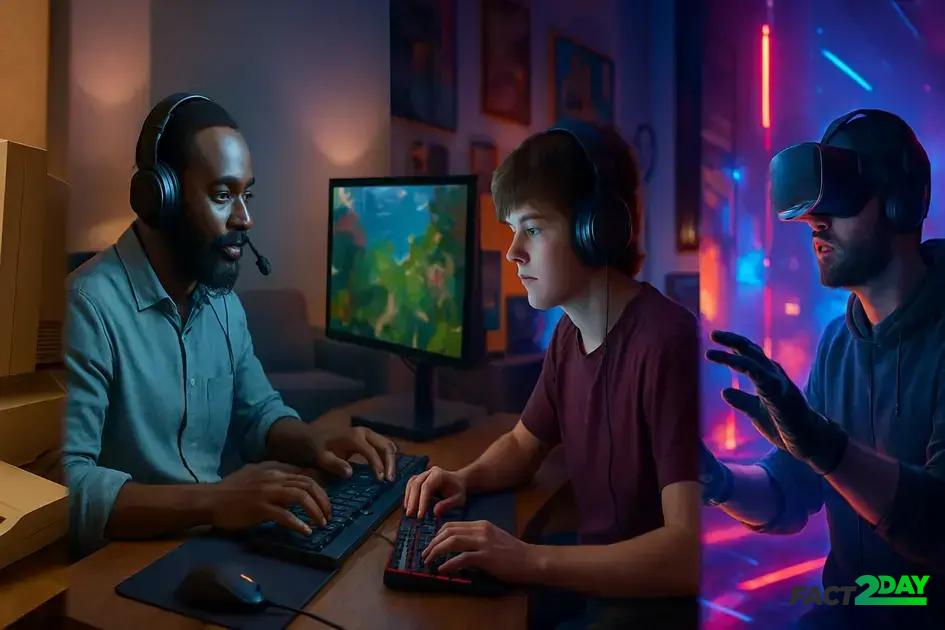
The evolution of multiplayer online gaming progressed from slow dial-up connections with basic games to broadband-enabled expansive virtual worlds and now to cutting-edge technologies like cloud gaming, VR, AI, and the metaverse, creating immersive, accessible, and socially connected gaming experiences.
Have you ever felt the magic of connecting with players around the world? The Evolution of Online Multiplayer shows how this experience has grown from the days of dial-up to today, when virtual worlds seem to breathe along with us.
The Dial-Up Era and the First Multiplayer Games
In the early days of online gaming, the experience was defined by the dial-up connections that many players used to log into multiplayer games. These connections were slow and unstable, often limiting players to simple games with low graphical demands. Titles like Doom and Quake led the way, allowing gamers to connect through direct IP addresses or early matchmaking services.
The challenges of dial-up connections
Dial-up modems operated at speeds of up to 56 Kbps, causing frequent latency and disconnects. As a result, early multiplayer games relied on small maps and limited player counts. Yet, despite these limitations, the thrill of competing or cooperating with others in real-time created a passionate gaming community eager to explore new online possibilities.
The rise of LAN and peer-to-peer gaming
To overcome internet instability, local area networks (LANs) became popular, offering faster and more reliable connections for multiplayer experiences. Games like Counter-Strike started as mods playable over LAN, which fueled their rise. Peer-to-peer networking also emerged, enabling players to connect directly without central servers, fostering social interactions and teamwork.
This era laid the foundation for the multiplayer online world, teaching developers and players the importance of networking, latency management, and community building. These lessons directly influenced the next phases of multiplayer evolution with better infrastructure and technology.
the transformation with broadband and the expansion of virtual worlds
The introduction of broadband internet was a game-changer for multiplayer online gaming. Faster and more stable connections allowed developers to create larger, more detailed virtual worlds that players could explore together. This shift marked the rise of MMORPGs (Massively Multiplayer Online Role-Playing Games) and expansive multiplayer shooters.
Impact of broadband on gameplay and social features
Broadband removed many previous restrictions on game design, enabling real-time communication, complex graphics, and larger player communities. Features like voice chat and in-game messaging became common, enhancing cooperation and competition. Games like World of Warcraft and Guild Wars flourished, offering persistent worlds where thousands of players interacted simultaneously.
Expansion of virtual worlds
This era saw the birth of rich, persistent online environments. Players could join guilds, complete quests, trade items, and engage in large-scale battles. The sense of immersion increased profoundly as developers continuously expanded game content and improved mechanics.
These advances also led to the growth of esports and streaming, turning multiplayer gaming into a social and cultural phenomenon worldwide. The broadband revolution set the stage for the interconnected, vast multiplayer experiences we enjoy today.
current technologies and the future of online multiplayer
Today, multiplayer online gaming stands at the forefront of technological innovation, driven by advances in cloud computing, 5G networks, and artificial intelligence. These technologies enable seamless, large-scale player interactions with minimal latency and stunning graphics.
Cloud gaming and accessibility
Cloud gaming platforms allow players to stream games directly without the need for powerful hardware. This technology broadens access, letting more people enjoy multiplayer games across various devices – from smartphones to smart TVs.
The rise of virtual and augmented reality
Virtual reality (VR) and augmented reality (AR) are redefining immersion, providing players with deeply engaging and interactive experiences. Multiplayer VR worlds encourage physical movement and social interaction, while AR brings gaming into real-world environments.
The future: AI-driven experiences and metaverse integration
Artificial intelligence enhances game design through intelligent NPCs, dynamic content, and personalized challenges that adapt to player behavior. Meanwhile, the concept of the metaverse promises interconnected virtual spaces where users can play, socialize, and create seamlessly.
As technology evolves, multiplayer online games will continue to break boundaries, connecting players in richer and more meaningful ways than ever before.
The ongoing journey of multiplayer online gaming
The evolution of multiplayer online gaming reflects how technology shapes the way we connect and play. From slow dial-up connections to immersive virtual worlds and AI-driven experiences, each step has expanded possibilities and deepened social bonds.
As broadband, cloud gaming, and virtual reality continue to advance, players can look forward to more exciting, accessible, and engaging multiplayer adventures. The future holds endless potential to bring gamers closer together in ways we can only imagine today.