Australia Once Lost a War… to Emus
Explore the curious tale of the Emu war Australia faced, where nature’s birds surprisingly outmatched soldiers in the outback.
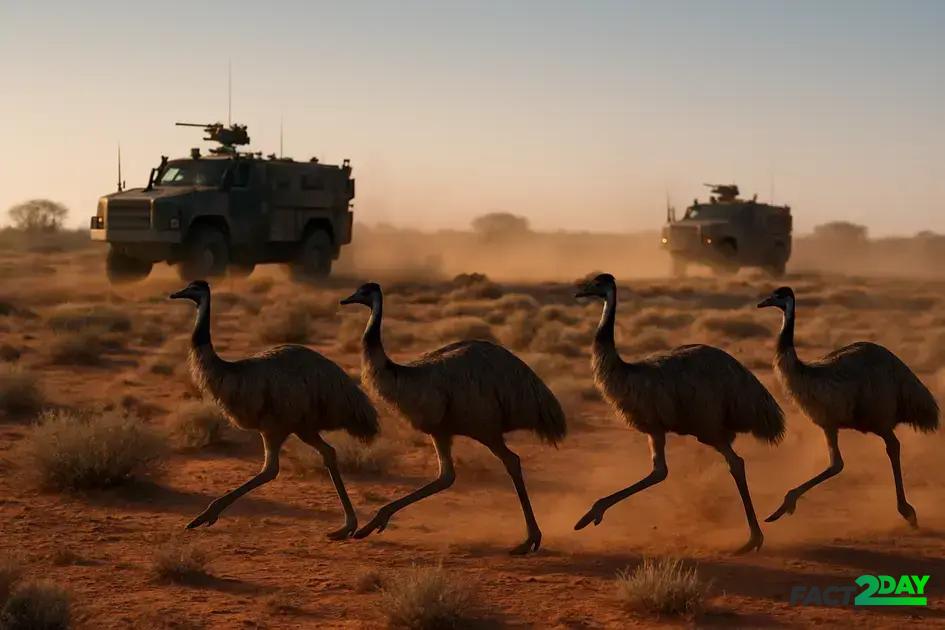
The Emu War Australia was a 1932 military operation aimed at controlling emu populations damaging farmlands, but the birds’ speed and behavior led to the military’s failure, making it a unique and unusual conflict in history.
Emu war Australia might sound like a tall tale, but it’s a true story where nature tested human might in a most unexpected way. Have you ever wondered how a bunch of birds could challenge soldiers? Let’s wander this curious chapter together.
what was the emu war in Australia
The Emu War in Australia was a bizarre conflict that took place in late 1932 when the Australian government struggled to control a large population of emus damaging crops in Western Australia. After World War I, many veterans moved to farming, but their crops were threatened when thousands of emus migrated to their areas. The government sent soldiers armed with machine guns to reduce the emu numbers, but the birds proved surprisingly elusive and resilient.
Military Involvement and Attempts to Control Emus
The military operation aimed to cull the emu population with armed intervention, featuring soldiers from the Royal Australian Artillery. Despite several attempts using machine guns, the emus’ speed and scattered groups made it difficult to achieve significant reductions. The birds often outran or avoided the attacks, leading to an ineffective campaign.
This event is often cited as a unique example in history where wildlife challenged human military efforts, highlighting the unforeseen challenges when nature intersects with human activity.
why did the emus become a problem for farmers
After World War I, many Australian soldiers were given land to start farming, mainly in Western Australia. However, the vast open spaces, coupled with a drought and poor harvests, made farming very difficult. Emus migrated to these farmlands in large numbers during their annual movements, seeking food and water. This migration coincided with the harvest season, resulting in emus trampling and eating crops.
Impact on Crops and Livelihood
Emus damaged fences and destroyed wheat crops by trampling, which led to significant financial losses for farmers. Many farmers struggled to protect their fields from these large, fast-running birds. The growing emu population and their increasing encroachment on farmland created tension between wildlife and agricultural needs.
Farmers appealed to the government for help, which eventually led to military intervention. The emus became a symbol of an unexpected struggle between nature and human efforts to cultivate land.
how the military got involved in the conflict
As the emu population continued to devastate farmlands, farmers in Western Australia desperately sought help. The government decided to intervene in late 1932 by deploying the military to control the emu problem. The Royal Australian Artillery, led by Major G.P.W. Meredith, was tasked with using machine guns to reduce the birds’ numbers.
The military’s role and operations
The military operation involved soldiers armed with Lewis guns and thousands of rounds of ammunition. They attempted to cull emus in multiple locations while navigating the difficult terrain of the outback. Despite their efforts, the emus’ fast speed and scattered groups made it challenging to effectively target them.
This event became well-known as the “Emu War,” a unique conflict where conventional military tactics met the unpredictable behavior of wildlife, resulting in unexpected challenges for the troops.
tactics used during the emu war
During the Emu War, the military employed a variety of tactics to try and reduce the emu population damaging Western Australian farms. Soldiers mainly used Lewis machine guns mounted on trucks to chase and target the restless birds across the rough terrain.
Use of machine guns and mobility
The military relied on their mobility, driving through the outback to locate emu groups. Once spotted, they attempted to stop the birds using burst fire from the machine guns. However, the emus’ speed and erratic movements made aiming difficult. Often, the birds scattered and ran away before many could be hit.
Patrols were also organized across different farms, aiming to cover large areas and hit as many emus as possible. Despite the firepower, the birds’ ability to quickly regroup and flee challenged the effectiveness of these tactics.
the surprising outcome of the emu war
The Emu War ended in an unexpected way. Despite the military’s efforts using machine guns and tactical maneuvers, very few emus were actually killed. The birds proved incredibly fast and clever at avoiding the attacks, often outrunning soldiers and scattering into small groups.
The aftermath
Public opinion soon turned to amusement and criticism, as the military’s campaign was widely seen as a failure. The soldiers eventually withdrew, leaving farmers to deal with the emus on their own. The emu population continued to flourish, proving resilient against human attempts to control them.
This unusual conflict highlighted the limits of conventional military tactics when applied to wildlife. It also remains a unique episode illustrating how nature can unexpectedly challenge human interventions.
how the emu war impacted Australian farming communities
The Emu War had a significant impact on Australian farming communities, especially in Western Australia. Farmers faced huge crop losses and damage to fences, creating financial distress and uncertainty about their livelihoods. The presence of large emu flocks threatened the recovery of farms post-war when veterans tried to establish themselves as farmers.
Economic and social effects
Crop destruction led to lower yields and income for farmers, which in turn affected local economies reliant on agriculture. Many communities experienced frustration as government solutions, like the military intervention, did not fully resolve the problem. This event highlighted the challenges of balancing wildlife management with agricultural needs.
The emu problem also fostered a sense of resilience and innovation among farmers who sought better fencing and land management techniques. The Emu War remains a reminder of the complex relationship between nature and human settlement in Australia.
lessons learned from the emu war
The Emu War offers several valuable lessons about wildlife management and human intervention. One key takeaway is the importance of understanding animal behavior before taking action. The emus’ speed and unpredictability made traditional military tactics ineffective, showing the limits of force in handling wildlife issues.
Importance of effective management strategies
Conservation and agricultural balance require creative and humane approaches rather than forceful control. Improved fencing, habitat management, and alternative deterrents could be more successful than violent solutions. Planning based on ecological knowledge can help avoid unintended consequences.
The Emu War also highlights how public perception matters. The event became a symbol of government missteps, teaching that transparency and cooperation with local communities are essential during such conflicts. Overall, it underscores the need for thoughtful and adaptive solutions that respect both nature and human needs.
why the emu war remains a unique event in military history
The Emu War stands out as a truly unique event in military history because it involved a conflict where the enemy was a group of large, flightless birds. This unusual warfare highlighted the challenges armed forces can face when confronting nature rather than human opponents.
Uniqueness of the conflict
Unlike traditional wars, the Emu War showcased how conventional military weapons and strategies struggled against wildlife. The emus’ speed, agility, and behavior made them difficult targets, resulting in an unexpected and somewhat humorous military defeat.
This event remains a rare example of an organized military operation aimed at controlling an animal population. It sheds light on the complex relationship between humans and nature and serves as a reminder that not all battles are fought between people. The Emu War is a symbol of nature’s resilience against human efforts and a unique chapter in Australia’s history.
The lasting legacy of the Emu War
The Emu War is a fascinating story showing how nature and human efforts can collide in surprising ways. While the military efforts failed to stop the emus, the event teaches us about respect for wildlife and smart problem-solving.
It reminds us that sometimes, strength alone isn’t enough when dealing with the natural world. Understanding and working with nature often leads to better outcomes than trying to fight against it.
Today, the Emu War remains a unique and memorable part of Australian history, symbolizing the unexpected challenges people can face and the importance of adapting our approaches.