The First Recorded Strike Happened in Ancient Egypt
Egyptian strike marks history's first recorded labor protest, revealing workers' demands and social dynamics in ancient times.
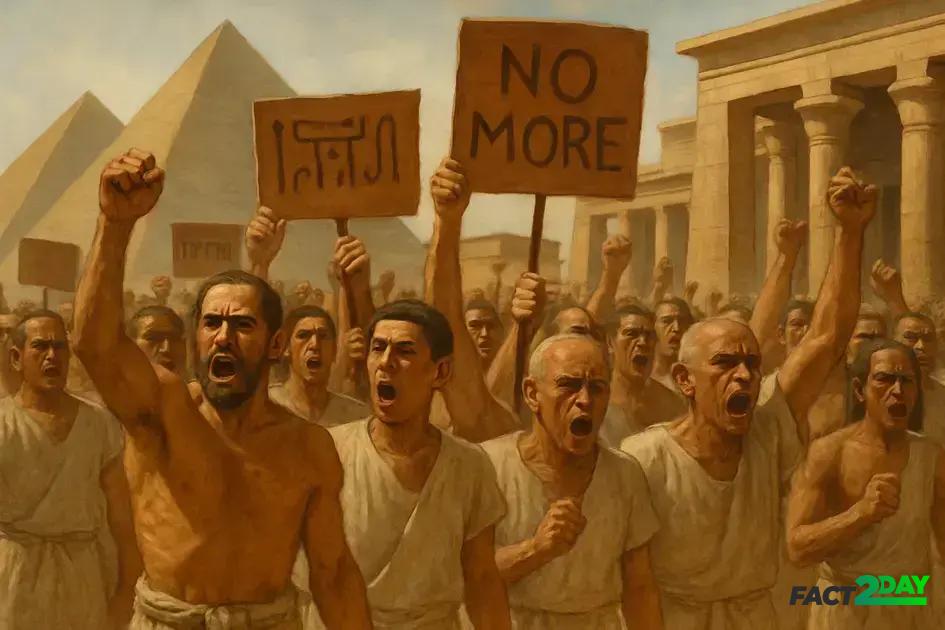
The Egyptian strike is the earliest recorded labor protest, where skilled workers in ancient Egypt united to demand timely food rations and fair treatment during Pharaoh Ramses III’s reign.
You might be surprised to learn that the Egyptian strike is actually history’s first documented labor protest. Ever wondered how workers back then made their voices heard? Let’s dive into this fascinating story and see what it reveals about life and work in ancient Egypt.
The historical context of the egyptian strike
The Egyptian strike took place during the reign of Pharaoh Ramses III, around 1152 BCE, making it the earliest recorded labor strike in history. This event happened in Deir el-Medina, a village where skilled workers and artisans built royal tombs. The context of this strike reveals important social and economic challenges of the era, especially issues related to delayed rations and harsh working conditions.
Economic struggles faced by workers
During this period, Egypt faced pressures from external invasions and internal strife, which disrupted food supplies. Workers often waited weeks for their grain and bread, which were their main compensation. These delays caused significant hardship, forcing the workers to unite and demand fair treatment.
Political and social environment
The strike also reflects the broader political climate under Ramses III’s rule. Despite being a powerful pharaoh, his government struggled to maintain stability and control resources efficiently. This failure led workers to take unprecedented steps by refusing to work, challenging the authority and management of the state.
Understanding this context helps us grasp how early labor disputes were not just about pay but about survival and respect. It highlights the evolving relationship between rulers and workers, setting a foundation for labor rights discussions centuries later.
Who were the workers involved in the strike
The workers involved in the Egyptian strike were primarily skilled laborers and artisans who lived in Deir el-Medina. This small village housed craftsmen responsible for constructing and decorating the royal tombs in the Valley of the Kings. These workers were highly specialized in their trades, including stonecutters, painters, and scribes.
The role of the artisans
These artisans were valued for their skills but often faced difficult living conditions. They worked long hours in demanding environments, relying heavily on timely payment and supplies from the state. Their specialized knowledge made their labor essential to preserving the pharaoh’s legacy through tomb construction.
Social status and living conditions
Despite their essential roles, workers had a modest social status. They lived in basic homes and depended on rations like grain as compensation. Delays or shortages in these rations directly impacted their families and fueled dissatisfaction. The sense of community in Deir el-Medina was strong, which helped organize and sustain the strike.
The strike shows that even in one of the world’s oldest civilizations, skilled workers recognized their value and were willing to take collective action when treated unfairly. Their unity was a crucial factor in making their voices heard by the authorities.
Causes behind the earliest recorded strike
The earliest recorded strike in ancient Egypt happened because of multiple hardships faced by workers at Deir el-Medina. One main cause was the delay and shortage of food rations. These workers depended heavily on regular grain supplies, which were their main form of payment.
Food shortages and delayed rations
Grain and bread were essential for the workers’ survival. When supplies were late or insufficient, their families suffered from hunger and hardship. This created tension and led workers to demand fair and timely distribution of resources.
Heavy workload and harsh conditions
The artisans and laborers worked long hours in tough conditions. Building royal tombs required skill and endurance, but the inability to receive proper compensation reduced their morale. Their exhaustion combined with food scarcity became a powerful motivator for protest.
Economic and political instability
During Pharaoh Ramses III’s reign, Egypt faced invasions and economic troubles. These pressures affected resource management and workers’ wages. The strike reflected the growing frustration as the government struggled to provide for essential labor forces.
These causes show how critical fair treatment and reliable payment were, even thousands of years ago, linking ancient labor movements to modern ideas of workers’ rights and justice.
How the strike was organized and conducted
The organization of the Egyptian strike was a remarkable example of early collective action. Workers at Deir el-Medina came together to voice their grievances in a united manner. They stopped working on the royal tombs, effectively halting important state projects and drawing attention to their demands.
Coordination and leadership
Although detailed records are scarce, evidence suggests that local leaders or foremen played roles in coordinating the strike. These individuals helped organize shared protests and negotiations with the authorities to press for payment of overdue rations.
Methods of protest
The workers did not resort to violence but rather used a peaceful form of protest by refusing to work. This slow-down was disruptive enough to compel the royal administration to respond. They also likely communicated their demands through formal letters or petitions, showing an early use of negotiation tactics.
Community support and solidarity
The strike was sustained through strong community bonds. Families and neighbors supported each other during the difficult period without wages, which helped maintain morale and collective determination.
This early strike highlights the power of unity and strategic action, demonstrating how workers in ancient times organized effectively to fight for fair treatment.
The pharaoh’s response to the labor unrest
The pharaoh’s response to the labor unrest was crucial in resolving the strike at Deir el-Medina. Pharaoh Ramses III, who governed during this period, faced the difficult task of managing unrest while maintaining authority and order.
Initial reaction and negotiation
Initially, the government tried to address the issue by promising to deliver the overdue rations. Officials were likely sent to negotiate directly with the workers, aiming to calm tensions without escalating the conflict.
Meeting workers’ demands
Historical records suggest that the pharaoh’s administration eventually fulfilled the food and grain payments, acknowledging the workers’ demands. This action was necessary to resume the construction of the royal tombs and maintain the pharaoh’s image as a provider and protector.
Maintaining authority
Despite complying with the workers’ requests, the pharaoh needed to reassert control. Measures to prevent future strikes may have included stricter oversight of supplies and workers, ensuring loyalty through benefits and supervision.
This response demonstrates how even in ancient Egypt, rulers had to balance power with the needs of their people, highlighting early examples of conflict resolution between labor and authority.
Consequences for ancient egyptian society
The consequences of the strike in ancient Egyptian society were significant and far-reaching. It marked one of the first known occasions where workers collectively resisted authority, setting a precedent for future labor actions and social dynamics.
Impact on labor relations
The strike highlighted the need for better management of worker compensation and conditions. It forced the government to pay closer attention to laborers’ needs, improving rations and delivery systems to prevent future unrest.
Changes in royal administration
After the strike, Pharaoh Ramses III’s administration likely revised their approach to governance. This included stricter oversight of supplies and greater efforts to maintain worker loyalty through incentives and better communication.
Social awareness and worker rights
This historic event demonstrated an early awareness of workers’ rights and collective bargaining power. It challenged the absolute power of the pharaoh by showing that organized groups could demand fair treatment.
The strike’s legacy influenced how labor and authority interacted throughout Egyptian history, revealing the complexity of social structures and the importance of mutual respect between rulers and workers.
What this strike tells us about labor rights evolution
The Egyptian strike offers valuable insight into the early evolution of labor rights. It is one of the first documented instances where workers collectively demanded fairness and adequate compensation, showing that labor rights have deep historical roots.
Early forms of collective bargaining
The strike illustrates how workers, even thousands of years ago, realized the power of unity. By organizing and refusing to work, they effectively negotiated for their needs, predating many modern labor rights concepts.
Recognition of workers’ value
This event highlights a growing awareness that skilled workers deserved respect and fair treatment. It challenged traditional views of absolute authority by demonstrating that laborers could influence governance through organized action.
Foundation for future labor movements
The strike at Deir el-Medina set a precedent for how labor disputes might be handled. It influenced later societies to recognize the importance of addressing workers’ grievances to maintain social stability and productivity.
Understanding this strike helps us appreciate the long journey toward modern workers’ rights, reminding us that respect and fairness in the workplace have been fought for since ancient times.
Lessons from the egyptian strike for today’s workers
The Egyptian strike offers timeless lessons for today’s workers about the power of unity and the importance of standing up for fair treatment. It shows that collective action can lead to meaningful changes even under challenging circumstances.
The importance of solidarity
Workers uniting for a common cause demonstrates strength. Modern labor movements continue to rely on solidarity to negotiate better wages, benefits, and working conditions, much like the ancient Egyptian artisans did.
Effective communication and negotiation
The strike teaches the value of organized communication. Presenting clear demands and negotiating respectfully with management can improve outcomes and foster productive relationships.
Balancing rights and responsibilities
Both workers and employers have roles in maintaining fair workplaces. Learning from the past, today’s workers understand the benefits of standing firm on rights while recognizing the need for cooperation to achieve long-term success.
Overall, the Egyptian strike reminds us that advocating for workers’ rights has a long history, encouraging modern workers to continue fighting for dignity and fairness in the workplace.
Understanding the legacy of the Egyptian strike
The Egyptian strike teaches us that standing up for fair treatment is a powerful tool that has been used for thousands of years. It shows how workers can come together to make their voices heard, even in difficult times.
The lessons from this ancient protest remind us of the importance of unity, clear communication, and cooperation between workers and leaders. These ideas are just as relevant today as they were in ancient Egypt.
By studying the past, we can better appreciate the progress made in labor rights and continue to work toward fairness and respect for all workers in the future.