The Invisible Shield: Unraveling the Enigmas of Earth’s Magnetic Field and Its Future
Explore Earth's Magnetic Field Mysteries and discover the secrets of our planet's invisible shield that protects life and shapes our future.
Frisson, the intense chill or goosebumps from music, results from the brain activating reward and fear areas simultaneously, signaling that the experience is profoundly impactful.
Have you ever noticed how mysterious and vital our planet’s magnetic field is? Earth’s Magnetic Field Mysteries surround an invisible shield that safeguards life and influences everything from compass navigation to space weather. Let’s explore these enigmas that remain hidden yet essential.
What is Earth’s magnetic field and how is it generated?
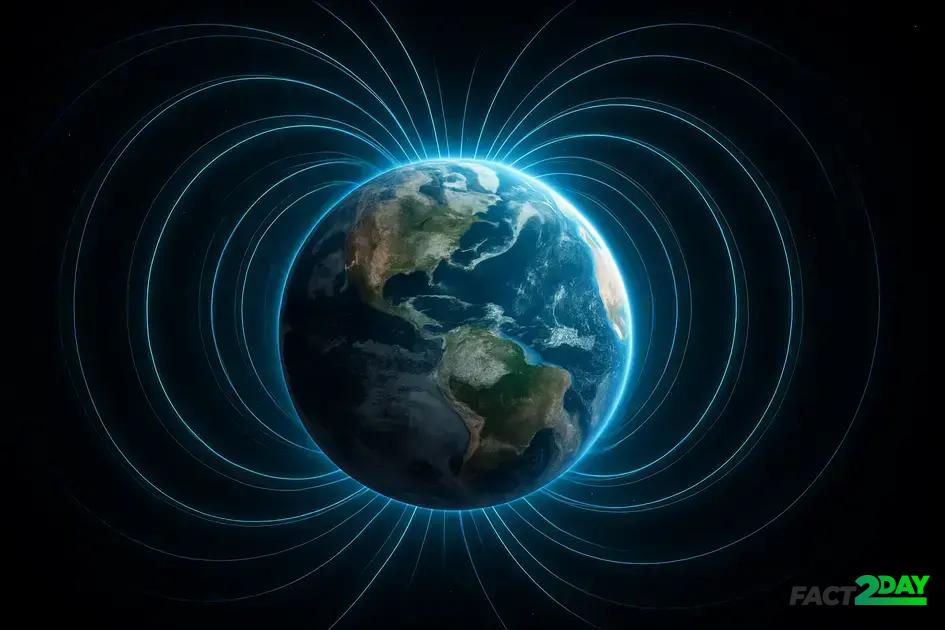
The Earth’s magnetic field is an invisible force that surrounds our planet and extends into space. It acts like a giant shield, protecting us from harmful solar radiation and cosmic rays. This field is generated deep within the Earth’s core through a process called the geodynamo.
The geodynamo arises from the movement of molten iron and nickel in the Earth’s outer core. As these metals move due to convection currents and the Earth’s rotation, they create electric currents. These electric currents then produce magnetic fields, which combine to form the Earth’s overall magnetic field.
How the geodynamo works
The movement of the molten metal in the core is influenced by heat escaping from the inner core to the mantle, along with the Coriolis effect caused by the Earth’s rotation. This complex motion generates a constantly changing magnetic field that extends far into space, forming the magnetosphere.
Importance of the magnetic field
Without this magnetic field, solar wind particles would strip away the ozone layer that protects the Earth from harmful ultraviolet radiation. It also helps animals like birds and sea turtles navigate during migrations by using the Earth’s magnetic field as a natural guide.
Understanding how the magnetic field is generated helps scientists study changes in its strength and direction, which can affect technology and life on Earth.
The role of the magnetic field in protecting life on Earth
The Earth’s magnetic field plays a crucial role in protecting all forms of life on our planet. It acts like a vast shield, deflecting harmful charged particles from the Sun, known as solar wind, and cosmic radiation from deep space. Without this protection, the solar wind could strip away the Earth’s atmosphere and expose living organisms to dangerous radiation levels.
The magnetosphere as a protective bubble
Surrounding Earth is the magnetosphere, a magnetic bubble formed where the planet’s magnetic field meets the solar wind. It traps and channels charged particles away, preventing them from reaching the surface. During intense solar storms, this shield helps reduce radiation exposure that could otherwise disrupt life and technology.
Protecting Earth’s atmosphere
One of the magnetic field’s vital functions is preserving the atmosphere. The field helps prevent the gradual erosion of atmospheric gases by steering solar wind particles away. This preservation is essential since the atmosphere contains the air we breathe and regulates the planet’s climate.
Impact on living organisms
Radiation blocked by the magnetic field can cause genetic mutations and damage cellular structures. By shielding life from this radiation, the magnetic field indirectly supports health and biodiversity. Some plants and microbes are also sensitive to magnetic fluctuations, showing the field’s wide influence on ecosystems.
Technological protection
Modern technology, including satellites, power grids, and communication systems, can be affected by solar particles that penetrate the atmosphere during magnetic disturbances. The magnetic field reduces this risk, highlighting its importance in sustaining not only natural life but also our technological society.
Understanding the magnetic poles and their movements
The Earth has two main magnetic poles: the North Magnetic Pole and the South Magnetic Pole. These poles are the points where the planet’s magnetic field lines are vertical. Unlike the geographic poles, magnetic poles are not fixed; they move over time due to changes in the Earth’s core.
What causes the poles to move?
Movement of molten iron in the Earth’s outer core affects the magnetic field, causing the magnetic poles to shift. This movement is part of the geodynamo process, where convection currents and Earth’s rotation create changes in the magnetic field’s flow.
How fast do the poles move?
The speed of pole movement varies. For example, the North Magnetic Pole has moved from Canada towards Siberia at an average rate of about 10 kilometers per year in recent decades. This rapid movement has created challenges for navigation systems that rely on magnetic compass readings.
Magnetic declination and navigation
Because magnetic poles move, the angle between geographic north and magnetic north, called magnetic declination, changes depending on where you are on Earth. Accurate updates of magnetic declination are important for pilots, ship captains, and outdoor enthusiasts using compasses to navigate.
Magnetic poles and magnetic field strength
The shifting poles affect not only directions but also the strength of the magnetic field locally. Areas near the poles often experience weaker magnetic fields, which can impact the level of protection from solar radiation in those regions.
Understanding the movement of magnetic poles helps scientists track the health of Earth’s magnetic field and predict future changes in this dynamic system.
Historical records of magnetic field changes
Historical records show that Earth’s magnetic field has changed many times over millions of years. Scientists study ancient rocks, lava flows, and sediments to understand these shifts. When lava cools, iron particles inside align with the magnetic field, preserving a record of its direction and strength at that time.
Magnetic field reversals
One fascinating aspect of the field’s history is the occurrence of magnetic reversals. During these events, the North and South Magnetic Poles switch places. These reversals happened irregularly, approximately every few hundred thousand years, and can be seen in the magnetic patterns of ocean floor rocks.
Geomagnetic excursions
Apart from full reversals, there are shorter and less complete changes called geomagnetic excursions. These are temporary shifts where the magnetic poles move far from their usual positions but return without a full reversal.
Tracking historical changes
By examining layers of sediment and volcanic rock, scientists create timelines of magnetic field variations. These records help us understand the strength fluctuations and polarity changes, which are essential for studying Earth’s past climate and geological activity.
Such historical insights reveal that the magnetic field is dynamic, constantly evolving over geological time.
The phenomenon of magnetic pole reversals
Magnetic pole reversals are events where the Earth’s magnetic North and South Poles switch places. These reversals happen over thousands of years and have occurred many times in the planet’s history. The process is slow and does not happen overnight.
How do reversals occur?
The Earth’s magnetic field is generated by the movement of molten iron in the outer core. Changes in this flow can weaken the field, allowing the poles to gradually shift until they flip completely. Scientists are still studying exactly why and how these reversals happen.
Frequency and timeline
Reversals occur irregularly, roughly every 200,000 to 300,000 years, although the timing varies. The last full reversal, called the Brunhes–Matuyama reversal, took place about 780,000 years ago. Evidence from the geological record shows that reversals have been happening for over 160 million years.
Effects on Earth
During a reversal, the magnetic field can weaken, which might reduce the protection from solar and cosmic radiation. This could affect the atmosphere, animal navigation, and even technology like satellites and power grids. However, there is no clear evidence that reversals cause mass extinctions or major disasters.
Studying reversals
Scientists use rocks, particularly volcanic and sedimentary, to track past magnetic reversals. Patterns on the ocean floor also reveal magnetic stripes that record these flips. Understanding magnetic pole reversals helps us prepare for future changes and better grasp Earth’s dynamic core processes.
How scientists study Earth’s magnetic field today
Today, scientists study Earth’s magnetic field using a combination of advanced technologies and methods. Satellites play a key role by providing continuous, detailed data on the magnetic field’s strength and structure around the globe.
Satellite missions
Satellite missions such as ESA’s Swarm constellation monitor changes in the magnetic field with high precision. These satellites measure the magnetic signals from the Earth’s core, crust, oceans, and ionosphere. Data collected helps researchers understand both short-term variations and long-term trends.
Ground observatories
On the ground, magnetic observatories record local magnetic field variations daily. These observatories contribute to global networks that track magnetic activity, providing important data for navigation, communication, and climate studies.
Magnetic surveys and rock studies
Scientists also conduct magnetic surveys on land and oceans, measuring magnetism in rocks and sediments. These studies reveal historical changes and help map the magnetic properties of Earth’s crust.
Computer modeling and simulations
Advanced computer models simulate the geodynamo process inside the Earth’s core. These models help scientists predict future behavior of the magnetic field and explain complex phenomena like reversals and excursions.
By combining satellite data, ground measurements, rock analysis, and modeling, scientists gain a comprehensive understanding of Earth’s magnetic field today and its dynamic nature.
The connection between solar activity and the magnetic field
Solar activity, such as solar flares and coronal mass ejections, dramatically affects Earth’s magnetic field. When the Sun releases bursts of charged particles and radiation, they travel toward Earth and interact with its magnetosphere.
Solar wind and its impact
The continuous stream of charged particles from the Sun, called solar wind, pushes against the Earth’s magnetic field. This interaction can cause the magnetic field to compress on the day side and stretch into a long tail on the night side, known as the magnetotail.
Geomagnetic storms
Intense solar events can trigger geomagnetic storms, which are temporary disturbances in the magnetic field. These storms can cause beautiful auroras near the poles but also disrupt satellite communications, navigation systems, and even power grids on Earth.
Magnetic reconnection
During solar storms, magnetic reconnection occurs where the Sun’s and Earth’s magnetic fields connect and rapidly release energy. This process accelerates particles that enter the Earth’s atmosphere, creating visible auroras.
Cycle of solar activity
The Sun follows an approximately 11-year cycle of activity, from minimum to maximum solar events. The strength and shape of Earth’s magnetic field respond to this cycle, which influences the frequency and intensity of magnetic disturbances.
Studying the connection between solar activity and Earth’s magnetic field helps scientists predict space weather and protect technology and life on our planet.
Magnetic storms: causes and effects on technology
Magnetic storms are disturbances in Earth’s magnetic field caused by enhanced solar activity, such as solar flares and coronal mass ejections. These storms occur when charged particles from the Sun interact with the magnetosphere, creating fluctuations in the magnetic field.
Causes of magnetic storms
Solar eruptions release large clouds of plasma and magnetic fields into space. When these clouds, known as coronal mass ejections (CMEs), collide with Earth’s magnetic field, they compress and disturb it, leading to magnetic storms.
Effects on technology
Magnetic storms can have significant impacts on modern technology. They can disrupt satellite operations, causing signal loss or damage. Communication systems like GPS and radio waves may experience interference, affecting navigation and communication.
Impact on power grids
Strong magnetic storms can induce electric currents in long conductors, such as power lines. These geomagnetically induced currents can overload transformers and cause power outages or damage to electrical infrastructure.
Satellite navigation and aviation
During magnetic storms, increased radiation and signal interference can degrade GPS accuracy. This affects aviation navigation and timing systems, requiring operators to rely on backup methods.
Monitoring and mitigation
Scientists constantly monitor solar activity to predict magnetic storms. Early warnings help power companies and satellite operators prepare for potential disruptions, minimizing damage and maintaining reliability.
The impact of magnetic field fluctuations on animal navigation
Many animals rely on Earth’s magnetic field for navigation during migration, hunting, and finding their way home. This ability, called magnetoreception, helps creatures like birds, sea turtles, and whales travel long distances with accuracy.
How animals sense magnetic fields
Some animals have specialized cells containing magnetic minerals or proteins that detect the Earth’s magnetic field. For example, certain birds have magnetite crystals in their beaks, while others use light-sensitive proteins called cryptochromes in their eyes to sense magnetic direction.
Effects of magnetic field fluctuations
Fluctuations or disturbances in the magnetic field, caused by solar storms or internal Earth changes, can confuse animals that rely on magnetoreception. This may lead to altered migration routes or difficulty in orientation, impacting survival and reproduction.
Examples of disrupted navigation
Studies show that during magnetic storms, birds might deviate from their usual paths or delay migration. Sea turtles that hatch near disturbed magnetic fields can struggle to find the ocean or their feeding grounds.
Adaptations and resilience
Though magnetic fluctuations pose challenges, many animals combine magnetic cues with other senses like vision, smell, and the position of the sun or stars to navigate. This multipronged approach helps them adapt to changing magnetic conditions.
Understanding how magnetic field changes affect animal navigation helps conservationists protect species and predict how environmental changes might disrupt natural behaviors.
Theories explaining the origin of Earth’s magnetic field
The origin of Earth’s magnetic field has been explained through several scientific theories, all centered on processes occurring within the planet’s interior. The most widely accepted explanation is the geodynamo theory.
Geodynamo theory
This theory suggests that Earth’s magnetic field is generated by the movement of molten iron and nickel in the outer core. As the liquid metals move due to convection and Earth’s rotation, they create electric currents. These currents produce magnetic fields that combine to form the planet’s global magnetic field.
Other early theories
Before the geodynamo theory gained acceptance, scientists proposed simpler ideas. One was the permanent magnet theory, which assumed the Earth’s core was a giant magnet. However, this could not explain the changes and reversals observed in the magnetic field.
Role of convection and rotation
Convection currents caused by heat escaping from the inner core create motion in the liquid outer core. Earth’s rotation influences these movements through the Coriolis effect, organizing the flow and enhancing magnetic field generation.
Modern research and simulations
Computer simulations now replicate the geodynamo process, helping scientists understand the complex interactions inside Earth’s core. These models explain field reversals, fluctuations, and the overall structure of the magnetic field.
Understanding these theories is crucial for grasping how our planet protects life through its invisible magnetic shield.
Predictions about the future of the magnetic field
Scientists predict that Earth’s magnetic field will continue to change and evolve in the future. These changes include shifting magnetic poles, fluctuations in field strength, and possible magnetic reversals. Monitoring these trends helps prepare for potential impacts on technology and the environment.
Shifting magnetic poles
The North Magnetic Pole has been moving rapidly towards Siberia. This movement is expected to continue, which may affect navigation systems and requires regular updates to magnetic maps used in aviation and maritime operations.
Possible weakening of the magnetic field
Some data suggest that the magnetic field is gradually weakening over time. While this does not pose an immediate threat, a weaker field could increase Earth’s exposure to solar radiation and affect satellites and power grids.
Magnetic reversals in the future
Magnetic reversals happen over thousands of years, so predicting the exact timing is challenging. However, signs of weakening and complex changes in the field might indicate that a reversal could occur sometime in the next several thousand years.
Impacts and preparation
Future changes in the magnetic field could influence animal migration, communication systems, and technological infrastructure. Scientists use simulations and real-time data from satellites to forecast changes and help mitigate risks.
Understanding these predictions emphasizes the importance of ongoing research and monitoring to protect life and technology on Earth.
How magnetic field changes affect climate and atmosphere
Changes in Earth’s magnetic field can influence the climate and atmosphere in subtle but important ways. The magnetic field acts as a shield against charged particles from the Sun, which can affect atmospheric chemistry and weather patterns.
Protection against solar radiation
The magnetic field deflects harmful solar radiation, preventing it from stripping away the atmosphere or triggering chemical reactions that change climate patterns. When the field weakens, more solar particles can enter the atmosphere, potentially affecting ozone and other gases.
Impact on atmospheric circulation
Variations in the magnetic field can influence the ionosphere and upper atmosphere, which in turn can affect atmospheric circulation. These changes can lead to small shifts in weather systems and climate over time.
Geomagnetic storms and short-term effects
During geomagnetic storms, increased solar energy input can cause temporary heating of the upper atmosphere and changes in its composition. These effects can influence satellite drag and radio communication but may also have minor impacts on global weather.
Long-term magnetic field changes and climate
While direct links between long-term magnetic field changes and climate are still under study, some research suggests correlations between magnetic excursions or reversals and periods of climate change. However, these relationships are complex and influenced by many factors.
Understanding how magnetic field changes affect our atmosphere and climate helps scientists better predict environmental shifts and protect technology and life on Earth.
Technological tools used to monitor and model the field
Monitoring and modeling Earth’s magnetic field requires advanced technological tools that provide precise data from both space and the ground. These tools help scientists track changes and predict future behavior of the magnetic field.
Satellites and space missions
Satellite missions like ESA’s Swarm constellation play a crucial role by orbiting Earth and measuring magnetic signals with high accuracy. These satellites collect data on magnetic variations from the core, crust, and ionosphere.
Ground-based observatories
Magnetic observatories around the world continuously record local magnetic field data. These stations form a global network that complements satellite measurements, offering detailed insights into daily and seasonal magnetic fluctuations.
Magnetometers and survey tools
Portable magnetometers are used for on-site measurements in geological surveys. These instruments detect magnetic anomalies in rocks and soils, helping to map Earth’s crustal magnetism and understand localized magnetic effects.
Computer simulations and models
Using collected data, scientists run computer simulations to model the geodynamo process. These numerical models help predict magnetic field behavior, including reversals, excursions, and fluctuations, improving our understanding of Earth’s magnetic environment.
The combination of these technological tools allows for a comprehensive study of the magnetic field, vital for navigation, communication, and protecting life on Earth.
Why understanding Earth’s magnetic field mysteries matters to us
Understanding Earth’s magnetic field mysteries is essential because it directly affects life, technology, and our planet’s future. This invisible shield protects us from harmful solar radiation and cosmic particles that could otherwise damage the atmosphere and living organisms.
Protection of life and environment
The magnetic field deflects charged particles from the Sun, preventing severe radiation exposure. Without it, the ozone layer could erode, increasing UV radiation and harming ecosystems and human health.
Impact on technology
Modern technologies like satellites, GPS, and power grids depend on the stability of Earth’s magnetic field. Understanding magnetic field fluctuations helps prepare for and mitigate disruptions caused by solar storms or magnetic anomalies.
Navigation and animal behavior
Many animals, including birds, turtles, and whales, use Earth’s magnetic field to navigate during migration. Changes or disturbances can disrupt these natural behaviors, impacting biodiversity and ecosystems.
Predicting future changes
Studying the magnetic field’s mysteries allows scientists to anticipate shifts like pole reversals or weakening, enabling society to better prepare for potential effects on climate, communication, and infrastructure.
Deep knowledge of Earth’s magnetic field mysteries enhances our ability to protect life, support technology, and safeguard the environment for generations to come.
Understanding Earth’s Magnetic Field: Why It Matters
Earth’s magnetic field is more than just an invisible force; it is a vital shield that protects life and technology on our planet. From guiding migratory animals to safeguarding satellites and power grids, this magnetic shield plays a key role in our daily lives.
Studying the mysteries of the magnetic field helps scientists predict future changes and prepare for their possible impacts. As we continue to explore and learn, this knowledge will help us better protect our environment, technology, and all forms of life dependent on Earth’s magnetic shield.
By appreciating the importance of Earth’s magnetic field, we can support scientific efforts and be more aware of the natural phenomena that influence our world.