The Hidden Biome: Life Thriving Billions of Feet Beneath Earth’s Surface
Explore Earth's deep hot biosphere and discover the astonishing lifeforms thriving billions of feet beneath the surface.
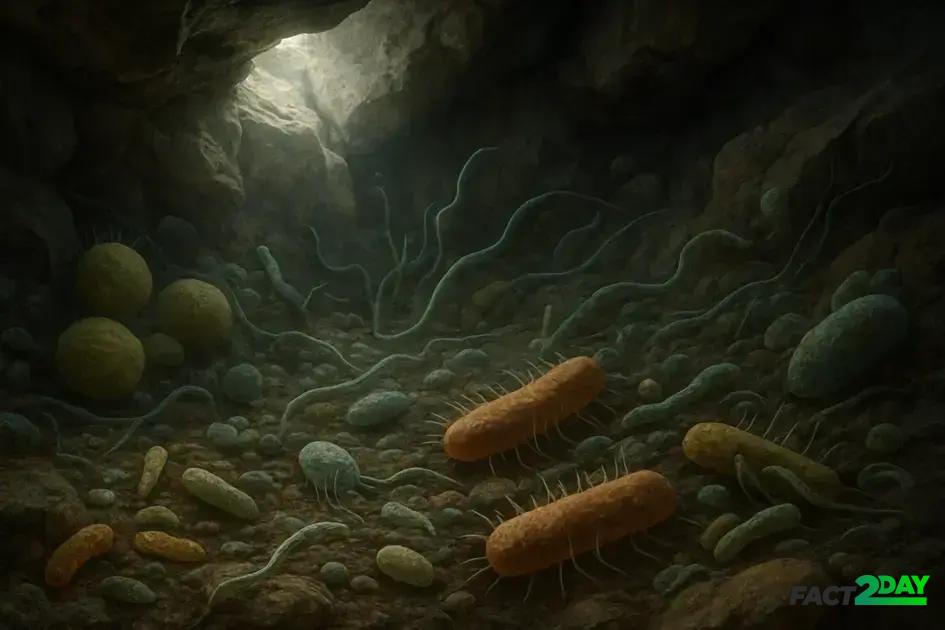
Earth’s deep hot biosphere is a vast underground ecosystem where heat-tolerant microbes live without sunlight, relying on chemical energy and adapting to extreme heat and pressure deep beneath Earth’s surface.
Earth’s deep hot biosphere is a world few have imagined — life pulsing far beneath the surface, in scalding heat and crushing pressure. Have you ever wondered how such hidden ecosystems survive and what secrets they hold? Let’s journey into this subterranean realm together.
discovering the deep hot biosphere: what lies beneath
The Earth’s deep hot biosphere is an extraordinary ecosystem located miles beneath the surface, where temperatures and pressures soar. This hidden world contains diverse microorganisms thriving in environments once thought uninhabitable. It extends through porous rocks and fractures, highlighting a vast, untapped part of our planet’s life support system.
What Lies Beneath the Surface?
Below the earth’s crust, conditions become increasingly extreme. Yet, microbial life adapts, living in hot water-filled rock pores and cracks. These organisms survive by metabolizing chemicals from the rocks and fluids around them, independent of sunlight. Scientists believe this subsurface biosphere might be one of the largest ecosystems on Earth.
Techniques to Explore the Deep Biosphere
Exploring the deep hot biosphere requires advanced technology, including deep drilling and in-situ sensors. Specialized rigs penetrate kilometers underground, retrieving rock and fluid samples. These allow scientists to analyze microbial life forms and their metabolic processes, expanding our understanding of life’s resilience and limits.
Studying this remote biome challenges our ideas about where life can exist and offers clues about the origins of life on Earth and potentially other planets.
adaptations of life forms in extreme underground environments
Life forms living deep in Earth’s hot biosphere have developed unique adaptations to survive harsh conditions such as extreme heat, high pressure, and limited nutrients. These extremophiles use biochemical processes that differ significantly from surface life. Heat-tolerant enzymes help them maintain metabolism even where temperatures exceed 140°F (60°C).
Energy Sources in Darkness
Since sunlight cannot reach these depths, organisms rely on chemosynthesis, converting chemicals like hydrogen sulfide or methane into energy. This biological process allows microbes to thrive in total darkness, feeding off minerals and gases from the Earth’s crust.
Physical and Biological Adaptations
Microbes in this environment have sturdy cell walls and proteins that resist damage from heat and pressure. They also reproduce slowly, adapting their life cycles to the limited resources available. Some form biofilms or colonies to enhance survival in rock fractures and fluid-filled pores.
Studying these adaptations helps scientists understand life’s resilience and could inform the search for life on other planets with similar extreme conditions.
implications of the deep biosphere for science and human understanding
The deep biosphere challenges many traditional ideas about life on Earth by showing how organisms can thrive without sunlight and under extreme conditions. This discovery has wide-ranging implications for science and human understanding, especially in fields like biology, geology, and astrobiology.
Impact on Biological and Geological Sciences
Discovering life forms deep underground expands the known boundaries of habitable environments. It reshapes how scientists study life’s evolution and adaptation, highlighting the importance of subsurface ecosystems in Earth’s carbon and nutrient cycles. This knowledge helps improve models of Earth’s geology and climate history.
Astrobiology and the Search for Extraterrestrial Life
The existence of a thriving deep biosphere suggests life could exist in similar extreme environments beyond Earth, such as the subsurface of Mars or icy moons like Europa. Understanding how life survives here guides missions searching for life elsewhere in the solar system, influencing the design of exploration tools and experiments.
These scientific breakthroughs also raise philosophical questions about the diversity and resilience of life, inspiring new research and curiosity about the unseen ecosystems beneath our feet.
Understanding the deep biosphere’s impact
The deep biosphere reveals a world of life thriving where few expected it. This challenges what we know about life’s limits and broadens our view of Earth’s ecosystems.
Learning about these hidden life forms helps scientists in many fields and opens doors to discovering life beyond Earth. It reminds us that life can endure in amazing ways, pushing the boundaries of our knowledge.
Exploring the deep biosphere continues to inspire curiosity and new questions about the resilience and diversity of life on our planet and beyond.