The Layers of Time: How Discoveries in Geological Sediments Reveal Ancient Climates and Lives
Descubra como as descobertas arqueológicas em camadas geológicas desvendam antigos climas e formas de vida, revelando histórias esquecidas no solo.
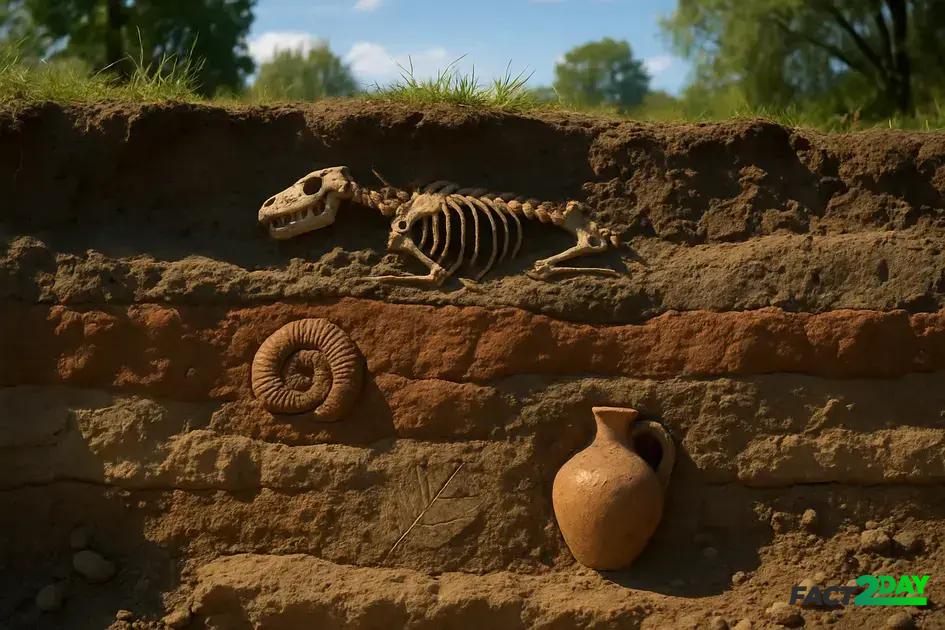
Archaeological discoveries in geological layers reveal ancient climate conditions and life forms by analyzing sediments, fossils, and artifacts preserved in different soil strata.
Archaeological discoveries in geological layers invite us to delve into the past with a careful lens. Have you ever wondered how soil can hold secrets of ancient climates and life that inhabited the Earth? Let’s explore together these traces that silently tell profound stories.
Reading the layers: chronology and stored information
Geological layers act like natural archives, preserving a timeline of Earth’s history in their stratified makeup. By studying these sediment layers, scientists can determine the age of rocks and the events that shaped our planet. Each layer represents a specific period, with its own characteristics and clues about past environments.
The process of reading these layers, called stratigraphy, involves analyzing the thickness, composition, and ordering of sediments. For example, a thicker layer with coarse materials might indicate a period of heavy rainfall or flooding, while thinner, finer layers can suggest calmer conditions. Understanding the sequence of layers allows researchers to reconstruct ancient timelines with precision.
Techniques used to interpret layers
Experts employ techniques such as radiometric dating to measure the decay of radioactive elements within minerals, providing accurate ages for the layers. Fossil content also serves as markers, helping to correlate strata across different locations. Together, these methods uncover detailed stories embedded in the Earth’s crust.
By decoding the information stored in geological layers, archaeologists and geologists uncover how climates changed, how ecosystems evolved, and how life adapted over millions of years. This recorded history beneath our feet is vital to understanding both our past and future.
how fossils and artifacts tell stories of the past
Fossils and artifacts are the storytellers of the past, offering valuable insights into ancient life and human history. Fossils, the preserved remains or traces of organisms, inform us about species that lived millions of years ago, their environments, and evolutionary changes over time. Artifacts, on the other hand, are human-made objects that reveal cultural practices, technology, and societal organization.
The role of fossils in understanding ancient life
Fossils such as bones, shells, and imprints allow scientists to reconstruct extinct species and ecosystems. They help identify climate shifts and migration patterns by indicating which species thrived during different geological periods. The study of fossils is crucial to mapping the development of life on Earth.
Artifacts as cultural and historical evidence
Artifacts like tools, pottery, and jewelry shed light on human behavior, innovation, and adaptation. These objects provide clues about diet, trade routes, and social structures of past civilizations. When found within specific geological layers, artifacts help date archaeological sites and connect human history with environmental changes.
Together, fossils and artifacts create a bridge between natural history and human evolution, helping us understand how life and cultures have evolved in response to Earth’s changing conditions.
impacts of climate change revealed by sediments
Sediments serve as detailed archives of climate changes that have occurred over millions of years. Layers of rock and soil record fluctuations in temperature, precipitation, and atmospheric conditions by trapping minerals, organic matter, and chemicals that respond to environmental shifts.
How sediments reveal past climate impacts
Scientists analyze elements like pollen, isotopes, and microfossils within sediment layers to interpret ancient climates. For instance, an increase in certain pollen types can indicate warmer or cooler periods, while isotopic ratios reveal changes in rainfall patterns. These clues help build a timeline of climate events.
Examples of climate change recorded in sediments
Periods of glaciation are evident in sediments containing layers of ice-rafted debris, while shifts to warmer periods show different mineral deposits and fossil assemblages. Sediments can also capture evidence of extreme events like droughts or floods, exposing how ecosystems and landscapes responded.
By studying sediment records, researchers understand how climate changes have influenced life on Earth, shaping species evolution and patterns of extinction. This knowledge informs predictions about current and future climate impacts.
Understanding the Past to Inform Our Future
Studying geological layers, fossils, artifacts, and sediment records helps us unlock the secrets of ancient climates and life on Earth. These discoveries provide valuable knowledge about how environments and species changed over time.
By learning from the past, scientists can better predict how current climate changes might impact our planet and guide efforts to protect its future. Exploring these layers is like reading Earth’s diary, full of stories that continue to shape our world today.