The Ocean’s Hidden Light Show: Unveiling the Mysteries of Deep-Sea Bioluminescence
Deep sea bioluminescence reveals nature's glowing spectacle beneath the waves, inviting us to explore the ocean's mysterious light show.
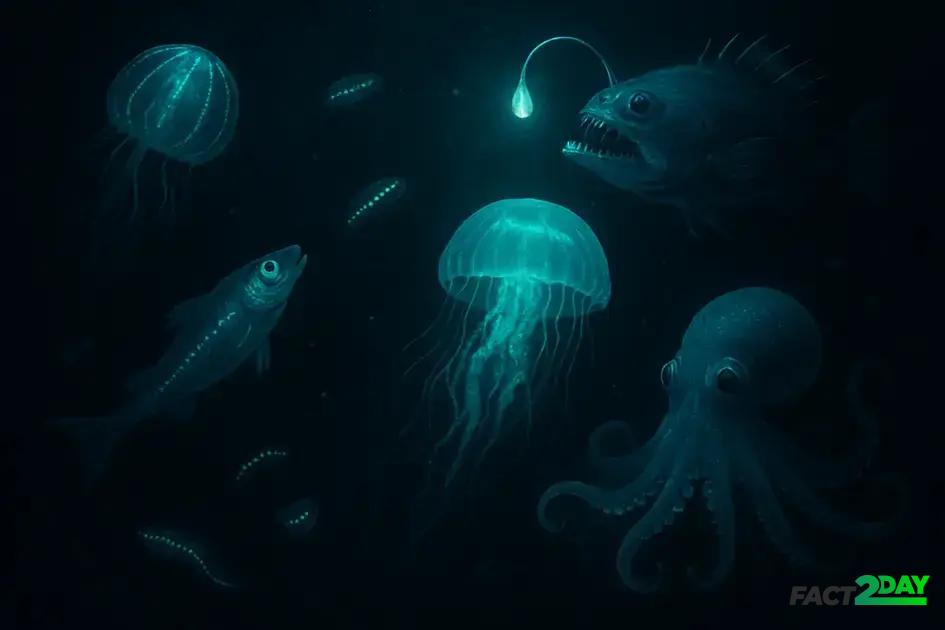
Deep sea bioluminescence is the natural production of light by marine organisms using chemical reactions to communicate, attract prey, and camouflage in the dark ocean depths.
Have you ever wondered about the magic of deep sea bioluminescence? It’s a hidden light show occurring in the ocean’s darkest corners, illuminating life in ways that feel almost otherworldly. Join me as we dive into this radiant mystery beneath the waves.
What is deep sea bioluminescence and how does it occur?
Deep sea bioluminescence is the natural phenomenon where living creatures produce and emit light in the ocean’s darkest depths. This light is created through a chemical reaction involving a light-emitting molecule called luciferin and an enzyme called luciferase. When these two substances interact, energy is released in the form of light, often blue or green in color, which travels well through water.
How bioluminescence occurs
Bioluminescent organisms often have specialized cells known as photophores that help control the production and direction of light. Many deep-sea creatures use this glowing ability to communicate, attract mates, lure prey, or confuse predators. Some even produce light by hosting bioluminescent bacteria inside their bodies.
The process is highly efficient because it produces almost no heat, allowing these creatures to survive in harsh, cold environments. This fascinating adaptation has evolved independently in many species, making the deep sea a glowing world of its own.
Common species that illuminate the dark ocean depths
Many fascinating species use bioluminescence to survive in the pitch-dark environment of the deep ocean. Among the most well-known are the anglerfish, which uses a glowing lure on its head to attract prey close enough to catch. The light is produced by bacteria that live inside this lure, creating an eerie and effective fishing tool.
Other well-known bioluminescent species
The lanternfish is another common deep-sea dweller, named for its rows of tiny light organs along its body. These lights help it communicate and avoid predators. Additionally, certain types of squid, like the firefly squid, flash bright blue or green lights to confuse enemies or attract mates.
Jellyfish also contribute to the ocean’s glow, with many species producing shimmering pulsations of light when disturbed. Some deep-sea shrimp and comb jellies add to this natural light show by creating soft glows as they move through the water.
The role of bioluminescence in deep sea ecosystems
Bioluminescence plays a key role in deep sea ecosystems by supporting survival, communication, and reproduction. In the pitch-black depths, light becomes a vital tool. Many animals depend on bioluminescence to find food or avoid becoming prey. For example, some fish flash lights to confuse predators or to attract smaller creatures as bait.
Communication and camouflage
Bioluminescent signals help species communicate silently. Some squids use blinking patterns to signal mates or warn rivals. Others use a technique called counter-illumination, producing light on their undersides to match faint light from above. This camouflage method hides them from predators lurking below.
Bioluminescence also helps maintain balance in the food chain. Organisms that glow attract predators, supporting a diverse community. This glowing web adds energy flow and complexity to life far from sunlight, making bioluminescence a crucial survival strategy in the deep ocean.
Methods scientists use to study bioluminescence underwater
Scientists use a variety of methods to study bioluminescence underwater, combining technology and direct observation. One common tool is remotely operated vehicles (ROVs). These submarines carry cameras and sensors to explore deep ocean regions where sunlight doesn’t reach. ROVs can capture live footage of bioluminescent creatures and measure the light intensity they produce.
Sampling and laboratory analysis
Another approach involves collecting water and biological samples with special nets or traps. Researchers bring these samples back to the lab to study the chemical reactions that create bioluminescence. They analyze molecules like luciferin and luciferase to understand how different species generate light.
Advanced imaging and sensors
Scientists also use highly sensitive light detectors and cameras that can record the faint glow emitted by deep-sea animals. These devices allow for measurements without disturbing the natural behavior of the creatures. Some experiments even use controlled tanks simulating deep ocean conditions to observe bioluminescence in real-time.
How bioluminescence influences marine communication and behavior
Bioluminescence plays a vital role in marine communication and behavior, especially in the deep sea where light is scarce. Many species use glowing signals to send messages to others. For example, some fish flash patterns of light to attract mates or warn rivals. These flashes can be unique and help individuals recognize each other in the dark environment.
Attracting mates and prey
Many creatures use bioluminescent displays to find partners during mating season. Squid and certain fish create rhythmic light patterns as part of their courtship rituals. Others use light to lure prey closer. The anglerfish’s glowing lure is a famous example, tricking smaller fish to swim near for an easy meal.
Defense and camouflage
Bioluminescence also affects behavior by providing defense mechanisms. Some species produce sudden bursts of light to startle predators and escape. Others use subtle glows on their bodies to blend in with faint ambient light, a method called counter-illumination. This camouflage helps them avoid being seen from below.
Overall, bioluminescence shapes how marine animals interact, feed, and protect themselves in the vast, dark ocean.
Future research and conservation of bioluminescent organisms
Future research on bioluminescent organisms aims to deepen our understanding of how these creatures adapt to extreme environments and their role in ocean ecosystems. Scientists are exploring new technologies to observe bioluminescence in its natural setting with minimal disturbance. This includes improved deep-sea robots and sensitive imaging systems that capture light emissions accurately.
Conservation challenges
Conservation efforts focus on protecting habitats threatened by climate change, pollution, and deep-sea mining. Since many bioluminescent species rely on delicate ecosystems, protecting these areas is vital to preserve their unique light systems. Organizations are advocating for marine protected areas specifically targeting deep-sea environments.
Biotechnological potential
Research into bioluminescence has promising applications outside ecology, including medical imaging, environmental monitoring, and bioengineering. Understanding bioluminescent mechanisms could lead to safer, natural alternatives to chemical light sources.
Continued study and conservation of bioluminescent organisms help safeguard ocean biodiversity and unlock new scientific discoveries that benefit humanity and nature alike.
Exploring the wonders of deep sea bioluminescence
The ocean’s hidden light show reveals a world full of fascinating creatures using bioluminescence to survive, communicate, and thrive in darkness. Understanding how these organisms work helps us appreciate their role in marine life and sparks curiosity for future discoveries.
As technology advances, scientists are unlocking more secrets of bioluminescent species while working to protect their fragile habitats. This research not only helps conserve ocean biodiversity but also offers exciting new possibilities for science and technology.
By exploring and safeguarding this glowing underwater world, we ensure that its mysteries will continue to inspire and benefit generations to come.