Blockchain Gaming: The Future of Gaming or Just a Bizarre Bubble of NFTs and Crypto?
Explore the thrilling world of Cryptocurrency NFT Games and discover if blockchain gaming is truly the future or just a passing crypto craze.
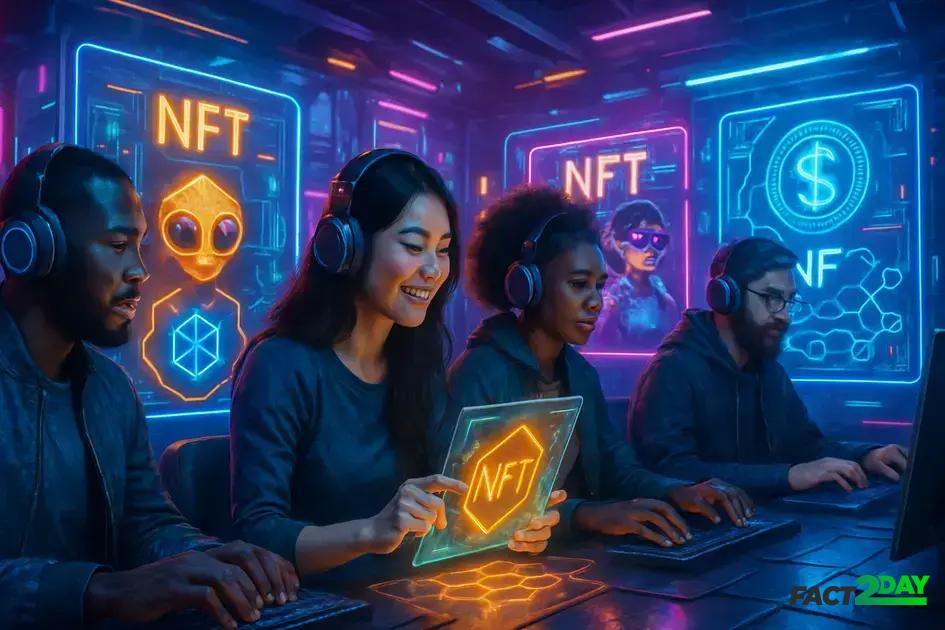
Cryptocurrency NFT games leverage blockchain technology to offer players true ownership of digital assets, enabling new play-to-earn models and decentralized gaming economies that revolutionize the way we interact with virtual worlds.
Cryptocurrency NFT Games have taken the gaming world by storm, blurring lines between digital assets and play. But is this revolution the future of gaming, or just a bizarre bubble fueled by hype and crypto dreams? Let’s dive into this captivating universe and find out.
Understanding cryptocurrency and NFTs in gaming
Cryptocurrency and NFTs are transforming the gaming landscape by introducing unique digital ownership and new economic models. Cryptocurrencies are digital currencies that operate on decentralized blockchain networks, allowing players to trade and earn real value through in-game activities without intermediaries.
Non-fungible tokens (NFTs) represent unique digital assets, such as characters, skins, or collectibles, which players can own, sell, or trade with verified scarcity and authenticity. Unlike traditional game items, NFTs provide true ownership, making the items transferable across different games and platforms that support blockchain.
This evolution means that gamers can potentially earn by playing, investing, or creating in virtual economies powered by blockchain. However, understanding the basics of crypto wallets, token marketplaces, and blockchain mechanics is essential to engage safely and effectively in these new gaming environments.
Key Differences from Traditional Gaming Assets
Unlike conventional digital assets confined to one game, NFTs give players control over their in-game items, enabling cross-platform use or real-world trade. This shift can reshape the value of virtual goods and the player experience itself.
As blockchain and NFTs gain popularity in gaming, they open opportunities for innovation and challenges around regulation, security, and environmental impact, which every player should be aware of.
How blockchain technology is changing games
Blockchain technology is revolutionizing the gaming industry by enabling the creation of decentralized game worlds where players can truly own their in-game assets. Unlike traditional games where items are stored on centralized servers, blockchain stores ownership records on distributed ledgers, increasing transparency and security.
This technology allows players to buy, sell, and trade items safely through smart contracts without relying on middlemen or game publishers. It also encourages innovation by enabling player-driven economies and play-to-earn models where gamers can earn real value through gameplay.
Decentralization and Ownership
With blockchain, game data isn’t controlled by a single entity, making it more resistant to hacking and unfair manipulation. Players gain full control over their digital assets, which can include rare skins, characters, or virtual land, all uniquely verifiable on the blockchain.
Enhanced Interoperability
Blockchain also opens the door for assets to be used across multiple games or platforms, a concept known as interoperability. This expands the value and usability of in-game items far beyond traditional boundaries.
New Economic Models
The rise of play-to-earn games incentivizes player participation by offering cryptocurrency rewards. This model has created vibrant ecosystems where gamers can monetize their time and skills, transforming the player role from consumer to stakeholder.
While blockchain gaming presents exciting possibilities, it also raises questions about regulatory oversight, environmental sustainability, and market volatility, which still need to be navigated carefully.
Popular Cryptocurrency NFT games to know
Several popular Cryptocurrency NFT games have risen to prominence by combining engaging gameplay with blockchain-powered ownership. These games offer players unique digital assets that can be traded, sold, or used across platforms.
Axie Infinity
One of the most well-known NFT games, Axie Infinity allows players to collect, breed, and battle fantasy creatures called Axies. Players earn the game’s native tokens through gameplay, which can be traded on various exchanges.
The Sandbox
The Sandbox offers a virtual world where players create, own, and monetize gaming experiences. With NFT-based land parcels and assets, users have deep control over their creations backed by blockchain verification.
Decentraland
Decentraland is a decentralized virtual reality platform where users can buy virtual land, build structures, and participate in events. NFT ownership enables users to control their digital real estate and assets in this shared metaverse.
Gods Unchained
This digital trading card game uses NFTs to represent unique cards with rarity and value. Players can buy, sell, and trade cards, offering a true marketplace experience within a competitive strategy game.
Illuvium
Illuvium merges open-world exploration with NFT collectibles known as Illuvials. The game features play-to-earn mechanics paired with blockchain technology for secure ownership and trading.
These games showcase the growing diversity in how blockchain and NFTs are redefining value and interaction in digital gaming, offering vibrant communities and new ways to engage.
The economics of NFT gaming and player rewards
The economics of NFT gaming center around the creation, ownership, and exchange of unique digital assets that hold real-world value. Players can earn rewards through gameplay, trading, or contributing to the game’s ecosystem.
Play-to-Earn Model
This model allows players to earn cryptocurrency or NFTs by completing tasks, winning battles, or participating in events. Players can convert these digital assets into real money, creating new income opportunities.
Marketplace Dynamics
Most NFT games have marketplaces where players can buy, sell, and trade assets. Prices fluctuate based on rarity, demand, and the game’s popularity. This creates vibrant economies fueled by player activity and speculation.
Tokenomics and Governance
Many NFT games use native tokens that govern transactions and influence game decisions. Players often participate in governance, voting on updates or policies, which adds a deeper economic layer to the gaming experience.
Risks and Volatility
The value of NFTs and tokens can be highly volatile. Economic success depends on sustained player interest and fair game design. Players should be aware that earnings are not guaranteed and market fluctuations impact asset value.
Understanding the complex economics behind NFT games helps players make informed decisions and better engage with these innovative gaming ecosystems.
Risks and challenges in blockchain gaming
Blockchain gaming offers exciting opportunities but also comes with several risks and challenges that players and developers need to understand.
Market Volatility
The value of cryptocurrencies and NFTs can be highly volatile. Prices of in-game assets may drop suddenly, which can lead to financial loss for players investing real money in these digital items.
Regulatory Uncertainty
Many countries are still determining how to regulate blockchain gaming, cryptocurrency transactions, and NFTs. Changes in laws or crackdowns could affect the legality and accessibility of these games in certain regions.
Security Risks
While blockchain technology offers robust security, players are still vulnerable to hacking, scams, and phishing attacks, especially when dealing with wallets and marketplaces.
Environmental Concerns
Proof-of-work blockchains consume significant energy, raising environmental concerns. Some blockchain games are adopting more eco-friendly protocols like proof-of-stake to reduce their carbon footprint.
Game Quality and Sustainability
Some blockchain games may prioritize speculative economics over gameplay, leading to poor user experience. Sustainability depends on maintaining active communities and balanced game design.
Technical Barriers
New players may find blockchain technology complex, which might hinder adoption. Learning about wallets, private keys, and token mechanics requires effort and caution to avoid mistakes.
Addressing these risks is essential for blockchain gaming’s long-term success and for protecting players in this emerging space.
The role of decentralization in game ownership
Decentralization plays a crucial role in transforming game ownership by shifting control from centralized companies to individual players. In traditional games, assets and progress belong to the game developer, limiting player rights and control.
True ownership through blockchain
Blockchain technology enables players to hold verifiable ownership of in-game items, characters, and currencies. These assets are recorded on decentralized ledgers, which means no single entity can alter or seize them without the owner’s consent.
Empowering players and creators
Decentralization also empowers players to trade their assets freely in open marketplaces, creating real-world value from digital goods. Creators benefit by earning royalties from secondary sales of their items, fostering a sustainable ecosystem.
Eliminating intermediaries
Smart contracts automate transactions and enforce ownership rules without intermediaries. This reduces fraud, lowers costs, and speeds up exchanges, enhancing player trust.
Community governance
Many blockchain games feature decentralized autonomous organizations (DAOs) where players vote on game updates and economics, giving the community a voice in development and decision-making.
Decentralized game ownership is reshaping the relationship between players and games, offering more control, fairness, and opportunity.
Community and social impact of NFT games
NFT games are creating new forms of community and social interaction by enabling players to connect through shared ownership and digital economies. These games encourage collaboration, competition, and social bonding in decentralized virtual spaces.
Building vibrant player communities
Players often form clubs, guilds, or social groups around NFT games, fostering teamwork and strategy. These communities not only play together but also trade assets and share knowledge, enriching the gaming experience.
Empowering creators and players
NFT games give both players and creators opportunities to profit by designing, selling, or trading digital items. This has led to increased participation and diversity within gaming cultures.
Social impact beyond gaming
Some NFT games support charitable causes, fund social projects, or promote environmental awareness through their gameplay and token economics.
Challenges to social dynamics
Despite benefits, social divides can appear due to asset ownership disparities. Access to valuable NFTs often depends on financial resources, which may exclude some players from full participation.
Overall, NFT games are shaping new social models within digital spaces, blending gaming with community engagement and real-world impact.
Environmental concerns with blockchain gaming
Blockchain gaming faces significant environmental concerns mainly due to the energy consumption of certain blockchain protocols. Traditional blockchains like Bitcoin and Ethereum use a proof-of-work consensus mechanism, which requires powerful computers to solve complex puzzles, consuming vast amounts of electricity.
Energy consumption and carbon footprint
The energy used in blockchain gaming can be comparable to that of entire countries, raising alarms about its impact on global warming and sustainability. The carbon footprint of maintaining these networks can be high, especially when gaming platforms scale up.
Shift to eco-friendly alternatives
To address these issues, many projects are moving to proof-of-stake or other low-energy consensus models that require far less power. These alternatives aim to keep blockchain secure while minimizing environmental damage.
Developer and community efforts
Some blockchain gaming companies invest in carbon offset programs or renewable energy to balance out their emissions. Communities are also advocating for greener solutions and transparency in the energy usage of games.
Balancing innovation and responsibility
While blockchain gaming offers exciting opportunities, developers and players need to consider environmental responsibility to ensure this industry’s growth is sustainable and conscientious.
Future trends in cryptocurrency NFT games
Future trends in cryptocurrency NFT games are set to deepen the integration of blockchain technology with immersive gaming experiences. Innovations will reshape how players interact, earn, and own digital assets.
Expansion of play-to-earn models
The play-to-earn concept is gaining momentum, allowing more players to earn valuable rewards simply by engaging with games. We expect this model to become more sophisticated, with diverse ways to monetize skills and time.
Interoperability across games and platforms
Future NFT games will focus on interoperability, enabling players to use their assets across multiple games and ecosystems, breaking down barriers between virtual worlds.
Integration of metaverse concepts
Cryptocurrency NFT games will increasingly merge with metaverse developments, creating persistent shared environments where users socialize, trade, and build economies.
Enhanced player governance
Decentralized governance or DAOs will give players more say over game rules, updates, and the distribution of in-game resources, fostering community-driven development.
Use of advanced blockchain protocols
Smarter contracts and scalable blockchains will reduce fees and increase transaction speeds, improving user experience and lowering entry barriers.
Augmented reality (AR) and virtual reality (VR) integration
Future NFT games will explore AR and VR to offer immersive and interactive gameplay, blending physical and digital worlds.
Environmental sustainability efforts
As awareness grows, blockchain gaming will increasingly adopt eco-friendly protocols to minimize energy consumption and carbon footprints.
These trends show a promising evolution of cryptocurrency NFT games, emphasizing player empowerment, technological innovation, and sustainability.
How to start playing Cryptocurrency NFT games safely
Starting to play Cryptocurrency NFT games safely requires understanding the basics of blockchain technology and taking precautions to protect your assets and personal information.
Set up a secure crypto wallet
The first step is to create a reliable crypto wallet, which stores your NFTs and cryptocurrencies. Choose wallets with strong security features, like two-factor authentication and seed phrase backups.
Research games before playing
Not all games are trustworthy. Read reviews, check the development team’s reputation, and join community forums to ensure the game is legitimate and has active support.
Start small with investments
Invest only what you can afford to lose, especially when buying NFTs or in-game tokens. The value of assets can fluctuate greatly, so cautious spending is important.
Guard your private keys and information
Never share your private keys or seed phrases with anyone. These are sensitive credentials that control access to your wallet and assets.
Use official marketplaces
Trade NFTs and tokens on recognized marketplaces to reduce risks of scams or counterfeit items. Verify links and look out for phishing attempts.
Stay updated on security practices
Keep your software, wallets, and devices updated. Use antivirus tools and be wary of suspicious links or downloads.
By following these steps, new players can enjoy cryptocurrency NFT games while minimizing risks and protecting their investments.
Is blockchain gaming a sustainable future or a speculative bubble?
Blockchain gaming sits at a crossroads between becoming a sustainable future for interactive entertainment and a speculative bubble driven by hype.
Signs of sustainability
Many projects focus on building solid communities, innovative gameplay, and decentralized ownership, which empower players and creators. The use of blockchain offers transparency and verifiable ownership that traditional games lack.
Speculative risks
High market volatility and rapid price swings for NFTs and tokens can fuel speculative bubbles. Some games prioritize financial gains over gameplay quality, risking player disillusionment.
Market maturity and regulation
The industry is still young and evolving. More robust regulation, better user education, and improved technology are needed to reduce scams and create trust.
Technological advancements
Progress in scalable blockchains and eco-friendly consensus mechanisms may address current drawbacks and encourage mass adoption.
Player adoption and long-term value
Sustainability depends on maintaining active player bases and delivering engaging experiences beyond just monetary rewards.
Evaluating whether blockchain gaming is a lasting evolution or a bubble requires watching how these factors develop in the coming years.
Looking Ahead for Blockchain Gaming
Blockchain gaming offers exciting opportunities for players to truly own digital assets and participate in new economic models. However, the path forward is not without challenges, including market volatility and technological hurdles.
As the industry matures, sustainable growth will depend on better technology, fair game design, and informed players. Whether blockchain gaming becomes a lasting revolution or a passing trend will largely rely on how these factors evolve together.
Staying cautious but optimistic is key for anyone interested in this dynamic and rapidly changing space.