The Bottom of the Abyss: The Bizarrely Resilient Creatures of the Hadal Zone, the Deepest Point in the Ocean
Criaturas da zona hadal revelam a vida exuberante e resistente nas profundezas do oceano, desafiando o que pensamos sobre ambientes extremos.
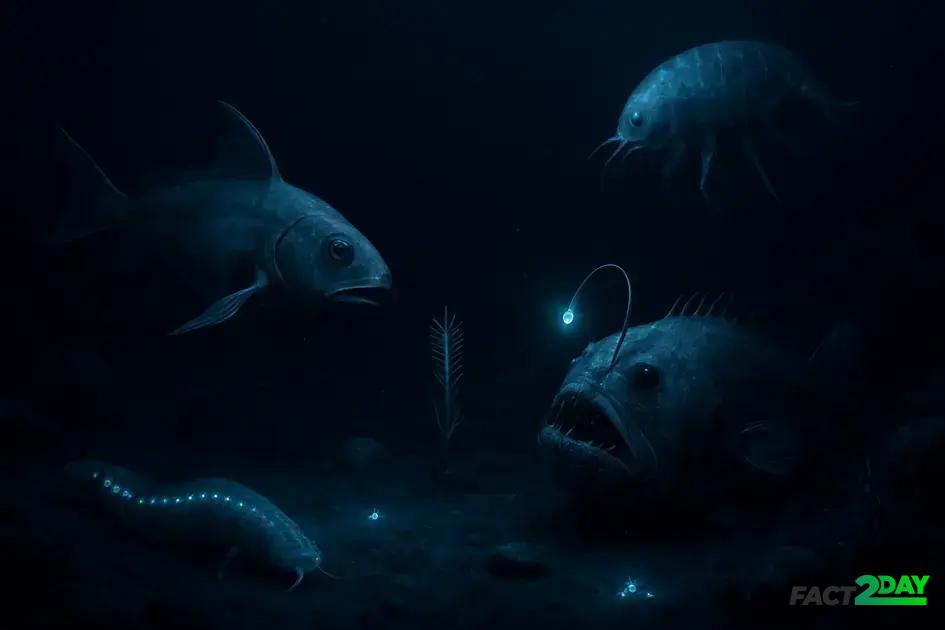
Hadal zone creatures are unique deep-sea organisms adapted to extreme pressure, darkness, and cold, playing vital roles in nutrient cycling, scientific research, and understanding life in Earth’s most profound ocean depths.
Ever wondered what lives in the deepest depths of the ocean? Hadal zone creatures inhabit a world that seems like something out of a strange dream, where the pressure is crushing and light is almost non-existent. Let’s explore these amazing life forms together and understand how they survive in this abyss.
The characteristics of the hadal zone and its extreme conditions
The hadal zone is the deepest part of the ocean, found mostly in oceanic trenches below 6,000 meters. This environment is marked by extreme pressure — more than 1,000 times the atmospheric pressure at sea level — and near-freezing temperatures. Sunlight does not reach these depths, resulting in complete darkness.
Water in the hadal zone is rich in nutrients due to the accumulation of organic matter sinking from upper layers, but oxygen levels are often very low. The terrain is rugged, featuring steep trench walls and uneven ocean floor topography.
Despite these harsh conditions, life thrives here, adapted to the crushing pressure, cold, and scarce food supply. Creatures in the hadal zone have evolved unique biological mechanisms such as flexible cell membranes and specialized enzymes that maintain function under extreme pressure. Understanding these conditions is key to studying the remarkable organisms that inhabit this mysterious part of our planet.
Unique adaptations of hadal zone creatures
Creatures living in the hadal zone have developed unique adaptations allowing them to survive under intense pressure, low temperatures, and complete darkness. One key adaptation is their flexible, soft bodies, which prevent them from being crushed by the immense water pressure at these depths.
Many hadal creatures produce special proteins called piezolytes that help stabilize their cells. These proteins protect vital enzymes, allowing biochemical reactions to continue despite the crushing environment.
Bioluminescence is common among hadal species, providing light to communicate, attract prey, or camouflage themselves. Unlike shallower sea creatures, some also have slow metabolisms, enabling them to live with scarce food resources by conserving energy.
Another fascinating adaptation is their unique feeding mechanisms. Some scavengers in the zone can detect tiny particles of organic matter, while predators may rely on expanded senses other than sight, such as touch or vibration detection, to hunt in the dark.
Understanding these adaptations not only illuminates the resilience of life but also provides insights into biology under extreme conditions, which could have applications in medicine and technology.
The importance of hadal zone creatures for science and the planet
The creatures of the hadal zone play a crucial role in scientific research and Earth’s ecosystems. Studying these organisms helps scientists understand how life adapts to extreme environments, offering clues about resilience and survival that can inspire advancements in medicine and biotechnology.
Many hadal species contribute to the ocean’s nutrient cycles by breaking down organic material that sinks from upper layers. This process is vital for maintaining the ocean’s health and supports life at multiple levels, from tiny plankton to large marine animals.
Research on hadal creatures also informs our understanding of climate change. Deep-sea environments act as huge carbon sinks, and the organisms that live there influence how carbon is stored and released. Better knowledge of these processes can improve climate models and policies.
Finally, the hadal zone represents one of Earth’s last frontiers of biodiversity. Protecting these ecosystems is important to conserve unknown species and the overall balance of marine life, which, in turn, affects global ecological stability and human well-being.
Understanding the hadal zone’s amazing life
The creatures of the hadal zone teach us a lot about survival in the toughest places on Earth. Their unique adaptations and roles in the ocean’s ecosystem show how life finds a way even in extreme conditions.
By studying these fascinating animals, scientists unlock secrets that help improve medicine, protect the planet, and better understand climate change.
Exploring and preserving the hadal zone is important for keeping our oceans healthy and ensuring that the incredible diversity of life continues to thrive deep below the surface.