Stardust on Your Fingertips: How Tiny Bits of the Cosmos Land on Earth Daily
Discover how cosmic dust on Earth quietly falls around us each day, connecting us to the vast universe in subtle, fascinating ways.
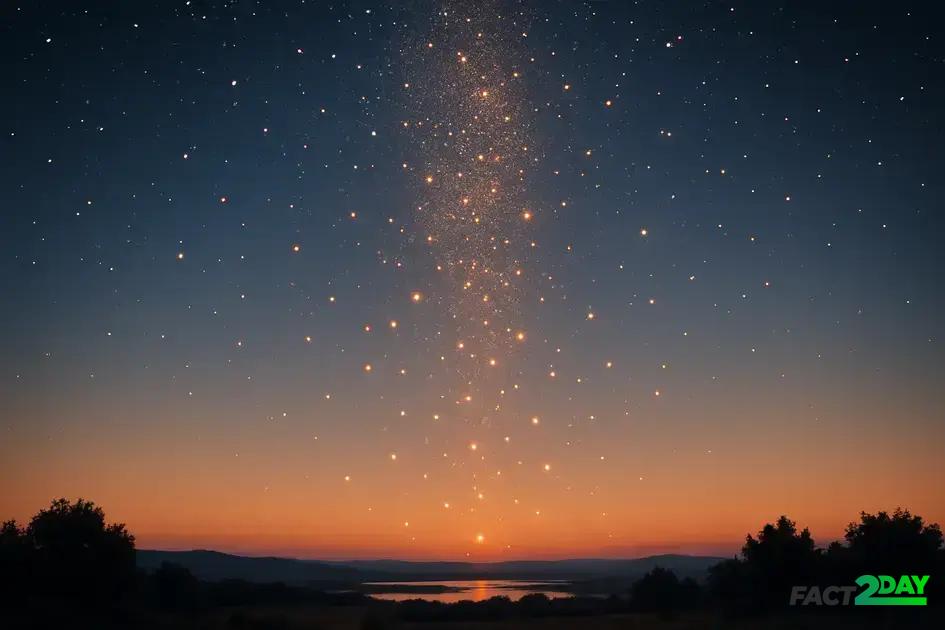
Cosmic dust on Earth consists of tiny particles from space that travel through the atmosphere, influence weather and environment, and can be observed during meteor showers or collected for study.
Have you ever wondered about the tiny visitors from space that drift down to us every day? Cosmic dust on Earth is more common than we realize, carrying whispers of the universe right to our planet’s surface. Let’s explore how these minuscule particles journey through space to land unexpectedly close to us.
how cosmic dust travels to earth
Cosmic dust travels vast distances through space before reaching Earth. These tiny particles, often smaller than a grain of sand, originate from comets, asteroids, and the remnants of exploded stars. As they drift through our solar system, they are influenced by solar winds, gravity from planets, and magnetic fields.
When cosmic dust enters Earth’s atmosphere, it moves at very high speeds, heating up and often burning due to friction with air particles. This process can create brief, bright shooting stars or meteors visible from the ground. However, most pieces are so small that they cool quickly and gently settle to the surface without causing any harm.
Sources of cosmic dust
Comets release dust particles as they orbit close to the sun, while collisions between asteroids in space create debris that eventually drifts toward Earth. Additionally, supernovae—massive star explosions—scatter dust across the galaxy, adding to this continuous stream.
The journey of cosmic dust is affected by many forces, but ultimately, gravity pulls these particles toward Earth’s atmosphere, making them regular visitors in our environment, often falling unnoticed but connecting us to the cosmos.
the role of cosmic dust in earth’s environment
Cosmic dust plays a subtle yet important role in Earth’s environment. These tiny particles contribute to cloud formation by acting as nuclei where water vapor condenses, influencing weather patterns and climate. Without cosmic dust, clouds might form less effectively, altering rainfall and temperature dynamics.
Additionally, cosmic dust brings rare elements and compounds to Earth, enriching the atmosphere and soil over time. These materials can support the growth of microorganisms and plants, indirectly sustaining ecosystems.
Impact on the atmosphere and climate
The presence of cosmic dust in the atmosphere helps scatter sunlight, affecting how heat and light are distributed across the globe. This scattering contributes to beautiful twilight colors and plays a small part in maintaining Earth’s energy balance.
Scientists study cosmic dust to understand long-term climate changes and atmospheric chemistry. Tracking its variations helps reveal patterns tied to solar activity and cosmic events, deepening knowledge about Earth’s place in the cosmos.
ways to observe and appreciate cosmic dust
Observing cosmic dust can be a fascinating way to connect with the universe. One common method is watching meteor showers, which occur when Earth passes through streams of dust left by comets. These showers create spectacular streaks of light as dust particles burn up in the atmosphere.
Using a telescope or binoculars, you can also observe areas of the night sky where dust clouds scatter starlight, creating hazy, glowing regions. Dark patches in the Milky Way galaxy are often caused by dense dust clouds blocking the light behind them.
Collecting cosmic dust
Scientists and hobbyists can collect cosmic dust particles that land on surfaces like car roofs, plants, or specially designed collectors. These tiny grains can be examined under microscopes to reveal their unique structure and origin.
Appreciating cosmic dust includes understanding its journey and recognizing that each speck is a piece of the universe, offering a tangible connection to the stars and galaxies far beyond our world.
Connecting with the universe through cosmic dust
Cosmic dust may be tiny, but its impact and presence are vast. From traveling through space to affecting Earth’s environment and inspiring us to observe the night sky, these particles link us directly to the cosmos.
By learning how cosmic dust moves, influences our planet, and ways to observe it, we gain a deeper appreciation for the universe surrounding us. Each speck of stardust on Earth is a reminder that we are part of a much bigger story.
Embracing this connection can spark curiosity and wonder, encouraging us to look up and explore the mysteries of space in everyday moments.