From Joysticks to Haptics: How Controllers Evolved
Explore the controller evolution from simple joysticks to immersive haptics, unveiling how gaming interaction transformed over time.
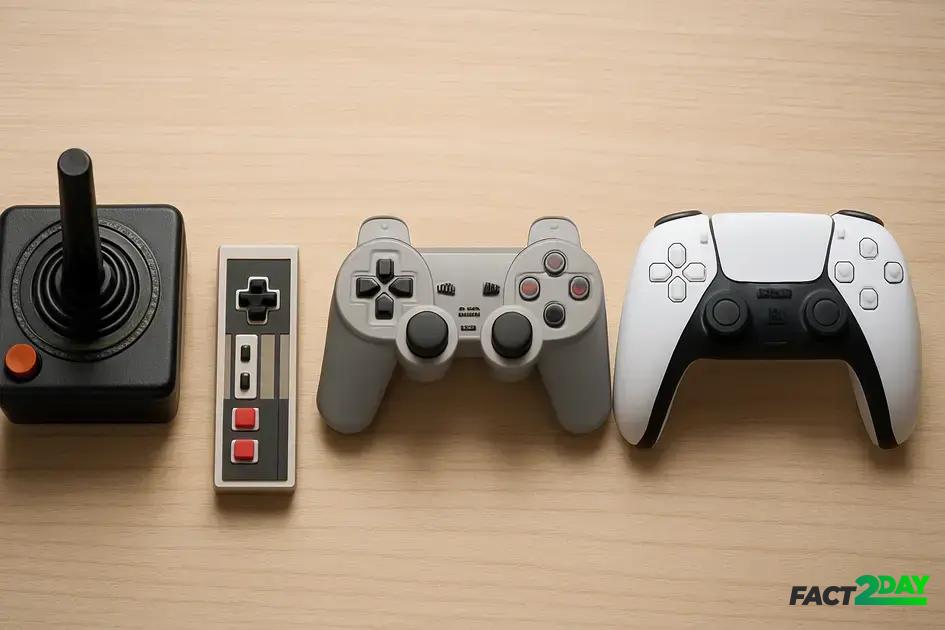
Controller evolution spans from early joysticks to modern adaptive devices featuring motion controls, haptic feedback, wireless technology, and AI integration, enhancing gaming immersion, accessibility, and personalization.
Have you ever wondered about the journey behind the devices you hold while gaming? The controller evolution paints a fascinating story from clunky joysticks to intricate haptics, showing how our connection with games has deepened over time.
the early days of joysticks and their impact
The early days of video game controllers were marked by the introduction of joysticks, which became iconic symbols of gaming in the 1970s and 1980s. These simple devices featured a stick that could be moved in multiple directions, allowing players to control movement within a game. The design was intuitive, and many games were built around joystick controls, making them a staple in arcades and home consoles alike.
Impact on gaming experience
Joysticks provided a level of precision and immersion that was revolutionary at the time. They enabled players to interact with games in ways that felt natural and responsive, laying the groundwork for the future of game interaction. Early joysticks often had just one button, encouraging developers to create gameplay mechanics that worked within these limitations.
Challenges and limitations
Despite their success, early joysticks had limitations. Their bulky design sometimes restricted gameplay, and the lack of multiple buttons limited the complexity of games. Additionally, they were less portable and more prone to mechanical wear compared to later controllers.
Legacy and influence
The legacy of joysticks is visible in many modern controllers that incorporate analog sticks as a direct evolution. They also influenced the development of specialized controllers in flight simulators and other genres, where joystick-style controls remain essential.
rise of gamepads and ergonomic design
As gaming moved from arcades to home consoles, the rise of gamepads revolutionized how players interacted with their games. Unlike joysticks, gamepads featured a flat design with multiple buttons and directional pads, creating more versatile and comfortable controls. This shift was driven by the need for more complex input options and longer gaming sessions.
Ergonomic design principles
Gamepads embraced ergonomic design to improve comfort and reduce hand fatigue. Curved grips, button placement, and lightweight materials helped players maintain better control without strain. These designs evolved with input from both engineers and gamers, leading to more user-friendly controllers.
Impact on gameplay and accessibility
The introduction of multiple buttons on gamepads enabled richer gameplay mechanics, making it possible to perform various actions seamlessly. Additionally, their intuitive layout made games accessible to a wider audience, including casual players. This accessibility helped gaming grow rapidly across different age groups and skill levels.
Iconic examples
Controllers like the Nintendo Entertainment System (NES) gamepad set the standard for future designs. The simple rectangular shape with a directional pad and a couple of action buttons inspired many subsequent controllers. Over time, manufacturers refined this concept, adding shoulder buttons, analog sticks, and vibration feedback.
introduction of motion controls and sensors
The introduction of motion controls and sensors marked a significant shift in how players interacted with games. Instead of relying solely on buttons and sticks, players could now use their body movements to control the gameplay. This innovation added a new layer of immersion and made gaming more physical and engaging.
How motion controls work
Motion controllers use sensors like accelerometers and gyroscopes to detect movement and orientation. This allows the controller to translate real-world actions, such as swinging an arm or tilting the device, into in-game responses. Unlike traditional controllers, they offer a broader range of input options based on natural human motion.
Popular motion control systems
The rise of motion controls gained fame with devices like the Nintendo Wii Remote, which featured infrared sensors and accelerometers to detect position and motion. Sony and Microsoft later introduced their own versions, PlayStation Move and Kinect, using cameras and sensor bars for full-body movement tracking.
Impact on gameplay and accessibility
Motion controls expanded the types of games available, encouraging active play and fitness-related titles. They also made gaming more accessible to non-traditional audiences, including families and older adults, by offering intuitive, physical interaction rather than complex button combinations.
Challenges and limitations
Despite their popularity, motion controls faced challenges like accuracy issues and limited precision compared to traditional inputs. Some players found extended use tiring, and certain games did not fully utilize the technology, causing mixed experiences.
the birth of wireless controllers
The birth of wireless controllers transformed gaming by removing the physical tether between the player and the console. Early wireless controllers used radio frequency (RF) or infrared (IR) technology to send signals, allowing players more freedom of movement and a cleaner gaming setup.
Advantages over wired controllers
Wireless controllers freed players from cable length limits, reducing clutter and providing a more comfortable experience. Gamers could sit farther from the screen and move naturally without worrying about tripping over wires. This mobility also made multiplayer gaming in the same room easier and more enjoyable.
Technology behind wireless controllers
Initial wireless controllers relied on infrared, which required a clear line of sight to work properly. Later models adopted RF technology, which used radio waves to communicate, offering more reliable and longer-range connections. Today, Bluetooth is the standard, combining efficiency and compatibility with many devices.
Challenges faced
Wireless technology introduced new challenges, such as battery life, potential signal interference, and input lag. Manufacturers had to design controllers that balanced power consumption with performance. Rechargeable batteries and improved wireless protocols addressed many of these issues over time.
Impact on gaming culture
The rise of wireless controllers influenced how games were played, allowing more casual and social gaming setups. It also enabled new genres like party games and couch co-op experiences to thrive, emphasizing ease of play and convenience.
advancements in haptic feedback technology
Advancements in haptic feedback technology have dramatically enhanced the gaming experience by adding tactile sensations to controllers. These vibrations and forces simulate real-world touch, making interactions feel more immersive and realistic. Modern controllers can vary the intensity, frequency, and pattern of feedback.
Types of haptic feedback
Traditional rumble motors were basic but effective in conveying general impacts or explosions. Today, advanced haptics include precise actuators that create detailed sensations, such as the feeling of texture, resistance, or directional forces. This allows players to sense subtle in-game events like footsteps or tension in a bowstring.
Impact on gameplay immersion
Haptic feedback contributes significantly to player immersion by engaging the sense of touch alongside sight and sound. It helps convey spatial awareness and emotional cues, making games more engaging and believable. Developers can design more nuanced experiences that rely on these tactile signals.
Recent innovations
Technologies like the PlayStation DualSense controller introduce adaptive triggers that offer resistance and variable tension. This feature creates a physical sensation that corresponds to in-game actions, like squeezing a trigger harder to draw a bow. Such innovations enhance interactivity beyond vibration.
Benefits for accessibility
Haptic feedback also aids players with visual or auditory impairments by providing essential gameplay cues through touch. This can improve reaction time and overall gameplay understanding, creating a more inclusive gaming environment.
how adaptive controllers broaden accessibility
Adaptive controllers have opened the door for many gamers with physical disabilities, allowing them to enjoy video games with customized setups tailored to their needs. These controllers are designed to be flexible and configurable, making gaming more inclusive and accessible to a wider audience.
Design features of adaptive controllers
Adaptive controllers often include large programmable buttons, multiple inputs for external devices, and compatibility with switches, joysticks, and other assistive technologies. This versatility enables players to create a control scheme that matches their physical capabilities.
Impact on gaming community
The introduction of adaptive controllers, such as the Xbox Adaptive Controller, has empowered gamers who faced challenges with traditional controllers. This innovation fosters a more diverse and inclusive community, encouraging game developers to consider accessibility in their designs.
Customization and ease of use
Players can easily configure buttons and connect various peripherals to an adaptive controller. This means games can be played with one hand, foot pedals, or other devices, granting independence and enhancing the gaming experience.
Challenges and future potential
While adaptive controllers offer tremendous benefits, there are still challenges such as limited game support for specialized inputs. However, ongoing advancements and awareness are driving improvements that will help make gaming accessible to all in the future.
integration of touchscreens and voice commands
The integration of touchscreens and voice commands has changed how players interact with games, offering more intuitive and hands-free control options. Touchscreens allow direct manipulation by tapping or swiping, while voice commands enable players to control game features through speech, enhancing convenience and accessibility.
Advantages of touchscreens in gaming
Touchscreen interfaces offer quick and precise input, allowing players to navigate menus, control characters, or interact with the game world effortlessly. Devices like smartphones and handheld consoles use touchscreens to create unique gameplay experiences that differ from traditional button-based controllers.
Role of voice commands
Voice commands provide a hands-free way to perform actions like changing settings, issuing commands, or even controlling complex game functions. This technology is particularly useful for players who want a more immersive experience or require accessibility features.
Combining both inputs
Many modern devices combine touchscreen and voice recognition to enhance flexibility. For example, players can switch between typing commands or speaking naturally to control game elements. This allows diverse player preferences and needs to be met.
Challenges and limitations
Despite their benefits, touchscreens can struggle with precision in fast-paced games, and voice commands may be hindered by background noise or language barriers. Developers continuously work on improving these technologies to make them more reliable and responsive.
the future trends in controller evolution
The future of controller evolution promises exciting innovations that will deepen the connection between players and games. Emerging technologies aim to make controllers more immersive, intuitive, and responsive, pushing the boundaries of gaming interaction.
Advances in biometric feedback
Future controllers may incorporate biometric sensors that track heart rate, skin temperature, or muscle activity. This data can dynamically influence gameplay or provide real-time feedback, creating a more personalized experience.
Integration of artificial intelligence
Artificial intelligence could enable controllers to learn players’ habits and customize controls or assist with gameplay, adapting in real time to improve comfort and performance.
Enhanced virtual and augmented reality controls
Controllers designed specifically for virtual and augmented reality will offer more natural and precise input, using advanced motion tracking, finger recognition, and even haptic gloves to simulate touch and texture.
Eco-friendly and modular designs
Future controllers may focus on sustainability with recyclable materials and modular components that allow easy upgrades, reducing electronic waste and extending device lifespan.
Greater accessibility options
Expanding on adaptive technology, future controllers will likely offer more customizable setups to accommodate a wider range of physical abilities, making gaming truly inclusive.
Looking ahead at controller evolution
The journey from simple joysticks to advanced, adaptive controllers shows how technology keeps shaping gaming experiences. Each innovation brings players closer to immersive, natural interaction with games.
As new trends like biometric feedback, AI, and eco-friendly designs emerge, controllers will become even more personalized and inclusive. These changes promise exciting possibilities for both casual players and dedicated gamers.
Staying informed about these developments can help you appreciate how controllers continue to evolve and enhance the way we play.