Beneath the Ice: The Thrilling Search for Life in the Subsurface Oceans of Icy Moons
Astrobiology of Ocean Worlds unlocks the secrets of alien life beneath icy moons’ oceans. Dive into the thrilling quest for extraterrestrial life today!
Ever encountered something strange in a game that just wasn’t supposed to be there? Well, back in the days of the original Pokémon Red and Blue, there was a glitch like no other: MissingNo.
If you fished on Cinnabar Island, this weird block of pixels would show up. It looked like static and sounded creepy. It could even mess up your game—your Hall of Fame records might get corrupted, and your graphics would go haywire. Total chaos!
But here’s the crazy part: players loved it. Why? Because catching MissingNo would duplicate items in your inventory. Suddenly, you could have unlimited Rare Candies or Master Balls! What started as a game-breaking glitch turned into a secret cheat code—an unofficial feature that became a fan favorite. Seriously, what other game turns a bug into a legend? Mind. Blown.
Astrobiology of Ocean Worlds is one of the most thrilling frontiers in space exploration. Ever wonder what secrets lie under the ice of moons like Europa or Enceladus? This journey dives deep into the search for alien life beneath those hidden oceans—get ready to uncover the mysteries that could change everything!
What is astrobiology and why it matters for ocean worlds
Astrobiology is the scientific study of life in the universe, including how life originates, evolves, and exists in different environments. It explores the potential for life beyond Earth, particularly in places where conditions might support living organisms. One exciting focus of astrobiology is the study of ocean worlds—planets or moons with vast, hidden oceans beneath their surfaces.
Ocean worlds are especially interesting because water is a key ingredient for life as we know it. These subsurface oceans, sealed beneath layers of ice, create unique environments that might shelter microbial life forms. Studying these worlds helps scientists understand the limits of life and the variety of conditions it can survive.
Why Ocean Worlds Matter
Exploring ocean worlds expands our knowledge of where life might be found beyond Earth. For example, moons like Europa and Enceladus show strong evidence of liquid water beneath their icy crusts, which could provide habitats for life. Investigating these moons can also reveal clues about Earth’s own oceans and the origins of life here.
Understanding the astrobiology of ocean worlds pushes the boundaries of science and fuels our curiosity about whether we are alone in the universe. It opens doors to discovering new ecosystems that challenge our ideas about life’s resilience and adaptability.
The hidden oceans beneath icy moons explained
Many icy moons in our solar system hide vast oceans beneath their thick, frozen surfaces. These hidden oceans are trapped under layers of ice that can be miles thick, creating unique environments completely isolated from space. Europa, a moon of Jupiter, and Enceladus, orbiting Saturn, are two of the most famous examples where scientists have strong evidence of these subsurface oceans.
These oceans remain liquid because of the heat generated by tidal forces — the gravitational pull from their giant host planets causes internal friction that warms the moon’s interior. This process prevents the water from freezing solid despite the freezing temperatures on the surface.
Structure and Composition
The ice crust varies in thickness and may include layers of fresh or salty water. Below the ice, the ocean might be in contact with a rocky seafloor, giving rise to chemical reactions that could provide energy for life. The salt content and possible hydrothermal activity suggest a dynamic environment beneath the ice.
Studying these oceans is challenging because the ice acts as a barrier, but advances in technology allow scientists to analyze surface features, like cracks and geysers, that give clues about the water below. Missions designed to explore these environments aim to better understand the ocean’s depth, chemistry, and potential habitability.
Understanding the hidden oceans beneath icy moons expands our knowledge of where life might survive beyond Earth, inspiring hopes of discovering extraterrestrial ecosystems right within our own solar system.
Key icy moons with subsurface oceans worth exploring
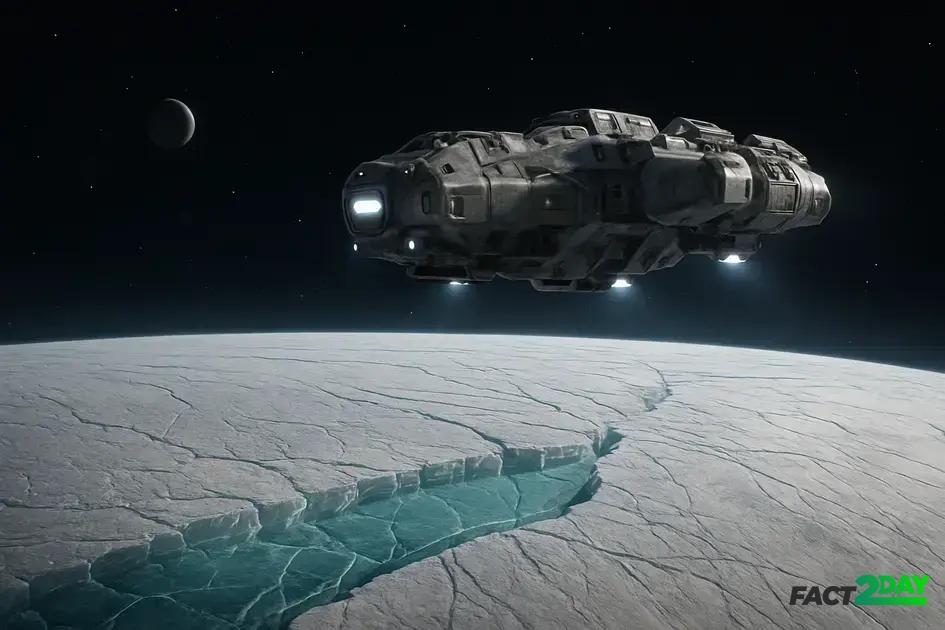
Several icy moons in our solar system are considered prime candidates for housing subsurface oceans. These moons have drawn significant scientific interest because of their potential to support life. Europa, one of Jupiter’s largest moons, is perhaps the most well-known. It has a smooth, icy surface crisscrossed by cracks and ridges, indicating a dynamic ocean underneath.
Enceladus, a smaller moon of Saturn, surprises scientists with its spectacular geysers that shoot water vapor and ice particles into space. These plumes suggest an active ocean beneath a relatively thin ice shell. The presence of organic molecules in these plumes makes Enceladus a fascinating target for life-hunting missions.
Other Noteworthy Moons
Ganymede, the largest moon in the solar system, also shows signs of a salty ocean beneath its icy crust. Its magnetic field and surface features hint at complex internal processes. Similarly, Titan, another of Saturn’s moons, has a subsurface ocean beneath its thick atmosphere and lakes of liquid methane on the surface.
Exploring these icy moons is crucial because they offer varied and intriguing environments. Each moon provides a different context to understand the conditions that might sustain life beyond Earth. Missions aimed at studying these celestial bodies are underway or planned, hoping to unlock the mysteries of these hidden oceans and their potential for hosting life.
How scientists detect oceans under thick ice crusts
Scientists use a variety of advanced techniques to detect subsurface oceans beneath thick ice crusts on icy moons. One key method is radar sounding, which sends radio waves through the ice and measures their reflections. Differences in the returned signals can indicate the presence of liquid water layers below the ice.
Another technique involves studying surface features, such as cracks, ridges, and plumes. For example, plumes of water vapor and ice particles erupting from moons like Enceladus provide direct evidence of liquid reservoirs beneath the surface.
Gravity and Magnetic Field Measurements
Variations in a moon’s gravity field can reveal the distribution of mass beneath its surface, helping to identify regions filled with liquid water. Similarly, magnetic field data can hint at salty, conductive oceans interacting with a moon’s magnetic environment.
Additionally, scientists analyze heat flow from the moon’s interior using thermal imaging. Areas with higher temperatures can suggest tidal heating, which keeps the ocean from freezing.
These combined approaches allow researchers to map and understand hidden oceans, even without direct sampling. They provide vital clues in the search for extraterrestrial life and enhance knowledge about the geology and evolution of icy worlds.
Potential life forms that could thrive in extreme ocean worlds
Extreme ocean worlds, with their harsh conditions like high pressure, cold temperatures, and limited sunlight, could still harbor unique life forms adapted to survive in such environments. Microorganisms similar to Earth’s extremophiles could thrive here, using chemical energy sources rather than sunlight.
Microbial Life
Microbes such as bacteria and archaea might live near hydrothermal vents on the ocean floor. These vents release chemicals like hydrogen sulfide, which some microbes use to produce energy through a process called chemosynthesis. Such ecosystems do not depend on sunlight and could be a model for life on icy moons.
These microorganisms might form the base of a food chain, supporting more complex multicellular organisms. The presence of organic molecules detected on some moons suggests the potential for such life.
Potential Complex Life
While speculative, larger organisms could exist if the environment provides enough nutrients and energy. These might include simple animals like worms or crustacean-like creatures adapted to dark, cold environments.
Studying life in Earth’s extreme oceans helps scientists understand what to look for on other worlds. It also expands knowledge about the limits of life and its adaptability to extreme conditions.
The role of chemistry in supporting extraterrestrial life
Chemistry plays a crucial role in creating and sustaining life in extreme environments like ocean worlds. The presence of certain elements and molecules, such as carbon, hydrogen, oxygen, nitrogen, phosphorus, and sulfur, is essential for building the complex organic compounds that form the basis of life.
Chemical Energy for Life
Chemosynthesis is a key process where microbes use chemical reactions to produce energy instead of sunlight. In subsurface oceans, chemical energy can come from interactions between water and rock, such as hydrothermal vents releasing minerals and compounds necessary for life.
These chemical reactions can create molecules like hydrogen, methane, and other organics that serve as fuel for microbial communities. The availability and balance of these chemicals influence how abundant and diverse life could be.
Water Chemistry and Habitability
The composition of the ocean water — including its salinity, pH, and presence of elements — affects its ability to support life. For example, salty, alkaline water with essential chemicals provides a stable environment where life can thrive.
Understanding the chemistry of extraterrestrial oceans helps scientists identify the most promising places to search for life and design better instruments to detect biosignatures.
The study of chemistry in ocean worlds links geology, biology, and planetary science, revealing the complex interactions that make life possible beyond Earth.
Challenges of exploring alien oceans remotely
Exploring alien oceans remotely presents many challenges due to the extreme conditions and vast distances involved. One of the biggest obstacles is the thick ice crust covering these subsurface oceans, which can be miles deep. This ice barrier makes direct observation and sampling very difficult.
Distance and Communication Delays
Many of these icy moons are located hundreds of millions of miles from Earth. Spacecraft exploring them face long travel times and significant communication delays, making real-time control impossible. Missions must operate autonomously and rely on pre-programmed instructions.
Another challenge is the harsh space environment, which exposes instruments to radiation and extreme temperatures. Designing durable equipment that can function reliably for years is essential.
Technical and Scientific Difficulties
Penetrating the ice to reach the oceans safely requires innovative technology, such as ice drills or melting probes, which must operate remotely without contamination. Gathering accurate data about ocean composition, pressure, and potential life forms requires highly sensitive instruments adapted for alien conditions.
Budget and logistical constraints also limit the scope and frequency of missions. Despite these hurdles, ongoing advancements in robotics and space technology continue to improve our ability to explore these mysterious oceans remotely.
Technologies enabling the search beneath ice-covered moons
Exploring subsurface oceans beneath ice-covered moons requires cutting-edge technologies designed to overcome extreme conditions and vast distances. One key technology is the use of orbital spacecraft equipped with ice-penetrating radar. These instruments send radio waves through the ice to map the thickness of the ice shell and detect underlying liquid water.
Robotic landers and probes are also being developed to make direct contact with the surface and eventually penetrate the ice. These devices may use heated drills or melting probes to reach the hidden oceans below without contaminating them.
Autonomous Systems and AI
Because of communication delays with Earth, autonomous navigation and decision-making are vital. Artificial intelligence helps spacecraft adjust to unexpected challenges in real time, improving mission success rates.
Advanced sensors analyze the chemical makeup of plumes or surface materials to search for biosignatures—clues that life may exist beneath the ice. Instruments like mass spectrometers and chromatographs play a crucial role in this analysis.
Innovative power sources such as radioisotope thermoelectric generators provide long-lasting energy for missions in the distant and cold outer solar system.
Together, these technologies form the backbone of humanity’s efforts to explore and possibly discover life beneath the ice-covered oceans of distant moons.
Past and planned missions targeting ocean worlds
Several past and planned space missions aim to explore ocean worlds within our solar system, seeking to understand their environments and the possibility of life beneath their icy surfaces. The Galileo spacecraft was among the first to provide detailed data about Jupiter’s moon Europa, revealing signs of a subsurface ocean and active geology.
The Cassini mission significantly advanced our knowledge of Saturn’s moons, especially Enceladus. Cassini discovered water vapor plumes erupting from Enceladus’ south pole, indicating a liquid ocean beneath the ice and potential hydrothermal activity.
Upcoming Missions
NASA’s Europa Clipper mission, set to launch in the mid-2020s, will conduct detailed reconnaissance of Europa’s ice shell and subsurface ocean. It will carry advanced instruments to analyze the moon’s ice, surface composition, and search for signs of habitability.
The European Space Agency’s JUICE (Jupiter Icy Moons Explorer) mission will explore Ganymede, Europa, and Callisto. JUICE aims to study Ganymede’s subsurface ocean and assess these moons’ potential to host life.
These missions are designed to overcome the challenges of exploring icy moons and deepen our understanding of ocean worlds, bringing us closer to answering the profound question of whether life exists beyond Earth.
The significance of discovering life beyond Earth
Discovering life beyond Earth would be one of the most profound scientific achievements in human history. It would reshape our understanding of biology, evolution, and the uniqueness of life in the universe. The search for extraterrestrial life, especially in ocean worlds, holds the promise of answering the age-old question: Are we alone?
Impact on Science and Philosophy
Finding life elsewhere would confirm that life can arise in diverse environments and suggest that the universe is teeming with living organisms. This would challenge current scientific models and open new fields of study.
Philosophically, the discovery would affect humanity’s perspective on our place in the cosmos and could inspire a sense of unity and curiosity about the universe.
Technological and Societal Implications
Exploring ocean worlds fuels technological innovation, advancing robotics, remote sensing, and autonomous systems. These technologies often find applications on Earth, improving industries and scientific research.
The prospect of discovering alien life also raises ethical and societal questions about how we interact with extraterrestrial ecosystems and the potential consequences of contact.
Above all, the search for life beyond Earth emphasizes the importance of exploration, discovery, and expanding human knowledge, fueling our innate desire to understand the universe and our origins.
How studying ocean worlds enriches our understanding of Earth’s oceans
Studying ocean worlds such as Europa and Enceladus provides valuable insights into Earth’s own oceans. By analyzing these distant environments, scientists learn more about the processes that shape underwater ecosystems and the factors that sustain life under extreme conditions.
Comparative Planetology
Ocean worlds serve as natural laboratories to compare with Earth’s oceans. Understanding how liquid water behaves under thick ice covers helps refine models of ocean circulation, chemistry, and thermal dynamics, which are essential for grasping Earth’s ocean systems.
Investigations of hydrothermal activity on these moons inform scientists about similar processes here on Earth. Hydrothermal vents on Earth’s ocean floor are teeming with life, fueled by chemicals from the planet’s interior, and studying icy moons helps clarify how such systems develop.
Climate and Habitability Insights
Data about ocean composition and ice interactions in space provide clues about Earth’s climate history and future. Ice-ocean interactions influence global sea levels and climate, so this research has direct implications for understanding climate change.
Additionally, exploring ocean worlds expands knowledge about life’s adaptability, which informs conservation and biodiversity studies in Earth’s oceans.
Overall, these studies foster a deeper appreciation of the delicate balance sustaining life on our planet, highlighting the interconnectedness of planetary science and Earth sciences.
Future prospects and exciting possibilities in ocean world research
Research into ocean worlds is entering an exciting new phase with upcoming missions and advanced technologies on the horizon. These developments promise to deepen our understanding of these mysterious environments and the potential for life within them.
Next-Generation Exploration
New instruments with increased sensitivity will allow better analysis of surface materials and plumes emitted from icy moons. Missions like the planned Europa Lander aim to directly sample the surface and possibly pull evidence from subsurface oceans.
Technologies such as autonomous underwater vehicles may one day explore beneath the ice crust, navigating alien oceans much like remotely operated vehicles do in Earth’s seas.
Scientific Discoveries and Broader Impact
Future research may reveal signs of microbial or more complex life, radically transforming biology and planetary science. Discovering how life adapts to such extreme worlds could influence medicine, astrobiology, and our understanding of life’s resilience.
Beyond science, these efforts inspire international cooperation and fuel public interest in space exploration, driving innovation across multiple fields.
Ongoing and future research will build on decades of knowledge, opening doors to a new era of discovery that could answer fundamental questions about life in the universe.
Looking Ahead in the Search for Life in Ocean Worlds
The exploration of ocean worlds beneath the ice of distant moons offers a thrilling opportunity to answer some of humanity’s biggest questions. With advanced technology and upcoming missions, we are closer than ever to detecting signs of life beyond Earth.
Understanding these alien oceans not only expands our knowledge of the universe but also enriches our view of Earth’s own oceans and the resilience of life.
The journey to uncover the mysteries hidden beneath the ice will continue to inspire innovation, international collaboration, and wonder about our place in the cosmos.
As we push the boundaries of science, the exciting possibilities in ocean world research remind us that the universe is full of surprises waiting to be discovered.